The Sorolla Museum Madrid is one of those rare places that stops you in your tracks — not because of its size or its fame, but because of what it feels like inside. This is the preserved home, studio, and garden of Joaquín Sorolla (1863–1923), Spain’s greatest Impressionist painter, tucked into a quiet Chamberí mansion a short metro ride from the city centre. Walking through it, you half expect the artist to come back from lunch and pick up his brushes. If you’re planning a serious art day in the city, this belongs on your list alongside the titans — but before you dive into the big three, get your bearings with our full Madrid museums and art guide, which covers everything from the Prado to the small gems like this one.
This is one of Madrid’s most underrated spaces — budget 90 minutes and you’ll wish you’d had more. The standard ticket is just €3 (or free with the Madrid Museum Pass), the crowds are manageable even on weekends, and the quality of what you see is extraordinary. Let me walk you through everything: what to see, when to go, how to get there, and why Sorolla deserves to be in the same conversation as Goya and Velázquez.
Table of Contents
- Sorolla Museum Madrid at a Glance
- Who Was Joaquín Sorolla?
- What Makes This Museum Different
- Must-See Paintings and Rooms
- The Garden and Studio
- Tickets, Hours and Getting There
- Practical Tips
- Combining with Other Visits
- FAQs
Sorolla Museum Madrid at a Glance
- Address: Paseo del General Martínez Campos 37, 28010 Madrid (Chamberí)
- Hours: Tuesday–Saturday 9:30am–8:00pm; Sunday 10:00am–3:00pm
- Closed: Mondays, January 1, May 1, December 24, 25, and 31
- Standard admission: €3
- Free with: Madrid Card, under-18s, EU students under 25, over-65s (EU)
- Free hours: Saturdays after 2:00pm; Sundays 10:00am–3:00pm
- Audio guide: €4 (English, Spanish, French, German, Italian)
- Average visit: 90 minutes
- Metro: Gregorio Marañón (Lines 7 and 10) — closest stop, 5 minutes on foot. Also Iglesia (Line 1) or Rubén Darío (Line 5).
- Photography: Permitted without flash; no tripods
Who Was Joaquín Sorolla?
Joaquín Sorolla (1863–1923) was the master of Mediterranean light — born in Valencia, orphaned young, and self-made into one of the most commercially successful European painters of his era. His 1909 New York exhibition was a phenomenon, and his “luminism” — sunlight captured on water, white linen, bronzed skin — still makes art historians argue about exactly how he did it. He designed and built this Madrid mansion in 1910 with the proceeds of his American success. After his death in 1923, his widow Clotilde donated the entire complex — house, studio, gardens, and roughly 1,200 canvases — to the Spanish state. The museum opened in 1932. This is not a reconstruction. This is the actual place, with actual things, exactly where Sorolla left them.
What Makes This Museum Different From the Big Three
The Prado, the Reina Sofía, and the Thyssen are institutions — vast, slightly intimidating, and exhausting to do properly. The Sorolla is the opposite: one artist, one life, one place. You walk through the rooms where he lived, stand in the studio where his easels still carry dried pigment. There is an intimacy here that no major museum can manufacture. It also corrects a persistent undervaluation: Sorolla was internationally famous in his lifetime — more famous in the United States than Picasso at the time of his 1909 New York show. Standing in front of his beach paintings here, you see immediately that the 20th century’s dismissal of him was a mistake. The light is actually there on the canvas.
If you’re doing a Golden Triangle circuit of the Prado, Reina Sofía, and Thyssen, I’d add one more afternoon for the Sorolla. You won’t regret it.
Must-See Paintings and Rooms
1. Strolling Along the Seashore / Walk on the Beach (1909)
Sorolla’s wife Clotilde and daughter María walk along a Valencian beach in white dresses, the turquoise Mediterranean blazing behind them. This is one of the most perfectly executed paintings of light in European art. Stand close enough to see the brushwork — it is almost violent in its confidence — then step back to watch it resolve into something that feels like a memory of a summer afternoon. This is the painting I always return to first.
2. Sad Inheritance! / Triste Herencia (1899)
Disabled children, supervised by a monk, bathing in the Valencia surf. A social-realist subject treated with unsentimental compassion and Sorolla’s full technical arsenal. It won the Grand Prix at the 1900 Paris Universal Exposition and made his international reputation. The scale is imposing; the light is merciless and beautiful at the same time.
3. The Pink Robe / La Bata Rosa (1916)
Sorolla’s daughter María in a pink kimono, painted in the garden of this very house. One of his finest late-period portraits.
4. Portraits of Clotilde
Sorolla painted his wife dozens of times. Seeing these portraits in the actual rooms where they lived gives them a weight that a gallery cannot replicate — and tracking his technique across the decades, from careful academic work to his loose late style, is fascinating.
5. Studies for Vision of Spain (Visión de España)
Sorolla’s most ambitious commission: 14 huge panels depicting the regions of Spain for the Hispanic Society of America in New York (1911–1919). The museum holds high-quality reproductions and his preparatory oil studies. The downstairs rooms showing these are often skipped by rushed visitors — don’t.
6. Valencian Beach Scenes (Multiple)
Sorolla returned to the Valencia beaches obsessively: fishermen hauling boats with oxen, children in the surf, women drying nets. Among the finest depictions of beach light ever painted — hot, physical, exact, and not nostalgic at all.
The Garden and Studio
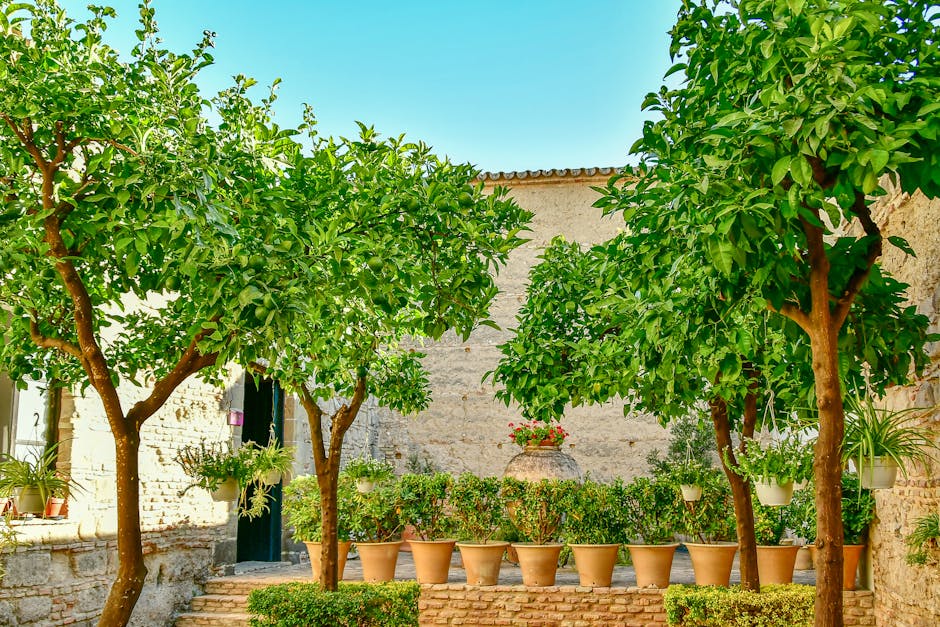
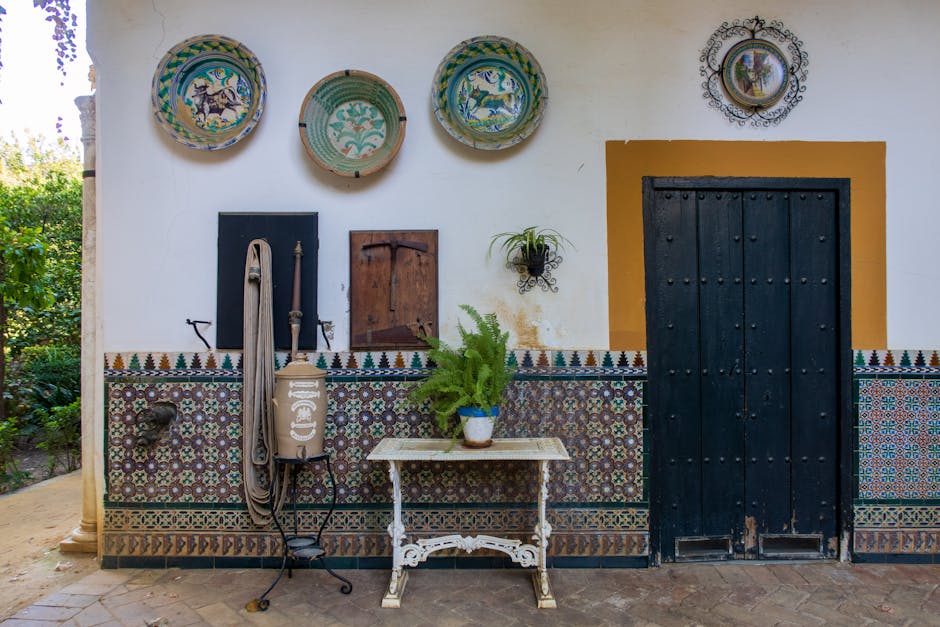
The garden should not be treated as an afterthought. Sorolla designed it himself based on his travels through Andalusia, Italy, and the Moorish gardens of Granada: three connected rooms — an Italian-style space with cypresses and a fountain, an Andalusian patio with ceramic tile work and citrus trees, and a more formal northern section. In April and May, when the wisteria and orange blossom are out, this is one of the most beautiful small gardens in Madrid. Budget 20 minutes here.
The studio is the largest room in the house, oriented to the north for consistent light as any painter would require. Sorolla’s easels are still set up. His brushes are still on the table. His palette, hardened with decades of pigment, sits exactly where he left it. This is not staging — it is preservation. The room has not been rearranged for dramatic effect. The effect is already there.
The rest of the house — dining room, library, upstairs living quarters — is equally preserved, with personal objects, books, and photographs exactly as the family left them. This is a domestic space first and an exhibition space second, and that inversion is what makes it work.
Tickets, Hours and Getting There
Admission (2026)
- Standard: €3
- Reduced: €1.50 (EU students 25+, EU seniors)
- Free: Under-18s; EU students under 25; EU seniors over 65; Saturdays 2:00pm–8:00pm; Sundays 10:00am–3:00pm; May 18 (International Museum Day)
- Madrid Card: Covered — see our guide to the Madrid Museum Pass to see if it makes sense for your itinerary
- Buy tickets: At the door, or online via culturaydeporte.gob.es (Ministry of Culture). Online booking is recommended in peak season (Easter, July–August).
The free hours at the Sorolla are not the scrum they are at the Prado. Even on Sunday mornings you can walk in without queuing. This is a small museum with managed visitor numbers. If you want to plan a full free museum day, our guide to free museum hours in Madrid has the complete picture.
Opening Hours
- Tuesday–Saturday: 9:30am–8:00pm
- Sunday: 10:00am–3:00pm
- Monday: Closed
- Also closed: January 1, May 1, December 24, December 25, December 31
Getting There by Metro
The closest metro stop is Gregorio Marañón on Lines 7 (orange) and 10 (dark blue) — about a 5-minute walk to the museum entrance on Paseo del General Martínez Campos. You can also reach it from Iglesia (Line 1) or Rubén Darío (Line 5), both roughly 10–12 minutes on foot through pleasant Chamberí streets. There is no car park at the museum; street parking in the area is metered.
Practical Tips
- Get the audio guide: At €4, it is one of the better audio guides in Madrid — covers the technique, the house history, and the specific paintings in useful depth. Available in English.
- Best time to visit: Tuesday through Friday morning, 10:00am–noon. Weekday mornings are genuinely quiet. Avoid Sunday free slots if you want to move at your own pace.
- Spring is the right season: April and May — the gardens are at their best with wisteria and citrus blossom. The light inside also feels closest to the Mediterranean quality Sorolla was chasing.
- Photography: Permitted without flash throughout most of the museum. No tripods or selfie sticks.
- Wheelchair access: Ramps and lifts throughout. The garden is accessible at ground level.
- No café on site: Plaza Olavide, 10 minutes on foot, has excellent café options for lunch or coffee afterwards.
- Combine with Lázaro Galdiano: The Museo Lázaro Galdiano is 15 minutes on foot — another exceptional small private-collection museum with Bosch, Goya, and El Greco. A natural pairing for a half-day. See our Lázaro Galdiano Museum guide.
Combining the Sorolla with Other Visits
Here is how I would build a half-day around the Sorolla:
- 10:00–11:30: Sorolla Museum (90 minutes, including the garden)
- 11:30–12:30: Coffee at Plaza Olavide — 10 minutes on foot through Chamberí
- 12:30–14:00: Lunch: Sala de Despiece on Calle Ponzano (modern tapas) or Bodega de la Ardosa (historic vermouth bar)
- 14:30–16:00: Lázaro Galdiano Museum (15-minute walk east)
- 16:00–17:00: Cerralbo Museum if you want a third stop
The Sorolla also pairs well with a morning in Retiro Park — take the metro north after a couple of hours in the park, and you have a full cultural day without feeling rushed at either stop. And for everything else worth doing in the city, our things to do in Madrid guide has you covered.
Sorolla vs. Other Artist-House Museums
The Sorolla is one of Europe’s best-preserved artist homes. Compared to the Musée Rodin in Paris: both have great gardens, but the Sorolla is far more intimate and rarely crowded. Within Madrid, the obvious comparison is the Cerralbo Museum — an aristocratic collector’s mansion from the same period with extraordinary decorative arts, but no single dominant artistic personality. The Sorolla is laser-focused on one vision, one light, one hand. Different experiences; both worth your time.
Sorolla Museum Madrid: FAQs
Is the Sorolla Museum Madrid worth visiting?
Without question — and at €3, it is the best-value cultural experience in Madrid. The combination of masterwork paintings, preserved studio, and beautiful garden creates something the big institutions cannot replicate.
How much does the Sorolla Museum cost?
€3 standard; €1.50 reduced. Free on Saturday afternoons (from 2:00pm) and Sunday mornings (10:00am–3:00pm). Permanently free for under-18s and EU students under 25. Also covered by the Madrid Card.
When is the Sorolla Museum open?
Tuesday–Saturday 9:30am–8:00pm; Sunday 10:00am–3:00pm. Closed Mondays and major public holidays including January 1, May 1, and December 24–25 and 31.
Which metro stop for the Sorolla Museum?
Gregorio Marañón on Lines 7 and 10 is the closest — about 5 minutes on foot. Iglesia (Line 1) and Rubén Darío (Line 5) are also within 10–12 minutes’ walk.
How long do I need at the Sorolla Museum?
90 minutes covers the full museum comfortably, including the garden. Add 30 minutes if you’re doing the audio guide in depth.
Can I take photos at the Sorolla Museum?
Yes, photography is permitted without flash in most rooms. Tripods and selfie sticks are not allowed.
Is there a café at the Sorolla Museum?
No on-site café. Plaza Olavide, 10 minutes on foot, has a good range of cafés and terrace spots.
Is the Sorolla Museum suitable for children?
Children over about 10 often love the studio — the preserved brushes and palette are tangible in a way that abstract gallery context is not. Younger children may find the focus on paintings less engaging, though the garden usually works for any age. Free for under-18s.
What other museums should I combine with the Sorolla?
The Lázaro Galdiano Museum (15-minute walk) is the natural pair — another exceptional private collection in a similar building. The Cerralbo Museum (further west) is another preserved aristocratic mansion from the same era. Both are covered in the Madrid museums guide.
Official Resources
- Museo Sorolla official site: cultura.gob.es/msorolla
- Madrid official tourism: Sorolla Museum on esmadrid.com
The Sorolla Museum Madrid is one of those small museums that consistently earns a place on lists of favourite Madrid experiences — intimate, beautiful, and a perfect counterpoint to the demanding scale of the Prado or Reina Sofía. €3 to spend 90 minutes inside Spain’s greatest Impressionist’s home, looking at paintings he made in the garden outside the window, is among the best deals in European travel. If you only visit one small museum in Madrid, make it this one.