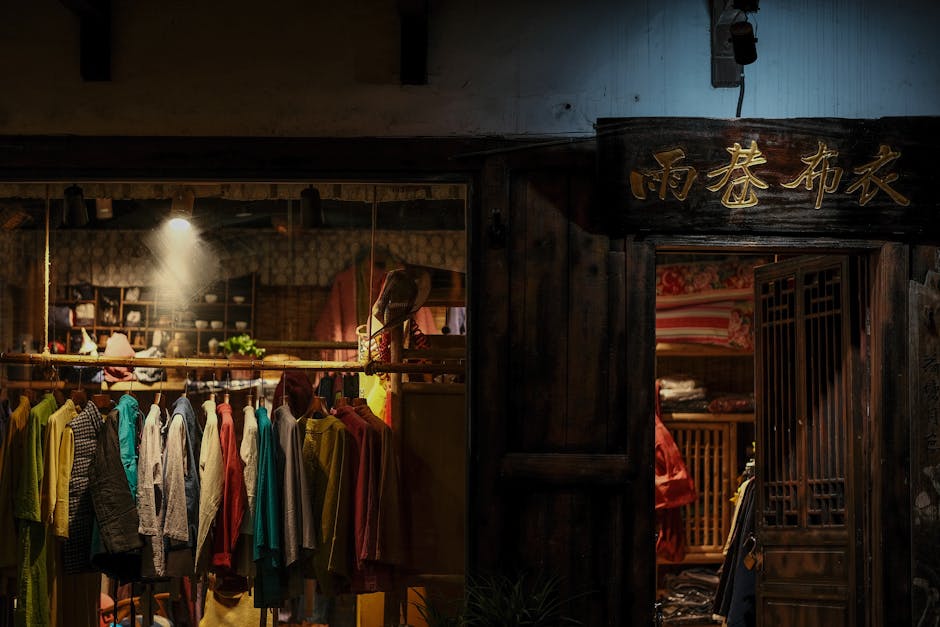
Malasaña is where Madrid buys second-hand, and it has been that way since the neighbourhood became the centre of La Movida in the late 1970s. The shops turn over, but the character doesn’t: small units, owners behind the counter, racks organised by decade rather than size.
One correction before anything else, because almost every guide gets this wrong. Calle Fuencarral is not the indie street. It’s the pedestrianised chain strip — New Balance, Levi’s, Diesel, Calvin Klein, Guess, Calzedonia. Perfectly fine, but it is not why you came. The actual vintage and independent cluster is on Velarde, Espíritu Santo, San Joaquín, Corredera Alta and Baja de San Pablo, and Calle del Pez. Walk in one block from Fuencarral and the neighbourhood changes completely.
Table of Contents
- Shopping Malasaña Madrid: Independent Retail District
- Why Malasaña shops the way it does
- Best Shopping Malasaña Madrid Streets
- Top Shopping Malasaña Madrid Stores
- Best Vintage Shopping Malasaña Madrid
- Music and Books
- Design and Concept Stores
- Shopping Malasaña Madrid Hours
- A note on prices
- Rebajas: when the sales actually run
- Tax-free shopping for non-EU visitors
- Combine Shopping Malasaña Madrid With…
- Insider tips
- FAQs
- Plan Your Visit
Shopping Malasaña Madrid: Independent Retail District
Malasaña sits north of Gran Vía, bounded roughly by Fuencarral to the east, San Bernardo to the west and Carranza to the north. Its official name is Universidad; nobody uses it. The name everyone does use comes from Manuela Malasaña, a teenage seamstress killed in the 1808 uprising against Napoleon’s troops.
What makes it good for shopping is the scale of the units. These are narrow, ground-floor spaces in nineteenth-century buildings, too small for chains and cheap enough — historically at least — for someone to open a shop on the strength of an idea. That produces a density of one-off businesses you don’t get on Serrano or in a mall.
It’s a compact area. You can walk the entire retail core in twenty minutes, which means you can cover it properly in an afternoon. Metro Tribunal on lines 1 and 10 puts you at the eastern edge; Noviciado on line 2 and Bilbao on lines 1 and 4 work for the north and west.
Why Malasaña Shops The Way It Does
The second-hand density here isn’t an accident of cheap rent — it’s a direct inheritance from La Movida Madrileña, the cultural explosion that followed Franco’s death in 1975 and centred on exactly these streets.
Madrid in the late seventies had four decades of enforced conservatism to work through and very little money to do it with. What emerged was a scene built on improvisation: bands forming in bars on Calle La Palma, Almodóvar filming his early work around the corner, and a look assembled from whatever the second-hand shops and family wardrobes could supply. Vintage clothing in Malasaña started as necessity and became identity.
You can still see the through-line. La Vía Láctea on Velarde 18 opened in 1979 and is on the same short street as three vintage shops. Casa Camacho predates the whole thing by fifty years and hasn’t changed its vermouth taps. La Vaca Austera on La Palma has played 70s rock since 1981. The shops and the bars grew up together and still serve broadly the same crowd, two generations on.
This matters practically for two reasons. First, it explains why the good stuff is on the residential side streets rather than the commercial artery — the scene formed away from the main roads, and the retail followed. Second, it explains the neighbourhood’s current tension: rents have risen enough that concept stores and chains are pushing in from Fuencarral, and some of the independents that defined the district have gone. Shopping here in 2026 means catching something that is still genuinely itself but visibly under pressure.
Best Shopping Malasaña Madrid Streets
Calle Velarde is the single best street for vintage and the one to start on. Three of the neighbourhood’s established second-hand shops sit within a few doors of each other, which makes comparison genuinely easy.
Calle Espíritu Santo runs east–west through the middle of the neighbourhood and mixes vintage clothing with cafés and small galleries. It’s the street to wander rather than target.
Calle San Joaquín is short but holds the by-the-kilo vintage shop, which is worth a stop regardless of whether you buy.
Corredera Alta and Corredera Baja de San Pablo are the design and concept-store axis — homeware, prints, jewellery, Nordic labels, and a good bookshop or two. Corredera Alta is the northern half, Corredera Baja the southern.
Calle del Pez has become the neighbourhood’s most self-consciously stylish street — galleries, a serious cocktail bar, a few boutiques.
Calle Fuencarral, to be clear about what it is: pedestrianised, busy, and full of international chains. If you want mainstream Spanish high street — Zara, Bershka, El Ganso at numbers 2 and 20, Scalpers at 53 — this is the efficient place to get it.
Top Shopping Malasaña Madrid Stores
Magpie Vintage, Calle Velarde 3 (units 3 and 4). The best-established vintage shop in the neighbourhood, trading fifteen years, with stock running from 1940s pieces through to Y2K, plus hats, belts and shoes. Cheapest garments start around €3. Open Monday to Saturday 11:30 to 21:00, closed Sunday.
Flamingos Vintage Kilo, Calle San Joaquín 16. Vintage sold by weight, which is either a bargain or a trap depending on your patience for digging. Open Monday to Saturday 11:00 to 21:00. Worth flagging: a lot of guides still place Flamingos on Espíritu Santo. The chain’s own site gives San Joaquín 16 — go there.
Biba Vintage, Calle Velarde. Trading since 2009, specialising in 80s, 90s and Y2K sportswear and streetwear. Its address is genuinely ambiguous across sources — some give Velarde 1 unit 4, others Velarde 4 — but on a street this short you’ll find it either way.
Williamsburg Vintage, Calle Velarde 4. US-imported second-hand. Listed hours are Monday to Saturday 11:30 to 21:00 and Sunday noon to 20:00, though I’d treat those as approximate — this is the shop I could find the least recent confirmation for, so if it’s the reason for your trip, check its Instagram first.
El Templo de Susu, Calle Espíritu Santo 1, specialises in the 1960s to 1980s. Lady Cacahuete sells womenswear made entirely in Spain with a 1950s and rockabilly bent. Antigua Casa Crespo makes handmade alpargatas — espadrilles — and is one of the genuinely historic businesses in the area. Mon Petit Retro does vintage children’s clothing for nought to six. La Cierva Vintage and Luciérnaga Concept Boutique are both still listed by the city tourism board.
Popland, Corredera Alta de San Pablo 28, is pop-culture gifts and retro kitsch — good for presents. Lefrik at Corredera Alta 33 makes backpacks from recycled PET. Generación X handles comics, manga and collectables. La Fiambrera Art Gallery at Calle del Pez 7 sells contemporary prints from more than twenty-five artists, and is the best place in the neighbourhood to buy something that will actually go on a wall.
Best Vintage Shopping Malasaña Madrid
If you have one hour and want vintage specifically, do this: start at Magpie on Velarde 3, cross to Biba and Williamsburg on the same street, then walk five minutes to Flamingos on San Joaquín 16 for the by-the-kilo racks, and finish at El Templo de Susu on Espíritu Santo 1.
That’s four distinct approaches to second-hand in a fifteen-minute walking radius: curated by decade, sportswear-focused, sold by weight, and 60s-to-80s specialist. It’s a genuinely good vintage district by European standards — not London or Berlin in volume, but tighter and easier to work.
Two practical points about buying vintage here. Sizing is inconsistent and mostly unlabelled or labelled in defunct systems, so try things on rather than trusting a tag. And the good pieces move fast at weekends — Saturday afternoon is the busiest window, so a weekday morning gives you better racks and more attention from the owner.
Music and Books
Here’s a correction that matters if you’re planning a route: Madrid’s famous record shops are not actually in Malasaña. They’re a short walk away, and calling them Malasaña shops will send you to the wrong streets.
- Discos La Metralleta — Postigo de San Martín 1, in the underground gallery at Plaza de las Descalzas, which is Callao, not Malasaña. Vinyl, CDs, DVDs and Blu-rays, buying as well as selling, open since 1985. Monday to Saturday 10:00 to 14:00 and 16:30 to 20:30. Note that “La Metralleta” and “Discos La Metralleta” are the same business, listed twice in a lot of guides.
- Escridiscos — Postigo de San Martín 4, also Callao. Rock, soul, garage, beat, punk, indie and folk, trading since 1977.
- Radio City Discos — Calle Conde Duque 14, which is Conde Duque, about five minutes west of Malasaña. New and second-hand pop, rock, jazz, soul and world. Monday 17:00 to 20:30, Tuesday to Saturday 11:00 to 14:00 and 17:00 to 20:30. LPs from around €3.
- Bajo el Volcán — Calle Ave María 42, which is Lavapiés, a good twenty minutes away. Rare African, Brazilian and Japanese jazz pressings, and the most specialist of the four.
The honest framing is “Malasaña and a short walk from it.” If records are the point of your day, plan a Callao–Conde Duque–Malasaña loop rather than expecting to find them among the vintage shops.
For books, La Fiambrera on Calle del Pez doubles as a print and art-book shop, and Generación X covers comics and manga.
Design and Concept Stores
El Moderno Concept Store is the most complete of them — design objects, décor, jewellery, illustration books and plants. Its address is inconsistently listed as Corredera Alta 16 or Corredera Baja 19; both are on the same axis a few minutes apart.
Le Circus at Corredera Baja de San Pablo 18 stocks Swedish and Danish fashion labels, and is the place to go if Spanish design isn’t what you’re after. Lefrik at Corredera Alta 33 does the recycled-plastic bags. Popland at Corredera Alta 28 is the gift stop.
The concept stores are the part of Malasaña that has changed most in the last decade, and they’re where the neighbourhood’s rising rents show. Expect prices closer to Chueca than to the vintage racks two streets away.
Shopping Malasaña Madrid Hours
Independent Madrid shops keep different hours from chains, and getting this wrong wastes an afternoon.
The general shape: most of the vintage shops open around 11:00 or 11:30 and run to 21:00 without closing at midday. The smaller and more specialist a shop, the more likely it splits the day — Radio City, for instance, closes 14:00 to 17:00, and La Metralleta 14:00 to 16:30. Older family businesses are far more likely to keep the midday break than a vintage shop aimed at twenty-somethings.
Sundays: ordinary independent shops in Malasaña are generally closed. Madrid is unusual among Spanish cities in permitting a lot of Sunday retail in designated tourist zones, so the Fuencarral chains and the big central stores often open — but the small vintage units mostly don’t. Magpie is explicitly closed Sunday.
Monday mornings are the other trap: several independents open late or not at all.
The practical rule: come Tuesday to Saturday, arrive after 11:30, and if there’s one shop you specifically care about, check its Instagram the night before. In a district with this much turnover, a shop’s own social feed is more reliable than any listing, including this one.
A Note on Prices
I’m going to be straight about something most shopping guides won’t admit: reliable prices for independent Madrid shops largely don’t exist in public. These are small businesses that don’t publish price lists, don’t run e-commerce, and change stock weekly.
Across the whole of Malasaña and Chueca, the only two figures I could verify from a primary source were Magpie’s cheapest garments from about €3 and Radio City’s LPs from about €3. Everything else you read — “expect to pay €15–40 for a vintage jacket” and so on — is somebody’s guess dressed up as research.
What I can tell you honestly: vintage in Malasaña is cheaper than equivalent districts in London, Paris or Berlin, by-the-kilo shops are the cheapest option in the neighbourhood, and the concept stores on the Correderas are the most expensive. Budget as you would for any independent retail and expect to be pleasantly surprised at the second-hand end.
Rebajas: When the Sales Actually Run
Most guides state Spanish sale dates as though they were fixed by law. They aren’t — and haven’t been since the 2012 retail liberalisation. Every retailer now sets its own dates. The windows below are customary, not statutory, and small independents may not follow them at all.
- Winter rebajas 2026 started 7 January, with many chains going live online on the 6th, and ran to somewhere between the end of February and early April depending on the region.
- Summer rebajas nominally start 1 July, though much of the sector now moves in the last week of June, and run through August.
For vintage shops this matters less than you’d think — second-hand stock isn’t seasonal in the same way, and the by-the-kilo model doesn’t discount. The rebajas are a chain-store phenomenon, so they’re relevant on Fuencarral and largely irrelevant on Velarde.
Tax-Free Shopping for Non-EU Visitors
If you live outside the EU you can reclaim Spanish VAT, and the rules are more generous than most people realise.
There is no minimum spend. Spain abolished the old €90.15 threshold, so any purchase amount qualifies. That genuinely changes the calculation for vintage shopping, where you might buy several small items rather than one expensive one.
You need to be habitually resident outside the EU, proven by passport, buying goods for personal use from a shop that issues a DIVA form — mandatory for participating retailers since January 2019. Small independent shops may not be set up for it, so ask before you buy if the refund matters.
The goods must leave for your country of residence within three months of purchase, and the forms have to be validated before the end of the third month following the month of purchase, as you exit the EU. At Barajas you scan the form’s barcode at a DIVA interactive terminal near customs — no queue at a customs counter, ten languages available. The screen either validates the form, in which case you collect the money from the refund operator, or rejects it, in which case you go to the customs desk.
Two things that catch people out. Your purchases must be with you, not checked into the hold, when you validate. And if you leave Spanish territory without completing the DIVA step, the refund is legally unobtainable — there is no retrospective fix.
Refund operators include Global Blue, Planet and Innova Tax Free, with downtown refund points around the city — Planet has a lounge at Claudio Coello 113.
Combine Shopping Malasaña Madrid With…
Chueca, which starts on the other side of Fuencarral and is a five-minute walk. Chueca does boutiques, concept stores and shoes where Malasaña does vintage, so the two together make a full and non-repetitive day. Mercado de San Antón at Augusto Figueroa 24 is the obvious lunch stop.
Conde Duque, immediately west, for Radio City Discos and the cultural centre, which programmes exhibitions and concerts year-round.
A drink, which is the correct way to end. Casa Camacho at San Andrés 4 has been open since the 1920s and still pours from original brass vermouth taps — order a yayo, which is soda, vermouth and gin. Monday to Saturday 12:30 to 02:00, closed Sunday. Lolina Vintage Café at Espíritu Santo 9 fits the neighbourhood’s aesthetic exactly, Sunday to Thursday 10:00 to midnight and to 02:30 at weekends. Bodega de la Ardosa at Colón 13 does vermouth on tap. Café Manuela at San Vicente Ferrer 29 has been going since 1979 and keeps board games behind the bar.
If you want to keep going into the evening, La Vía Láctea at Velarde 18 — on the same street as the vintage shops — is a Movida survivor with free entry.
Insider Tips
Start on Velarde, not Fuencarral. Fuencarral is the chains. One block west is the reason you came.
Come Tuesday to Saturday, after 11:30. Sunday closes most independents and Monday mornings are unreliable.
Weekday mornings beat Saturday afternoons for stock and for service.
Carry cash. Some of the smallest units still prefer it, and it makes haggling at the kilo shops less awkward.
Try everything on. Vintage sizing is unreliable and often unlabelled.
Check Instagram before a special trip. Turnover in this district is high, and a shop’s own feed is the only current source.
Ask about DIVA before you pay if you’re claiming VAT back, because not every small shop participates.
Don’t go looking for record shops here. They’re in Callao, Conde Duque and Lavapiés.
FAQs
Is Malasaña good for vintage shopping? Yes — it’s Madrid’s best district for it, with four distinct second-hand shops within a fifteen-minute walk on and around Calle Velarde, including a by-the-kilo shop.
Which street should I start on? Calle Velarde. Magpie at number 3, plus Biba and Williamsburg on the same short street.
Is Calle Fuencarral part of Malasaña shopping? Geographically it borders it, but it’s the mainstream chain strip — New Balance, Levi’s, Diesel, Zara. Useful, but not the independent scene.
Are shops open on Sunday? Mostly not in Malasaña. The Fuencarral chains and larger central stores often do open, since Madrid permits Sunday retail in designated zones, but the small vintage units generally close.
How much does vintage cost in Malasaña? Cheapest garments at Magpie start around €3, and by-the-kilo shops price by weight. Beyond that, these are independents that don’t publish prices — treat any precise range you read elsewhere with scepticism.
When are the Spanish sales? Winter began 7 January in 2026; summer nominally starts 1 July, often the last week of June. There have been no legally fixed dates since 2012, so each retailer chooses.
Can I claim VAT back on vintage purchases? Yes if you live outside the EU, and there’s no minimum spend in Spain. The shop must issue a DIVA form, and you validate it at an airport terminal with the goods in your hand luggage before you leave.
Malasaña or Chueca for shopping? Malasaña for vintage and second-hand, Chueca for boutiques, concept stores and shoes. They’re five minutes apart, so do both.
Plan Your Visit
Get to Metro Tribunal by late morning on a weekday, walk west into Velarde, and give yourself three hours before lunch at Mercado de San Antón in Chueca. Bring cash, expect to try things on, and finish with a yayo at Casa Camacho.
For more, see our Madrid shopping guide, shopping in Chueca, Spanish fashion brands worth buying, the full VAT refund guide and the rebajas calendar. For the neighbourhood itself, see our guide to Madrid’s barrios.