Faunia is the Madrid animal park that most visitors have never heard of, and for families with small children it is the better of the city’s two. It’s built as a series of walk-through ecosystems rather than a conventional zoo layout, and crucially several of the best ones are indoors and climate-controlled — which in a city that averages 31°C in August is not a minor detail.
It sits out east in Valdebernardo, about 20 minutes from the centre on Metro line 9, and the trip is genuinely easy. What follows is the practical detail: what it costs, when the shows run, how it compares to the Zoo Aquarium across town, and the one pricing decision that saves a family of four more than €60.
Table of Contents
- Faunia Madrid: Park Overview
- Faunia Madrid Tickets and Hours 2026
- Buy online, always: the price gap explained
- Faunia Madrid’s 4 Ecosystems
- Faunia Madrid Themed Zones
- Shows and keeper talks: the daily timetable
- Animal experiences you can book
- How to Get to Faunia Madrid
- Food and what you can bring in
- Accessibility
- Sample Faunia Madrid Day Itinerary
- Best time of year to visit
- Faunia Madrid vs. Zoo Aquarium
- Insider Tips for Faunia Madrid
- FAQs
- Plan Your Visit
Faunia Madrid: Park Overview
Faunia occupies about 16 hectares in Valdebernardo, in the east of the city, and describes itself as a nature park rather than a zoo. The distinction is real: instead of walking a circuit of enclosures, you move between recreated habitats — a tropical jungle under glass with a scheduled downpour, a polar building, a temperate woodland, a mangrove.
Sixteen hectares is small enough that short legs can manage it without a meltdown, which is the single biggest practical advantage over the Zoo Aquarium. The other is the indoor space. On a 35-degree afternoon or a wet March morning, a park where half the highlights are under a roof is worth a great deal.
It’s operated by Parques Reunidos, the same group that runs the Zoo Aquarium de Madrid — which matters because it opens up a combined ticket and an annual pass covering both, discussed below.
Faunia Madrid Tickets and Hours 2026
Faunia prices by height, not age, which is unusual and catches people out. There is no children’s age bracket — there’s a measuring point at the gate.
- General admission (over 140 cm) — from €16.90 online against €33.95 at the gate
- Child (100–140 cm) — from €16.90 online against €27.95 at the gate
- Reduced (over-65s, large families, disability of 33% or more, with one carer free) — from €16.90 online against €27.95 at the gate
- Under 100 cm — free
The free-under-100cm rule covers most toddlers, which makes Faunia unusually cheap for families with a two- or three-year-old.
Hours. For summer 2026 the park ran daily from 29 June to 6 September, 10:00 to 19:00, and it opens daily from March through September. Outside that, in January, February, October, November and December, opening days vary month to month and you have to check the calendar on the park’s own site before travelling — this is the most common reason people arrive to a closed gate. Both the entrance and the box office stop admitting one hour before closing.
I’d add one honest caveat: the park publishes its low-season schedule only through an interactive calendar, and secondary sources disagree about whether the winter opening time is 10:30 or 11:00. Check the official calendar rather than trusting a third-party listing, including this one.
Buy Online, Always: The Price Gap Explained
This deserves its own section because the gap is enormous. An adult paying at the gate pays €33.95. The same adult booking online pays from €16.90. That’s a difference of €17.05 per person — for a family of two adults and two children over 100 cm, roughly €60 saved for two minutes of work on your phone in the Metro on the way there.
The combined Zoo + Faunia pack is €39.90, online only, giving one full day at each park, valid on any open day until 31 December of the year you buy it. Against gate prices for both (€33.95 + €29.50 = €63.45) that’s a clear win. But be careful with the comparison everyone gets wrong: against two cheapest-online tickets bought separately (€16.90 + €19.90 = €36.80), the pack actually costs you €3.10 more. Buy the pack only if you’d otherwise pay at the gate, or if you value having both days locked in.
Annual passes are worth a look if you’re in Madrid for a while or you live here. The Bono Zoollower at €85 (€82 to renew) gives unlimited entry to Faunia, the Zoo Aquarium, Atlantis Aquarium, Selwo Marina, Selwo Aventura and the Benalmádena cable car, plus priority entry. It repays itself on the third visit. Above that sit the Bono Plata (€154), Oro (€214), Oro+Parking (€289) and Platino (€319), covering eleven or twelve Parques Reunidos parks, with the top two tiers including Faunia parking. A parking-only annual add-on for Faunia is €35.
Faunia Madrid’s 4 Ecosystems
The park’s organising idea is habitat rather than taxonomy, and four large environments carry it.
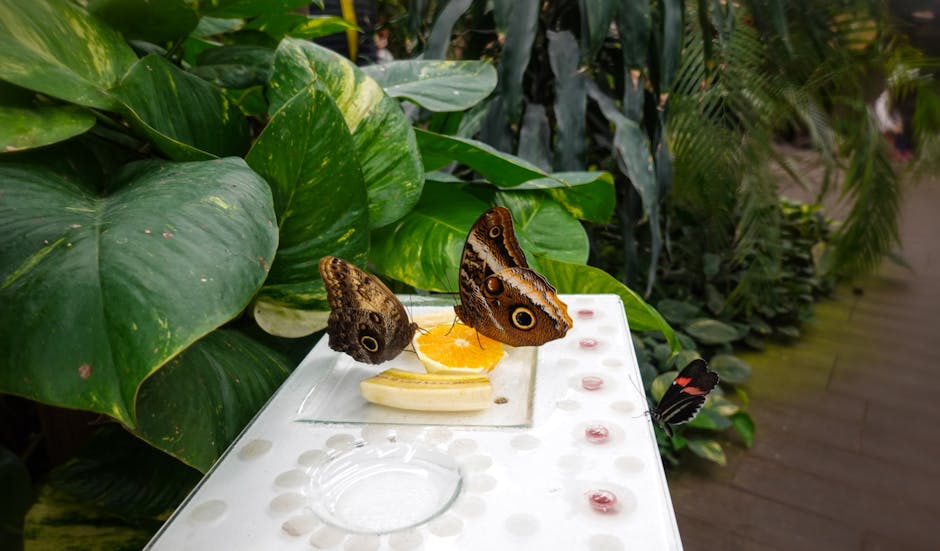
The Jungle. A large glasshouse kept hot and humid, with a scheduled artificial tropical storm that children find either thrilling or alarming depending on temperament. Free-flying birds, sloths, monkeys and a canopy walkway. It’s the single best thing in the park on a cold day and the worst on a hot one — go early.
The Polar Ecosystem. Faunia claims the largest polar habitat in Europe, and it’s the reason to come in July. Penguins on real snow behind glass, in a building kept genuinely cold. Bring a layer — the temperature drop from a Madrid August afternoon is abrupt enough to be a shock.
The Temperate Woodland. European species in a recreated deciduous forest — the quietest part of the park and the one most visitors walk through too fast.
The Mangrove and aquatic zones. Manatees are the headline here, and there’s a keeper talk (see the timetable below) that’s worth timing your visit around.
Faunia Madrid Themed Zones
Beyond the four big ecosystems, the park is divided into smaller themed areas that each anchor a species or a talk. The lemur enclosure is a walk-through, which is consistently the highlight for children between about four and eight — the animals move freely around the path. There’s a Komodo dragon house with a midday talk, a nocturnal house, a bird of prey area used for the flight display, a meerkat zone, and a section built around venomous animals which is signposted as Veneno and has its own talk.
There’s also a playground and splash area, which is more useful than it sounds. Building in twenty minutes of unstructured running about halfway through the day is often what makes the difference between a good visit and a fraught one.
Shows and Keeper Talks: The Daily Timetable
Faunia runs two proper shows daily plus a rotating set of keeper talks. Getting these right is most of the work of planning the day.
- Sea lions — “Guardianes del Océano”: 12:00 and 16:00, daily
- Bird flight display: 13:30 and 17:00, daily
- Penguins: a talk at 12:30, weekends and holidays only — there is no penguin show
- Komodo dragon: 12:00
- Lemurs: 13:00 and 16:30
- Venomous animals (Veneno): 13:30
- Crocodile feeding: 14:00, weekends, paid extra
- Meerkats: 16:00
- Manatees: 17:00
Note the clash at 13:30 between the bird display and the Veneno talk, and again at 12:00 between the sea lions and the Komodo talk. You can’t do everything. The sea lion show and the bird flight display are the two set pieces; build around those and treat the talks as opportunistic.
Most of the keeper talks run at weekends and on holidays rather than every weekday, so a Tuesday in October is a substantially quieter and thinner experience than a Saturday in July. If the talks matter to you, come at a weekend.
Animal Experiences You Can Book
This is Faunia’s genuine standout, and it has no equivalent at the Zoo Aquarium. Two bookable interactions:
- Bathing with fur seals — €50.90
- Polar expedition — €48.90
These are the reason to bring a teenager who has decided they’re too old for animal parks. They book out, particularly at weekends and in school holidays, so reserve when you buy your entry rather than on the day.
How to Get to Faunia Madrid
Address: Avenida de las Comunidades 28, 28032 Madrid. Telephone: +34 911 54 74 82.
- Metro — Valdebernardo, line 9. The most straightforward route from the centre, roughly 20 to 25 minutes plus a short walk.
- Cercanías — Vicálvaro on line C-2.
- Bus — EMT line 71 runs direct to the gate from Plaza de Manuel Becerra.
- Car — A-3 at exit 6, or the M-40 at exit 13 northbound and 12 southbound.
- Parking — €6.50 flat, paid at the box office, or free for holders of the €35 annual parking pass and the top two annual bono tiers.
The Metro is the sensible choice unless you’re already driving. Line 9 is one of the less disrupted lines and Valdebernardo is a straightforward step-free station.
Food and What You Can Bring In
Faunia sells meal deals at a meaningful online discount: a fast-food adult menu is €12.90 booked online against €14.95 inside the park, and the child version €8.90 against €9.90. If you know you’ll eat there, add it to the booking.
On bringing your own food, the guidance genuinely conflicts and I’d rather say so than guess. The park’s own published rules state that eating and drinking are not permitted outside designated areas, and that restaurant terraces are for paying customers only. Madrid’s city tourism board, meanwhile, lists a picnic zone at Faunia. Both are official sources and they don’t agree.
The practical reading: bring water and snacks for children, which no one will challenge, but don’t plan a full picnic lunch on the assumption there’s a sanctioned spot for it. If a picnic is central to your day, ring the park first.
Accessibility
Wheelchairs are loaned free of charge, no reservation needed, subject to availability. Mobility scooters are €25 plus a €50 deposit. Visitors with a certified disability of 33% or more pay the reduced rate and bring one carer free.
What the park doesn’t publish is route-level detail — gradients, ramp coverage, accessible toilet locations. Neither Madrid animal park does. If you have specific mobility requirements, phone ahead on +34 911 54 74 82 rather than relying on published information, because there isn’t any.
Sample Faunia Madrid Day Itinerary
A weekend day in summer, built around the two shows and the heat.
- 10:00 — arrive at opening. The Jungle first, while it’s still tolerable and before the crowds.
- 11:15 — Temperate woodland and the lemur walk-through.
- 12:00 — Sea lion show. Get there five minutes early for a seat with shade.
- 12:30 — Penguin talk at the polar building (weekends and holidays). Stay in the cold for a while.
- 13:30 — Bird flight display.
- 14:15 — Lunch. This is the hottest part of the day, so eat indoors or under cover and don’t rush it.
- 15:30 — Playground and splash area. Let them run.
- 16:00 — Meerkats, then the second sea lion show at 16:00 if you missed the first.
- 16:30 — Lemur talk.
- 17:00 — Manatee talk, then the mangrove and aquatic zones.
- 18:00 — Anything missed, and the shop. Remember last admission is an hour before closing, so nothing new opens up after 18:00 on a 19:00 close.
In winter, invert it: do the outdoor zones in the warmest part of the early afternoon and use the Jungle and polar buildings as bookends.
Best Time of Year to Visit Faunia
Faunia is the rare Madrid attraction that is arguably better in bad weather, because so much of it is under cover.
July and August. Madrid averages a high of 31.3°C in August with almost no rain, and out on the eastern edge of the city where Faunia sits it runs hotter still. This is when the polar building and the Jungle earn their keep. Go at 10:00, do the outdoor zones first, and spend 14:00 to 17:00 indoors. The park is open daily and every show and talk is running, so you get the fullest programme — you just have to plan around the heat.
September and October. The best compromise. September averages 26.4°C by day, the park is still on daily opening for the first week of September, and school holidays have ended so the weekend crowds thin. If you can choose, come now.
November to February. The cheapest and quietest time, and the Jungle in January is genuinely lovely — hot, humid and green while Madrid is grey. The catch is that opening days vary through these months and the park doesn’t publish a simple schedule, so a midweek day in November may find the gates shut. Always check the calendar. Expect fewer keeper talks midweek too.
March to June. Daily opening resumes in March. Spring is the sweet spot for the outdoor zones and the bird display, and Easter week is the busiest non-summer period by a wide margin.
Weekends versus weekdays is a real trade-off rather than an obvious call. Weekends bring crowds but also the full slate of keeper talks and the crocodile feeding. A quiet Tuesday in October is a calmer visit and a thinner one.
Faunia Madrid vs. Zoo Aquarium
Both parks belong to Parques Reunidos, so this isn’t a loyalty question — it’s about who you’re bringing.
Choose Faunia for children under about five. The indoor climate-controlled ecosystems mean heat or rain doesn’t destroy the day, free entry under 100 cm covers most toddlers, there are only two timed shows to organise around, and 16 hectares is walkable for small legs.
Choose the Zoo Aquarium for roughly six to eleven. It has the charismatic large animals Faunia lacks — giant pandas, koalas, gorillas, elephants, Iberian lynx — plus a 35-tank aquarium, a little train, and five to eight timed shows and keeper talks to structure a day around. It’s also easier to reach on Metro lines 5 and 10 and parking is reportedly free.
For teenagers or adults, the Zoo wins on sheer species breadth — unless you book one of Faunia’s animal experiences, in which case Faunia wins outright, because there’s no equivalent at the Zoo.
One important change at the Zoo: the dolphin show has been discontinued. All eight dolphins were transferred to a park in Hainan, China, in January 2025, and the dolphinarium is retained only as temporary housing. A great many guides still list the dolphin show as a headline attraction. If that was your reason for choosing the Zoo, choose again.
Doing both? The €39.90 combined pack covers one day at each — but as noted, two separate cheapest-online tickets come to €36.80, so the pack only makes sense against gate prices.
Insider Tips for Faunia Madrid
Book online, without exception. €16.90 against €33.95 is the largest online-versus-gate gap of any major Madrid attraction. You can do it on your phone on the Metro.
Measure your child before you go. The 100 cm and 140 cm thresholds decide what you pay, and a child close to 100 cm might get in free.
Check the calendar for anything outside March to September. Opening days genuinely vary in the low season and the park doesn’t publish a simple table.
Bring a jumper in August. The polar building is properly cold and it’s where you’ll want to spend the hot hours.
Come at a weekend if the talks matter. Several keeper talks and the crocodile feeding run only at weekends and holidays.
Watch the last-admission rule. Both the gate and the box office close a full hour before the park does.
Ignore promotional banners. Both Madrid parks’ websites carry stale promotional messaging — at one point the Zoo was simultaneously advertising an offer “until 5 July” and an extension to 23 August. Don’t treat a banner price as the standing rate; check the booking engine.
FAQs
How much does Faunia cost in 2026? From €16.90 online for anyone over 140 cm, or €33.95 at the gate. Children 100 to 140 cm are from €16.90 online against €27.95 at the gate, and under 100 cm is free.
Is Faunia free for toddlers? Yes — under 100 cm tall, not under a particular age. Faunia gates on height throughout.
How do I get there on public transport? Metro Valdebernardo on line 9 is the simplest option. Cercanías C-2 to Vicálvaro also works, and EMT bus 71 goes to the gate from Plaza de Manuel Becerra.
How long do I need at Faunia? A full day if you want both shows and the main talks. Four to five hours covers the four ecosystems and one show if you’re pushed.
Is there a penguin show? No. There’s a penguin talk at 12:30 at weekends and on holidays. The two actual shows are the sea lions at 12:00 and 16:00 and the bird flight display at 13:30 and 17:00.
Can I bring my own food? The park’s rules say eating outside designated areas isn’t allowed, while the city tourism board lists a picnic zone — the two official sources conflict. Snacks and water for children are fine in practice; phone ahead if a full picnic is the plan.
Faunia or the Zoo Aquarium? Faunia for under-fives, thanks to the indoor habitats and the free-under-100cm rule. The Zoo for six to eleven, for pandas, koalas, elephants and the aquarium. Note the Zoo’s dolphin show ended in 2025.
Is the combined Zoo + Faunia ticket worth it? At €39.90 it beats paying at both gates (€63.45) but costs slightly more than two separate cheapest-online tickets (€36.80). Buy it for convenience, not for savings.
Is parking available? Yes, €6.50 flat, paid at the box office. An annual parking pass is €35.
Plan Your Visit
Book online before you leave your accommodation, check the calendar if you’re visiting outside the March to September season, and decide in advance whether you’re doing the animal experiences — those need reserving with your ticket. Aim to arrive at opening, and pack a layer for the polar house whatever the forecast says.
For more on visiting Madrid with children, see our complete family travel guide, the Zoo Aquarium guide, the best family attractions in the city and our family itineraries. For getting around, see the Madrid transport guide.