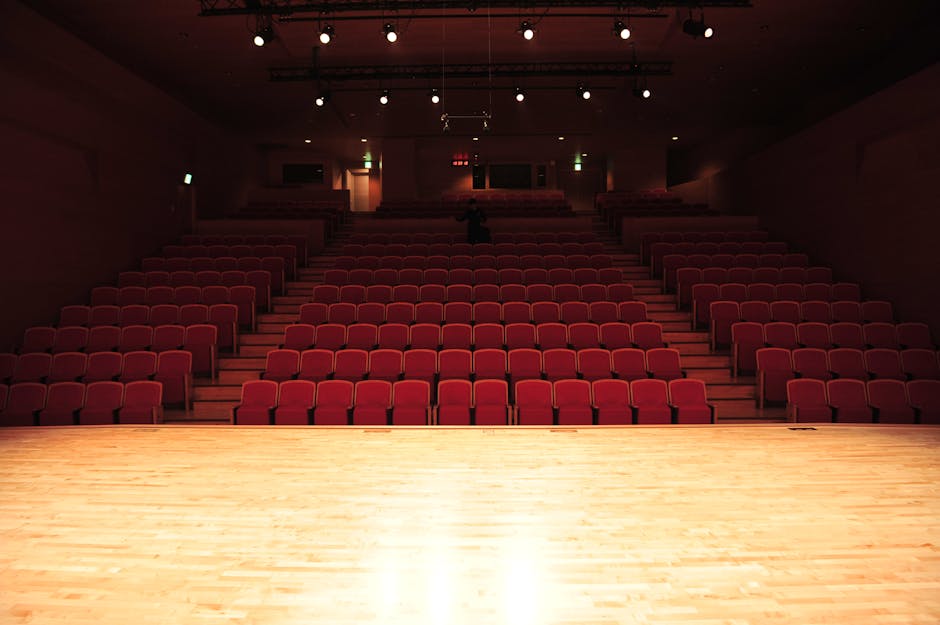
Festival de Otoño is Madrid’s international performing-arts festival, run by the regional government rather than the city, and it is the most serious theatre and dance programme in Spain. Where Veranos de la Villa is a broad municipal summer festival with a lot of free events, Otoño is narrower, more curated and aimed squarely at people who follow contemporary theatre.
One thing to be upfront about: at the time of writing, the 2026 programme has not been published. The dates and the editorial direction are confirmed, but no shows, artists or prices have been announced. Rather than pad this out with invented specifics, what follows is everything genuinely confirmed for the 44th edition, a detailed account of the 43rd so you know what the festival actually looks like, and the practical mechanics — booking, discounts, venues, transport — which don’t change much year to year.
Table of Contents
- Festival de Otoño Madrid Overview
- Festival de Otoño Madrid 2026 Dates
- What’s confirmed for the 44th edition
- The 43rd edition in detail: what the festival actually programmes
- Major Festival de Otoño Madrid Venues
- Festival de Otoño Madrid Genre Breakdown
- Festival de Otoño History
- Festival de Otoño Madrid Tickets
- Discounts worth knowing about
- Festival de Otoño Madrid Compared
- Festival de Otoño Madrid Tips
- FAQs
- Plan Your Visit
Festival de Otoño Madrid Overview
Festival de Otoño is programmed by the Comunidad de Madrid — the regional government — and centred on Teatros del Canal, the region’s flagship theatre complex. The Comunidad describes it as one of its longest-running festivals, founded to present the newest tendencies in the performing arts, and Madrid’s tourism board calls it the best performing-arts festival in the country.
The shape is consistent: roughly three to four weeks in November, somewhere in the region of twenty to twenty-five productions, a strong international bias, and a spread across both central Madrid venues and one or two theatres in the wider region. It is a festival of imported work rather than a showcase of local companies, which is what distinguishes it from most of the city’s other programming.
A naming warning that trips up a lot of searches: Festival de Otoño is not the same as Feria de Otoño, which is the autumn bullfighting fair at Las Ventas with an ancillary cultural programme. Search engines conflate the two constantly. If what you’re reading mentions bulls, you’re in the wrong place.
Festival de Otoño Madrid 2026 Dates
The 44th edition begins on Friday 6 November 2026. That start date is confirmed by both Teatros del Canal and Madrid’s tourism board.
The end date is genuinely unresolved, and I’d rather tell you that than pick one. Teatros del Canal — the festival’s principal venue — states 6 to 29 November, giving that range twice on its own page. Madrid’s tourism board states 6 to 26 November, and repeats it in its events calendar. Both are official sources and there’s no tiebreaker available. Treat the festival as running from 6 November to the end of the month and confirm the closing weekend before booking travel around it.
The programme and ticket sales are not out. Teatros del Canal’s own wording is that information on programming and ticket sales is coming próximamente — shortly. For reference on timing: the 2025 programme was presented on 10 July 2025 for a 6 November opening, so by that rhythm the 2026 announcement is overdue and may land at any point.
Also worth noting: the regional government’s own Festival de Otoño landing page currently carries no 2026 content at all — its images and video still refer to earlier editions, and the 2026 microsite doesn’t exist yet. That’s not a sign the festival is in doubt; it’s just how far behind the web presence runs.
What’s Confirmed for the 44th Edition
Here is the complete list of what is actually known, which is short:
- It is the 44th edition, by the festival’s own count.
- It opens 6 November 2026 and runs “more than three weeks”, closing either 26 or 29 November depending on which official source you believe.
- Teatros del Canal is the principal venue, and all four of its halls will be used: Sala Roja Concha Velasco, Sala Verde, Sala Negra and Sala Cristal.
- The artistic director is Marcela Díez. Note that Spanish Wikipedia still lists Pilar Yzaguirre in the role; the regional government’s own page names Díez, and I’d go with the primary source.
- The editorial direction is a real shift. The stated focus is contemporary European theatre and dance, plus a deliberate opening to work from the Americas and especially from the United States. The 2025 edition was focused on Hispanoamérica, so 2026 pivots north.
- The announced venue list is Teatros del Canal, Contemporánea Condeduque, Teatro de La Abadía, Réplika Teatro, Sala Cuarta Pared, Teatro Pradillo, Teatro Auditorio de San Lorenzo de El Escorial and Teatro del Bosque in Móstoles. I’d treat this as provisional — it is identical to the 2025 venue set, which suggests it has been carried over pending the real programme.
No titles, no companies, no performers, no casts, no prices and no on-sale date have been published. If you find a source claiming otherwise, check its date.
The 43rd Edition in Detail: What The Festival Actually Programmes
Since the 2026 line-up isn’t available, the most useful thing I can give you is a proper look at the last confirmed edition, so you know what kind of festival you’d be buying into. The 43rd edition ran 6 to 30 November 2025 with 23 shows from 17 countries, focused on Hispanoamérica, across six venues in the capital plus the towns of San Lorenzo de El Escorial and Móstoles.
In the Sala Roja, the main house: the festival opened with Coup Fatal, Alain Platel’s collaboration with Fabrizio Cassol and Rodriguez Vangama for the Comédie de Genève. It also staged Fabio Rubiano’s Labio de liebre for Colombia’s Teatro Petra, Christos Papadopoulos’s My Fierce Ignorant Step, Cie Amala Dianor’s DUB, and Tamara Cubas’s Ofrenda para el monstruo, performed on the stage itself rather than to the auditorium.
In the Sala Verde: Marco da Silva Ferreira’s F*cking Future, Teatrocinema’s Historia de Amor, David Gaitán’s Edipo: Nadie es ateo, Emma Dante’s Re Chicchinella, and a run of Wajdi Mouawad’s Todos pájaros directed by Mario Gas with Vicky Peña, Pere Ponce and Candela Serrat.
In the Sala Negra, the smallest and most experimental: Leonel Schmidt’s adaptation of Mariana Enríquez’s Las cosas que perdimos en el fuego, La Fille Du Laitier’s Macbeth Muet, ÉSKATON’s HÄXAN, Violeta Gil’s Andábamos maravillados and La Mecànica’s Odiseas.
Beyond Teatros del Canal: Condeduque hosted Lukas Avendaño’s Réquiem para un alcaraván, Lola Arias Company’s Los días afuera, and El invencible verano de Liliana with Cecilia Suárez, adapted from Cristina Rivera Garza. La Abadía staged Ukraine’s Lesya Ukrainka National Academic Drama Theatre in Life is a Dream and the Spanish-language premiere of Victoria Szpunberg’s El imperativo categórico. Réplika had Marina Otero’s Ayoub; Cuarta Pared had Conchi León’s Cachorro de León; Teatro Pradillo had Hasta encontrarte. San Lorenzo de El Escorial hosted the regional orchestra under Alondra de la Parra, and Móstoles took Tamara Cubas.
That list tells you the level: established international auteurs, national premieres, and companies you would otherwise have to travel to see.
One practical pattern worth extracting: runs are short. Several 2025 titles played only one or two performances — Ofrenda para el monstruo ran a single night at Canal, and the Pradillo show two — while the longest run was six. This is not a festival where you can drift in during your second week and catch what you missed.
Major Festival de Otoño Madrid Venues
Teatros del Canal, Calle Cea Bermúdez 1, 28003 Madrid, is the hub and the only venue with fully documented access. Metro Canal (lines 2 and 7) and Ríos Rosas (line 1); buses 3, 12, 37 and 149; a BiciMAD station opposite Calle José Abascal 2. Car parks are all a 10 to 15 minute walk — Plaza de Olavide, Almagro 11, Alonso Cano 42, Galileo 26 and 71, General Martínez Campos 42. Telephone 91 308 99 50.
Its four halls are used differently: the Sala Roja Concha Velasco is the main house for large-scale international work, the Sala Verde for mid-scale, the Sala Negra for experimental and small-cast pieces, and the Sala Cristal for the smallest formats. Wheelchair positions are published per hall — Sala Roja stalls row 11 seats 29 to 30, Sala Verde stalls row 5 seat 19, Sala Negra central tier row 1.
The other central venues — Contemporánea Condeduque on Calle Conde Duque 11, Teatro de La Abadía on Calle Fernández de los Ríos 42, Réplika Teatro on Calle Explanada 14, Sala Cuarta Pared on Calle Ercilla 17, Teatro Pradillo on Calle Pradillo 12 — are all reachable on foot or by Metro from the centre, though I couldn’t find official per-venue transport pages for them and won’t guess station names.
Two venues are outside Madrid city and were used in 2025 and appear on the 2026 announced list: the Teatro Auditorio de San Lorenzo de El Escorial in Parque Felipe II, and Teatro del Bosque in Móstoles on Avenida de Portugal 57. Both need real travel time factored in — check the evening return before booking.
One venue that appears in older coverage and is not on either the 2025 or the announced 2026 list: the Corral de Comedias in Alcalá de Henares. It was used back in 2010. Don’t plan around it.
Festival de Otoño Madrid Genre Breakdown
The Comunidad de Madrid describes the programme as a diverse scenic mosaic reflecting dialogue between languages, geographies and aesthetics, spanning theatre, music, dance and multidisciplinary work, with a strong vocation for discovery.
Concretely, from the 2025 programme, the mix ran: theatre (Emma Dante, Teatro Petra, Mouawad directed by Mario Gas, Conchi León, David Gaitán); contemporary dance (Papadopoulos, Amala Dianor, Marco da Silva Ferreira); performance (Lukas Avendaño’s muxe ritual piece from Oaxaca, Marina Otero, Tamara Cubas); orchestral music; music-dance hybrids; documentary and verbatim theatre (Lola Arias); visual and cinematic theatre (Teatrocinema); and literary adaptation.
What it is not: this is not a flamenco festival and it is not a circus festival. Circus has appeared historically — the 2010 edition included it — but there was no flamenco or circus strand in 2025 and none has been announced for 2026. Teatros del Canal programmes both year-round, but that’s the theatre’s own season, not the festival. If flamenco is what you want from Madrid, Veranos de la Villa in summer is by far the stronger festival for it.
Festival de Otoño History
The festival was founded in 1984 by the Comunidad de Madrid’s culture department, explicitly to present the newest tendencies in the performing arts. The first edition ran from mid-September to the end of October, directed by José Luis Ocejo and Pilar Yzaguirre across 45 days, using the Teatro Real, Teatro Español, Teatro Albéniz, the Prado and Archaeological museums, El Retiro, and towns including Aranjuez, La Granja and El Escorial. It was conceived openly as a Spanish answer to the Festival d’Automne in Paris.
Then the festival spent eight years not being an autumn festival at all, which is a genuinely odd chapter and one most short accounts garble. The sequence:
- 1984 to 2009 — an autumn festival, roughly September to October.
- 2010 — moved to April and May and renamed Festival de Otoño en Primavera, literally “Autumn Festival in Spring”. The stated motive was avoiding unfair competition with other events. It stayed in the spring slot for three editions.
- 2012 — stretched across almost the whole theatrical season, November to June, concentrated at Teatros del Canal, and renamed Festival de Otoño a Primavera, “Autumn to Spring”. The sector read this as a disguised budget cut, with the festival effectively becoming the regular programming of a publicly owned theatre complex.
- 2018 — the Comunidad de Madrid restored the original November format and the original name. So the spring and stretched era ran 2010 to 2017, and 2018 was the first restored autumn edition.
Directors over the years have included Yzaguirre and Ocejo, Agustín Tena, Tomás Marco, Alicia Moreno Espert, Ariel Goldenberg for fifteen years, Carlos Aladro, Carlota Ferrer, Alberto Conejero and Pilar Yzaguirre returning in 2024, with Marcela Díez named on the regional government’s current page.
The 2020 edition under Alberto Conejero lost its international programming to the pandemic. He pivoted to Spanish creators and ran two notable virtual initiatives, including Teatro de guardia, in which 24 actors recited poems and dramatic texts down the phone to a single listener at a time across the festival’s eighteen days.
On the edition number, a small honest inconsistency. If 1984 was the first edition, 2026 should be the 43rd — but the festival counts it as the 44th. The regional government also called the 2024 edition both the 42nd and the 40th anniversary in the same period. The drift originates in the Otoño-a-Primavera years, when cross-season editions were numbered inconsistently: one official source labels the 2014–15 run the 33rd edition and another labels the 2015–16 run the 33rd as well. The safe formulation is that this is the festival’s own 44th edition, that the Comunidad dates its founding to 1984, and that the count and the calendar don’t quite line up.
Festival de Otoño Madrid Tickets
No 2026 prices have been published, and no on-sale date. What follows is how the mechanics have worked, which is likely but not guaranteed to carry over.
The progressive multi-show discount is the single most valuable thing to know about this festival. As operated for the 43rd edition:
- 2 shows — 20% off
- 3 shows — 30% off
- 4 shows — 40% off
- 5 or more shows — 50% off
It applies to the general tariff only, maximum four seats per show, and is applied automatically during checkout. There are no exchanges or refunds, and in 2025 one show was excluded. The strategic implication is clear: decide your whole festival in one sitting and book it as a single transaction. Buying five shows halves the price of all of them; picking them up one at a time over the month costs you double.
A practical trap: ticketing is decentralised. There is no single festival box office. In 2025, Teatros del Canal sold its own shows, while Condeduque went through the Madrid Destino shop, La Abadía through its own system, Réplika and Pradillo through Entradium, Cuarta Pared through Entradas.com, and Móstoles through the town’s own platform. Anyone telling you there’s one festival ticketing system is wrong, and the multi-show discount only applies within Teatros del Canal’s own sales.
Teatros del Canal box office and reservations: 91 308 99 99, open 14:30 to 21:00. Groups are handled separately, Monday to Thursday 09:00 to 17:00 and Friday 09:00 to 15:00.
On free events: unlike Veranos de la Villa, I found no evidence of a free-ticket strand within Festival de Otoño itself. The free cultural offer named alongside the 2025 edition — exhibitions at Sala Alcalá 31, Sala Canal de Isabel II, CA2M, Casa Museo Lope de Vega and the Regional Archive — is separate Comunidad de Madrid programming running concurrently, not festival programming. Worth not conflating the two.
Discounts Worth Knowing About
Beyond the multi-show discount, Teatros del Canal’s standing discounts apply and are non-cumulative. €5 off the general tariff for: Carné Joven holders, under-25s, unemployed people, those on ERTE, over-65s, large families, anyone with a disability of 33% or higher, under-14s on family programming, and members of a long list of professional bodies.
10% off with a Comunidad de Madrid library card, which is an unusually easy discount to qualify for. Groups of 20 or more get €6 off with one free ticket per 30. Anyone certified with reduced mobility or dependency gets a free companion ticket — box office only, certificate required, reserve on 91 308 99 99.
One seat per card, accreditation is checked at the door, and discounts don’t stack on an already-reduced tariff. Note that the festival’s flat €5-off model is quite different from Veranos de la Villa’s percentage-based structure, and there is no equivalent of Veranos’ free entry for 16 to 26-year-olds through JOBO.
Festival de Otoño Madrid Compared
The clearest way to place this festival is against Madrid’s other big one.
- Who runs it — Otoño is the regional government; Veranos de la Villa is the city council.
- When — Otoño is three to four weeks in November; Veranos runs early July to late August.
- Scale — Otoño had 23 shows in 2025; Veranos had 193 events in 2026.
- Content — Otoño is curated international contemporary theatre and dance; Veranos is broad, popular and multi-genre, strong on flamenco, zarzuela and music.
- Price philosophy — Otoño uses a flat €5-off model with a volume discount up to 50%; Veranos uses percentage discounts by age and status, plus free entry for 16 to 26-year-olds on JOBO.
- Free events — Veranos had over 100; Otoño appears to have none within the festival itself.
- Indoors or out — Otoño is indoor theatres; Veranos is largely open courtyards and parks.
They’re complementary rather than competing. If you follow contemporary theatre and dance seriously, Otoño is the reason to come to Madrid in November. If you want a broad, cheap, sociable cultural programme, come in summer.
A nice link between the two: Contemporánea Condeduque appears in both festivals, so it’s worth knowing as a venue regardless of when you visit.
Festival de Otoño Madrid Tips
Book everything in one transaction. The progressive discount reaches 50% at five shows and is the biggest saving available at any Madrid festival.
Watch for the programme announcement. The 2025 edition was announced on 10 July for a November opening, so check Teatros del Canal from midsummer onwards.
Don’t assume one box office. Six or more separate ticketing systems have been used across the venues, and the multi-show discount only covers Teatros del Canal’s own sales.
Expect short runs. Many productions play once or twice. Book the thing you most want to see first, not last.
Check whether your show is out of town. San Lorenzo de El Escorial and Móstoles are both on the venue list and both need a real journey.
Curtain times are early by Madrid standards — 2025 performances clustered between 19:00 and 21:00, mostly 19:30 or 20:00, with weekend matinees as early as 12:30. This is not a festival that fits around a 22:00 dinner.
Get a library card if you’re staying a while. A Comunidad de Madrid library card is 10% off, and useful for other things besides.
Confirm the closing date before booking flights around the final weekend, given the 26-versus-29 November discrepancy.
FAQs
When is Festival de Otoño 2026? It opens 6 November 2026. The closing date is given as either 26 or 29 November by two different official sources, so confirm before booking around the final weekend.
Is the 2026 programme out? Not at the time of writing. Teatros del Canal says programming and ticket information is coming shortly. The 2025 programme was announced in early July, so the 2026 one may appear at any point.
How much are tickets? No 2026 prices are published. The mechanics to expect are Teatros del Canal’s standard tariffs with a progressive discount of 20% for two shows rising to 50% for five or more, plus €5 off for various categories.
Where is it held? Principally Teatros del Canal on Calle Cea Bermúdez 1, using all four halls. The announced wider list includes Condeduque, La Abadía, Réplika, Cuarta Pared, Teatro Pradillo, and theatres in San Lorenzo de El Escorial and Móstoles.
How do I get to Teatros del Canal? Metro Canal on lines 2 and 7, or Ríos Rosas on line 1. Buses 3, 12, 37 and 149. There’s a BiciMAD station opposite Calle José Abascal 2, and the nearby car parks are all a 10 to 15 minute walk.
Is there flamenco at Festival de Otoño? No. It’s a contemporary theatre and dance festival. For flamenco, Veranos de la Villa in the summer has a dedicated strand and is much the better choice.
Are there free events? Not within the festival itself, as far as I can establish. Free exhibitions programmed by the regional government run alongside it but are separate.
Which edition is 2026? The 44th by the festival’s own count. The Comunidad de Madrid dates the founding to 1984, which would arithmetically make it the 43rd — the discrepancy dates from the years when the festival ran across seasons.
Is this the same as Feria de Otoño? No. Feria de Otoño is the autumn bullfighting fair at Las Ventas. Completely different event, frequently confused in search results.
Plan Your Visit
Watch Teatros del Canal from midsummer for the programme drop, then decide your whole festival at once and buy it in a single transaction to trigger the volume discount. Keep the last weekend of November flexible until the closing date is confirmed, and check whether anything you’ve booked is in San Lorenzo de El Escorial or Móstoles rather than central Madrid.
For the rest of the city’s cultural calendar, see our guides to Madrid festivals and events, Veranos de la Villa, Madrid’s theatres and the best time to visit.