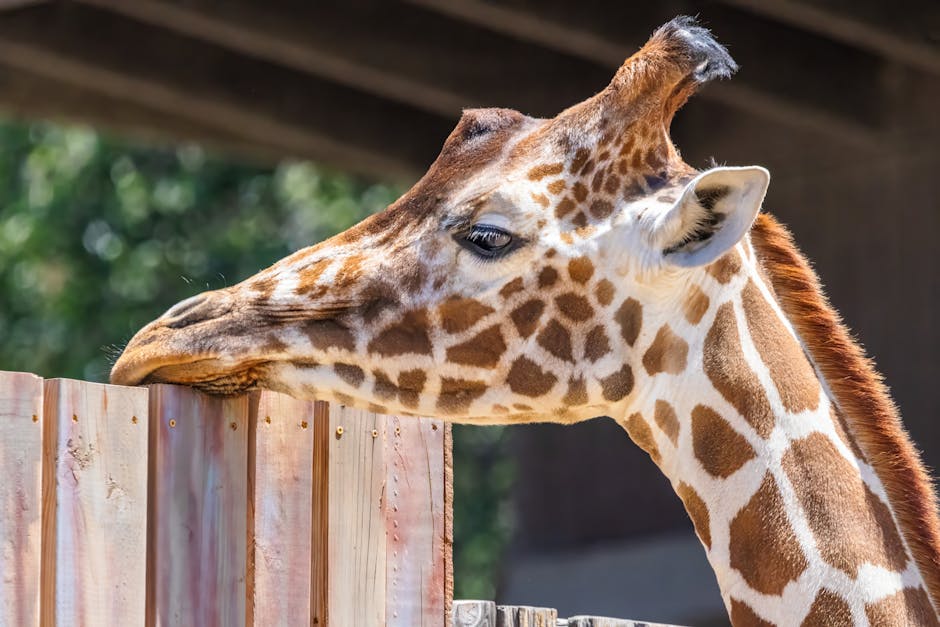
The Zoo Aquarium de Madrid sits inside Casa de Campo, the enormous former royal hunting ground on the west side of the city, and it is the better of Madrid’s two animal parks for children roughly six and up. Giant pandas, koalas, gorillas, elephants, a 35-tank aquarium — it has the animals children arrive wanting to see.
It also has one significant change that most guides haven’t caught up with: the dolphin show no longer exists. If that was on your list, read the section below before you buy tickets.
Table of Contents
- Madrid Zoo Aquarium Kids: Overview
- Madrid Zoo Aquarium Tickets and Hours 2026
- Buy online: the price gap
- The dolphin show has ended
- Must-See Animals at Madrid Zoo Aquarium
- Shows and keeper talks: the daily timetable
- How to Get to Madrid Zoo Aquarium
- Food at Madrid Zoo Aquarium
- Accessibility, pushchairs and sensory support
- Sample Full-Day Madrid Zoo Aquarium Itinerary
- Combining with the rest of Casa de Campo
- Best time of year to visit
- Insider Tips for Madrid Zoo Aquarium Kids
- Madrid Zoo Aquarium vs. Faunia
- FAQs
- Plan Your Visit
Madrid Zoo Aquarium Kids: Overview
This is a conventional zoo in the best sense — a large collection with real breadth, laid out as a circuit through mature parkland, with an aquarium and an aviary folded in. It’s inside Casa de Campo, which means the setting is trees rather than concrete, and it’s considerably bigger than Faunia across town.
Size is both the appeal and the warning. There is a lot to see, and there is also a lot of walking, much of it outdoors with limited shade in places. With a four-year-old you will be carrying them by mid-afternoon. With an eight-year-old it’s close to a perfect day out.
The park is run by Parques Reunidos, which also operates Faunia — relevant because of the combined ticket and annual passes covered below.
Madrid Zoo Aquarium Tickets and Hours 2026
Unlike Faunia, which prices by height, the Zoo prices by age:
- General, ages 8 to 64 — from €19.90 online against €29.50 at the gate
- Child, ages 3 to 7 — from €16.90 online against €23.90 at the gate
- Reduced (over-65s, large families, disability of 33% or more, with one carer free) — from €16.90 online against €23.90 at the gate
- Under 3 — free
The autotren, the little train that loops the park, is €3.70 on top and is money well spent with tired children.
Hours — and I’m going to be straight with you here. The Zoo publishes its opening times only through an interactive day-by-day calendar on its own site, with no static table anywhere. There is genuinely no reliable published schedule to quote. Secondary sources put opening between 10:30 and 11:00 and closing between 17:30 on winter weekdays and 20:00 or later in high summer, but I couldn’t confirm any of it against the operator.
Check the calendar on zoomadrid.com for your specific date before travelling. Anyone quoting you precise Zoo opening hours for a date months out is guessing. What is confirmed: entry and the box office close one hour before the park does, and animals are moved to indoor housing before closing time — so arriving late in the day means seeing considerably less.
Buy Online: The Price Gap
Booking ahead saves an adult €9.60 and a child €7.00. For a family of two adults and two children that’s €33.20 for a couple of minutes online. There is no scenario in which paying at the gate is the right move.
The combined Zoo + Faunia pack costs €39.90, online only, and covers one full day at each park on any open day up to 31 December of the year of purchase. Set against gate prices for both (€29.50 + €33.95 = €63.45) it’s a substantial saving. Set against two separate cheapest-online tickets (€19.90 + €16.90 = €36.80) it costs €3.10 more. So the pack is worth buying for the convenience and the locked-in second day, not as a discount.
If you’re staying a while, the Bono Zoollower at €85 (€82 renewal) covers unlimited visits to the Zoo, Faunia, Atlantis Aquarium, Selwo Marina, Selwo Aventura and the Benalmádena cable car, with priority entry. It pays for itself on the third visit. The Plata, Oro, Oro+Parking and Platino tiers run €154, €214, €289 and €319 and cover eleven or twelve group parks, with the top two including Faunia parking.
The Dolphin Show Has Ended
This deserves its own heading because it’s the most out-of-date piece of information in circulation about the Zoo.
The Zoo Aquarium’s dolphin show is discontinued. All eight of its dolphins were transferred in January 2025 to Hainan Ocean Paradise in China, and the dolphinarium is now retained only as temporary housing. The show has been removed from the schedule entirely.
Plenty of guidebooks, blog posts and even some ticket resellers still advertise it as a headline attraction. If a family member is specifically expecting dolphins, tell them before you arrive rather than at the empty pool. The sea lion show remains and is genuinely good.
Must-See Animals at Madrid Zoo Aquarium
Giant pandas are the headline and the reason a lot of families come. Madrid is one of a small number of European zoos to hold them, and there’s a keeper talk at noon. Go early — the panda house gets busy and the animals are more active in the morning.
Koalas are the other rarity. Expect them to be asleep; that is what koalas do for around twenty hours a day, and it’s worth managing children’s expectations in advance.
The aquarium runs to 35 tanks and includes sharks, with a keeper talk at 13:30. It’s indoors and air-conditioned, which makes it the obvious place to be in the middle of a July afternoon.
Elephants have talks at 13:30 and 16:00. Gorillas and orangutans are in the primate section, with orangutan activity windows from 11:00 to 14:00 and 15:00 to 17:00. Hippos at 15:30 and otters at 15:00 both have talks, and the otters are reliably the surprise hit with younger children.
Iberian lynx is the one to point out to older children: Europe’s most endangered cat, and a genuine conservation success story over the last two decades. Spain is the only country where you’ll see one.
Shows and Keeper Talks: The Daily Timetable
The Zoo runs more timed content than Faunia, which is what makes it easier to structure a full day around.
- Sea lions — Monday to Friday 12:00 and 17:30; Saturday, Sunday and holidays 12:00, 14:00 and 18:00
- Birds of prey and exotic birds — Monday to Friday 13:00 and 16:30; weekends and holidays 12:30, 14:30 and 17:00
- Giant panda talk — 12:00
- Shark talk — 13:30
- Elephant talks — 13:30 and 16:00
- Otter talk — 15:00
- Hippo talk — 15:30
- Orangutan activity — 11:00 to 14:00 and 15:00 to 17:00
- Lemur experience — 12:30 and 16:30, paid extra
Note the pile-up at 12:00 (sea lions and pandas) and at 13:30 (sharks and elephants). You can’t see everything, and the weekend timetable is noticeably richer than the weekday one — three sea lion shows against two, and three bird displays against two.
How to Get to Madrid Zoo Aquarium
Address: Casa de Campo, 28011 Madrid — the street form given by the city tourism board is Paseo Zarzón s/n. Telephone: +34 911 54 74 79.
- Metro — Casa de Campo, on lines 5 and 10. Be aware it’s about a 900-metre walk from the station to the gate, through the park. Not far, but not nothing with small children in August.
- Bus — EMT line 33 stops at the gate itself and connects Príncipe Pío with Metro Casa de Campo. With young children this is the better choice.
- Parking — the city tourism board lists the municipal car park as free, though the operator doesn’t confirm this on its own site. It fills up at weekends, and parking on the roadside in Casa de Campo risks a €90 fine.
The Zoo’s own guidance recommends public transport, and on a busy weekend that’s sound advice. Bus 33 to the gate spares you the walk in both directions, which matters more on the way out than the way in.
Food at Madrid Zoo Aquarium
Meal deals are cheaper booked online with your ticket:
- Fast food — €11.60 online against €14.50 in the park
- Self-service — €15.60 against €19.50
- All-inclusive adult — €40 against €45
On bringing your own food, the same contradiction applies as at Faunia: the Zoo’s published rules state that eating and drinking outside designated areas isn’t permitted, while the city tourism board lists a picnic zone. Two official sources, no agreement. Snacks and water for children won’t be an issue; don’t build the day around a full picnic without phoning first.
One advantage of the Casa de Campo setting: you’re in a very large public park. Eating outside the gates before you go in is entirely feasible.
Accessibility, Pushchairs and Sensory Support
Wheelchairs are loaned free from the medical post, subject to availability. Mobility scooters are €25 plus a €40 deposit. Pushchairs can be hired at €8 for a single and €12 for a double, which is genuinely useful given the size of the site. Visitors with a certified disability of 33% or more pay the reduced rate and bring one carer free.
One provision worth highlighting because it’s unusually thoughtful and not widely known: the Zoo lends noise-cancelling headsets in two sizes for autistic visitors. If you have a child who finds crowds and animal noise overwhelming, ask at the entrance.
As with Faunia, route-level accessibility detail — gradients, surfaces, accessible toilet locations — isn’t published. Given the site’s size and the parkland terrain, phone ahead on +34 911 54 74 79 if that matters to your visit.
Sample Full-Day Madrid Zoo Aquarium Itinerary
A weekend day in warm weather, built around the timed events and the heat. Adjust the start to whatever the calendar says your opening time is.
- At opening — go straight to the giant pandas, before the crowds and while they’re active.
- +45 min — primates: gorillas and orangutans, whose morning activity window runs 11:00 to 14:00.
- 12:00 — Sea lion show, or the panda keeper talk if you’d rather. You can’t do both.
- 12:30 — Lemur experience if you’ve booked it, otherwise the koalas.
- 13:00 or 13:30 — Bird of prey display (13:00 weekdays, 12:30 or 14:30 weekends).
- 13:30 — Shark talk in the aquarium. Stay in the aquarium afterwards; it’s air-conditioned and this is the hottest stretch of the day.
- 14:30 — Lunch, indoors or under cover.
- 15:00 — Otters, then hippos at 15:30.
- 16:00 — Elephant talk.
- 16:30 — Take the autotren (€3.70) round the outer loop. This is the moment it earns its money.
- 17:30 or 18:00 — Second sea lion show.
- Final hour — Iberian lynx, anything missed, the shop. Remember animals go indoors before closing, so the last hour is thinner than the rest.
Combining the Zoo with the Rest of Casa de Campo
One advantage the Zoo has over Faunia is its setting. Casa de Campo is Madrid’s largest public park — a former royal hunting estate several times the size of Central Park — and there is a full day’s worth of other things inside it, most of them cheaper than the Zoo.
The Parque de Atracciones, Madrid’s main amusement park, is a short distance away in the same park. Combining both in one day with children is ambitious to the point of unwise, but doing them on consecutive days from the same Metro station works well.
The Teleférico cable car runs from Paseo del Pintor Rosales, near the Templo de Debod, across the Manzanares and into Casa de Campo. It’s a genuine attraction in its own right for younger children and gives the best aerial view of the park. Note it isn’t an efficient way of reaching the Zoo gate — treat it as a separate outing rather than transport.
The lake has rowing boats and a run of restaurants along the shore, and is a considerably cheaper afternoon than anything inside the Zoo. If your visit runs shorter than planned — which happens with young children — the lake is a five-minute redirect rather than a journey home.
Because Casa de Campo is a public park with free entry, eating outside the Zoo gates before or after your visit is straightforward, and sidesteps the ambiguity about picnics inside.
Best Time of Year to Visit
Spring and early autumn are clearly best. September averages 26.4°C by day against August’s 31.3°C, and because this is a largely outdoor site with a lot of walking, that difference is the difference between a pleasant day and an endurance exercise. April to June and September to October are the windows to aim for.
High summer is manageable with planning: arrive at opening, do the outdoor circuit in the morning, and treat the aquarium as your midday refuge. Bring more water than you think you need — Casa de Campo has shade in places and none in others.
Winter is quiet and cheap, and the animals are often more active in the cool. The trade-off is a shorter day — winter weekday closing may be as early as 17:30 — and, since entry stops an hour before closing, a genuinely compressed visit. It’s also the season where checking the calendar matters most.
Weekends give you the fuller timetable — three sea lion shows rather than two, three bird displays rather than two — at the cost of crowds and a fuller car park. Easter week is the busiest non-summer period.
Insider Tips for Madrid Zoo Aquarium Kids
Book online. €19.90 against €29.50 for an adult. There’s no reason to pay at the gate.
Check the calendar for your date. The Zoo genuinely doesn’t publish a static hours table, and any specific times you read elsewhere — including secondary sources quoting 10:30 or 11:00 openings — are unverified.
Take bus 33, not the Metro, with small children. It stops at the gate; the Metro leaves you a 900-metre walk each way.
Hire a pushchair if you’ve come without one — €8 single, €12 double. The site is big.
Ask for the noise-cancelling headsets if a child needs them. They’re free and few people know they exist.
Don’t promise dolphins. The show ended in January 2025.
Warn children about the koalas. They will almost certainly be asleep.
Don’t park on the roadside in Casa de Campo. It risks a €90 fine. Use the car park or come by bus.
Treat website banners with suspicion. Both Madrid parks carry stale promotional messaging — at one point the Zoo’s site simultaneously advertised an offer ending 5 July and an extension to 23 August. Trust the booking engine, not the banner.
Madrid Zoo Aquarium vs. Faunia
Both are Parques Reunidos parks, so pick on the basis of who’s coming.
The Zoo wins for children six to eleven. Pandas, koalas, gorillas, elephants and the Iberian lynx are animals children already know and want to see, and the 35-tank aquarium plus five to eight timed shows gives a full day real structure. Metro lines 5 and 10 and reportedly free parking make it the easier trip.
Faunia wins for under-fives. Its ecosystems are largely indoors and climate-controlled, so weather can’t ruin the day; entry is free under 100 cm, which covers most toddlers; there are only two timed shows to organise around; and at 16 hectares it’s walkable for short legs. Faunia also gates on height rather than age, which sometimes works out cheaper.
For teenagers and adults, the Zoo has far more species — unless you book one of Faunia’s animal experiences, bathing with fur seals at €50.90 or the polar expedition at €48.90, which have no Zoo equivalent and are the single most memorable thing either park offers.
Doing both? The €39.90 pack covers a day at each, but two cheapest-online tickets total €36.80. Buy the pack for convenience, not savings.
FAQs
How much is Madrid Zoo in 2026? From €19.90 online for ages 8 to 64, against €29.50 at the gate. Children 3 to 7 are from €16.90 online against €23.90. Under-3s are free. The autotren is €3.70 extra.
Is there still a dolphin show? No. The dolphins were transferred to a park in China in January 2025 and the show has ended. The sea lion show continues.
What time does the Zoo open? It varies by date and the Zoo only publishes an interactive calendar rather than a fixed table. Check zoomadrid.com for your date. Entry closes an hour before the park does.
How do I get there? Metro Casa de Campo on lines 5 and 10, then a 900-metre walk — or EMT bus 33, which stops at the gate and links Príncipe Pío.
How long do I need? A full day for the shows and the aquarium. Five hours is enough for the main animals and one show if you’re short on time.
Does Madrid Zoo have pandas? Yes, giant pandas, with a keeper talk at 12:00. Go first thing — they’re most active in the morning and the house gets crowded.
Can I hire a pushchair? Yes — €8 for a single, €12 for a double. Worth it given the size of the site.
Is parking free? The city tourism board says the municipal car park is free, though the operator doesn’t confirm it. It fills at weekends, and roadside parking in Casa de Campo risks a €90 fine.
Zoo or Faunia for a three-year-old? Faunia. Indoor habitats, free entry under 100 cm, a smaller site and fewer timed events to chase.
Plan Your Visit
Check the opening calendar for your date, book online, and decide whether you want the lemur experience — that’s a paid extra worth reserving. Take bus 33 if you have small children, arrive at opening for the pandas, and use the aquarium as your escape from the middle of the day.
For more on Madrid with children, see our complete family travel guide, the Faunia guide, the best family attractions, Casa de Campo with kids and our family itineraries. For getting there, see the Madrid transport guide.