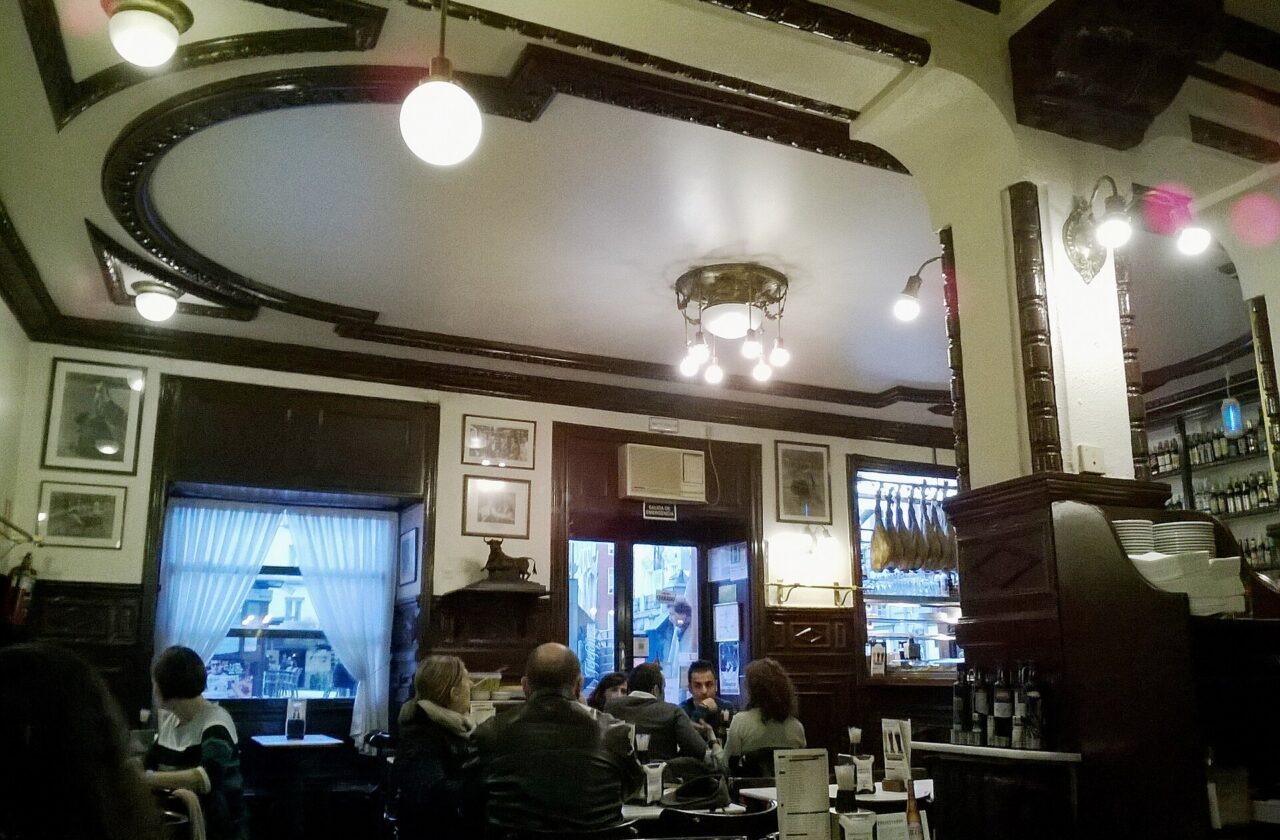
Watch a table of Madrileños settle the bill after a long Sunday lunch and you will notice what doesn’t happen. Nobody gets out a phone to work out fifteen per cent. Somebody pays, the waiter brings back the change on a little saucer, and a couple of coins get left behind, or don’t. That small, unbothered gesture is most of what you need to know about tipping in madrid: it is appreciated, it is never owed, and it is measured in coins, not percentages.
This guide covers what the city’s own tourism office says about tipping, how it works in restaurants, tapas bars, cafés, taxis and hotels, what is and isn’t included in the price you see, and the situations where leaving nothing at all is completely normal. The fares and rules quoted were checked in November 2026 against the City Council’s, the tax agency’s and the official tourism office’s own pages. If you are planning your spending more widely, our Madrid daily costs guide puts tipping in context.
The Short Answer
| Where | What locals usually do |
|---|---|
| Tapas bar or café, at the counter | Usually nothing; perhaps leave the small coins from the change |
| Restaurant, everyday meal or menú del día | Leave a little change, or round up if the service was good; nothing is also fine |
| Restaurant, special dinner with great service | A few euros left on the table, at your discretion |
| Taxi | Not expected; rounding up to the nearest euro is a kind gesture |
| Hotel staff | Not expected; a small amount for a porter or someone who went out of their way is appreciated |
| Free walking tour | The exception: the guide is paid by what you give at the end |
What the City’s Tourism Office Says
The most useful single statement comes from esMadrid, the city’s official tourism site. Its guidance on money in Madrid says that tipping is not customary, and that it is up to the customer whether to leave a little extra as a thank-you for friendly service. It applies the same rule to hotels, taxis, hair and beauty salons and other one-to-one services.
That matches what you will see in practice. Waiters in Madrid are paid a wage, not a tipped minimum, and a service percentage on top of the bill is not the custom. A tip here is a thank-you, not part of someone’s pay packet. If you come from a country where twenty per cent is the floor, you can relax: leaving that much would be unusual and would mark you out as a visitor, and leaving nothing will not offend anyone.
Is Service Included in Madrid?
The price you see on a menu should be the price you pay. Spanish consumer law (the general consumer protection law, Real Decreto Legislativo 1/2007) requires businesses to show the full final price including taxes, and to itemise any additional charges. Restaurant and hospitality services carry VAT (IVA) at 10%, according to Spain’s tax agency, and that should be inside the price. The tourism office warns that a sign reading “IVA no incluido” means an extra 10% will be added to the bill, so look for it before you order.
Two things can still appear on a bill that surprise visitors:
- Bread and nibbles. The tourism office notes that some restaurants charge €2 or €3 for bread or a small appetiser. The restaurant must tell you, and you can refuse it. If a basket of bread arrives that you didn’t ask for and don’t want, say so and send it back.
- Terrace prices. Many bars charge more for a table outside than at the counter, and a few post separate prices for the bar, the dining room and the terrace. That is a price difference, not a tip.
If a separate “service” line ever appears on a bill in Madrid, ask what it is for. It is not the custom, and a tip is something you decide on, not something that should be added for you.
Tipping in Restaurants
Restaurants are where most visitors worry about getting it wrong, and where the answer is gentlest. Here is how it tends to work.
The everyday meal
For a menú del día at lunch or a simple dinner, many Madrileños leave nothing, and others leave the small coins from their change, or round up to a convenient figure. If the bill comes to €27.40 and you pay with €30, leaving the change is a perfectly normal thank-you. Nobody will chase you down the street if you take it.
A special meal
At a more expensive restaurant, where the service has been attentive and the evening long, leaving a few euros, or a note for a group, is a generous and welcome gesture. It is still not a percentage, and it is still your choice. A tasting menu at a smart restaurant does not oblige you to leave more than you would in a neighbourhood place; the service charge is not hidden in the etiquette any more than in the bill. Our guide to Michelin-starred restaurants in Madrid covers the city’s top tables.
Large groups
Groups follow the same idea. Pool the change, leave a few euros between you if the waiter coped well with eight people ordering at once, and don’t overthink it. If you are splitting the bill, ask early whether the restaurant can divide it; some will, but many prefer one payment per table.
Tapas Bars and Cafés
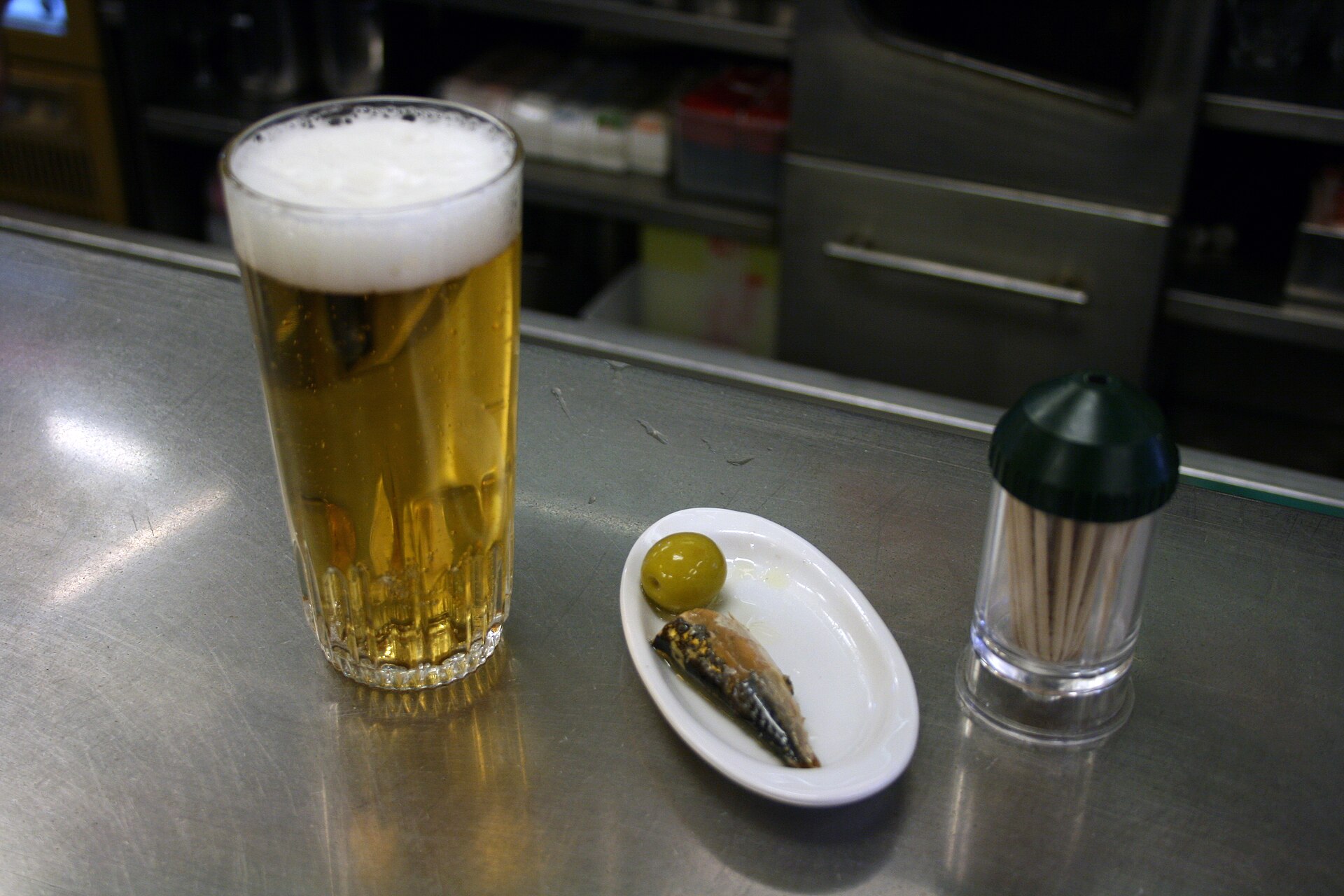
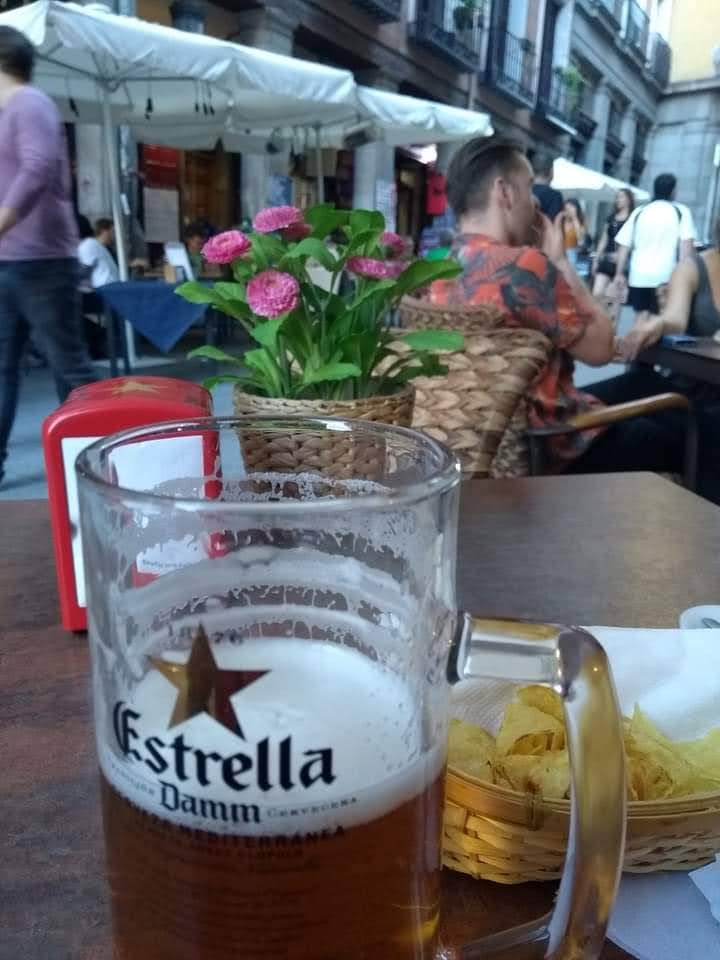
At the bar, things are simpler still. Order a caña and a tapa, or a coffee, pay at the counter or when you leave, and go. Most locals leave nothing, or leave the odd small coin on the saucer the change came back on. There is no expectation of more, even when a free tapa came with your drink.
On a tapas crawl in La Latina, where you might stop in four or five bars in an evening, nobody leaves a tip in each one. If one bar looked after you especially well, leave the coins there.
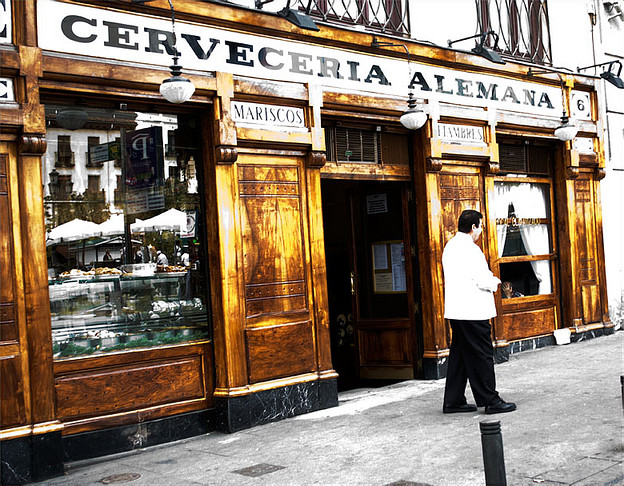
Some of the city’s classic old bars are worth a visit for the service alone: waiters in white jackets who remember an order shouted across a packed room. The Cervecería Alemana on Plaza de Santa Ana, which the city’s tourism office says was established in 1904, is one of the best known. Check its hours before you go.
Paying by Card: What About the Tip?
Almost everywhere in Madrid accepts cards, though the tourism office notes that some places ask for a minimum spend, and most also take phone payments. What you should not count on is the card machine asking you whether you want to add a tip. If you want to leave something, the easiest way is still a few coins on the table or the saucer, so it is worth carrying a little cash. The tourism office mentions that app-based tipping is starting to appear in Spain, but it is not something you will meet at every table.
One card habit matters more than the tip itself: if the machine offers to charge you in your home currency, choose euros. The conversion offered at the terminal is usually poorer than your bank’s.
Taxis
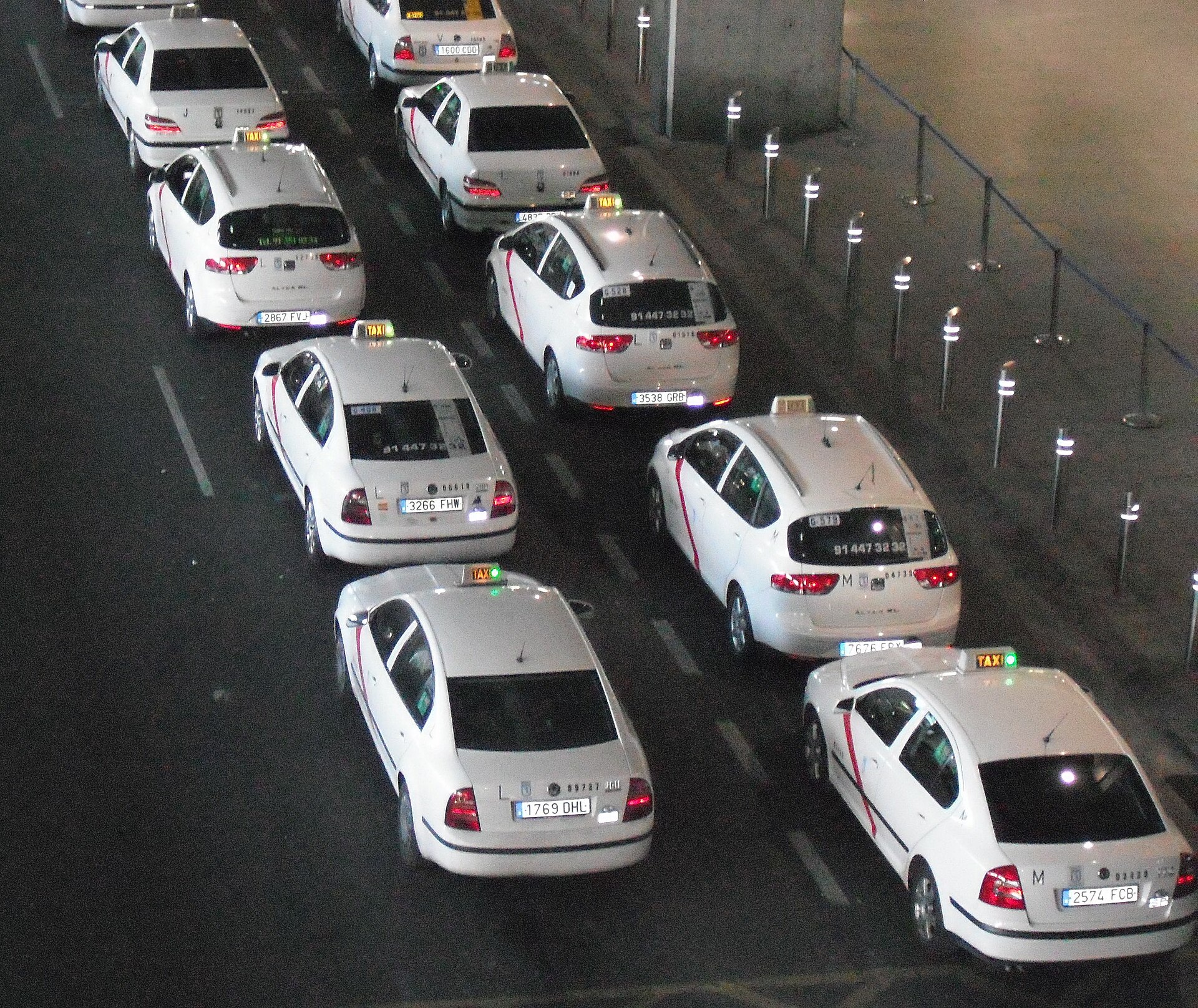
Taxi drivers in Madrid don’t expect a tip, and the tourism office includes taxis in its “not customary” guidance. Rounding up to the nearest euro, or telling the driver to keep the change on a short ride, is a kind gesture, particularly if they helped with heavy bags.
The fares themselves are set by the City Council, and knowing them is more useful than worrying about a tip:
- Airport fixed fare (Tarifa 4): €33 between Barajas and anywhere inside the M-30 ring road, 24 hours a day, with no supplements added. The City Council’s 2026 fare update kept this price unchanged.
- Ordinary fares in 2026: €1.40 a kilometre on weekdays from 07:00 to 21:00 (Tarifa 1), and €1.60 a kilometre at night and at weekends and holidays (Tarifa 2), with maximum starting fares of €2.55 and €3.20 respectively.
- Short trips from stations and IFEMA: journeys under 1,450 m from these points use a fixed €8 fare (Tarifa 7).
- Christmas Eve and New Year’s Eve: a €7 supplement applies to trips on 24 and 31 December that end between 21:00 that day and 07:00 the next morning.
If a driver quotes more than €33 for a trip from the airport to a hotel inside the M-30, the fare is fixed in the rules, so you are within your rights to point that out. Our Madrid taxi fares guide explains the rest, and our Uber and ride-hailing guide covers the apps, which let you add a tip in the app if you want to.
Hotels
Hotel staff in Madrid don’t expect tips, as the tourism office’s guidance makes clear, but there are moments when a small amount is a nice touch:
- A porter who carries heavy luggage to your room: a euro or two per bag is generous.
- Housekeeping on a longer stay: a few euros left on the pillow with a note at the end of the week, if you want to.
- A concierge who books you a hard-to-get table or sorts out a problem: a thank-you of a few euros, or simply a sincere thank-you and a good review.
None of this is required. In a budget hotel or hostel, nobody will think twice if you leave nothing.
Tours, Guides and Shows
Free walking tours
This is the one situation in Madrid where a tip isn’t really a tip. “Free” walking tours, such as Wake Up Tours’ routes from Plaza Mayor, are tip-based: the guide is paid by what the group gives at the end. Pay what the tour was worth to you. If you would have paid for a ticketed tour of the same length, that is a fair guide.
Paid tours and private guides
On a ticketed tour, the guide is paid by the operator, and a tip is entirely optional. For a private guide who has spent a whole day showing your family around, a tip at the end is a generous thank-you; base it on how much you enjoyed it rather than a percentage.
Flamenco, concerts and shows
At a flamenco tablao or a concert, your ticket covers the performance. You don’t tip the performers. If you are served drinks at your table, treat it like any other bar.
Other Services
- Hairdressers and beauty salons: the tourism office’s rule applies: not customary, entirely up to you.
- Food delivery: the apps let you add a tip for the rider if you want to.
- Petrol stations, shops, supermarkets: no tip is expected.
When Leaving Nothing Is Completely Normal
It is worth being clear about this, because visitors from tipping cultures often feel guilty walking away from a table without leaving anything. In Madrid you can leave nothing, without any awkwardness, when:
- you had a coffee or a drink at the bar;
- you ate a menú del día and the service was simply fine;
- you paid exactly by card and have no change;
- you bought from a market stall, a bakery or a takeaway counter;
- the service was poor.
And when you do want to say thank you, the local way is modest: the change on the saucer, a rounded-up bill, a few euros for a special evening. If you get it slightly “wrong” in either direction, nobody will mind.
Frequently Asked Questions
Do you tip in Madrid restaurants?
It is not customary, according to the city’s tourism office, but leaving a little change or rounding up the bill for good service is a common and welcome gesture. Leaving nothing is also normal.
How much should I tip in Spain?
There is no percentage. Locals think in coins: the change from the bill, or rounding up to a convenient figure. For a special meal with excellent service, a few euros is generous.
Is a service charge included in Spanish restaurant bills?
The menu price should be the full price, including 10% VAT. Spanish restaurants don’t add a service percentage as standard. Some charge €2-3 for bread or nibbles; they must tell you, and you can refuse.
Do you tip at tapas bars in Madrid?
Usually not. At the counter, most people pay and leave, perhaps leaving a small coin or two.
Do you tip taxi drivers in Madrid?
It is not expected. Rounding up to the nearest euro is a kind gesture. The airport fixed fare of €33 to anywhere inside the M-30 has no supplements.
Can I add a tip when I pay by card?
Don’t count on it. Many card machines in Madrid don’t ask, so carry a few coins if you want to leave something.
Do I tip on a free walking tour?
Yes. Free tours are tip-based, so the guide is paid by what the group gives at the end.
Related Madrid Guides
- Madrid meal times and opening hours
- Menú del día in Madrid
- Madrid taxis and fares
- Madrid daily costs
- Madrid travel budget
- Madrid travel tips
- eSIMs and SIM cards for Madrid
Photo Credits
Cervecería Alemana interior: Madrid Plaza Santa Ana Cerveceria Alemana – panoramio by rene boulay, CC BY-SA 3.0, via Wikimedia Commons.
A caña and a tapa at the bar: Sardina y Caña 097 by Tamorlan, CC BY 3.0, via Wikimedia Commons.
Waiter outside the Cervecería Alemana: Cerveceria alemana 2841840949 e06a1e85b2 t by Angel from Azuqueca, España, CC BY 2.0, via Wikimedia Commons.
Madrid taxis: 001829 – Madrid (4327078143) by M.Peinado from Alcalá de Henares, España, CC BY 2.0, via Wikimedia Commons.
Terrace on Plaza Mayor: Plaza Mayor, Madrid, España by Leticia Alamilla Castillo, CC BY-SA 4.0, via Wikimedia Commons.