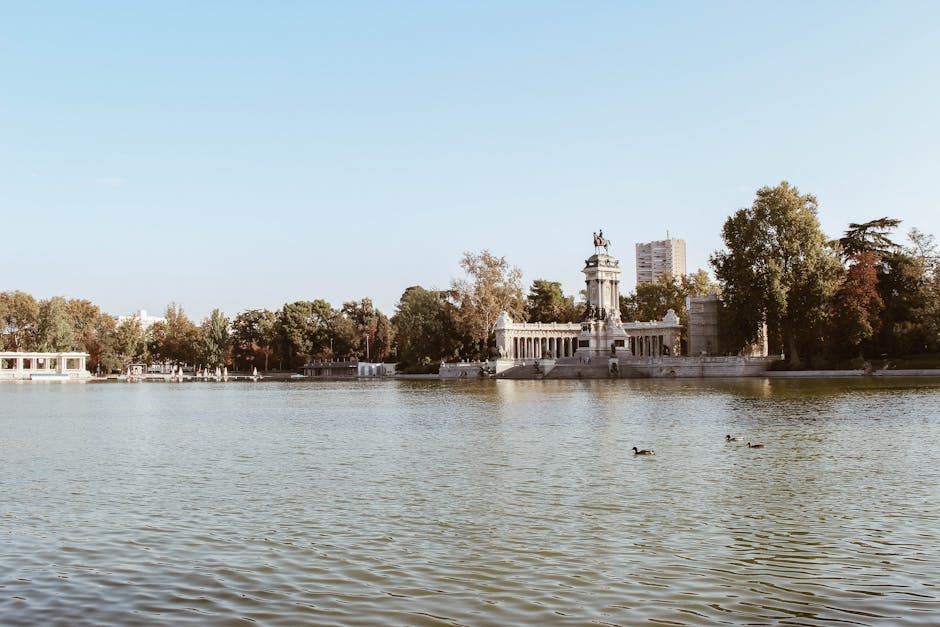
Retiro Park Madrid is 125 hectares of free park five minutes from the Prado — and it’s the place Madrileños actually spend their Sundays. Row a boat on the 17th-century Estanque, watch street performers next to the Alfonso XII monument, duck into the 1887 Crystal Palace for a free contemporary art show, or find the park’s 400-year-old Mexican cypress planted by Felipe IV. Originally a royal pleasure garden, opened to the public in 1868, and inscribed on the UNESCO World Heritage list in 2021, Retiro is the city’s communal living room. This guide covers 15 activities, the best self-guided walk, and everything practical you need for a visit. For the broader picture of things to do in Madrid, Retiro pairs perfectly with a morning at the Prado — they’re a 10-minute walk apart.
Table of Contents
- Quick Facts About Retiro Park
- Retiro Park Madrid Activities: 15 Things to Do
- A 90-Minute Self-Guided Walk
- Best Times to Visit Retiro
- Where to Eat Near Retiro
- Tips for Visiting Retiro
- Retiro Park FAQs
Quick Facts About Retiro Park
- Size: 125 hectares (about 309 acres)
- Hours: Daily from 6am. Closes 10pm in winter, midnight in summer
- Entry: Free
- Metro: Retiro (Line 2) for the main entrance; Ibiza (Line 9), Atocha (Line 1), or Príncipe de Vergara (Line 9) for other gates
- Nearest sights: Prado Museum, Reina Sofía, Real Jardín Botánico, Puerta de Alcalá
- UNESCO World Heritage: Inscribed 2021 as part of “Paseo del Prado and Buen Retiro: a landscape of Arts and Sciences”
Retiro Park Madrid Activities: 15 Things to Do
1. Row a Boat on the Estanque
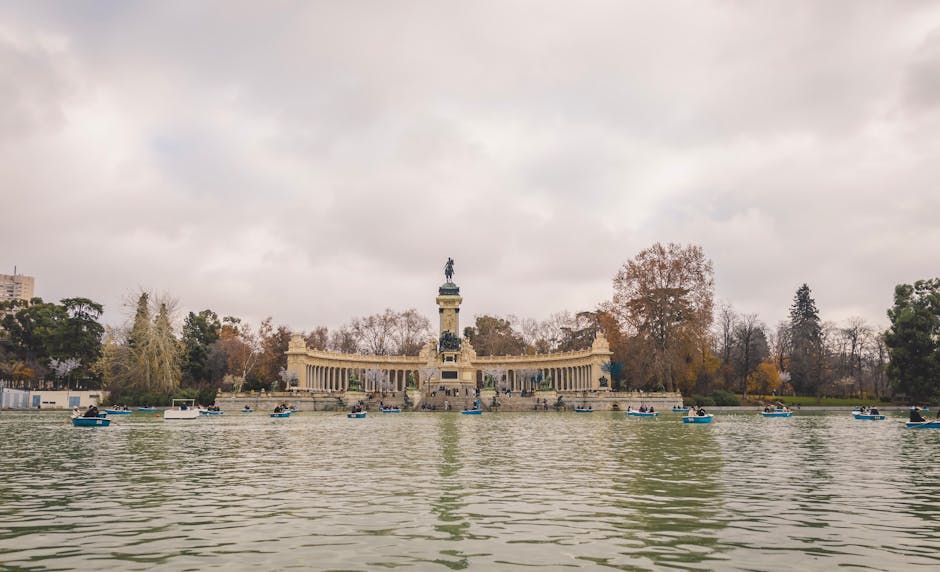
The 19th-century rectangular boating lake at the heart of the park is Retiro’s signature image. The Alfonso XII monument — a colonnade with bronze lions guarding it — rises behind the lake, completed in 1922. Rowboats are €6 per 45 minutes for up to 4 people, available at the boating dock on the lake’s south shore. Hours vary seasonally (typically 10am–7pm summer, 10am–5:30pm winter). Cash or card. Don’t bring valuables; you will be on water.
2. Visit the Crystal Palace (Palacio de Cristal)
This 1887 glass-and-iron pavilion, built for the Philippine Exposition, is Retiro’s most photogenic single building. It now functions as a satellite gallery of the Reina Sofía Museum, hosting rotating contemporary art installations (often immersive or sculptural — past shows have included Anish Kapoor, Cristina Iglesias, and Adrián Villar Rojas). Free entry, generally open Wednesday–Sunday. Even when no exhibition is on, the building reflecting in its small lake is unmissable.

3. Explore the Velázquez Palace
An 1883 sister exhibition pavilion (also a Reina Sofía annex), with rotating contemporary exhibitions. Less photographed than the Crystal Palace but often shows substantial mid-career or retrospective shows. Free entry.
4. Stroll the Rosaleda (Rose Garden)
Retiro’s formal rose garden contains 4,000+ roses of more than 100 varieties. Peak bloom is mid-May through early June, with a smaller secondary bloom in October. Even outside peak times, the formal layout, fountain, and rose-covered arbors are charming. Located on the southwest side of the park.
5. Find the Fallen Angel (Ángel Caído)
Sculpted by Ricardo Bellver in 1877, this is one of the only public monuments to Lucifer in the world. The statue depicts the moment of expulsion from heaven, and locals point out that it stands at exactly 666 meters above sea level — likely a coincidence given the era of construction. Located near the southern end of the park.
6. Watch the Sunday Street Performers
Sunday afternoons (especially 12pm–6pm) transform Retiro into Madrid’s open-air entertainment hub: tango dancers, flamenco guitarists, jugglers, mimes, fortune-tellers, marionettes, magicians, drum circles. The Plaza de la Independencia entrance through the Estanque is the busiest stretch. Bring small euro coins to tip performers.
7. Catch a Free Puppet Show
The Teatro de Títeres is a permanent puppet theater inside the park, offering free shows every Saturday and Sunday afternoon (typically 1pm and 7pm; check the official schedule). Performances are in Spanish but visual enough that international kids enjoy them. A 100-year-old Madrid tradition, especially beloved by families.
8. Visit the Bosque del Recuerdo
The “Forest of Remembrance” is a quiet living memorial to the 192 victims of the March 11, 2004 Madrid commuter train bombings. 192 olive and cypress trees, one for each victim, form a contemplative grove on the park’s western edge. A profoundly moving spot.
9. Find Madrid’s Oldest Tree
The “Ahuehuete” — a Mexican Montezuma cypress — was planted in the 1630s during the original Buen Retiro palace’s construction, making it Madrid’s oldest known tree at 400+ years old. It stands in the Jardines del Buen Retiro (the formal Parterre section) near the eastern edge of the park.
10. Run, Walk, or Cycle the 4 km Loop
The flat 4-kilometer perimeter loop is one of Madrid’s most popular running routes. Cycling is permitted on designated paths only (not all paths). Many Madrileños do their morning workouts here; expect company at any hour after 7am.
11. Picnic Under the Trees
Picnicking is not officially allowed on manicured lawns (signs are selectively enforced) but is generally fine on the wilder grass areas under the plane trees. If you want to plan a full free day around the park, check the free things to do in Madrid guide — it covers free museum hours and events that pair well with Retiro. The Mercado de la Paz or any nearby supermarket can supply your jamón, olives, bread, and wine. Locals do this constantly, especially on weekends.
12. Browse the Madrid Book Fair (May–June)
For two weeks in late May and early June, the Feria del Libro de Madrid takes over the western promenade with 350+ booksellers and publishers. Authors sign books at scheduled times. Free entry, very atmospheric, and one of Madrid’s signature annual cultural events.
13. Watch the Peacocks at Cecilio Rodríguez Garden
This small enclosed garden in Andalusian style — with cypress hedges, fountains, and a long reflecting pool — is home to a small flock of resident peacocks. They wander freely. Fully fenced with a single gate, so no risk of getting lost.
14. Find the Statue of the Devil’s Friend (Estatua del Amigo del Diablo)
Tucked away in a quiet corner near the Crystal Palace, this small bronze depicts a man coyly conversing with a small devil — sculpted by José Luis Iniesta in 1991. Easy to miss but a fun photo find for those who like quirky urban statues.
15. Have Coffee at El Florida Park or Pavilion Cafés
Several cafés operate inside the park. El Florida Park (with weekend brunch and DJ sets in summer) is the trendiest. The various small kiosks scattered around the Estanque sell coffee, ice cream, and snacks at fair prices.
For a quick taste of the best Retiro Park Madrid activities without committing to a full day, this 90-minute self-guided walk hits the highlights in one efficient loop.
A 90-Minute Self-Guided Walk
Enter from the Plaza de la Independencia gate (next to the Puerta de Alcalá and Retiro metro station). Walk straight ahead down the Paseo de las Estatuas — a tree-lined avenue with statues of Spanish monarchs. Continue to the Estanque, the great rectangular boating lake. Walk around it counter-clockwise; pause at the Alfonso XII monument for the famous photo. Continue south to the Crystal Palace and its small lake; if there’s an exhibition, go in (free). Walk west to the Rosaleda for rose-garden time. Loop back north past the Velázquez Palace and exit via the Puerta de Madrid back to where you started. Easy 90-minute self-guided introduction to the park.
Weekday mornings offer the most relaxed Retiro Park Madrid activities, while Sunday afternoons deliver the highest-energy street-performer scene.
Best Times to Visit Retiro
- Spring (April–June): Roses in bloom, mild weather, the Book Fair takes over in late May. The single best time to visit.
- Autumn (October–November): Spectacular foliage, especially the chestnuts and plane trees. Photographer’s gold.
- Summer mornings (June–August): Until 10am, before the heat hits. Avoid midday in summer (35–40°C).
- Winter (December–February): Bare trees but crisp light and uncrowded paths. Skating rink occasionally appears at one of the gates during Christmas season.
- Sunday afternoon: Most atmospheric — full of Madrileños, performers, families.
- Weekday morning: Quietest, best for photographs without crowds.
Where to Eat Near Retiro
- El Florida Park: Inside the park, weekend brunch and dinner.
- El Sur (Calle de Espalter, just outside the park): Andalusian-style bistro.
- Mercado de la Paz (Calle de Ayala, 12-min walk): Salamanca neighborhood food market with sit-down counters.
- Pum Pum Café (Calle de la Tribulete): Brunch favorite for younger visitors.
- Cervecería Cervantes (Plaza Jesús): Classic neighborhood tavern.
A few practical tips will make any of the Retiro Park Madrid activities below much smoother — bring water, wear comfortable shoes, and carry small euros for tips and rentals.
Tips for Visiting Retiro
- Bring water in summer — fountains exist but spread out.
- Sun protection: Hat and sunscreen even in shoulder seasons; the Meseta sun is strong.
- Cash for boats: Rowboat rental and some park kiosks prefer cash.
- Restrooms: Available near the main entrances and the Estanque; not always immaculate.
- Bicycles: Allowed on designated paths only. BiciMAD stations are at most major entrances.
- Dogs: Welcome on leash; some specific dog-friendly zones exist for off-leash play.
- Strollers and wheelchairs: Main paths are paved and accessible; some side paths are gravel.
- Don’t feed the pigeons: Discouraged, and there are many pigeons.
Retiro Park FAQs
Is Retiro Park free?
Yes, Retiro is completely free. Some attractions inside (rowboats, occasional ticketed events) charge separately, but entry to the park is always free.
How long should I spend in Retiro?
At minimum 90 minutes for a highlights walk. Allow half a day if you want to rent a boat, visit both palace exhibitions, and have a leisurely picnic. A full day is plausible for serious garden lovers or photographers.
Can you swim in Retiro Park?
No — swimming is not permitted in the Estanque or any other body of water in the park. The Estanque is for rowboats only.
Can I rent a bike in Retiro?
Yes. BiciMAD e-bike share has stations at most park entrances; bikes are €2/hour or €7 for a 3-day tourist pass. Several private bike-rental shops near the Prado also rent for €15–25/day.
Are there guided tours of Retiro?
Yes. The Madrid tourism authority offers free guided walks (book at esmadrid.com). Several private companies offer 2-hour Retiro-focused walks for €15–25.
Is Retiro Park safe at night?
Generally yes — well-lit on main paths and patrolled. The park officially closes at 10pm in winter and midnight in summer; police politely ask people to leave at closing time. Some of the wilder, less-lit areas should be avoided after dark.
Can I drink alcohol in Retiro Park?
Technically Madrid’s “botellón” ordinance prohibits public alcohol consumption. Enforcement in Retiro is generally relaxed for picnickers with a discreet bottle of wine, but police do issue fines occasionally. Drink with discretion or use the park’s licensed cafés instead.
When does the Crystal Palace have exhibitions?
The Palacio de Cristal hosts contemporary art exhibitions year-round on a rotating schedule, generally Wednesday–Sunday. Schedules are published on museoreinasofia.es. Even between exhibitions the building’s exterior alone justifies a visit.
Is Retiro Park stroller and wheelchair accessible?
Yes — the main paths are wide and paved. Some side paths and the rosaleda interior have gravel. The Crystal Palace and Velázquez Palace have ramped entries. Fully accessible restrooms are available near major gates.
Official Resources
- Madrid official tourism site: Parque del Retiro on esmadrid.com
- UNESCO World Heritage listing: Paseo del Prado and Buen Retiro
- Crystal Palace exhibitions: Palacio de Cristal at the Reina Sofía
The best Retiro Park Madrid activities are free — including the Crystal Palace exhibitions, the weekend puppet shows, the Sunday street performers, and the rose garden in May.
Background and History
The Parque del Buen Retiro began as a private royal estate in the early 17th century — Felipe IV’s court favorite the Conde-Duque de Olivares acquired the land in 1631 and developed it as the king’s pleasure retreat (“Buen Retiro” = good retreat). The original Buen Retiro Palace stood on the site of the current Casón del Buen Retiro and held a royal art collection that included Velázquez’s Las Meninas (later transferred to the Royal Palace and then the Prado). Most of the palace was destroyed during the Napoleonic invasion (1808-1814); the surviving outbuildings include the Casón (now Prado-extension), the Salón de Reinos (former throne room), and the Crystal Palace and Velázquez Palace. The estate was opened to the public in 1868. UNESCO inscribed the Retiro and the adjacent Paseo del Prado as the “Landscape of Light” World Heritage Site in 2021. Today the Retiro Park Madrid covers 1.4 km² and serves as Madrid’s central park — daily destination for walks, rowing on the boating lake, picnics, weekend tarot readers and street performers, free Saturday concerts in the Templete del Retiro, and the famous Crystal Palace exhibitions. The Retiro contains 19,000 trees, 27 themed gardens, and dozens of monuments and sculptures.
Top Things to Do in Retiro Park Madrid
- Boating Lake (Estanque del Retiro): Rent a rowboat (€8 for 45 min). Built 1634. Centerpiece of the park.
- Monumento a Alfonso XII: 1922 colonnaded monument behind the boating lake; the iconic Retiro photograph.
- Crystal Palace (Palacio de Cristal): 1887 glass-and-iron pavilion; rotating contemporary art exhibitions (free admission, organized by Reina Sofía).
- Velázquez Palace: 1883 brick-and-tile pavilion; also hosts Reina Sofía contemporary art exhibitions, free.
- Rosaleda (Rose Garden): 4,000+ rose bushes; spectacular May-June bloom. Free entry.
- Bosque del Recuerdo: 192 olive and cypress trees commemorating victims of the 2004 Madrid train bombings.
- Estatua del Ángel Caído (Fallen Angel): One of few public statues to Lucifer — 1885 Plaza de España by Ricardo Bellver.
- Paseo de la Argentina: Tree-lined avenue lined with statues of Spanish kings.
- Templete del Retiro: Hosts free weekend concerts in summer.
- Paseo de las Estatuas: Statue alley.
- Casa de Vacas: Cultural center hosting exhibitions; café.
- Children’s playground: Large, well-equipped near Plaza de la Independencia entrance.
- Sunday street performers: Tarot readers, musicians, dancers cluster near the boating lake.
Visiting the Retiro Park Madrid: Practical Information
- Address: Plaza de la Independencia (main entrance) and 13 other entrances.
- Metro: Retiro (Line 2), Príncipe de Vergara (Lines 2 and 9), Atocha (Line 1) all access the park.
- Hours: Daily 06:00-midnight (October-March); 06:00-midnight (April-September). Free entry 24/7 — but Casón del Retiro and Crystal Palace exhibitions have set hours.
- Admission: Free. Activities (boating, exhibitions): variable.
- Boating: €8 for 45 min for 4 people; lake operates 10:00-21:00 summer / 10:00-18:00 winter.
- Crystal Palace: Free; exhibitions Tuesday-Sunday 11:00-19:00 (winter) / 11:00-21:00 (summer).
- Time required: 1-3 hours for casual visit; 4+ hours for full park exploration.
- Best entrances: Puerta de Alcalá (north), Puerta de España (west, near Prado).
- Restrooms: Multiple locations including near boating lake.
- Picnics: Permitted; many designated areas.
- Dogs: Allowed on leash; specific off-leash zones.
Half-Day Retiro Park Itinerary
- 10:00 — Enter Plaza de la Independencia: See Puerta de Alcalá adjacent.
- 10:15 — Walk to Estanque (boating lake): 10 min through main avenues.
- 10:30 — Boating + Alfonso XII monument: 60 min including row boat.
- 11:30 — Crystal Palace: 30 min (current exhibition).
- 12:00 — Velázquez Palace: 20 min.
- 12:30 — Rosaleda: 30 min (essential May-June).
- 13:00 — Bosque del Recuerdo: 15 min.
- 13:15 — Lunch at Casa de Vacas café: Park-side dining.
- 14:30 — Florida Park or El Pabellón cocktail bar: Afternoon.
- 15:30 — Walk south to Real Jardín Botánico (€7, separate entry).
Free Activities in Retiro Park Madrid
Almost everything in the Retiro is free:
- Park entry: free always.
- Crystal Palace exhibitions: free always.
- Velázquez Palace exhibitions: free always.
- Rosaleda: free always.
- Saturday Templete concerts (summer): free.
- Sunday street performers: free.
- Children’s playgrounds: free.
- Picnics: free.
Paid activities: rowboat rental (€8), Real Jardín Botánico (separate entry €7).
Retiro Park Madrid vs. Other Major European City Parks
vs. Hyde Park (London): Hyde Park larger (1.4 km² vs. 1.4 km² — comparable); Retiro more historic and statue-filled.
vs. Central Park (New York): Central Park much larger (3.4 km²); Retiro more compact and walkable.
vs. Tuileries (Paris): Tuileries smaller and more formal; Retiro more diverse.
vs. Tiergarten (Berlin): Tiergarten larger and wilder; Retiro more designed and curated.
More Retiro Park Questions
Is the Retiro Park free?
Yes — entry always free. Boating costs €8; some exhibitions and the adjacent botanical garden charge.
When does Retiro Park close?
Open daily 06:00-midnight year-round. Some specific buildings (Crystal Palace) close earlier.
Can I picnic in Retiro Park?
Yes — many designated areas. Standard rules: clean up after yourself, no glass containers in some zones.
When is the rose garden in bloom?
May-June peak; some blooms April and into July. The Rosaleda (rose garden) has 4,000+ rose bushes.
How long do I need at Retiro Park Madrid?
1-2 hours for highlights (lake, monument, Crystal Palace); 3-4 hours for a full park exploration with rose garden, statue alley, and Velázquez Palace.
Is Retiro Park safe at night?
Generally safe but quieter — most visitors leave by sunset. Park officially closes at midnight.
Plan Your Visit
- Complete Madrid Parks Guide
- Things to do in Madrid — the full guide
- Top Madrid sights for first-timers
- Prado Museum Madrid — tickets and visitor guide
- Madrid with Kids
- Madrid Itinerary Planner
- Madrid Festivals Calendar (Book Fair, May–June)
- Retiro Neighborhood
- Free Things to Do in Madrid on a Budget
- Family Hotels in Madrid
Retiro Park is more than a green break between museums — it’s central Madrid’s communal living room. Spend an hour or a full day; either way, you’ll come away understanding how Madrileños live with their city.