
An Alcalá de Henares day trip from Madrid takes you to a UNESCO World Heritage city just 30 minutes by Cercanías commuter train — the medieval university town where Cervantes was born, where the Renaissance Universidad de Alcalá produced the first multilingual Bible, and where ornate Plateresque architecture lines the historic streets. The Alcalá de Henares day trip is one of the most underrated excursions from Madrid: cheap to reach (€4 each way), genuinely full of major monuments, and a great half-day or full-day option. This guide covers everything: getting there, unmissable sights, the Cervantes house museum, and why this small UNESCO city should be on every Madrid traveler’s shortlist.
Alcalá de Henares is the cheapest day trip from Madrid — around €8 return by Cercanías, a UNESCO city and birthplace of Cervantes. A half-day covers it, ideal to pair with an afternoon in the capital. See all options in the day trips from Madrid guide and the comparison hub.

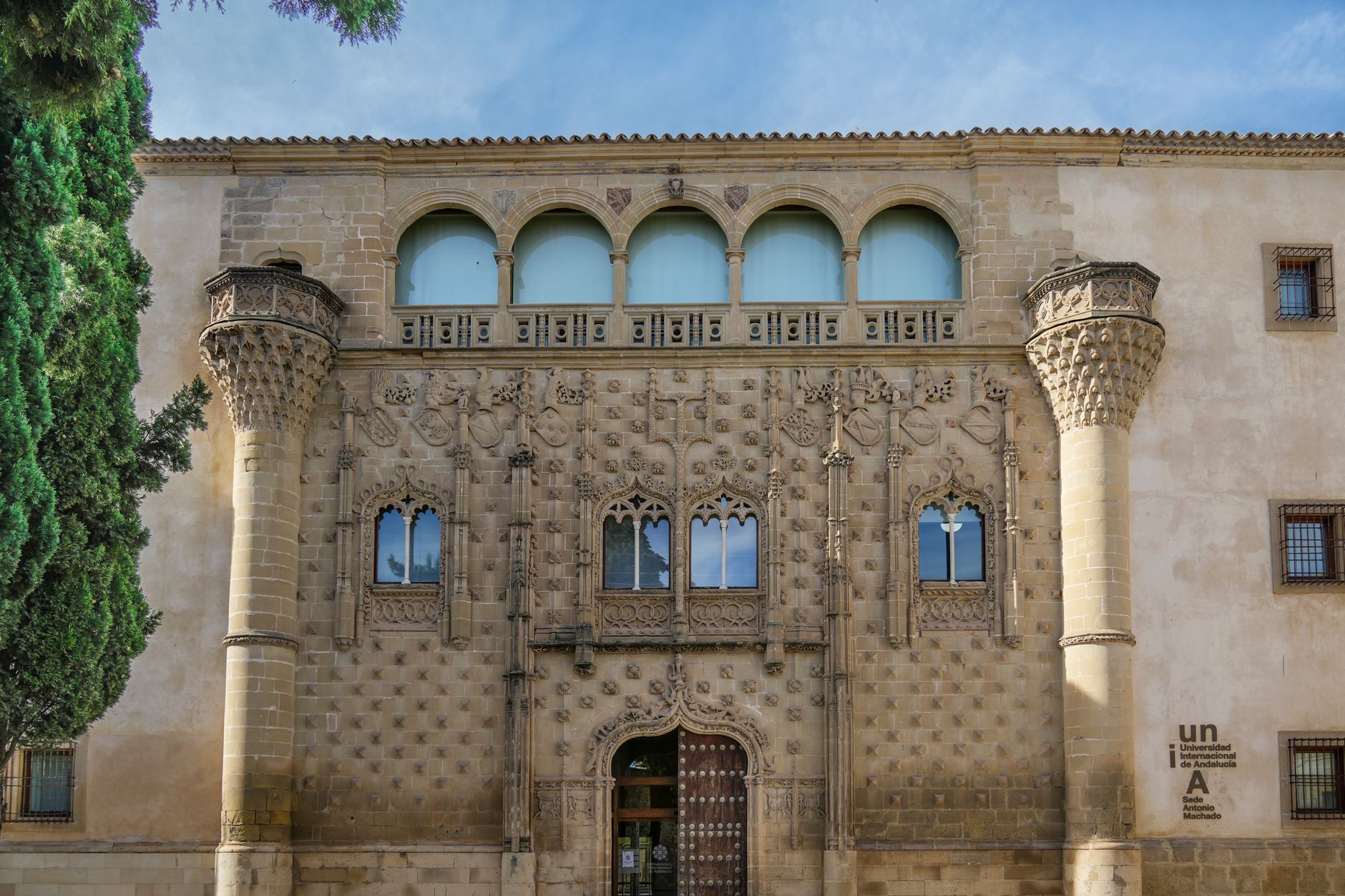
Table of Contents
- How to Get to Alcalá de Henares from Madrid
- What to See
- Cervantes Birthplace
- Where to Eat
- Practical Tips
- FAQs
How to Get to Alcalá de Henares from Madrid
- Cercanías commuter train (Recommended): Line C-2 from Madrid Atocha or Chamartín, ~35-40 minutes, €4.20 each way. Frequent service. Train station is 8-min walk to historic center.
- Bus: ALSA from Madrid Avenida de América, ~50 minutes, €4-6 each way.
- Car: 30-40 minutes via the A-2 highway. Parking outside historic center.
What to See on an Alcalá de Henares Day Trip

1. Universidad de Alcalá Façade
The 1543 Plateresque facade of the Renaissance university is among Spain’s most ornate. Founded 1499 by Cardinal Cisneros — the university produced the first multilingual Bible (the Complutensian Polyglot, 1517). Free to admire from outside; €5 guided tours of interior.

2. Casa Natal de Cervantes
Reconstructed birthplace of Miguel de Cervantes (1547), author of Don Quixote. Period rooms with 16th-century furnishings and Cervantes-related exhibits. Free admission.
3. Plaza de Cervantes
Central plaza with Cervantes statue, surrounded by the historic university and arcaded buildings. The atmospheric heart of Alcalá.
4. Catedral Magistral
Late-Gothic cathedral on the site of two early Christian martyrs (Justus and Pastor). Free entry to the church.
5. Calle Mayor
Spain’s longest porticoed street — a 400-meter covered medieval walkway lined with shops, cafés, and historic buildings.
6. Monasterio de San Bernardo
17th-century Cistercian convent with extraordinary interior — guided tours available. €4.
Casa Natal de Cervantes — Cervantes Birthplace
Miguel de Cervantes Saavedra was born in Alcalá in 1547 — Don Quixote, published 1605, is widely considered the first modern novel. The current Casa Natal museum is a reconstruction (the original 16th-century house no longer survives) but contains period rooms with authentic 16th-century furniture, manuscripts, early Don Quixote editions, and Cervantes-related exhibits. Free admission. Allow 45 minutes.
Where to Eat on an Alcalá de Henares Day Trip
- Hostería del Estudiante: 17th-century coaching inn with traditional Castilian cuisine.
- Casa Lola: Local family-run with menú del día.
- Restaurante La Galatea: Modern Spanish in a historic setting.
- Costradas de Alcalá: Local pastry specialty — try at any pastelería.
Practical Tips for an Alcalá de Henares Day Trip
- Half-day is enough: Alcalá de Henares is small. 4-5 hours on the ground covers everything.
- Cercanías is fast and cheap: 35-40 min, €4.20 each way.
- Best time: April-October. The Cervantes Week festival (October) is atmospheric.
- Avoid Mondays: Some monuments closed.
- Buy costradas: Sweet local pastries to take home.
- Combine with Madrid attractions: Easy to do as a half-day; afternoon free for Madrid sights.
Alcalá de Henares Day Trip FAQs
Is an Alcalá de Henares day trip worth it?
Yes — UNESCO World Heritage status, Cervantes’s birthplace, an extraordinary university facade, all 35 minutes from Madrid for €4.20 each way. Excellent value half-day excursion.
Why is Alcalá UNESCO World Heritage?
Inscribed 1998 as the world’s first planned university city — Cardinal Cisneros’s 1499 university was the model for Renaissance university towns across Europe.
How long does an Alcalá day trip take?
4-5 hours on the ground plus transit. Easily done as a half-day with afternoon free for Madrid attractions.
How much does an Alcalá day trip cost?
€30-50 per person: €8.40 train, free or €5-15 monuments, €15-30 lunch.
When is Cervantes Week?
Mid-October — typically the week of October 9 (Cervantes’s baptism date). Festivals, theater performances, and a Renaissance-era market.
Is the Cervantes Birthplace authentic?
The current Casa Natal is a reconstruction (the original 16th-century house no longer survives), but built on the actual site and furnished with authentic period furniture and Cervantes-related exhibits. Free admission.
History and Heritage
Alcalá de Henares — Roman Complutum, Moorish al-Qal’at al-Nahr (“the citadel by the river”) — was a cultural and intellectual capital of medieval Iberia. Cardinal Cisneros founded the Universidad de Alcalá in 1499 explicitly as Castile’s answer to Salamanca; he hired the best architects of the day to build the university complex (1499-1543) in pure Plateresque style, the ornate Spanish-Renaissance style named for its resemblance to silverwork. The Universidad’s flagship achievement was the Complutensian Polyglot Bible (1517), the first multilingual printed Bible — Hebrew, Greek, Aramaic, and Latin in parallel columns — a landmark in Renaissance scholarship and printing technology. Miguel de Cervantes Saavedra was born here in 1547, in a house on Calle Mayor; he would later write Don Quixote (1605), generally considered the first modern European novel. UNESCO inscribed Alcalá in 1998 as the world’s first planned university city — a prototype that influenced Renaissance university towns across Europe and the Americas. The university shrank dramatically in the 19th century when most faculties moved to Madrid, but the historic core — university facade, Cervantes birthplace, Cathedral of San Justo and Pastor (Catedral Magistral), arcaded Calle Mayor (Spain’s longest porticoed street, 400m) — survives intact. An Alcalá de Henares day trip from Madrid is one of the easiest, cheapest, and most rewarding excursions from the capital — UNESCO World Heritage, Cervantes’s birthplace, Plateresque architecture, all 35 minutes from Madrid for under €10.
Suggested Half-Day Itinerary
- 10:00 — Madrid Atocha or Chamartín: Cercanías C-2 to Alcalá (35-40 min, €4.20).
- 10:50 — 8-min walk from Alcalá station to Plaza de Cervantes.
- 11:00 — Plaza de Cervantes & Cervantes statue (15 min).
- 11:15 — Casa Natal de Cervantes (45 min): Reconstructed birthplace with period rooms; free admission.
- 12:00 — Calle Mayor walk (30 min): Spain’s longest porticoed street, 400m of medieval arcade.
- 12:30 — Universidad de Alcalá (45 min): Plateresque facade exterior + €5 interior tour to see the Paraninfo (auditorium).
- 13:15 — Catedral Magistral (30 min): Late-Gothic on the site of Roman martyrs Justus and Pastor.
- 13:45 — Lunch (90 min): Hostería del Estudiante (17th-century inn) or Casa Lola.
- 15:15 — Monasterio de San Bernardo (45 min): 17th-century Cistercian convent. €4.
- 16:00 — Costradas pastry shopping: Buy local sweets at any pastelería to take home.
- 16:30 — Train back to Madrid.
Hidden Gems on an Alcalá de Henares Day Trip
- Capilla de San Ildefonso: 16th-century university chapel with the original tomb of Cardinal Cisneros (the founder). €3, almost no tourists.
- Corral de Comedias: 1601 working theater — Spain’s oldest theater still in operation, plays staged in summer. €4 tour.
- Casa de la Entrevista: Site where Isabella the Catholic met Christopher Columbus on January 20, 1486 — the meeting that launched the New World expedition. Free.
- Museo Arqueológico Regional: Stellar Roman Complutum mosaics in a 17th-century palace. Free.
- Roman Complutum ruins: 3 km outside the historic center; archaeological park with mosaics. €3.
- Palacio Arzobispal: Where Catherine of Aragon was born in 1485 (later wife of Henry VIII). Free exterior; rare interior tours.
- Plaza de los Santos Niños: Quiet square behind the cathedral; older than Plaza de Cervantes.
Best Photography on an Alcalá Day Trip
- Universidad facade: 1543 Plateresque masterpiece — best in afternoon light.
- Calle Mayor arcades: 400m of medieval porticoes; strong shadows in side-light.
- Plaza de Cervantes: Cervantes statue with arcaded buildings — golden hour.
- Casa Natal de Cervantes courtyard: Period furnishings under skylight.
- Capilla de San Ildefonso interior: Cisneros’s tomb in Plateresque chapel.
- Cathedral apse: Late-Gothic from the rear plaza.
- Storks’ nests on towers: Alcalá is famous for nesting storks April-August.
When to Visit Alcalá de Henares
Spring (April-June): Mild and beautiful; storks return to nest on cathedrals. Cervantes’s death anniversary (April 23) coincides with World Book Day — the Cervantes Prize is awarded at the university.
Summer (July-August): Hot but evenings pleasant. Corral de Comedias summer theater season.
Autumn (September-October): Best season — cool, photogenic. Cervantes Week (typically week of October 9, the saint’s baptism date) brings Renaissance markets, costumed theater, and processions.
Winter (November-March): Cool but quiet — restaurants offer hearty Castilian classics. Christmas markets in Plaza de Cervantes.
Alcalá vs. Other Madrid Day Trips
Alcalá is the closest, cheapest, and most accessible UNESCO day trip from Madrid.
Choose Alcalá if: You have only a half-day; you’re a literature/history enthusiast (Cervantes); you want UNESCO content with minimal travel; you’re traveling on a budget.
Combine Alcalá with: Madrid morning sights — Alcalá is so close (35 min) it works as an afternoon excursion after a Madrid morning.
Alcalá doesn’t replace Toledo or Segovia for first-time visitors, but for travelers with extra days or limited budgets, it’s outstanding value.
Alcalá’s Local Cuisine
- Costradas de Alcalá: Local pastry — layered puff pastry with custard and meringue, dusted with cinnamon. The signature sweet.
- Migas del Quijote: Migas with chorizo and grapes, “as Don Quixote would have eaten.”
- Cordero asado: Roast lamb in traditional restaurants.
- Cocido madrileño: Three-course chickpea stew at traditional spots.
- Almendras garrapiñadas: Caramelized almonds — a convent specialty.
- Vino de Mejorada: Local Madrid-region wine.
Top restaurants: Hostería del Estudiante (17th-century coaching inn, traditional Castilian — historic destination), Casa Lola (family-run with menú del día), Restaurante La Galatea (modern Spanish in a historic setting).
Tips for an Alcalá Day Trip
- Cercanías is fast and cheap: 35-40 min, €4.20 each way. Trains every 15-20 min.
- Walk from station: 8 min to historic center; no transfer needed.
- Most monuments free: Casa Natal de Cervantes, cathedral, Calle Mayor, Plaza de Cervantes — no admission.
- Universidad interior tour: €5; includes Paraninfo (auditorium where Cervantes Prize is awarded). Worth it.
- Avoid Mondays: Most monuments closed.
- Cervantes Week (mid-October): Atmospheric Renaissance market, costumed performers — book lunch ahead.
- Buy costradas to take home: Pastelería Salinas is the historic shop.
- Half-day is enough: 4-5 hours covers everything; great for after a Madrid morning.
More Alcalá de Henares Day Trip Questions
Is Cervantes’s birthplace authentic?
The current Casa Natal is a 1956 reconstruction (the original 16th-century house no longer survived), but built on the verified site and furnished with authentic period furniture and Cervantes manuscripts. Free admission.
Why is Alcalá UNESCO World Heritage?
Inscribed 1998 as the world’s first planned university city — Cardinal Cisneros’s 1499 university was the model for Renaissance university towns across Europe and the Americas (Mexico, Lima, Manila).
When is Cervantes Week?
Mid-October — typically the week of October 9 (Cervantes’s baptism date). Festivals, theater performances, Renaissance markets. Free public events.
How much does an Alcalá day trip cost?
€30-50 per person: €8.40 train round-trip, €0-15 monuments (most free; Universidad interior €5), €15-30 lunch.
Can I visit Alcalá in just a half-day?
Yes — easily. 4-5 hours on the ground covers Casa Natal, Universidad facade, Calle Mayor, Catedral, and lunch. Combine with Madrid morning sights for a productive day.
Official Resources
- Alcalá tourism: turismoalcala.es
- UNESCO listing: University and Historic Precinct of Alcalá de Henares
- Casa Natal de Cervantes: Casa Natal de Cervantes
Plan Your Day Trip
- All day trips from Madrid — complete guide
- Which day trip suits you — comparison hub
- Toledo day trip — most popular UNESCO excursion
- Buitrago del Lozoya — off-the-beaten-path option
- Segovia day trip — aqueduct and cochinillo
- Getting to Alcalá by Cercanías train
- Madrid history and architecture guide
- Things to do in Madrid — the full city guide
An Alcalá de Henares day trip from Madrid is one of the easiest, cheapest, and most rewarding excursions from the capital — UNESCO World Heritage, Cervantes’s birthplace, Plateresque architecture, all 35 minutes from Madrid for under €10.