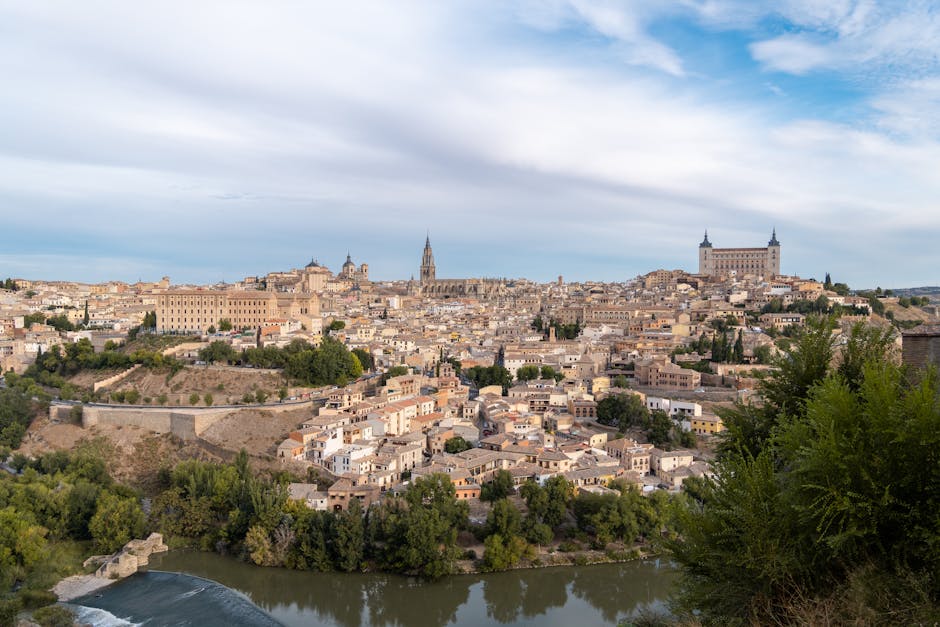
A Toledo day trip from Madrid is the single most rewarding excursion you can make from the Spanish capital. The medieval city perched above the Tajo River — once the imperial capital of Spain and home to centuries of coexistence among Christians, Muslims, and Jews — sits just 33 minutes south by high-speed train. Toledo’s historic center is a UNESCO World Heritage Site that feels like an open-air museum: every street curves into another Gothic church, Mudéjar synagogue, or Renaissance palace. This guide covers everything you need: how to get there, the best ticket combinations, what to see, where to eat, and the smartest order to explore the old town.
For the full overview of excursions from the capital — including Segovia, Ávila, and Cuenca — see our complete day trips from Madrid guide. Deciding which destination to prioritize? The day trip comparison hub ranks every option side by side.
Table of Contents
- How to Get There
- Best One-Day Itinerary
- Top Sights in Toledo
- Tickets and Pulsera Turística
- Where to Eat
- Practical Tips
- FAQs
How to Get to Toledo from Madrid
By High-Speed Train (Recommended)
The Renfe AVANT from Madrid Atocha to Toledo takes 33 minutes. Trains run roughly every 60–90 minutes from 6:50am to 9:50pm. Round-trip fares start at around €23 (2026) if you book ahead at renfe.com, rising to €27 for walk-up tickets. Weekend trains sell out — book a few days early. Toledo’s station is a 1919 Mudéjar revival gem worth a five-minute look. For more on getting between cities, our Madrid transportation guide covers all Renfe and Cercanías options.
By Bus
ALSA buses run from Madrid Plaza Elíptica every 30 minutes during the day. Travel time is 50–80 minutes depending on traffic; round-trip fares around €11–13. Cheaper than the train — and the bus station drops you closer to the historic center than the train station does.
By Car
The drive from central Madrid takes 60–75 minutes via the A-42 highway. Park at Miradero or Safont near the historic center (around €10–15 for the day). Driving makes sense if you want to combine Toledo with Aranjuez on the same outing — the royal palace town is only 40 km away.
The Best One-Day Toledo Itinerary
- 9:30am: Arrive Toledo train station; walk or take a city bus (€1.40) up to the historic center.
- 10:00am: Start at the Cathedral — Spain’s Gothic masterpiece. Allow 90 minutes for the Transparente alone.
- 11:30am: Walk to Iglesia de Santo Tomé to see El Greco’s “Burial of the Count of Orgaz.” 30 minutes.
- 12:00pm: Synagogue of Santa María la Blanca — 12th-century synagogue with Moorish horseshoe arches. 30 minutes.
- 12:45pm: Lunch in the Jewish Quarter or near Plaza de Zocodover. 90 minutes.
- 2:30pm: Monasterio de San Juan de los Reyes — the two-tier cloister is extraordinary. 45 minutes.
- 3:30pm: Alcázar / Army Museum for panoramic views of the city. 75 minutes.
- 5:00pm: Wander the Jewish Quarter, visit the Mirador del Valle viewpoint, buy marzipan.
- 6:30pm: Head to the train station. Back in Madrid by 7:30pm.
Top Sights in Toledo
1. Toledo Cathedral (Catedral Primada)
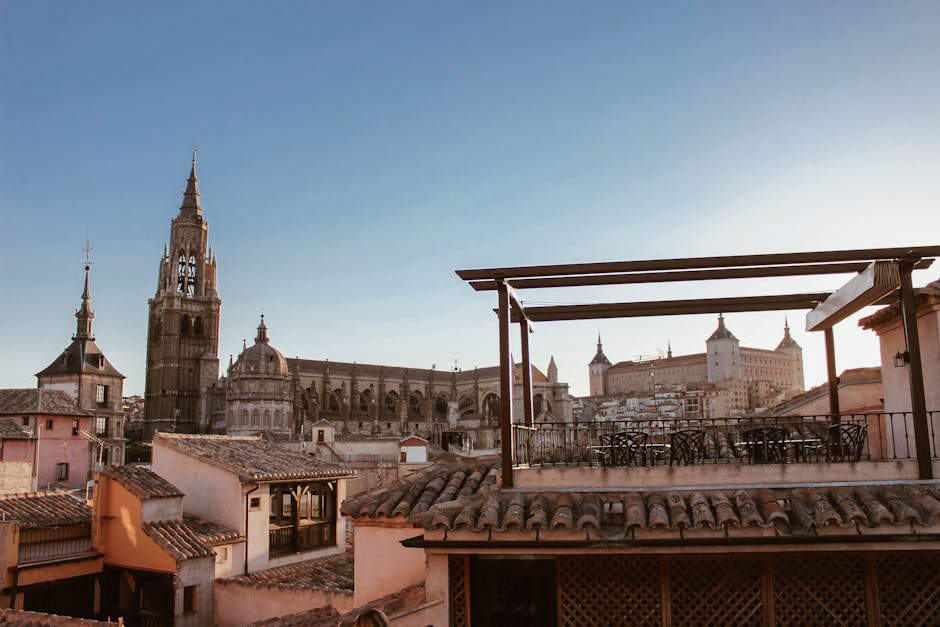
Construction began in 1226 and continued for 250 years, producing one of the world’s great Gothic cathedrals. The interior contains paintings by El Greco, Goya, Velázquez, Caravaggio, Titian, and Rubens — effectively a full art museum inside a single church. Don’t miss the Transparente, an 18th-century baroque skylight that makes natural light pour theatrically onto the altar. Tickets around €10, audio guide €4, combined treasury €13.
2. Iglesia de Santo Tomé — El Greco’s Masterpiece
This small 14th-century church houses what many consider El Greco’s greatest work — “The Burial of the Count of Orgaz” (1586). The painting depicts a 14th-century miracle and still hangs in the chapel for which it was commissioned. Around €4 entry, lines move quickly.
3. Synagogue of Santa María la Blanca
Built in the 12th century by Toledo’s Jewish community, this is one of Europe’s oldest surviving synagogue structures. Built by Mudéjar craftsmen with horseshoe arches and intricate stucco work that show clear Moorish influence. Converted to a church in 1411, now a museum. Around €4 entry.
4. Sinagoga del Tránsito
Built in 1357, the only Spanish synagogue with original Hebrew inscriptions still on the walls. The carved cedar ceiling and the upstairs women’s gallery are outstanding. Houses the Museo Sefardí. Around €3 entry.
5. Monasterio de San Juan de los Reyes
Commissioned in 1477 by the Catholic Monarchs to commemorate their victory at the Battle of Toro, this Franciscan monastery is a jewel of late-Gothic architecture. The two-tier cloister is the standout. The chains hanging on the exterior walls reportedly came from Christian captives freed when Granada fell in 1492. Around €4 entry.
6. Alcázar of Toledo (Army Museum)
The fortress crowning Toledo’s highest point dates to Moorish times. Heavily damaged in the Civil War’s 70-day siege of 1936, it was painstakingly reconstructed. Now the Spanish Army Museum (around €5 entry, free Sundays). The terrace views over Toledo and the Tajo gorge are unmatched.
7. Mirador del Valle Viewpoint
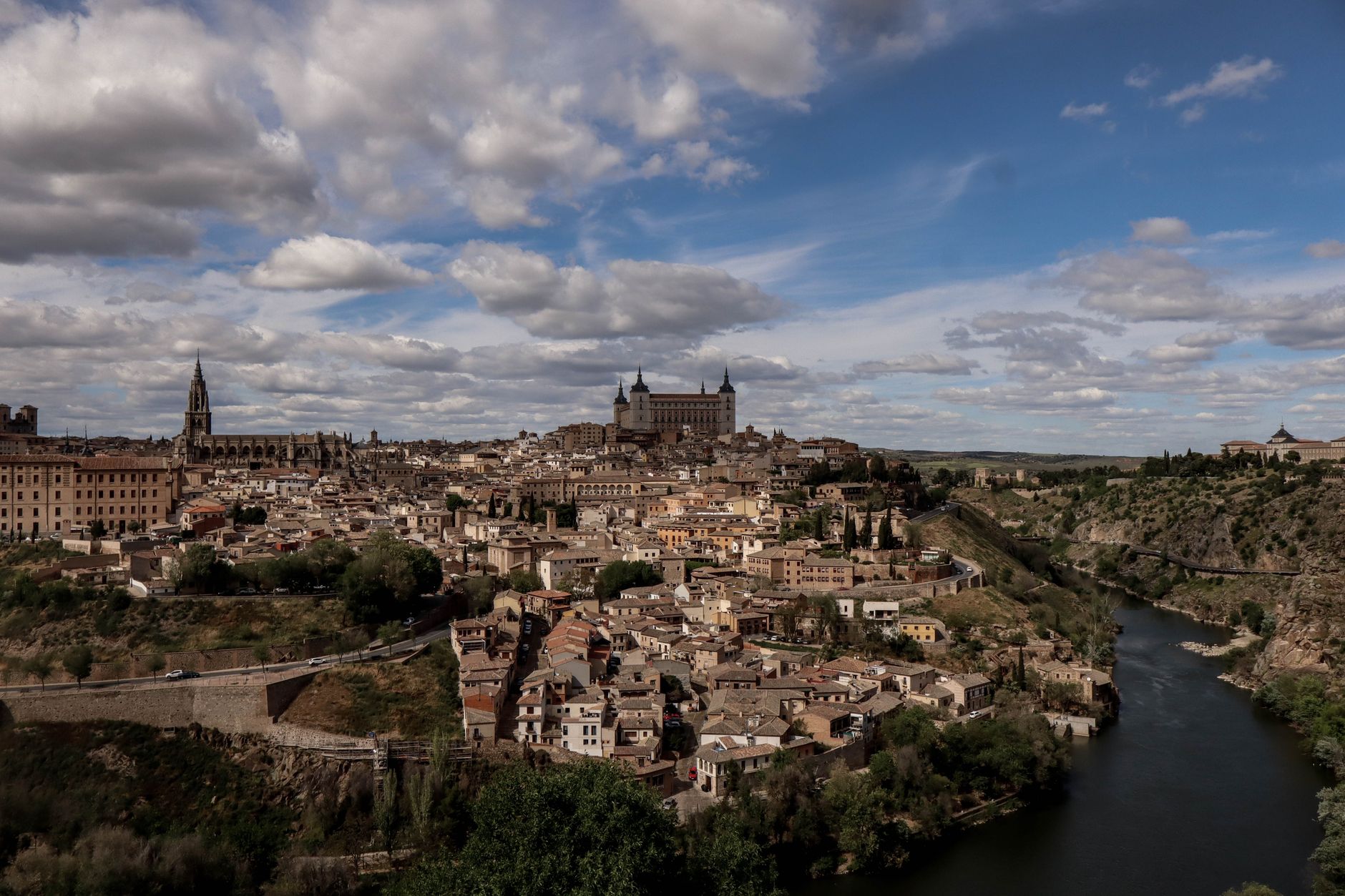
Across the river on the south bank, this elevated viewpoint gives the iconic Toledo panorama — the entire walled city in one frame, Cathedral and Alcázar dominating the skyline. Free, accessible by 15-minute walk or tourist hop-on bus. Best at golden hour.
8. Museo del Greco
A reconstructed re-creation of El Greco’s Toledo home, with original paintings including the Apostles series and “View and Plan of Toledo.” Essential for El Greco fans. Around €3 entry.
9. The Medieval Bridges
The Puente de San Martín (14th century, west end) and Puente de Alcántara (Roman/Moorish, east end) bookend the old town on the Tajo. Both are free and photogenic — combine the San Martín bridge with the Mirador walk for a classic Toledo circuit.
Tickets and the Pulsera Turística
The Pulsera Turística (Tourist Bracelet) costs around €12 (2026) and covers seven monuments: Iglesia de Santo Tomé, Sinagoga de Santa María la Blanca, Monasterio de San Juan de los Reyes, Iglesia del Salvador, Iglesia de los Jesuitas, Real Colegio de Doncellas Nobles, and the Mezquita del Cristo de la Luz. Buy it at any participating monument. It pays for itself if you visit at least 4 sites. Toledo Cathedral and the Alcázar/Army Museum are not included and require separate tickets.
Where to Eat in Toledo
Toledo’s specialties are perdiz a la toledana (Toledo-style braised partridge), cordero asado (roast lamb), and mazapán — the almond marzipan Toledo has been producing for centuries. My picks:
- Adolfo (Calle Hombre de Palo): One of Toledo’s most respected restaurants; Castilian classics in a 14th-century setting. Worth the splurge.
- El Trébol (Plaza de Zocodover area): Reliable mid-priced lunch, tourist-friendly menu del día around €18–22.
- Restaurante Locum (Calle Locum): Modern Castilian cooking in an elegant 17th-century building.
- Confitería Santo Tomé (multiple locations): Founded 1856. Buy a small box of marzipan to take home — it’s genuinely excellent.

Practical Tips
- Book train tickets in advance at renfe.com — especially on weekends and Spanish holidays.
- Sturdy walking shoes: Toledo is built on a steep granite hill with cobblestone streets and stairs everywhere.
- Water and sun protection: Summer temperatures hit 40°C with little shade in the narrow streets.
- Cathedral dress code: Cover shoulders and knees for the Cathedral and active churches.
- Avoid Mondays: Many smaller museums and synagogues are closed.
- Cash: Cards accepted almost everywhere; carry small coins for smaller monument entries.
Combining Toledo with Other Day Trips
Toledo pairs naturally with Aranjuez if you’re driving — the Bourbon summer palace is on the same A-4 corridor between Madrid and Toledo, and many visitors do both in one full day. Segovia and Ávila are northwest of Madrid and work better as separate trips. Planning multiple excursions? The best day trips comparison has rankings and combination strategies.
Toledo Day Trip FAQs
Is a Toledo day trip worth it?
Yes — unequivocally. Toledo is the most rewarding single-day excursion from Madrid. A Gothic cathedral, ancient synagogues, El Greco paintings in their original setting, and one of Spain’s most photogenic skylines in a 1-square-kilometer area.
How long does the journey take?
The Renfe AVANT high-speed train takes 33 minutes from Madrid Atocha. Bus takes 50–80 minutes; driving 60–75 minutes.
What does a Toledo day trip cost in 2026?
Budget around €60–90 per person: train (around €23–27 return), Cathedral (around €10), Pulsera Turística (around €12), lunch (around €20), small tickets and snacks (around €10). Organized guided tours run €40–80 with transport and 1–2 entries included.
Best time of year to visit Toledo?
Spring (April–June) and autumn (September–November) are ideal — pleasant temperatures, manageable crowds. Summer is brutally hot in Toledo’s narrow streets. Winter is cooler but atmospheric, with much shorter queues. Avoid Mondays when many sites close.
Is one day enough?
One day covers the major highlights — Cathedral, synagogues, Alcázar, a couple of churches. To go deeper (Museo del Greco, more churches, Tajo gorge walks), allow two days with an overnight.
Is Toledo accessible for visitors with mobility issues?
Partially. The historic center has steep cobblestone streets and stairs. Outdoor escalators (Remonte Mecánico) at the eastern entrance help with the main climb. Major monuments are accessible inside, but getting between them on foot can be challenging.
Plan Your Day Trip
- All day trips from Madrid — complete guide
- Which day trip is right for you — comparison hub
- Segovia day trip — aqueduct, Alcázar and cochinillo
- Ávila day trip — medieval walls and Saint Teresa
- Getting to Toledo by train — Madrid transportation guide
- Madrid history and architecture guide
- Things to do in Madrid — the full city guide
A Toledo day trip from Madrid is the easiest way to add a major UNESCO World Heritage city to your trip. With a 33-minute train ride and a smart itinerary, you’ll see seven centuries of Spanish, Moorish, and Jewish history — and still be back in Madrid in time for dinner.