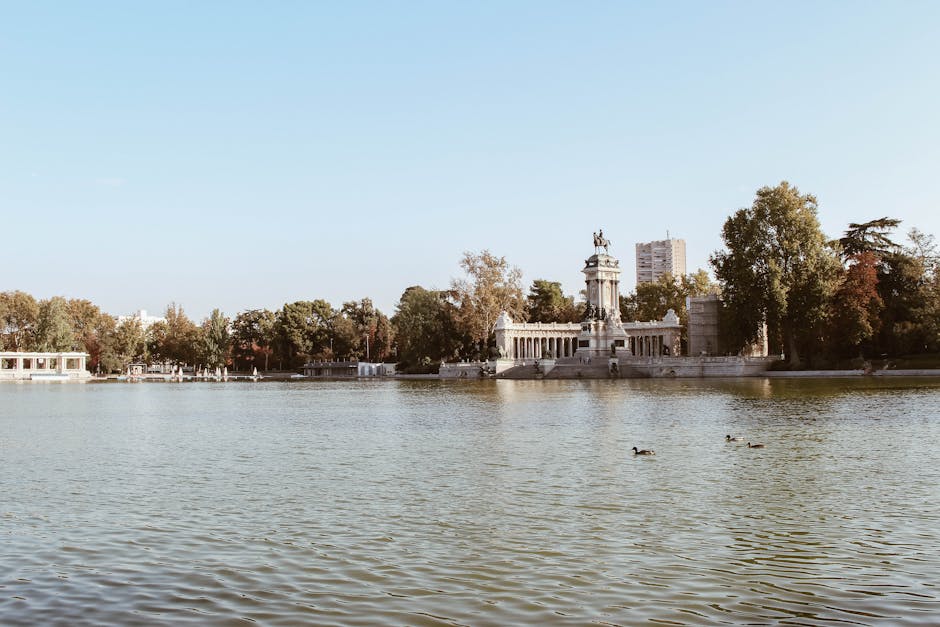
Madrid has more green space per capita than almost any other European capital — a legacy of Bourbon kings who landscaped royal estates for their own pleasure and later handed them to the public. The famous Retiro Park in the city center is just the beginning: Madrid has massive urban forests, riverside linear parks, 18th-century formal gardens, Romantic English-style estates with labyrinths, and the sprawling Sierra de Guadarrama National Park just 45 minutes from the center. Whatever kind of outdoor experience you’re after — a picnic, a 10K run, a rose garden photoshoot, a family row-boat outing, or serious mountain hiking — Madrid delivers.
This guide maps Madrid’s parks and outdoor offerings by size, personality, and purpose. We cover the essential city parks, the lesser-known gems locals prefer, Madrid’s excellent cycling and running infrastructure, seasonal highlights (cherry blossoms, almond trees, jacarandas), and the outdoor day-trip destinations you can reach by public transport. If you want a green break between museums or an all-day outdoor adventure, start here.
Quick Summary: Which Madrid Park Should You Visit?
- First-time visitor, short on time: Parque del Retiro — central, iconic, beautiful in every season.
- Family with young kids: Madrid Río (long path, splash pads, playgrounds) or Retiro (boats, marionettes).
- Want to escape the tourists: Parque del Capricho (hidden 18th-century romantic garden in Alameda de Osuna).
- Outdoor sports and fitness: Madrid Río (30 km cycling path) or Casa de Campo (mountain bike trails).
- Picnic with a view: Parque del Oeste or Templo de Debod overlook.
- Botanical enthusiasts: Real Jardín Botánico or Retiro’s rose garden.
- Romantic walk: Jardines de Sabatini or Parque Quinta de los Molinos in almond-blossom season.
- Day hike or mountain air: Sierra de Guadarrama National Park.
Parque del Retiro — Madrid’s Central Park
Retiro Park (officially Parque del Buen Retiro) is Madrid’s answer to Central Park or Hyde Park: 125 hectares of tree-lined avenues, ornamental lakes, formal gardens, hidden statues, and 19th-century pavilions just steps from the Prado Museum. Originally the private pleasure garden of the Habsburg and Bourbon monarchs, Retiro was opened to the public in 1868 and inscribed on the UNESCO World Heritage list in 2021 as part of the “Paseo del Prado and Buen Retiro” cultural landscape.
The Must-See Spots in Retiro
- Estanque (Great Pond): The 19th-century rectangular lake with its Alfonso XII monument — Retiro’s most photographed spot. Rent a rowboat for €6 per 45 minutes (up to 4 people). Open daily, but the boat concession has seasonal hours.
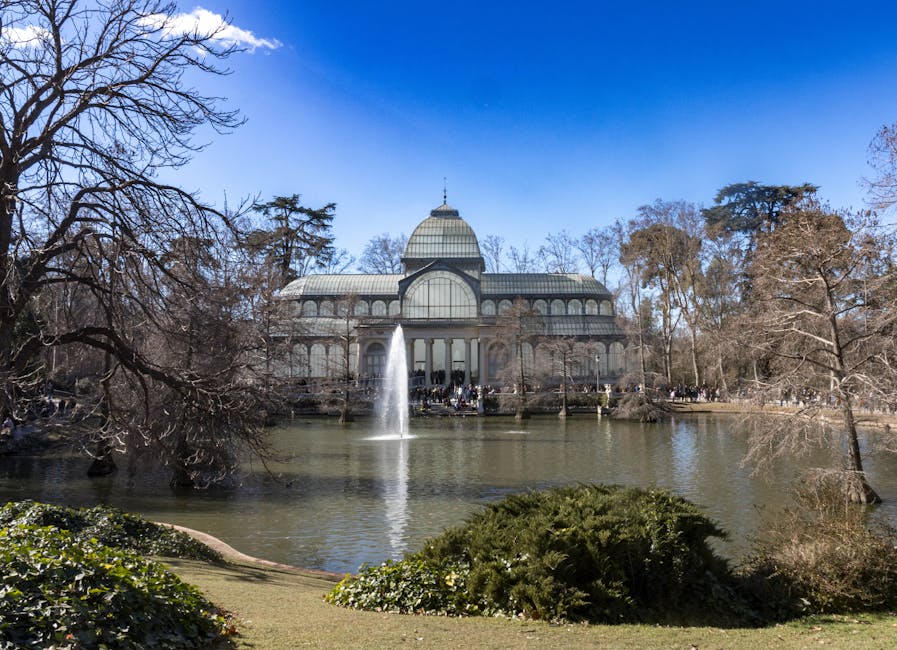
- Palacio de Cristal (Crystal Palace): An 1887 glass-and-iron exhibition pavilion, now used for rotating art installations by the Reina Sofía. Free entry. Easily Madrid’s most Instagrammable single building.
- Palacio de Velázquez: Similarly a 19th-century exhibition pavilion (1883) — also hosts Reina Sofía exhibitions; less crowded than the Crystal Palace.
- Rosaleda (rose garden): Peak bloom is mid-May through early June. Over 4,000 roses of more than 100 varieties, arranged in formal parterres.
- Jardín de Cecilio Rodríguez: A small enclosed garden of Andalusian inspiration with cypresses, fountains, and resident peacocks.
- Jardines del Buen Retiro (Parterre): 17th-century French-style formal gardens with hedge mazes and the fabled “ahuehuete” cypress — at 400+ years old, the oldest tree in Madrid.
- Bosque del Recuerdo: A living memorial to the victims of the March 11, 2004 Madrid train bombings. 192 olive and cypress trees, one for each victim.
- Ángel Caído (Fallen Angel): One of the very few monuments to the devil in the world, sculpted by Ricardo Bellver in 1877. Locals note that the statue stands at an altitude of exactly 666 meters — probably coincidence.
- Puppet theater (Teatro de Títeres): Free marionette shows every weekend, popular with kids (in Spanish but easy to follow).
Retiro Practical Info
- Hours: Daily from 6am. Closes 10pm in winter, midnight in summer.
- Entry: Free.
- Metro: Retiro (Line 2) is the main gate; Ibiza (Line 9) or Atocha (Line 1) for southern entrances.
- Best time: Weekday mornings for quiet walks; Sunday afternoons for maximum street-theater energy with buskers, tango dancers, and puppeteers.
- Accessibility: Paved main paths are stroller and wheelchair friendly; some gravel side paths less so.
Madrid Río — The Linear Riverside Park
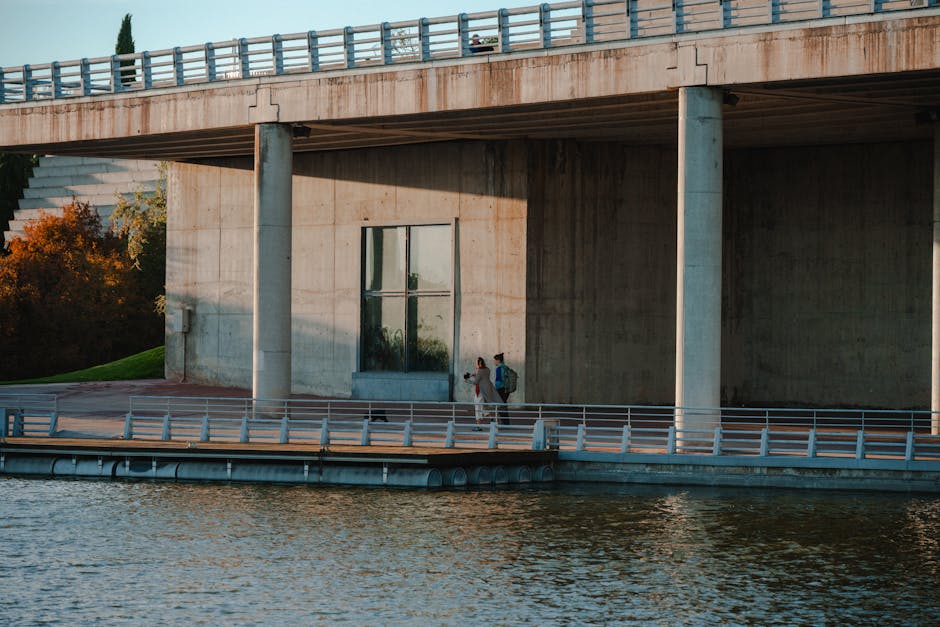
Madrid Río is the city’s big 21st-century urban project: between 2005 and 2011, Madrid buried a 6-kilometer stretch of the M-30 ring road in a tunnel and built a 150-hectare linear park along the Manzanares River on top. The result is a riverfront promenade unlike anywhere else in Europe — with 17 pedestrian bridges (some designed by Herzog & de Meuron, including the spectacular shell-shaped Puente de Perrault), 30 kilometers of cycling paths, 11 playgrounds, skateparks, splash pads, an urban beach, and outdoor sports courts spread along its length.
Highlights of Madrid Río
- Puente de Toledo: 18th-century baroque bridge with sculptures of Saint Isidore, a charming counterpoint to the contemporary design elsewhere.
- Puente Monumental de Arganzuela: The twisted-shell 2011 pedestrian bridge by Dominique Perrault — photogenic and functional.
- Playa de Madrid Río: Seasonal splash area with geyser fountains that erupt in timed patterns; kids love it in summer.
- Matadero Madrid: A converted 1910 slaughterhouse now functioning as a huge cultural center with theaters, cinemas, galleries, and a beloved open-air bar (Café La Cineteca) that spills into a plaza in summer.
- Salón de Pinos: A long pine-tree allée running the length of the park — part of the park’s signature landscape design by Burgos & Garrido.
- Huerta de la Partida: A recreated 16th-century royal kitchen garden just below the Royal Palace.
Madrid Río Practical Info
- Hours: Open 24 hours; lit at night.
- Entry: Free.
- Metro: Príncipe Pío (Lines 6, 10, R), Pirámides (Line 5), or Marqués de Vadillo (Line 5) to reach different sections.
- Best way to experience it: Rent a BiciMAD e-bike and ride the full 6km length — about 45 minutes each way at a leisurely pace.
Casa de Campo — Madrid’s Massive Urban Forest
At 1,722 hectares (roughly five times the size of Central Park), Casa de Campo is the largest public park in Madrid — and one of the largest urban parks in Europe. It was a royal hunting ground from the 16th century until Alfonso XIII donated it to the people of Madrid in 1931. The park is a genuine Mediterranean forest — holm oaks, pines, and cork oaks cover most of its rolling terrain — with hiking trails, mountain bike routes, a lake for rowing, and several major attractions inside its boundaries.
What’s Inside Casa de Campo
- Lago de Casa de Campo: A 19th-century artificial lake with rowboats for hire and several lakeside restaurants; stunning views back toward the Royal Palace.
- Teleférico (cable car): The 2.5 km aerial tramway connects Parque del Oeste to the interior of Casa de Campo. €6 one-way, €8.50 return. Excellent elevated views of the Royal Palace and the Manzanares valley. Runs weekends year-round plus daily in summer.
- Zoo-Aquarium de Madrid: Home to giant pandas, dolphins, and some 500 species. Open daily; tickets from €25.
- Parque de Atracciones: Madrid’s main theme park, inside the Casa de Campo grounds. Tickets €25–35 depending on day.
- Mountain biking trails: Casa de Campo has roughly 60 km of cycling paths, from flat family routes to challenging single-track for experienced riders.
- Running: The Lago Grande loop is a popular 5.5-km running circuit.
Casa de Campo Practical Info
- Hours: Open 24 hours.
- Entry: Free (attractions inside charge separately).
- Metro: Lago (Line 10) for the lake, Casa de Campo (Lines 5, 10) for the theme park, or Príncipe Pío + Teleférico for scenic entry.
- Safety note: Some outer parts of Casa de Campo are known for sex-work activity after dark; the main tourist zones (lake, Teleférico terminus) are entirely fine during daylight.
Real Jardín Botánico — Madrid’s 18th-Century Botanical Garden
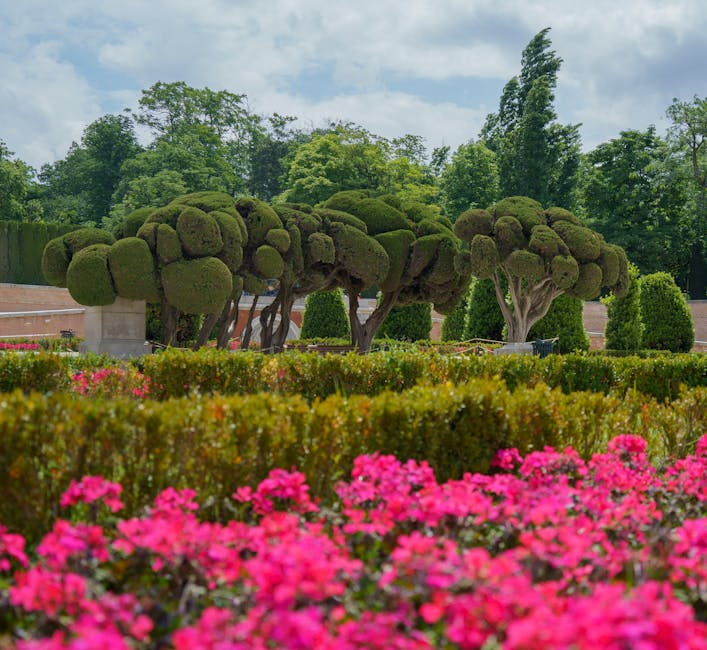
Next door to the Prado, this 8-hectare garden was established by Carlos III in 1781 as an Enlightenment-era scientific institution. The garden is divided into terraces arranged by scientific classification, with over 5,000 plant species from around the world — particularly impressive collections of bonsai (donated by former prime minister Felipe González), roses, and tropical specimens in the central greenhouse (the 1856 Pabellón de Invernadero).
- Hours: 10 am–9 pm (summer), shorter in winter. Closed December 25 and January 1.
- Entry: €6 adults, €3 students/seniors, free for under-10s and on select days.
- Metro: Atocha or Banco de España.
- Best time: Late April through June for peak blossoming; autumn for tree color; dawn and late afternoon for photography.
Parque del Capricho — Madrid’s Hidden Romantic Garden
The Parque del Capricho (“Whim”) is Madrid’s best-kept secret and arguably its most beautiful park — and the one most tourists miss because it sits in the far eastern Alameda de Osuna neighborhood, a 30-minute metro ride from the center. Commissioned in 1787 by the Duchess of Osuna, this is Madrid’s only surviving example of a Romantic-era English landscape garden, with a palace (no longer open), fountains, a labyrinth, a Temple of Bacchus, grottos, and a small bunker from the Spanish Civil War when the park served as Republican army headquarters.
- Hours: Only open Saturdays, Sundays, and public holidays (9am–6:30pm winter, extended hours summer).
- Entry: Free, but visitor numbers are capped — arrive by 10am on weekend mornings to avoid queues.
- Metro: El Capricho (Line 5).
- Best time: Late spring (flowering) or autumn (foliage).
Parque del Oeste — Hillside Views and a Rose Bower
On the western edge of the city center, Parque del Oeste tumbles down the hillside from the Moncloa district toward the Manzanares. Highlights include the Templo de Debod (an ancient Egyptian temple relocated to Madrid in 1968 — see our history and architecture guide), the Rosaleda del Oeste rose garden (with 20,000+ roses, peaking in May), and unparalleled sunset views over Casa de Campo and the Sierra de Guadarrama in the distance. The park also contains a small but lovely “Jardín de los Poetas” featuring statues of Spanish literary figures.
- Hours: Daily 6am–midnight.
- Entry: Free.
- Metro: Plaza de España (Line 2, 3, 10) for the Templo de Debod; Argüelles (Lines 3, 4, 6) for the central park.
Quinta de los Molinos — The Almond Blossom Park
This 21-hectare early-20th-century private estate, now a public park, is famous for exactly one thing: its 1,500 almond trees burst into pink and white blossom for approximately 10 days in late February or early March. During “almond blossom season,” Quinta de los Molinos is one of Madrid’s most photographed spots — thousands of locals make pilgrimages with their cameras. Outside the blossom window, it’s a quiet neighborhood park with meandering paths, a small lake, and a 1920s Modernist palace (visits by appointment).
- Hours: Daily 6:30am–10pm (winter), 6:30am–midnight (summer).
- Entry: Free.
- Metro: Suanzes (Line 5).
- Best time: Mid-to-late February for the almond blossom — check the park’s social feeds for real-time bloom updates.
Jardines de Sabatini and Campo del Moro — Royal Gardens
The gardens flanking the Royal Palace are free, beautiful, and often overlooked. The Jardines de Sabatini (named after the architect Sabatini), laid out in formal French neoclassical style with reflecting pool and boxwood parterres, sit on the palace’s north side. The Campo del Moro, on the western slope down to the Manzanares, is a more English-style park with curving paths, tall cedars, and a striking perspective up to the palace’s western facade. Both are free and offer some of the best Royal Palace photos you’ll get.
- Sabatini hours: Daily 9am–10pm (summer), shorter in winter. Free.
- Campo del Moro hours: Daily 10am–6pm (check seasonal variations). Free.
- Metro: Ópera (Line 2, 5, R).
Parque Juan Carlos I — Modern Sculpture in Greenery
Opened in 1992, this 160-hectare park near IFEMA (the convention center) is Madrid’s modernist outdoor sculpture gallery. Nineteen monumental contemporary sculptures dot the landscape among lakes, walking paths, and formal gardens. The park is rarely crowded, has a small tourist train, hosts open-air events, and offers some of Madrid’s most interesting photography opportunities.
- Hours: Daily 7am–11pm (summer), 7am–10pm (winter).
- Entry: Free.
- Metro: Campo de las Naciones (Line 8).
Other Worthwhile Parks
- Parque de Berlín (Chamartín): Small but has sections of the original Berlin Wall on display.
- Parque de la Fuente del Berro: Charming 17th-century garden with peacocks, fountains, and a Pushkin statue in the Salamanca neighborhood.
- Parque Enrique Tierno Galván: Southeast of the center, home to the Planetarium and IMAX cinema.
- Jardines del Descubrimiento (Plaza Colón): Small but centrally located; home to the huge Spanish flag.
- Dehesa de la Villa: 70-hectare pine forest in the northwest, popular with local runners and dog-walkers.
- Parque Olavide: Tiny Chamberí neighborhood park, lovely for terrace-café sitting at surrounding bars.
Cycling in Madrid
Madrid is improving as a cycling city. Dedicated cycle paths network Madrid Río, Casa de Campo, Parque del Retiro (limited), and the “Anillo Verde Ciclista” — a 64-kilometer ring of bike paths that circles the entire city. The Anillo Verde is a full-day ride and connects most of the city’s major parks.
BiciMAD — Municipal E-Bike Sharing
Madrid’s public e-bike system has 250+ stations around the central city. Visitors can register on the BiciMAD app with a credit card and pay €2 for a 1-hour pass or €7 for a 3-day tourist pass. The e-assist makes Madrid’s hills manageable.
Rental Bike Shops
Several shops near Retiro and Madrid Río rent touring or mountain bikes by the day. Trixi Madrid, Bike Spain, and Un Paseo en Bici are reliable options, with rentals €15–25 per day including helmet and lock. Guided city cycling tours (€30–45 for 3 hours) are also plentiful.
Running Routes
- Retiro Perimeter loop (4 km): Flat, car-free, lots of company. The most popular central running route.
- Madrid Río (6 km one way): Flat, smooth, scenic. 12 km out-and-back makes a proper half-marathon-prep session.
- Casa de Campo Lago loop (5.5 km): Some gentle hills, leafy cover, great for hotter days.
- Anillo Verde Ciclista (64 km full loop): Ultra-marathon territory; sections are excellent for 10K–half-marathon training.
- Dehesa de la Villa (5–8 km trails): The closest proper trail running to central Madrid.
Madrid hosts the Rock’n’Roll Madrid Marathon every April and the San Silvestre Vallecana 10K every December 31 — two of Spain’s biggest running events.
Outdoor Activities Beyond the Parks
Hiking: Sierra de Guadarrama National Park
45 minutes north of Madrid by Cercanías train, the Sierra de Guadarrama offers serious mountain hiking. Highlights include the La Pedriza granite formations (great for scrambling and beginner climbing), the Cuerda Larga ridge (multi-hour ridge walking over 2,200m peaks), the Valle de la Fuenfría (pine forests and Roman roads), and the Siete Picos (a classic day hike with 7 summits along one ridge). Cercanías lines C-8b and C-9 serve the main trailheads; Cercedilla and Manzanares el Real are the two most common starting points.
Rock Climbing
La Pedriza is one of Spain’s great granite climbing areas, with thousands of bolted and traditional routes from beginner slabs to multi-pitch adventures. Madrid also has several indoor climbing gyms — Urban Monkey, the Climb District, and Boulder Madrid — with day passes from €10–15.
Paddleboating, Rowing, and Water Sports
The Estanque in Retiro and the Lago in Casa de Campo both rent rowboats. The Centro Municipal de Piragüismo on the Manzanares offers canoe and kayak rentals and lessons. For proper open-water swimming, the Embalse de San Juan reservoir (1 hour west by car) is Madrid’s “beach” — swimming, windsurfing, and even waterskiing.
Skiing
The Puerto de Navacerrada ski resort is 60 km north and typically operates from December through March depending on snowfall. It’s small (roughly 10 runs) but accessible by public transport — take the Cercanías train to Cercedilla, then the rack-railway up to the pass. Day lift tickets from €35.
Picnicking
Picnicking is encouraged in most Madrid parks, though officially discouraged on manicured lawns in Retiro (signs are selectively enforced — Madrileños picnic there anyway, just pick a semi-shaded spot away from formal beds). Best picnic parks: Retiro (closest to Prado-area tourists), Casa de Campo (biggest spaces), Parque del Oeste (sunset views), and Dehesa de la Villa (forest atmosphere). Alcohol is technically not permitted in public parks under Madrid’s “botellón” ordinance; enforcement is loose but police do sometimes issue fines.
Seasonal Highlights — When to See What
Winter (December–February)
Bare trees but crisp air. Retiro’s rosaleda is dormant but the Crystal Palace exhibits continue. End of February brings the almond blossoms to Quinta de los Molinos — Madrid’s flagship winter park event.
Spring (March–May)
The best park season by far. Rose gardens peak in late May. Jacaranda trees bloom purple along Paseo del Prado and the Reina Sofía museum plaza. Wildflowers carpet Casa de Campo. Book Fair takes over Retiro in late May/early June. Spring is also ideal for hiking in the Sierra — snowmelt means waterfalls and green valleys.
Summer (June–August)
Days reach 35–40°C; parks empty during midday and fill up at dusk. Madrid Río’s splash pads are a godsend for families. Veranos de la Villa turns several parks into open-air theaters and concert venues. Take refuge in Casa de Campo’s cooler forest paths or head to the Sierra for cooler mountain air.
Autumn (September–November)
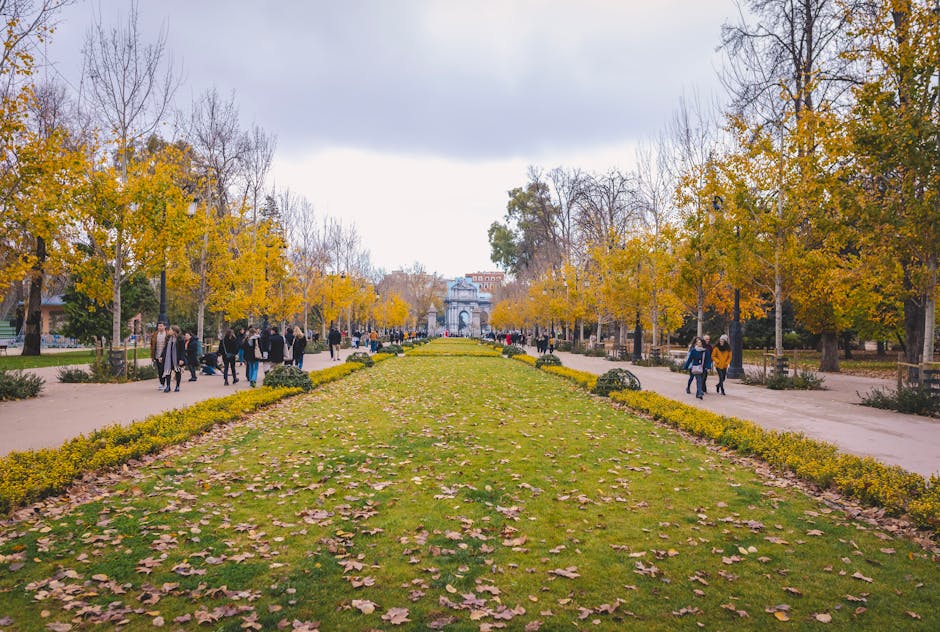
The second peak season. Retiro’s foliage peaks in late October through mid-November. The weather is ideal — 15–20°C, sunny — for all-day walking. Photographic gold.
Parks for Specific Needs
Best Parks for Kids
Madrid Río wins for sheer scale — playgrounds every 300 meters, splash fountains, skateparks, even an urban beach area. Retiro’s marionette theater, rowboats, and puppet-show Sundays are also excellent. See our complete Madrid with Kids guide for full details.
Dog-Friendly Parks
Most Madrid parks allow dogs on-leash. Casa de Campo, Dehesa de la Villa, and Madrid Río are the best for longer walks. Retiro has specific dog zones. Dogs are generally not allowed in fenced gardens (like El Capricho or the Botanical Garden).
Wheelchair-Accessible Parks
Retiro’s main paths, Madrid Río (excellent — flat, paved throughout), Parque Juan Carlos I, and the Real Jardín Botánico all offer fully accessible routes. Casa de Campo’s main roads are paved but many trails are rough terrain.
Parks for Photography
Retiro’s Crystal Palace and Velázquez Palace, the rose gardens in spring, the Templo de Debod at sunset (Parque del Oeste), El Capricho’s hidden corners, Quinta de los Molinos during almond bloom, and Campo del Moro’s angle on the Royal Palace are the iconic Madrid park shots.
Practical Tips for Enjoying Madrid’s Outdoors
- Bring water: Madrid is arid and summer heat is brutal. Public drinking fountains exist in most major parks.
- Sun protection: Even in winter, the Meseta sun is strong. Hat, sunscreen, sunglasses.
- Cash for boats and attractions: Rowboat rentals and some concessions still want cash.
- Public restrooms: Retiro, Madrid Río, and the Botanical Garden have reasonable facilities. Smaller parks often don’t — use café restrooms (buy a coffee).
- Sit where locals sit: Madrileños love the shaded edge of a park over the sunny center. Follow them in July/August.
- Evening is Madrid’s outdoor time: Locals fill the parks from 7 pm onwards in summer, using them more like an extension of their living rooms.
- Dog waste: Madrid fines dog-owners for uncollected waste; Madrileños are generally good about this.
Madrid Parks FAQs
What is the biggest park in Madrid?
Casa de Campo, at 1,722 hectares, is by far the biggest — about five times the size of Central Park in New York. Retiro, the famous central park, is a much smaller 125 hectares.
Is Retiro Park free?
Yes, Retiro is free and open daily from 6am to 10pm or midnight depending on season. Attractions inside (rowboats, exhibitions in the Crystal Palace) are also free or low-cost.
Can you swim in Madrid parks?
Not in the park lakes or fountains. Madrid city does have excellent public swimming pools (see the Municipal Pool network, €5 day entry) and Madrid Río has splash-fountain play areas for kids. For proper outdoor swimming, head to the Embalse de San Juan reservoir or the mountain pools at Las Presillas (in the Sierra de Guadarrama).
How long should I spend in Retiro?
At minimum 90 minutes — enough to see the Estanque, walk to the Crystal Palace, and loop through the rose garden. Allow half a day if you want to rent a boat, visit both palace exhibitions, and picnic. A full day is plausible for anyone serious about gardens.
When do the jacarandas bloom in Madrid?
Mid-May through early June, depending on the year. The best places to see them are the Paseo del Prado, Plaza de Cánovas del Castillo (around the Neptune fountain), and the Reina Sofía’s exterior gardens. Almond blossoms (at Quinta de los Molinos) come much earlier — late February to mid-March.
Can you drink alcohol in Madrid parks?
Technically no — Madrid has a “botellón” ordinance banning public drinking. Enforcement is loose in practice, but police can and do issue fines (€100+). If you want a glass of wine with your picnic, discretion is advised. Major parks tend to be more policed than smaller neighborhood parks.
Are Madrid parks safe at night?
Retiro and Madrid Río are well-lit and generally safe at all hours. Larger parks like Casa de Campo should be avoided in outer areas after dark. Small neighborhood parks vary — use common sense. Madrid is overall one of Europe’s safest capitals.
How do I get to the Sierra de Guadarrama without a car?
Cercanías commuter trains run frequently. Line C-8b goes to Cercedilla (gateway to Valle de la Fuenfría and Siete Picos). Line C-9 is the scenic rack-railway from Cercedilla up to Navacerrada. For La Pedriza, take the bus 724 from Plaza de Castilla to Manzanares el Real. Allow 90 minutes each way from central Madrid.
Can I bring a drone to Madrid parks?
Drone flight is prohibited in all Madrid city parks without a special permit — including Retiro, Madrid Río, and Casa de Campo. You’ll also need Spanish aviation authority (AESA) registration for any flight. Commercial drone operators need additional permits.
What’s the oldest tree in Madrid?
The “ahuehuete” (Montezuma bald cypress) in the Jardines del Buen Retiro (the formal Parterre section), planted in the 1630s during the original Buen Retiro palace construction. At 400+ years old, it’s Madrid’s oldest known tree.
Are the parks free?
Every public park in Madrid is free to enter: Retiro, Madrid Río, Casa de Campo, Parque del Oeste, El Capricho, Quinta de los Molinos, Parque Juan Carlos I, etc. The only exception is the Real Jardín Botánico (€6) and the attractions inside Casa de Campo (zoo, theme park) which charge their own admissions.
Related Guides
- Top Things to Do in Madrid
- Madrid Neighborhoods Guide
- Madrid with Kids — family-friendly park picks
- Madrid Day Trips — Sierra de Guadarrama and beyond
- Madrid Itinerary Planner — work parks into your day plans
- Madrid History and Architecture — context for the palaces that anchor the gardens
Madrid’s outdoor life is the side of the city that visitors often underestimate. Make time for at least one major park — and if possible both a city park (Retiro or Madrid Río) and an outlying one (Casa de Campo or El Capricho) — to see the full range. Locals retreat to these spaces daily, and that rhythm is a real part of what makes Madrid livable.
Heading out with the family? Pair this with Madrid with kids and our roundup of free things to do in Madrid.