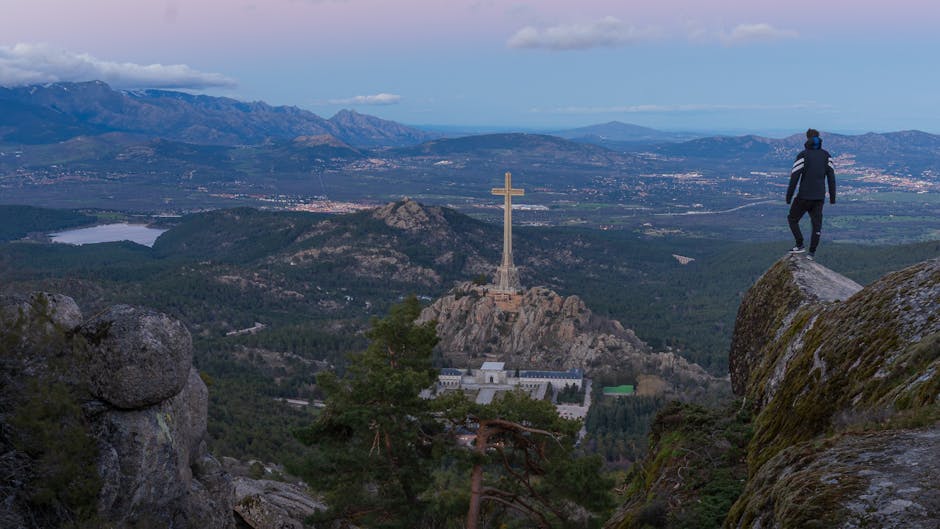
The Valle de los Caídos Madrid day trip — now officially renamed the Valle de Cuelgamuros — is one of Spain’s most controversial monuments and a sobering chapter in 20th-century European history. Set in the Sierra de Guadarrama 50 km northwest of Madrid, this massive Franco-era monument was constructed 1940-1959 by political prisoners, topped by a 150-meter granite cross visible from kilometers away. Following 2019-2024 reforms, it has been transformed from a Franco glorification site into a memorial to Spanish Civil War victims of all sides. This guide covers the Valle de los Caídos Madrid day trip: how to get there, what to see, the historical context, and how to combine with El Escorial.
Valle de los Caídos is the most historically charged day trip from Madrid — a site that Spain has debated for decades. Combine it with Toledo or Segovia if you want a fuller day, or see all options in our day trips from Madrid guide and the day trip comparison hub.

Table of Contents
- How to Get to Valle de los Caídos from Madrid
- What You’ll See
- Historical Context
- Combining with El Escorial
- Practical Tips
- FAQs
How to Get to Valle de los Caídos from Madrid
- Train + bus / car (Recommended): Cercanías C-3a or C-8 to El Escorial (60 min, €4 each way), then taxi to Valle de los Caídos (15 min, €15-20 round-trip). Total ~90 min from central Madrid.
- Organized tour: Most Valle de los Caídos Madrid tours combine with El Escorial; €60-80 for a full day with transport and guide.
- Car: 50 km via the M-600/M-505. Free parking at the monument.
What You’ll See on a Valle de los Caídos Madrid Day Trip

1. The Basilica
Carved 262 meters into a granite mountain — making it longer than St. Peter’s in Rome (which the Vatican’s specifications limited to 250m to ensure no Catholic basilica exceeded the Vatican’s own). Holds Catholic services daily; admission €9.
2. The Granite Cross
150 meters tall — the largest in the world. Visible from 30+ km. Statues of the four Evangelists at the base. Funicular access from the basilica.
3. The Memorial Crypt
Holds 33,000+ remains of Spanish Civil War victims from both sides — Republican and Nationalist. Following 2019 reforms, Franco’s remains were exhumed and reburied elsewhere; in 2023 the monument was rededicated as a memorial to all Civil War victims.
4. Sierra de Guadarrama Surroundings
The monument sits within the Sierra de Guadarrama National Park — granite rock formations, pine forests, and walking trails surround the basilica.
Historical Context
Conceived by Franco after the Spanish Civil War (1936-1939) as a “national reconciliation” monument and a Catholic basilica. Built 1940-1959, partly with forced labor by Republican political prisoners — a deeply contested aspect of its history. Originally Franco was buried inside; he was exhumed and reburied at Mingorrubio cemetery in 2019 under the Spanish Democratic Memory Law. Subsequent reforms (2022-2024) reframed the site as a memorial to all Civil War victims rather than a Franco-glorifying site. The visitor experience has been transformed accordingly.
Combining Valle de los Caídos with El Escorial
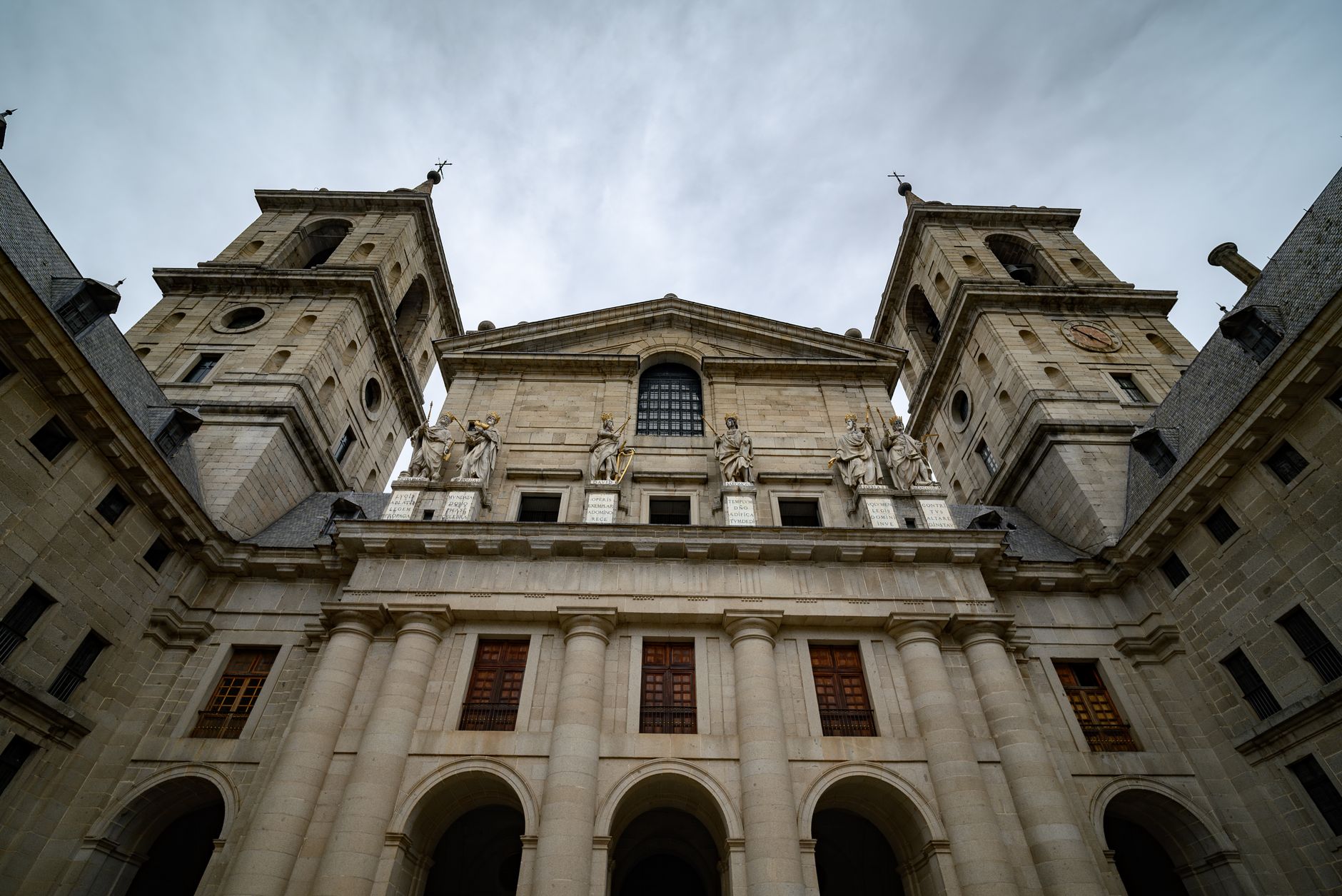
El Escorial — Felipe II’s vast 16th-century monastery-palace — is 8 km from Valle de los Caídos. Most Valle de los Caídos Madrid visitors combine the two as a single day:
- Morning: El Escorial monastery and royal apartments (3 hours).
- Lunch: El Escorial town has good Castilian restaurants.
- Afternoon: Valle de los Caídos (2 hours).
- Return: Cercanías to Madrid by 7-8pm.
Practical Tips for a Valle de los Caídos Madrid Day Trip
- Combine with El Escorial: 8 km apart; logical pairing.
- Allow 2 hours at Valle: Plus transit time.
- Dress respectfully: Active religious site; modest dress preferred.
- Bring water: Limited services at the monument.
- Read about the history first: The monument’s significance is deeply political; arrive informed.
- Sierra altitude (~1,200m): Cooler than Madrid; bring a jacket.
Valle de los Caídos Madrid FAQs
Is the Valle de los Caídos Madrid day trip worth doing?
For history-focused travelers interested in 20th-century Spain, yes — combined with El Escorial it makes a substantive full day. The monument’s scale is genuinely awe-inspiring, and the recent recontextualization makes it a thought-provoking visit. Less essential for first-time Madrid tourists.
Is Franco still buried at Valle de los Caídos?
No — Franco’s remains were exhumed in 2019 and reinterred at Mingorrubio cemetery near Madrid, following the Democratic Memory Law.
How much does a Valle de los Caídos Madrid day trip cost?
€40-70 per person: €8 train, €15-20 taxi to monument, €9 monument admission, lunch.
Is the cross really the largest in the world?
At 150 meters it’s widely considered the world’s tallest Christian cross. Visible from 30+ km away across the Sierra.
What should I wear?
Modest dress (covered shoulders/knees) for the basilica. Comfortable walking shoes. Light jacket — Sierra altitude is cooler than Madrid year-round.
History and Heritage
The Valle de los Caídos — officially renamed Valle de Cuelgamuros in 2022 — was built between 1940 and 1959 by Francisco Franco’s regime as a memorial to Spanish Civil War dead. The basilica is hewn 262 meters into a granite mountain near El Escorial, topped by a 150-meter cross (the tallest memorial cross in the world). Approximately 33,000 victims from both sides of the war are interred in the crypts, but the site has remained controversial: many of the bodies were transferred without family consent, and the construction itself relied partly on Republican political prisoners as forced labor. Franco was buried here from 1975 to 2019, when the Spanish government exhumed and moved his remains under the Historical Memory Law. Primo de Rivera (founder of the Falange) was likewise moved in 2023. The site has been transformed under the Democratic Memory Law (2022) into a place of memorialization rather than glorification — interpretive panels now contextualize the dictatorship, forced labor, and the war’s victims on both sides. A Valle de los Caídos day trip from Madrid is one of Spain’s most morally complex tourist experiences: an undeniably extraordinary feat of mid-century engineering, set in spectacular Sierra landscape, with an inseparable history of authoritarian violence. Most visitors find a Valle de los Caídos visit deeply contemplative.
Suggested Itinerary Combining Valle de los Caídos + El Escorial
- 09:00 — Madrid Atocha: Cercanías C-3 to El Escorial (~60 min, €4).
- 10:15 — El Escorial monastery (3 hours): Tour the basilica, royal pantheon, library, and palace. €14.
- 13:30 — Lunch in El Escorial town (60 min): Castilian classics.
- 14:30 — Bus or taxi to Valle de los Caídos (15 min, ~€20): No public transport directly; arrange round-trip taxi from El Escorial bus station.
- 14:45 — Valle de los Caídos (90 min): Basilica tour, exterior cross, esplanade. €9 admission.
- 16:15 — Return to El Escorial.
- 17:00 — Train back to Madrid: 60 min.
What Most Visitors Miss
- The Funicular: Closed since 2009 for safety reasons — but the original funicular shaft is visible from the basilica esplanade.
- Hostería de la Santa Cruz: Adjacent guesthouse run by Benedictine monks — open to non-guests for restaurant lunch with Sierra views.
- Camino de los Caídos forest path: 3-km path from the basilica through pine forest — mostly empty.
- Memorial interpretive panels (2022 onward): Read carefully — they document the forced labor and dual victims rarely mentioned by older guidebooks.
- Pinar de Cuelgamuros: Surrounding pine forest with picnic areas; spectacular Sierra views.
- Mirador del Puente de Mediano: 5-min walk along the road — best wide angle of the cross above the trees.
Photography at Valle de los Caídos
- Cross from approach road: 150-meter cross dominates the granite ridge — best with morning side-light.
- Basilica facade: Hewn into living rock; photograph the angel figures from the esplanade.
- Interior crypt (no flash): Cavernous nave with mosaic dome; tripod prohibited but available light works.
- Esplanade panorama: Sierra de Guadarrama backdrop.
- From Mirador del Puente de Mediano: Wide shot capturing the entire massif and cross.
- Important — respect: The basilica is an active church and memorial. Photography is permitted in most areas but conduct yourself with the gravity the site warrants.
Best Time to Visit Valle de los Caídos
Spring (April-June): Mild Sierra temperatures, surrounding forests at peak green. Best season overall.
Summer (July-August): Higher altitude (~1,000m) keeps the site cool. Crowds smaller than at El Escorial proper.
Autumn (September-October): Pine forests hold green but deciduous patches turn golden — striking with the granite massif.
Winter (November-March): Cold; the basilica interior is genuinely frigid (basilica is unheated stone). Snow on the cross is photogenic but check road conditions before driving.
Valle de los Caídos vs. El Escorial: Which Should You Visit?
Both are within 13 km in the Sierra de Guadarrama. Most visitors combine them.
El Escorial is essential for any visitor to Madrid: a UNESCO-listed Renaissance royal complex, Habsburg mausoleum, working monastery, library, and palace under one roof. Architecturally and historically significant for understanding Spain.
Valle de los Caídos is a controversial supplement — undeniably impressive engineering but inseparable from Franco’s authoritarian legacy. Some travelers visit; others choose not to. Approach it as moral history rather than tourism.
Recommended approach: visit El Escorial as your primary destination; add Valle de los Caídos as an afternoon supplement only if you’re interested in 20th-century Spanish history and prepared for the moral weight.
Where to Eat Near Valle de los Caídos
- Hostería de la Santa Cruz: Benedictine guesthouse restaurant — refined Castilian, panoramic Sierra dining room. €25-40.
- Restaurante Charolés: 12 km away in El Escorial town — famous for cocido madrileño and Castilian classics.
- Mesón La Cueva: El Escorial; rustic Castilian, since 1768.
- Hotel Botánico restaurant: Modern Castilian in El Escorial.
The valley itself has minimal dining options. Plan to eat in El Escorial town before or after.
Practical & Cultural Tips
- Approach with gravity: The site is morally complex; conduct yourself respectfully — appropriate dress in basilica, no celebratory selfies.
- No public transport directly: Taxi from El Escorial bus station (€20-25 round trip including wait).
- Read the 2022 panels: The Democratic Memory Law re-contextualization is essential to understanding the site.
- Dress warmly: The basilica is unheated stone — even in summer, bring a layer.
- Ticketing: €9 entry; closed Mondays. Buy online at patrimonionacional.es.
- Time required: 90 min on site is sufficient; combined with El Escorial, a full day.
More Valle de los Caídos Day Trip Questions
Is Valle de los Caídos open to visitors?
Yes — operated by Patrimonio Nacional. €9 admission; closed Mondays. Renamed Valle de Cuelgamuros in 2022.
Is Franco buried here?
No. Franco’s remains were exhumed and moved to Mingorrubio cemetery in October 2019. Primo de Rivera’s remains were also moved in 2023.
Is it controversial to visit?
Honest answer: yes, somewhat. Some Spanish visitors avoid it on principle; others view it as historical witness. The 2022 reframing emphasizes memorialization of all war victims and acknowledges forced labor in construction. Visit thoughtfully.
Can I get there without a car?
Difficult. No direct public bus. Take Cercanías to El Escorial, then taxi the final 13 km. Some Madrid tour companies offer combined El Escorial + Valle de los Caídos packages with bus transport.
Can I climb to the cross?
No — the funicular has been closed since 2009 and there is no walking access. The cross can only be admired from the esplanade.
Official Resources
- Patrimonio Nacional Valle de Cuelgamuros: Patrimonio Nacional
- Sierra de Guadarrama National Park: Parque Nacional
Plan Your Day Trip
- All day trips from Madrid — complete guide
- Which day trip suits you — comparison hub
- Segovia day trip — aqueduct, Alcázar and cochinillo
- Toledo day trip — medieval UNESCO city
- La Granja day trip — baroque royal gardens near El Escorial
- Getting to El Escorial by train — Madrid transportation guide
- Madrid history and architecture — Franco-era context
- Things to do in Madrid — the full city guide
A Valle de los Caídos Madrid day trip is for visitors interested in 20th-century Spanish history — a sobering, visually overwhelming monument now reframed as a memorial to all Civil War victims, best paired with El Escorial for a full day in the Sierra de Guadarrama.