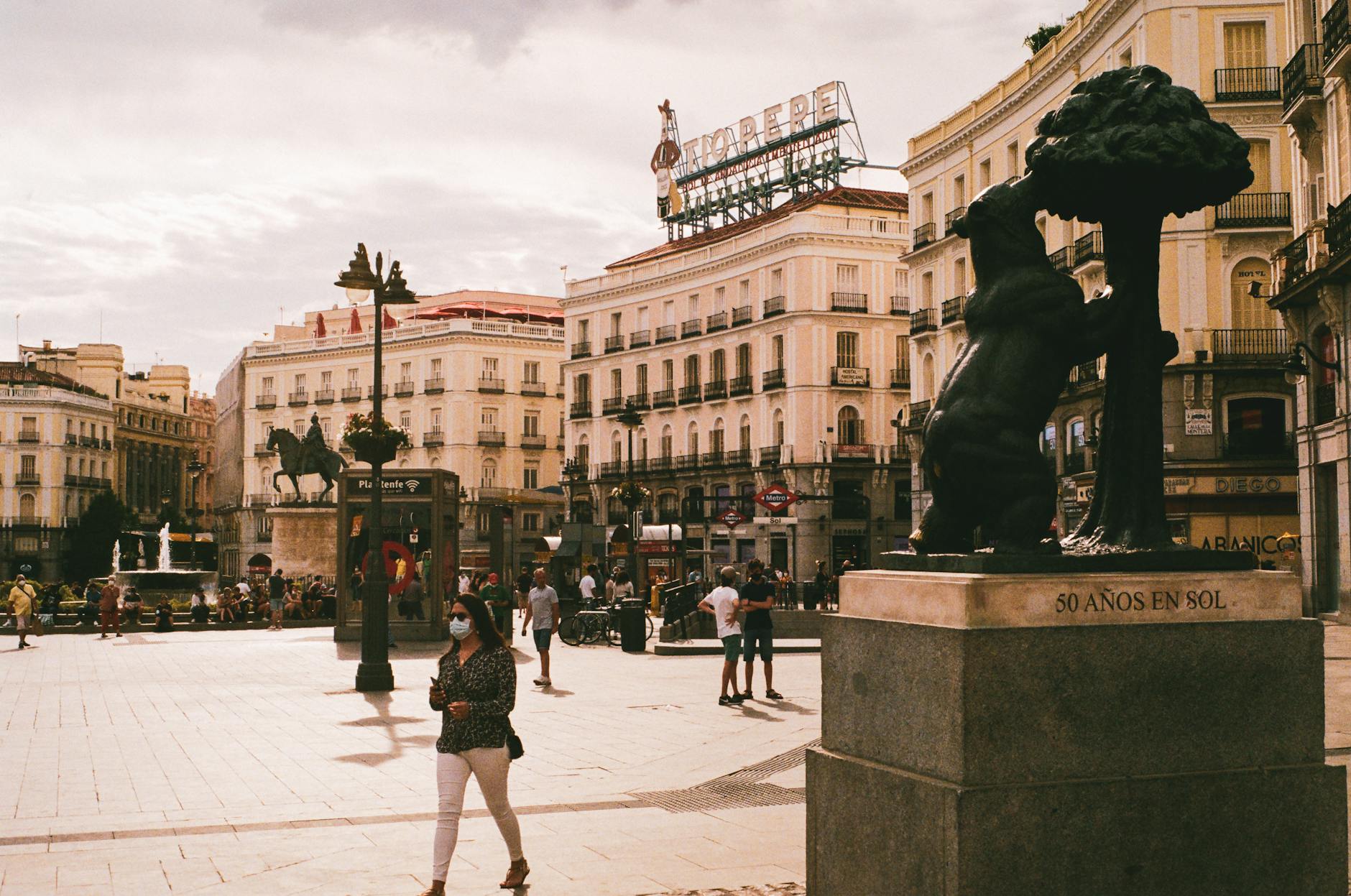
Madrid became a capital not because of geography or history but because Philip II pointed at it in 1561 and said: here. No river port, no Roman foundation, no natural defenses. Just a modest Castilian town that was suddenly required to be the center of the most powerful empire on Earth. That improbable origin gives Madrid a character you notice immediately when you walk through it — Habsburg austerity crashing into Bourbon grandeur, medieval lanes opening without warning onto vast neoclassical plazas, and a 9th-century Moorish wall tucked under the slope of a hill a few hundred meters from the Spanish royal family’s official residence.
This guide traces Madrid’s architecture and history from the Islamic fortress of Mayrit through every layer to the 21st-century skyline, with walking routes you can do in a day.
Islamic Mayrit: The 9th-Century Foundation
Madrid’s oldest recorded history begins not with Christians but with Muslims. Around 860 AD, Muhammad I — Emir of Córdoba — ordered a fortress built on the high ground above the Manzanares River. The settlement was called Mayrit, possibly from the Arabic “majra” (water channel), a reference to the underground streams feeding the area. It was a military outpost protecting Toledo, then the most important city in central Iberia, from Christian attacks from the north.
The Moorish legacy is subtle but there if you know where to look. Remnants of the original 9th-century walls — the Muralla Árabe — survive near the Cuesta de la Vega, just below the Royal Palace: rough limestone blocks that are the oldest standing structures in Madrid. The street pattern around the old Morería quarter (Calle de Segovia, Calle de Bailén) still follows the organic winding logic of the original settlement. Madrid’s underground water management system — the viajes de agua that carried fresh mountain water into the city — was an Islamic engineering achievement that kept functioning until the 19th century. It’s why Madrid’s tap water is still excellent today.
Christian Reconquest and Medieval Madrid (11th–15th Century)
In 1083, Alfonso VI of Castile captured Madrid during the broader Reconquista. The town grew outward from the Moorish fortress, with Christian churches built over or near former mosques. The best surviving example: San Nicolás de los Servitas, Madrid’s oldest church, with a 12th-century Mudéjar bell tower built by Muslim craftsmen working under Christian rule. Horseshoe arches, brick construction — Moorish aesthetics serving Christian patrons. That fusion is uniquely Spanish, and you see echoes of it throughout the old city.
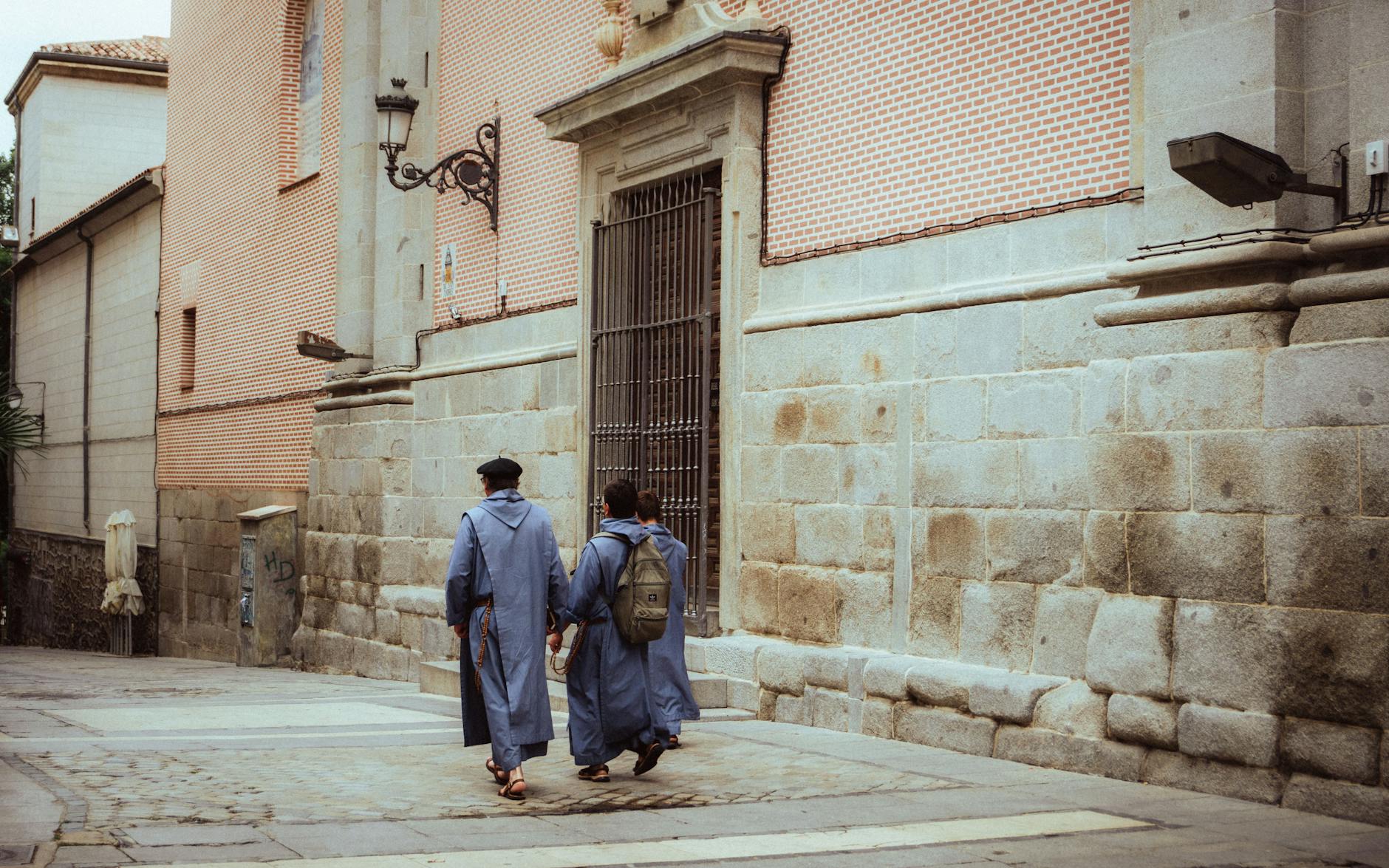
La Latina, Madrid’s oldest neighborhood, preserves the medieval street pattern most faithfully. Walking Calle de la Cava Baja, Calle del Nuncio, Calle de la Redondilla — narrow, sloping, densely human — you feel the medieval town’s scale. El Rastro flea market, which has occupied these streets since at least the 15th century, connects modern Sunday Madrid directly to its medieval commercial past.
Habsburg Madrid: Empire Builds a Capital (1561–1700)
When Philip II chose Madrid in 1561, the city had around 30,000 people. By 1600 it had 80,000; by the mid-17th century, 175,000. The Habsburgs — Philip II, III, IV, and the unfortunate Charles II — transformed a provincial town into an imperial capital with characteristic Spanish restraint. Habsburg architecture here is brick, slate roofs, sober facades. No excessive ornamentation. The grandeur is in proportion and scale, not decoration. Architects call the style Herreriano, after Juan de Herrera, who designed El Escorial.
Plaza Mayor: The Set Piece of Habsburg Madrid
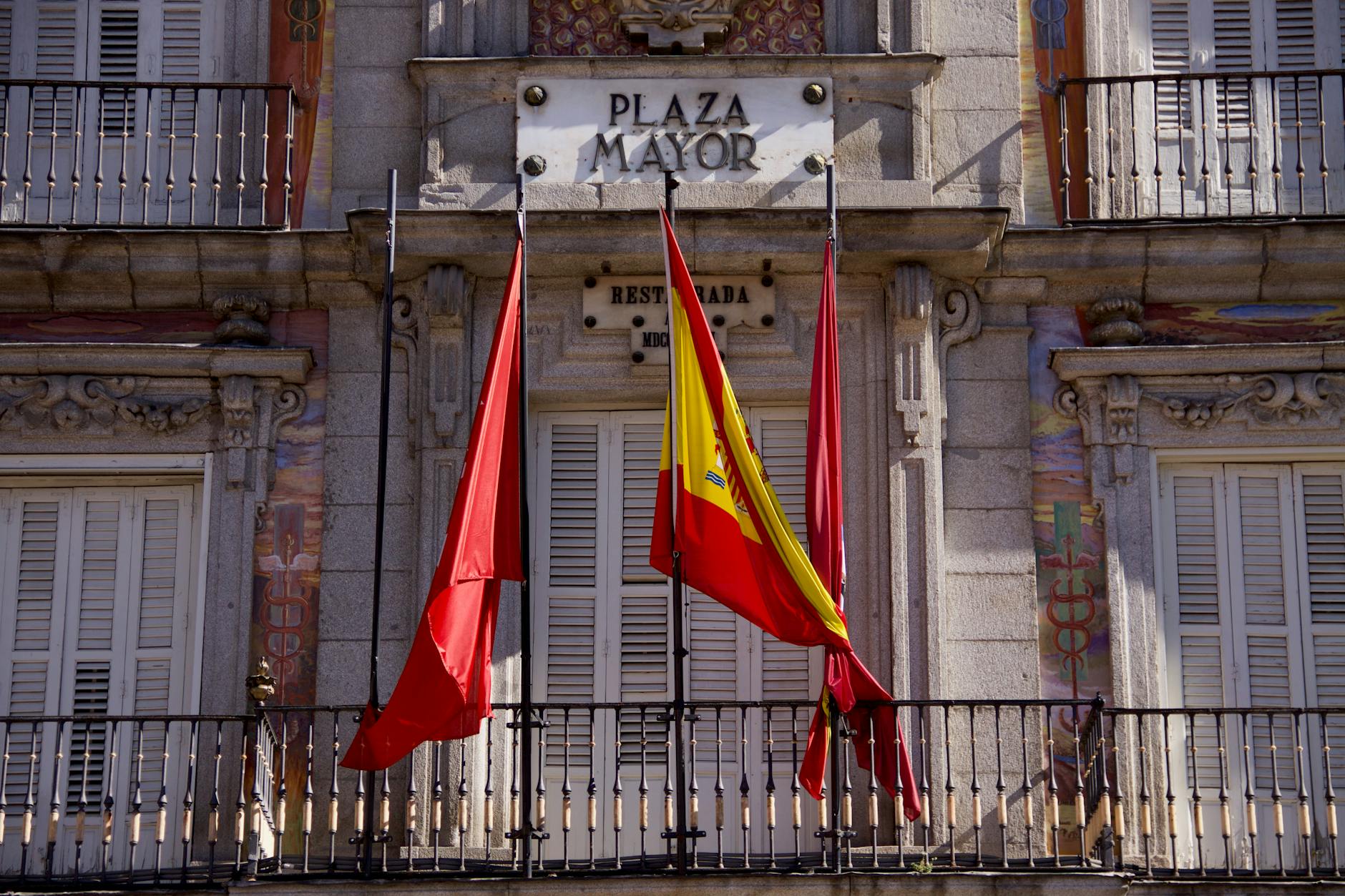
Plaza Mayor is the defining Habsburg landmark. Commissioned by Philip III, designed by Juan Gómez de Mora, completed in 1619. The rectangular plaza — four-story buildings, 237 balconies, completely enclosed — hosted markets, bullfights, theater, royal ceremonies, and during the Inquisition, autos-da-fé. The Casa de la Panadería on the north side, with its painted facade and twin towers, was the royal viewing box. The bronze Philip III on horseback at the center was cast by Giambologna and Pietro Tacca, originally in the Casa de Campo before being moved here in 1848. The plaza was rebuilt after fires in 1631, 1672, and 1790; the current enclosed form came from Juan de Villanueva after the final reconstruction.
The court culture of Habsburg Madrid was extraordinary. Philip IV’s Alcázar fortress — where the Royal Palace now stands — housed one of Europe’s greatest art collections. Velázquez served as court painter, producing Las Meninas within its walls. The connection between royal patronage and artistic genius during this period is the foundation of everything you see in the Prado Museum today.
The Buen Retiro Palace, built in the 1630s as a pleasure palace for Philip IV, occupied what is now Retiro Park. The Napoleonic invasion (1808) destroyed most of it; two structures survive — the Casón del Buen Retiro (now part of the Prado) and the Salón de Reinos, currently under restoration. The park itself became public property in the 19th century.
Bourbon Madrid: Grandeur and Enlightenment (1700–1808)
The Bourbon dynasty arrived in 1700 when Philip V — grandson of Louis XIV — took the Spanish throne after the War of Spanish Succession. The Bourbons brought French and Italian aesthetics: neoclassical elegance, monumental urban planning, a desire to rival Versailles.
The Royal Palace
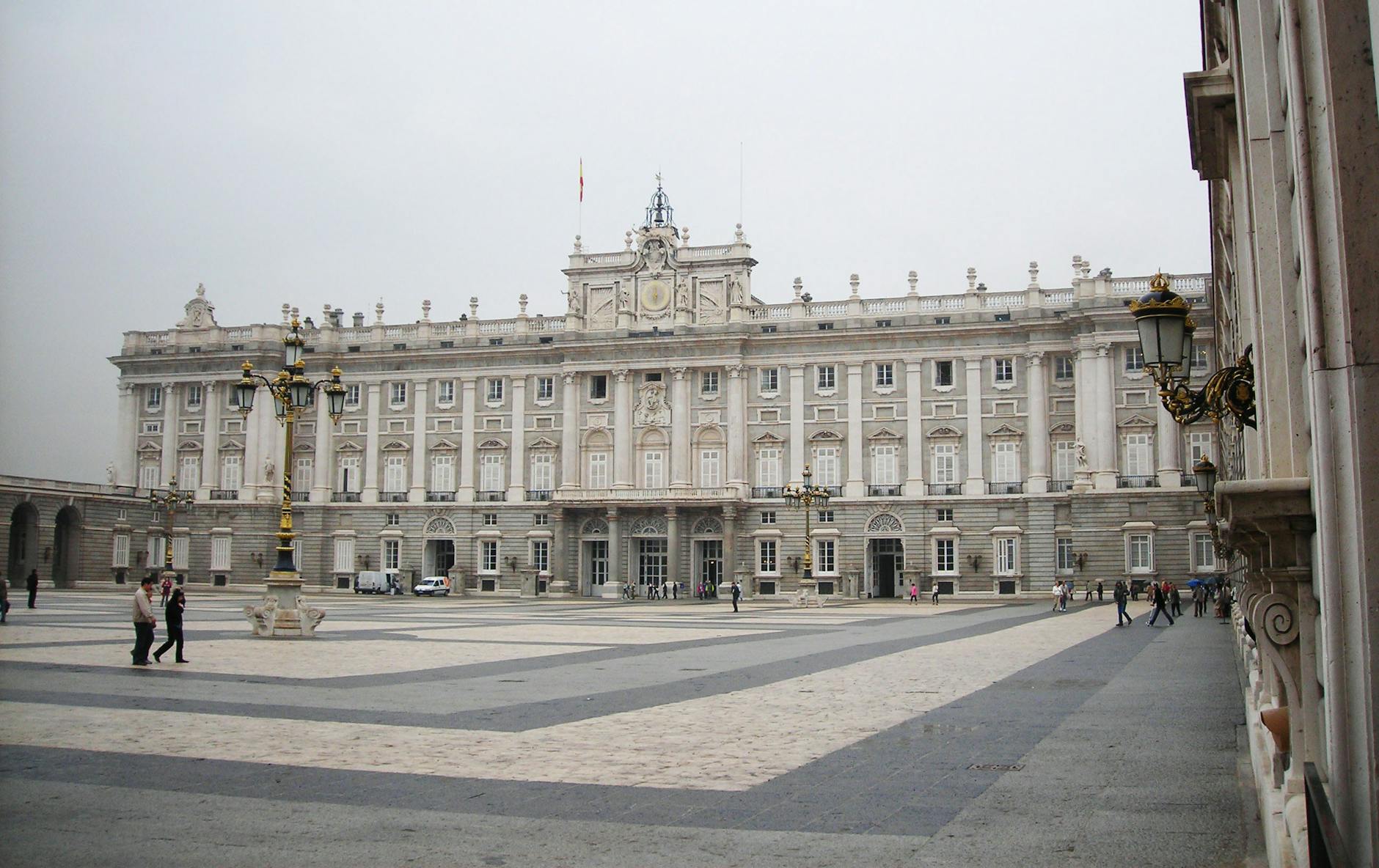
On Christmas Night, 1734, the Alcázar burned to the ground. Philip V used the moment to build a palace that would make Versailles look modest. The result — the Palacio Real — is the largest functioning royal palace in Europe: 3,418 rooms, 135,000 square meters, built entirely from limestone and granite (Philip V specified no wood, to prevent another fire). Italian architects Filippo Juvara and Giambattista Sacchetti designed it; Tiepolo painted the Throne Room ceiling. It’s genuinely astonishing inside.
👉 Full guide: Royal Palace of Madrid — tickets, hours, and what to see
Charles III and the Enlightenment City
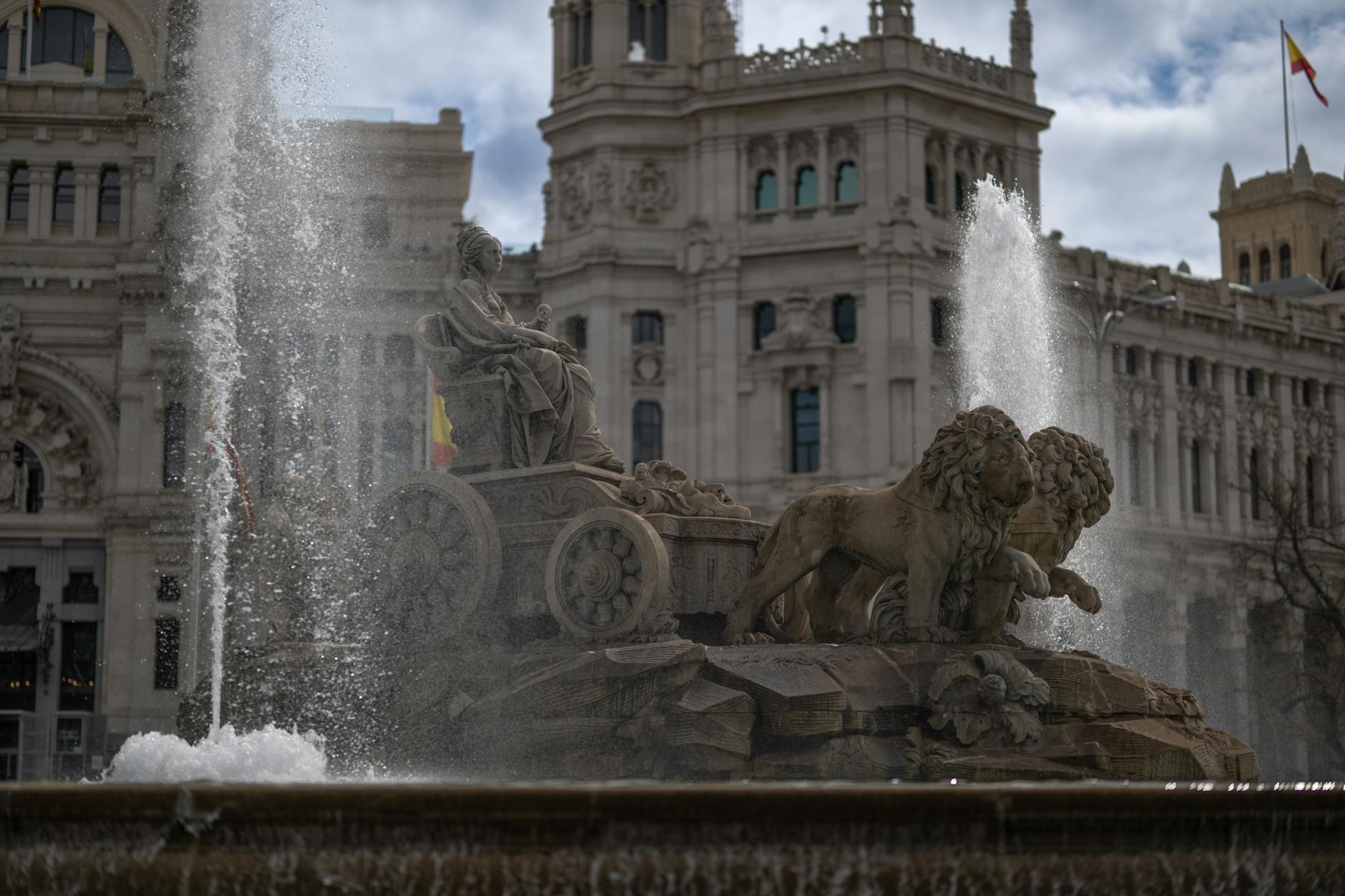
Charles III (1759–1788) is remembered as “the Best Mayor of Madrid.” His reign gave the city the Paseo del Prado (a grand tree-lined promenade), the Puerta de Alcalá (triumphal arch), the Cibeles and Neptune fountains, the Royal Botanical Garden, and the building that now houses the Prado Museum — originally designed by Juan de Villanueva as a natural history museum. The Paseo del Prado was declared a UNESCO World Heritage Site in 2021, and walking it today you feel exactly what Charles III intended: a space where science, art, and civic life converge.
👉 For a full tour of what’s on the Paseo del Arte corridor: Madrid museums and art guide
War, Revolution, and the 19th Century
The Dos de Mayo Uprising (1808)
On May 2, 1808, Madrileños rose up against Napoleon’s occupying forces. The uprising was suppressed brutally. Goya immortalized the violence in two paintings now in the Prado — The Second of May 1808 and The Third of May 1808 — that rank among the most powerful anti-war images ever made. The rebellion failed militarily but sparked the six-year Peninsular War that eventually expelled the French from Spain.
The Malasaña neighborhood is named for Manuela Malasaña, a seamstress executed by French soldiers. Plaza del Dos de Mayo at the neighborhood’s heart commemorates the uprising every May 2 — Madrid’s official city holiday. If you’re visiting in late April or early May, the celebrations are worth planning around.
19th-Century Expansion
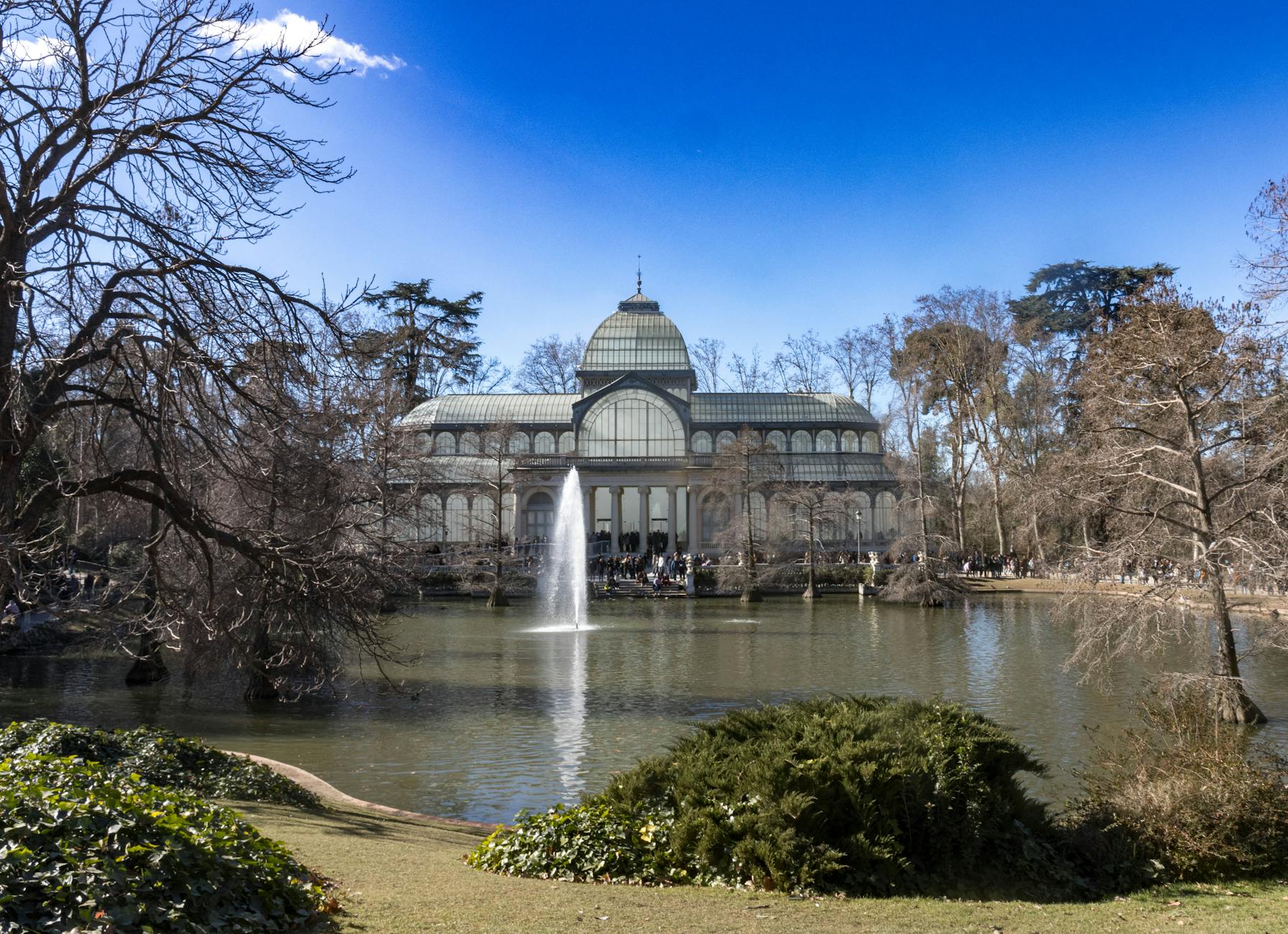
The old city walls came down, and Madrid expanded outward. The Ensanche plan of Carlos María de Castro (1860) created the rational grid of the Salamanca neighborhood — wide streets, elegant apartment buildings, bourgeois confidence. Late in the century, iron-and-glass architecture arrived: the Crystal Palace in Retiro Park (1887, Ricardo Velázquez Bosco), Mercado de San Miguel, and the main hall of Atocha station (now a tropical garden) all date to this era.
Early 20th Century: Gran Vía and Art Deco
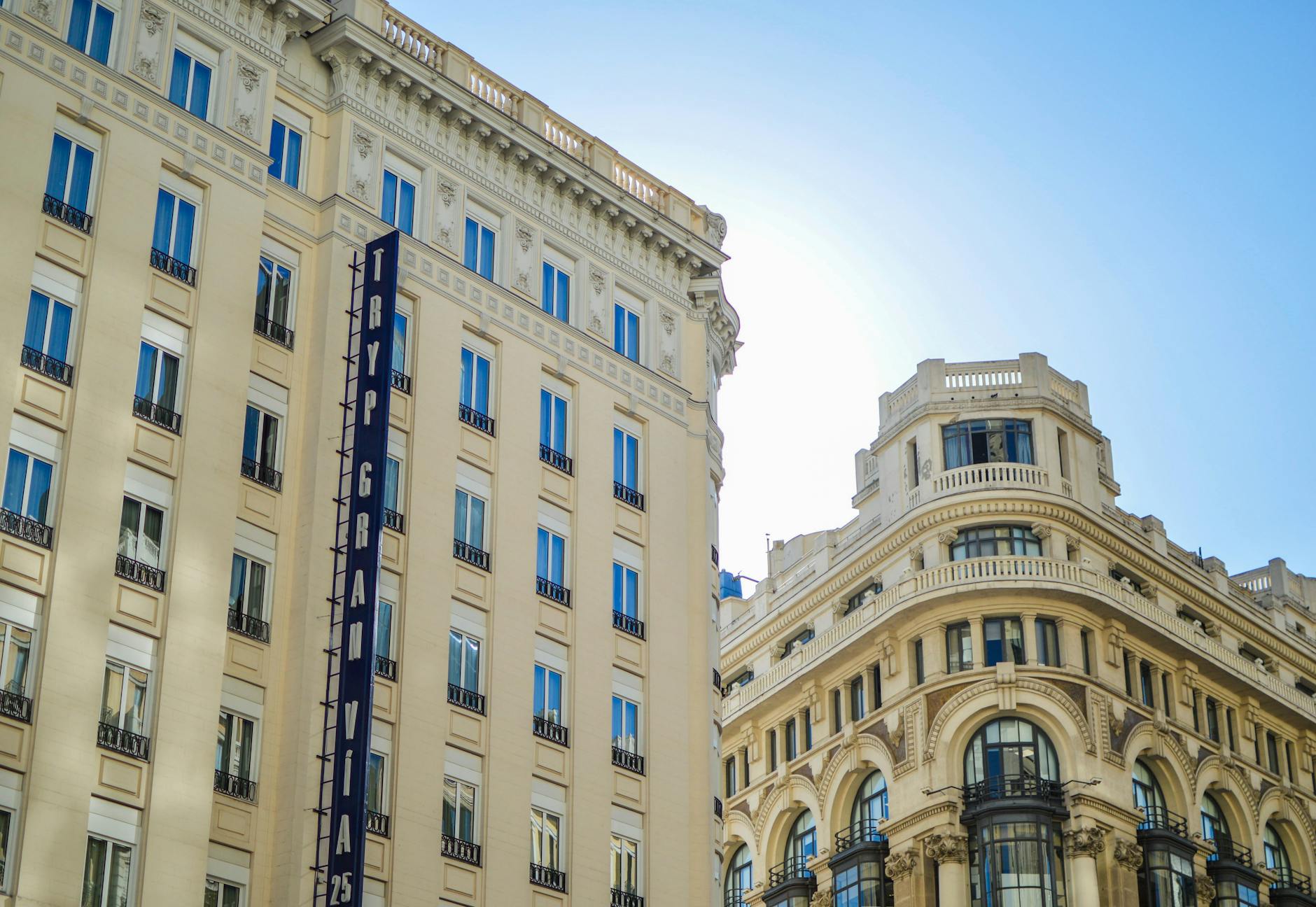
Construction of Gran Vía began in 1910, requiring the demolition of over 300 buildings to carve a grand boulevard from Calle de Alcalá to Plaza de España. The buildings along it span Art Nouveau, eclectic revivalism, and full Art Deco — an architectural timeline in a 1.3-kilometre walk. Key landmarks: the Metrópolis Building (1911, winged Victory statue on top, corner of Alcalá), the Telefónica Building (1929, Spain’s first skyscraper, used as a communications hub during the Civil War), and the Capitol Building (1933, outstanding Art Deco with the curved facade you see in every aerial photo of the city).
👉 Full architectural walk: Gran Vía Madrid guide
Art Nouveau left its best Madrid mark on the Palacio Longoria (1904, now SGAE headquarters on Calle de Fernando VI) — flowing organic forms, floral motifs, sinuous curves. One of the finest Modernismo buildings in Spain and easy to overlook because it doesn’t appear on most tourist maps.
The Spanish Civil War (1936–1939)
As the Republican capital, Madrid endured nearly three years of siege. Gran Vía earned the nickname “Howitzer Avenue” from foreign correspondents sheltering in the Telefónica Building while shells landed. Bullet holes still mark facades along Calle de Bailén and near the Royal Palace — not all of them have been filled in, deliberately.
The Reina Sofía Museum centers its war-era galleries around Picasso’s Guernica, painted in response to the German and Italian bombing of a Basque town. Spending 20 minutes in front of that painting in context — with the surrounding documentary photographs and preparatory sketches — is one of the most powerful experiences Madrid offers.
👉 Guide: Reina Sofía Museum and Guernica
The Valle de los Caídos (now officially Cuelgamuros Valley), 50 km northwest of Madrid, is Spain’s most contested monument — a massive basilica carved into a mountain, originally built using forced labor under Franco, now being reinterpreted as Spain grapples with Civil War memory. A full-day Valle de los Caídos day trip makes sense only if you have the historical context to process what you’re seeing.
The Movida Madrileña: Madrid Reinvents Itself
After Franco’s death in 1975, the transition to democracy produced one of the most remarkable cultural explosions in European postwar history. The Movida Madrileña — centered in Malasaña in the late 1970s and 1980s — was an outpouring of creative energy that had been suppressed for decades. Pedro Almodóvar made his first films here. The music, fashion, and photography that emerged transformed Madrid from a conservative, repressed capital into one of Europe’s most culturally alive cities. The effect lasted. You still feel it in Malasaña’s bars and in the particular Madrid attitude toward night, pleasure, and freedom.
Modern Madrid: 21st-Century Architecture
Contemporary Madrid has continued building. The Cuatro Torres Business Area — four skyscrapers completed 2007–2009, with Torre Caleido added in 2021 — redefines the northern skyline. Madrid Río (completed 2011) buried a six-lane highway along the Manzanares River and created 120 hectares of parks, bridges, and public spaces — transforming one of the city’s most neglected edges into the best urban riverside park I’ve seen in any European capital. The CaixaForum (2008, Herzog & de Meuron) added a vertical garden by Patrick Blanc to an already striking contemporary art center on the Paseo del Arte. The Matadero Madrid — former slaughterhouse, now thriving arts center — shows Madrid’s gift for repurposing industrial buildings without sanitizing their character.
Architectural Walking Routes
Route 1: Habsburg Madrid (2–3 hours)
Start: Royal Palace → Plaza de Oriente → Royal Theater (Teatro Real) → Plaza de la Villa (15th-century Torre de los Lujanes, oldest civil building in Madrid) → Plaza Mayor → Colegiata de San Isidro (1622) → La Latina. This walk covers 600 years of pre-Bourbon Madrid in under 4 kilometers.
Route 2: Bourbon Grandeur (2–3 hours)
Start: Puerta de Alcalá → Paseo del Prado → Cibeles Fountain and Palace → Neptune Fountain → Prado Museum exterior → Royal Botanical Garden → Atocha Station tropical garden. UNESCO World Heritage corridor walking south to north.
Route 3: Gran Vía and Art Deco (1–2 hours)
Start: Metrópolis Building (Calle de Alcalá) → walk the full length of Gran Vía → Plaza de España → Templo de Debod. Note the architectural progression: Beaux-Arts Grassy Building (1917) → eclectic Palacio de la Prensa (1924) → Art Deco Capitol Building (1933) → neo-Baroque Edificio España (1953). End with an authentic 2nd-century BC Egyptian temple gifted to Spain by Egypt in 1968 — the contrast is surreal and completely Madrid.
Route 4: Contemporary Madrid (2–3 hours)
Start: CaixaForum and vertical garden → walk along Madrid Río → Matadero arts center → Arganzuela footbridge → Cuatro Torres skyline viewpoint. This route is the least touristy but shows Madrid’s architectural ambition and its transformation of former industrial infrastructure.
Hidden Historical Sites
The Egyptian Temple of Debod in Parque del Oeste — an authentic 2nd-century BC temple reassembled stone by stone after Egypt gifted it to Spain in 1968. Free, and spectacular at sunset. Ghost metro station Chamberí (Andén 0) — a perfectly preserved 1919 station closed in 1966, with original tiles, advertisements, and ticket windows. Free on weekends. The Basilica of San Francisco el Grande (33-meter dome, Goya paintings). The Ermita de San Antonio de la Florida (Goya’s ceiling frescoes; the artist is buried beneath them).
The Almudena Cathedral
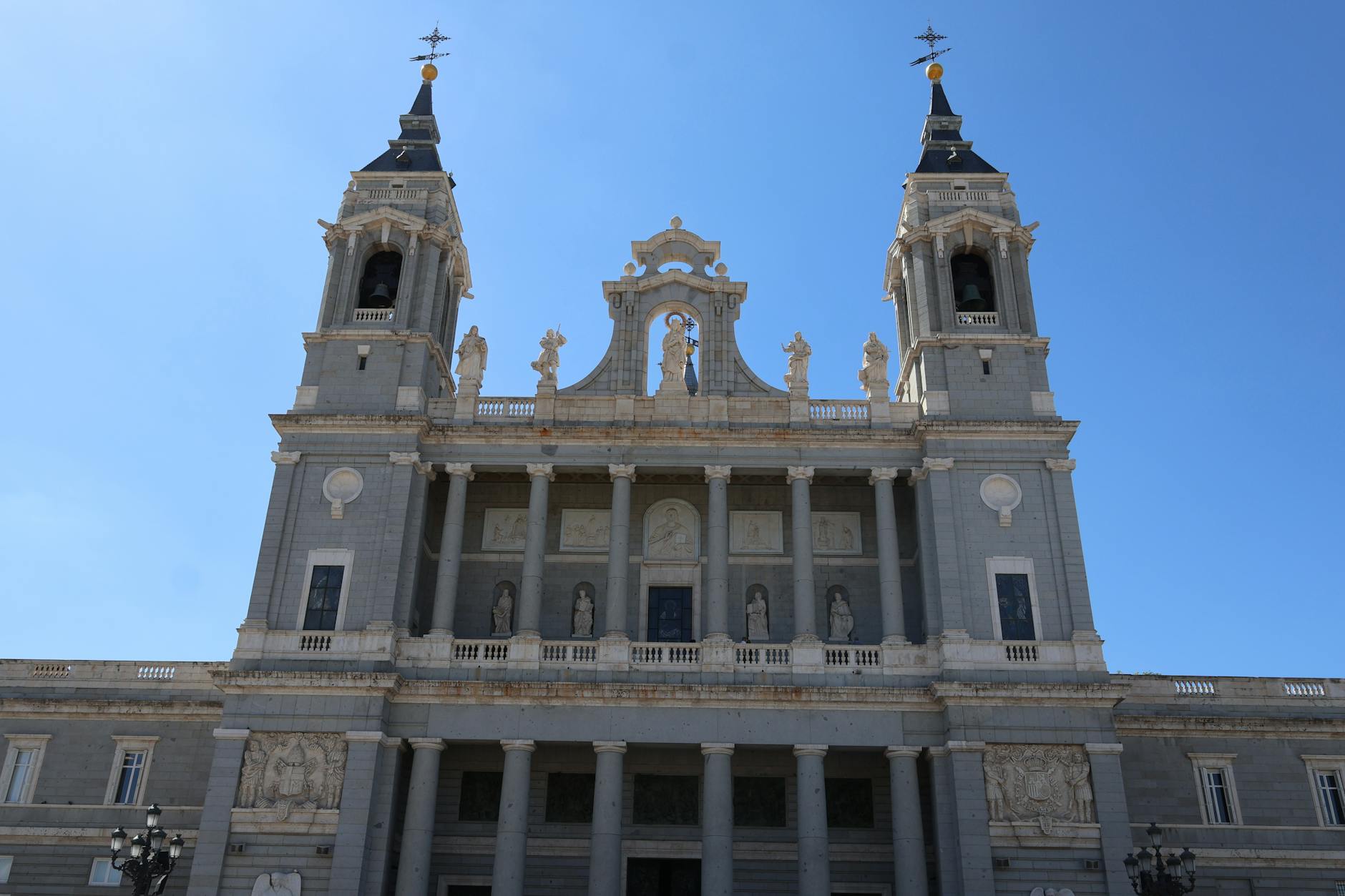
For the capital of the world’s most Catholic empire, Madrid was remarkably late in getting a cathedral. Construction started in 1883, was interrupted by the Civil War, and finished in 1993 — 110 years. The result is a genuine architectural hybrid: neoclassical exterior designed to complement the adjacent Royal Palace; neo-Gothic interior with unexpectedly bold modern ceiling paintings by Kiko Argüello. The crypt is Romanesque Revival and worth seeing for its carved capitals and quiet atmosphere.
Literary and Artistic Heritage
Barrio de las Letras (Literary Quarter) around Calle de las Huertas was home to Spain’s greatest Golden Age writers. Cervantes lived and died on Calle de Cervantes. Lope de Vega — attributed with over 1,500 plays — lived a few doors away; his house is now a museum (Casa-Museo de Lope de Vega), one of Madrid’s most intimate and overlooked. Quotes from great Spanish writers are set into the cobblestones in brass — a literary walking tour literally underfoot.
Francisco Goya spent much of his career in Madrid. His work from tapestry cartoons to the Black Paintings is in the Prado; his ceiling frescoes are in the Ermita de San Antonio de la Florida, where he’s also buried. Picasso studied at the Royal Academy of Fine Arts of San Fernando on Calle de Alcalá. Dalí enrolled in the same institution and was expelled from it. The creative energy that ran through Madrid’s 18th and 19th centuries still runs through its galleries, studios, and neighborhood bars today.
Related Madrid Guides
- Royal Palace of Madrid — tickets and complete visitor guide
- Things to do in Madrid — full city attractions guide
- Gran Vía Madrid — architecture, shops, and nightlife
- Madrid museums and art guide — from the Prado to smaller gems
- Prado Museum — tickets, hours, and visitor guide
- Day trips from Madrid — Toledo, Segovia, and beyond
- Toledo day trip — the city of three cultures
- Reina Sofía Museum and Guernica
- Valle de los Caídos day trip
Frequently Asked Questions
When did Madrid become the capital of Spain?
1561, when Philip II moved the court from Toledo. The decision was administrative rather than geographic — Madrid had no strategic advantages as a capital but was centrally located and politically uncomplicated.
What is the oldest part of Madrid?
The Muralla Árabe (Moorish Wall) near the Cuesta de la Vega is the oldest surviving structure — 9th-century limestone blocks from the original Islamic fortress of Mayrit. The La Latina neighborhood preserves the oldest street pattern.
What is the most important building in Madrid historically?
The Royal Palace — Europe’s largest functioning royal palace, built on the site of the original Alcázar that burned in 1734. It represents the full arc of Madrid’s imperial history and houses extraordinary art and furnishings from three centuries of royal collecting.
What is Gran Vía’s architectural style?
Gran Vía (built 1910–1929) spans multiple styles: Beaux-Arts and eclectic revivalism at the eastern (Alcalá) end, transitioning through Rationalism to Art Deco at the western end near Plaza de España. The Capitol Building (1933) is the finest Art Deco example.
Can you see Civil War damage in Madrid?
Yes. Bullet holes remain in building facades along Calle de Bailén and near the Royal Palace. Civil War bunkers in Parque del Oeste have been partially restored. The Reina Sofía Museum’s war galleries and Guernica are the deepest engagement with the conflict available in the city.