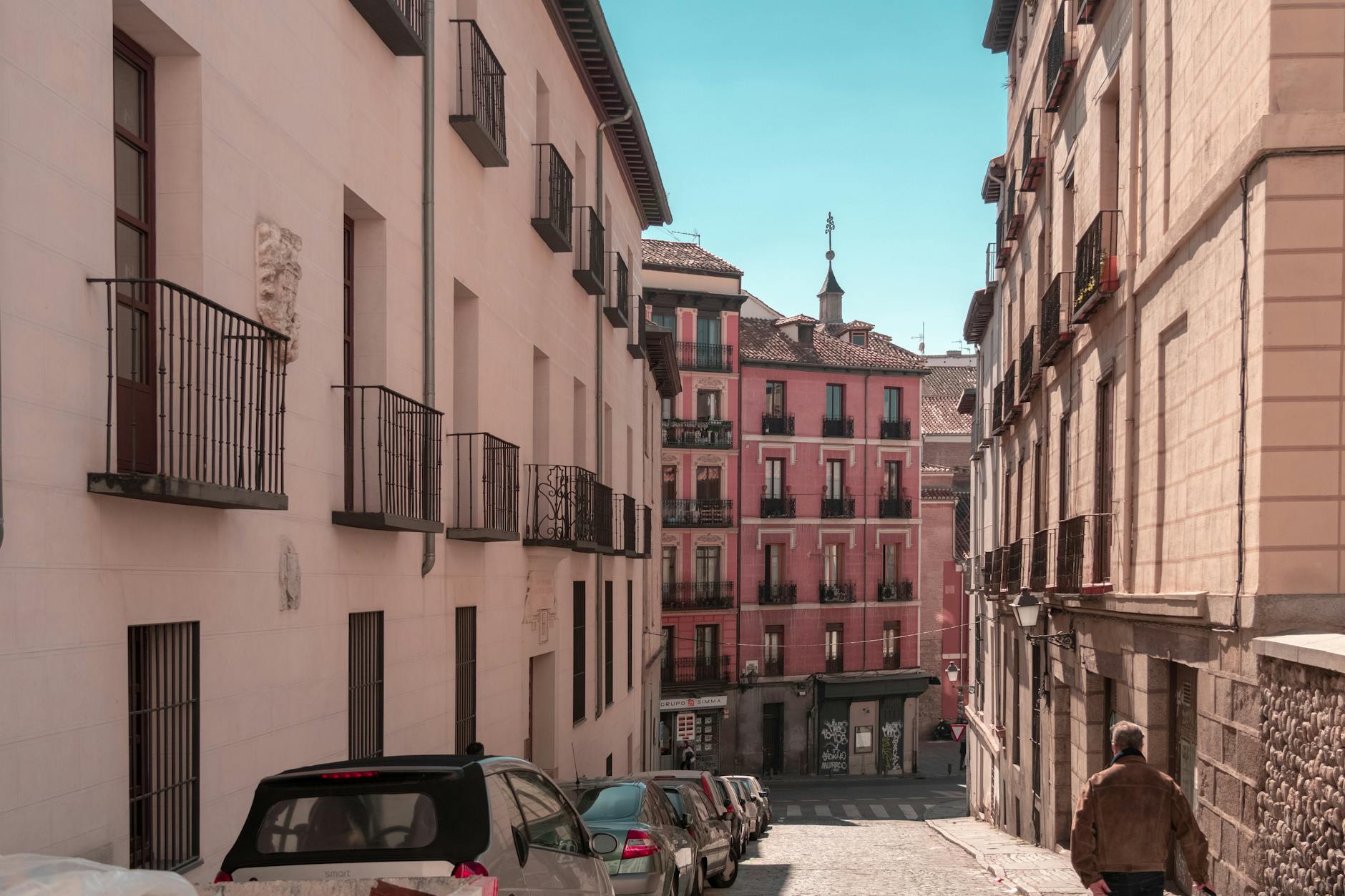
Madrid is a city defined by its neighborhoods. While other European capitals can feel uniform across their central districts, Madrid is a mosaic of barrios — each with its own unmistakable personality, architecture, culinary traditions, and rhythm of daily life. Understanding Madrid’s neighborhoods is the key to experiencing the city like a local rather than a tourist, and choosing the right barrio as your base can transform your entire trip. A week in the bohemian streets of Malasana will give you an entirely different Madrid than a week among the elegant boulevards of Salamanca, and both are equally authentic expressions of this endlessly fascinating city.
This comprehensive Madrid neighborhoods guide covers the city’s most rewarding districts for visitors, from the historic center where centuries of Spanish history unfold at every corner to the multicultural edges where Madrid’s future is being shaped. For each neighborhood, you will find its essential character, the top things to see and do, the best places to eat and drink, and practical advice on whether it suits your travel style and budget. Whether you are planning your first visit or your tenth, this guide will help you discover corners of Madrid you might otherwise miss.
Centro and Sol: The Historic Heart
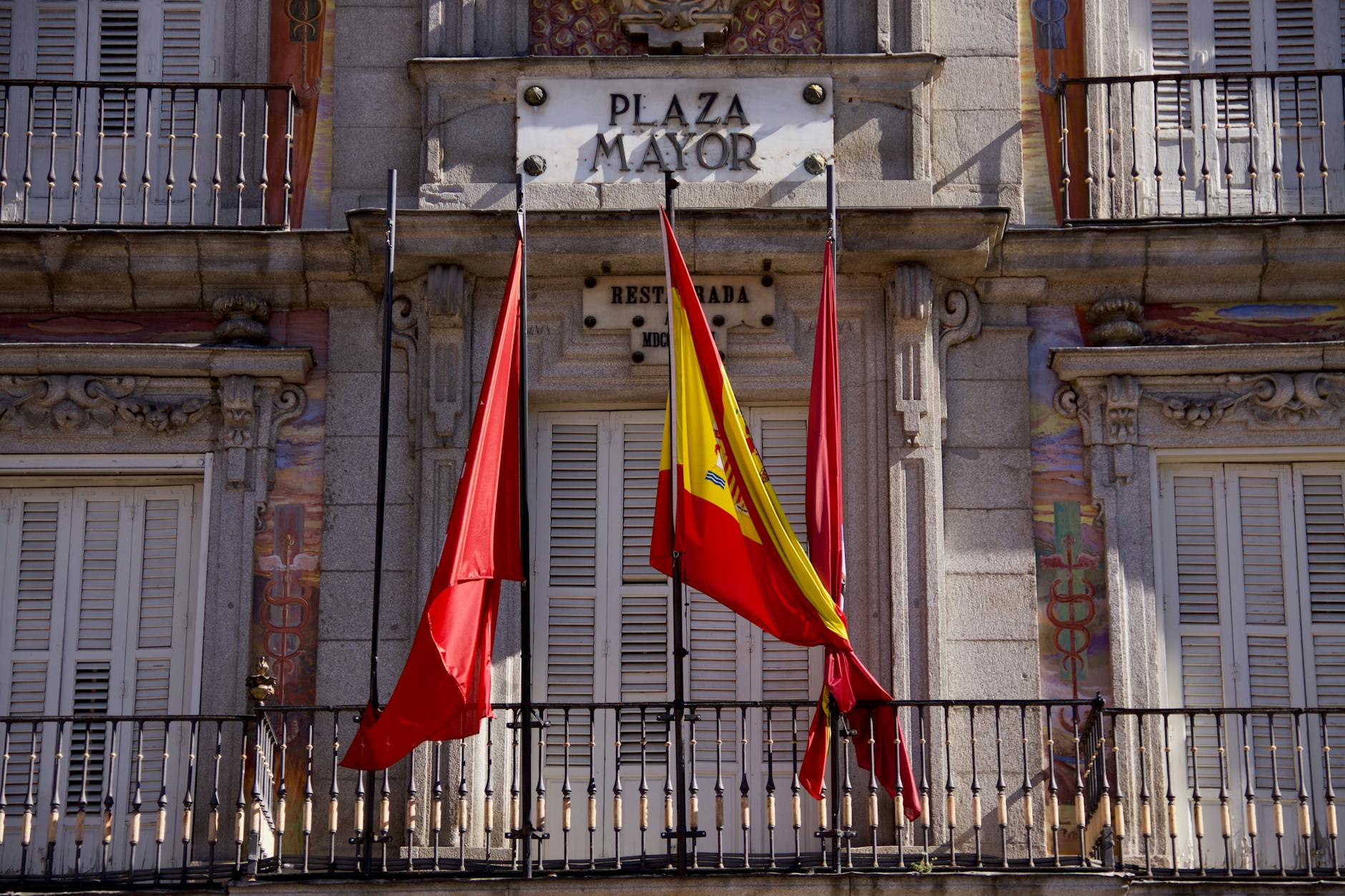
The Centro district — encompassing the Puerta del Sol, Plaza Mayor, and the streets radiating outward from these iconic landmarks — is the beating heart of Madrid and the natural starting point for any exploration of the city. Sol, the central hub from which all Spanish distances are measured (the famous Kilometre Zero plaque is set into the pavement outside the old Post Office), pulses with energy at virtually every hour of the day and night. Street performers, tourists, office workers, shoppers, and madrilenos going about their daily business create a constant current of humanity that is quintessentially Madrid.
Plaza Mayor, the magnificent arcaded square completed in 1619 under Philip III, is one of the most impressive public spaces in Europe. Originally used for royal ceremonies, bullfights, public executions, and market days, the square today is ringed by cafes (tourist-priced but worth it for the setting), portrait artists, and street performers. The surrounding streets — Calle de Toledo heading south toward La Latina, Calle Mayor heading west toward the Royal Palace — contain some of Madrid’s most atmospheric old shops, churches, and traditional businesses. The Mercado de San Miguel, a beautifully restored ironwork market hall just off the Plaza Mayor, offers a curated selection of gourmet tapas and Spanish delicacies, though prices reflect its popularity with visitors.
Centro is also home to the Royal Palace (Palacio Real) and its surrounding gardens, the Almudena Cathedral, the opera house (Teatro Real), and the atmospheric streets of the old Moorish quarter around the Viaduct. For first-time visitors, staying in Centro puts everything within walking distance and provides the most classically “Madrid” experience. The trade-off is higher prices, tourist-oriented dining, and noise levels that can be challenging in some streets.
Best for: First-time visitors, sightseeing-focused trips, those who want to be at the center of everything. Metro stations: Sol (Lines 1, 2, 3), Opera (Lines 2, 5, Ramal), Tirso de Molina (Line 1).
La Latina: Tapas, Tradition, and El Rastro
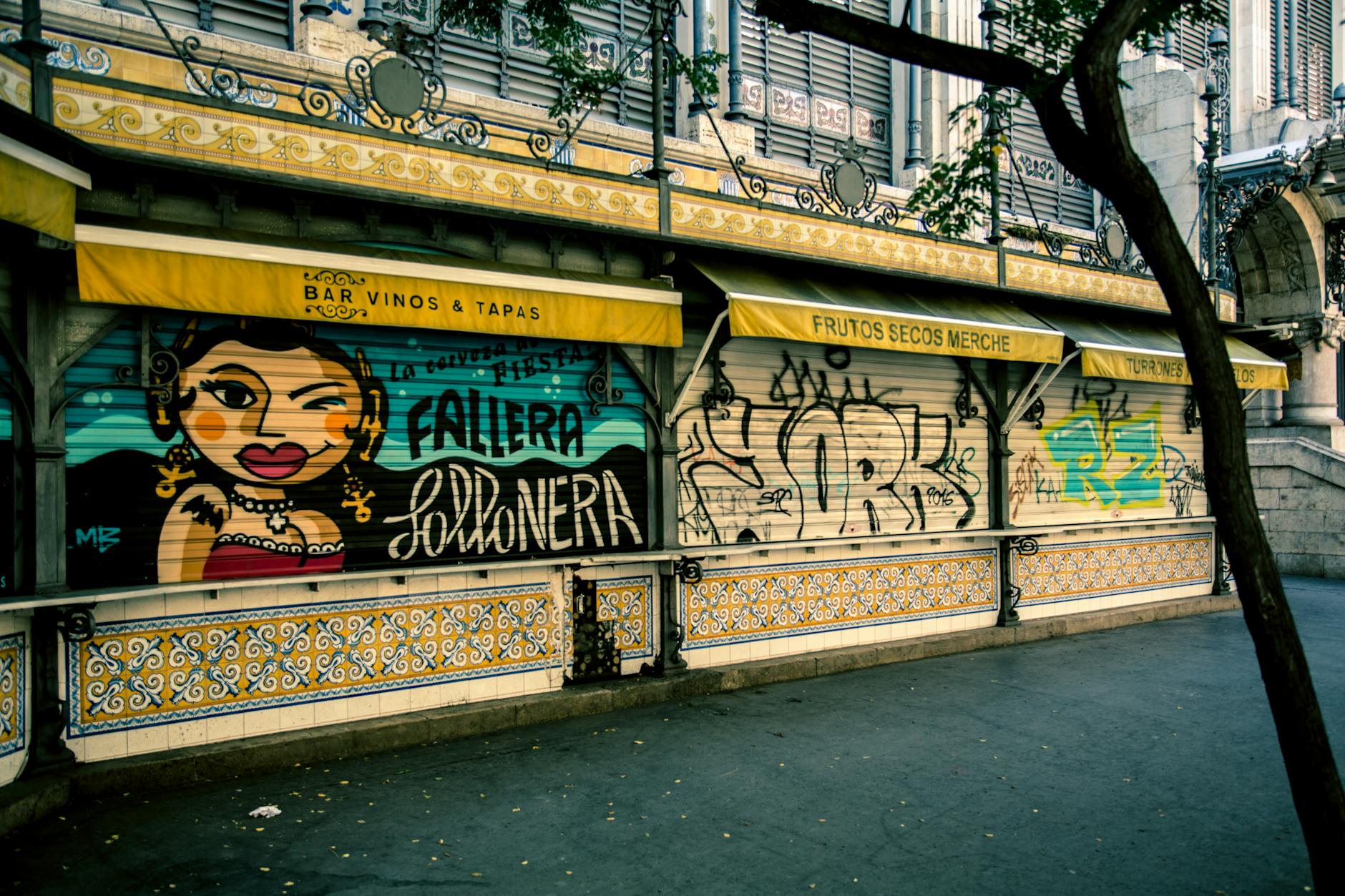
La Latina is the neighborhood that most perfectly embodies the traditional Madrid experience — a labyrinth of narrow medieval streets, hidden plazas, and some of the finest tapas bars in the entire city. This is one of Madrid’s oldest barrios, with a history stretching back to the medieval period, and its winding layout of streets descending from the Plaza de la Cebada toward the Manzanares River reflects the organic growth of a district that predates modern city planning by centuries.
The undisputed center of La Latina’s social life is Cava Baja — a gently curving street that contains perhaps the highest concentration of excellent tapas bars and traditional restaurants anywhere in Madrid. On a Thursday evening or a Sunday afternoon, the entire street becomes a slow-moving river of people hopping from bar to bar, plates of croquetas and glasses of vermouth in hand. Standout addresses include Casa Lucas (creative modern tapas), Txirimiri (Basque pintxos), La Chata (old-school Madrid tavern), and Taberna Tempranillo (superb Spanish wines by the glass). The adjacent Plaza de la Paja and Calle Almendro offer equally rewarding alternatives when Cava Baja gets too crowded.
Every Sunday morning, La Latina transforms as El Rastro — Madrid’s famous flea market — takes over the streets stretching from Tirso de Molina down to the Ronda de Toledo. Thousands of vendors sell everything from antiques and vintage clothing to cheap household goods and handmade crafts. The market itself is an experience in social theater — the crowds, the haggling, the energy — and the tradition of following a morning of browsing with a long tapas lunch on Cava Baja is one of the most authentically Madrid experiences you can have.
Beyond tapas and the Rastro, La Latina offers the beautiful Basilica de San Francisco el Grande (with its impressive dome — the fourth largest in Christendom), the quiet charm of the Jardines de las Vistillas (offering panoramic views toward the Casa de Campo), and a growing cluster of boutique shops and vintage stores. The neighborhood is particularly lively in summer when outdoor terraces fill the plazas and the Fiestas de la Paloma in August bring street parties, processions, and traditional chotis dancing.
Best for: Food lovers, traditional atmosphere seekers, Sunday market fans. Metro stations: La Latina (Line 5), Tirso de Molina (Line 1).
Malasana: Bohemian Spirit and Creative Energy
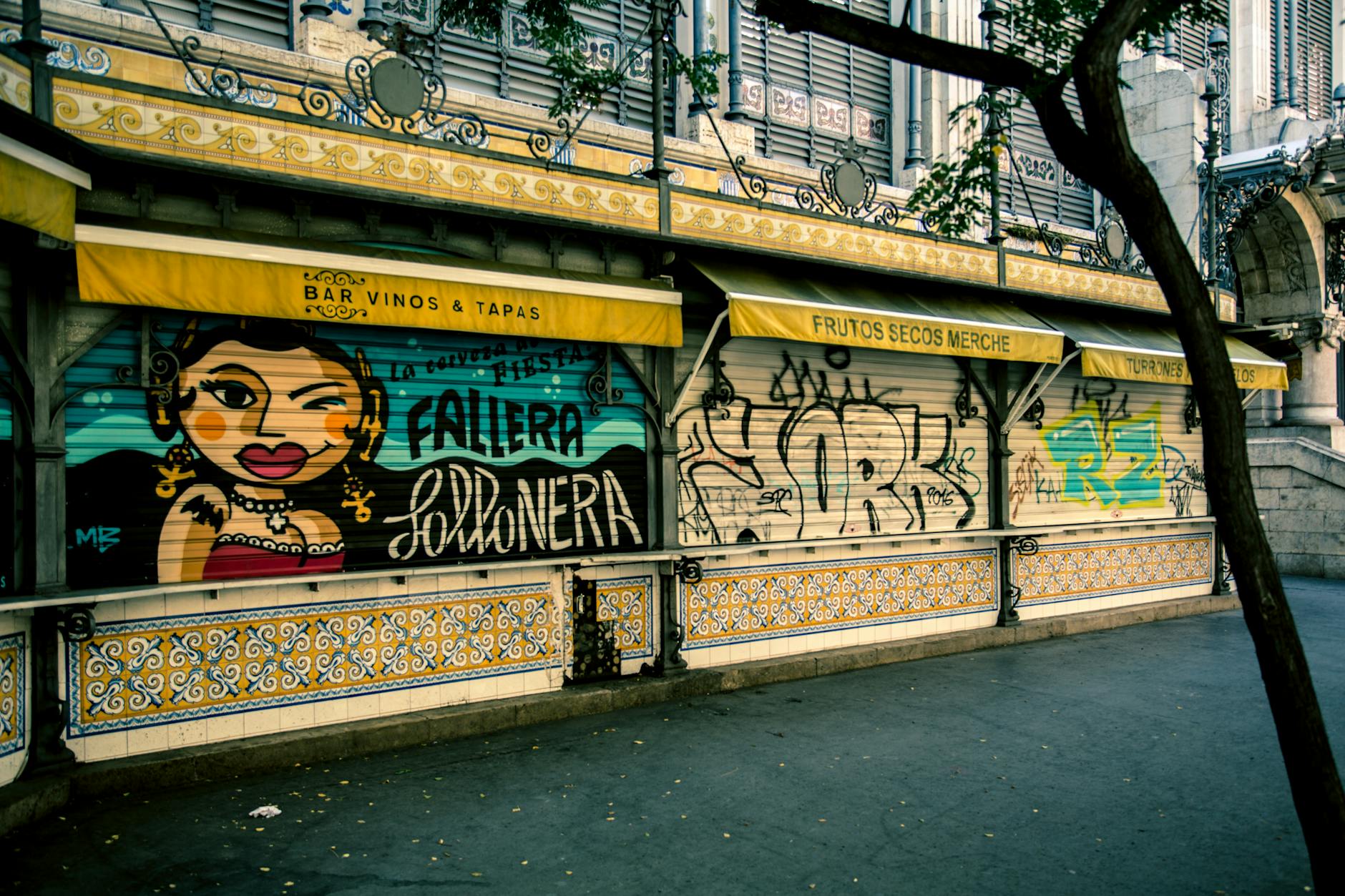
Malasana is Madrid’s most creatively vibrant neighborhood — a district that has reinvented itself repeatedly over the decades while maintaining an unshakeable spirit of independence and artistic energy. In the late 1970s and early 1980s, Malasana was the epicenter of La Movida Madrilena — the explosive cultural movement that erupted after the end of Franco’s dictatorship, producing groundbreaking music, film, fashion, and art. The neighborhood’s identity was forged during those wild years, and while the original Movida generation has given way to new waves of creatives, the DNA of artistic rebellion and nonconformity remains deeply embedded in Malasana’s character.
Today, Malasana is a neighborhood of contradictions that somehow coexist harmoniously. Vintage clothing shops and record stores sit next to craft coffee roasters and organic juice bars. Traditional tabernas that have served vermouth for generations share the street with vegan brunch spots and Japanese-inspired bakeries. Colorful street art covers building facades alongside nineteenth-century architectural details. The result is a neighborhood that feels genuinely alive and constantly evolving — unlike the more museum-like quality of some European hipster quarters, Malasana’s creative energy is authentically rooted in decades of cultural history.
The heart of Malasana is the Plaza del Dos de Mayo — a tree-shaded square named for the 1808 uprising against Napoleon’s troops that began here. On warm evenings, the plaza fills with people sitting on the grass, drinking canas purchased from surrounding bars, strumming guitars, and socializing in a scene that perfectly captures the neighborhood’s laid-back communal spirit. Calle del Pez, Calle de la Palma, and Calle de Velarde are the main arteries for shopping, eating, and nightlife, but the best of Malasana often reveals itself on the smaller side streets — unexpected vintage shops, tiny gallery spaces, and hole-in-the-wall bars that never make the guidebooks.
For dining, Malasana offers extraordinary range: La Barraca for excellent Valencian paella, Ojalá for brunch on an indoor sand-covered floor, StreetXO for Jose Andres’s Asian-Spanish street food fusion, and countless small tapas bars where a glass of wine and a plate of patatas bravas cost under five euros. The nightlife ranges from intimate jazz bars and live music venues to late-night cocktail bars and dance clubs that don’t close until dawn.
Best for: Creative travelers, nightlife lovers, vintage shopping enthusiasts, younger travelers. Metro stations: Tribunal (Lines 1, 10), Noviciado (Lines 2, 10), San Bernardo (Lines 2, 4).
Chueca: Pride, Style, and Inclusivity
Chueca — Madrid’s LGBTQ+ neighborhood and one of the city’s most vibrant, welcoming, and stylish barrios — sits just north of Gran Via and east of Malasana, sharing its neighbor’s energy while cultivating a distinctly more polished aesthetic. The transformation of Chueca from a neglected, run-down area in the 1980s and 1990s into one of Madrid’s most desirable neighborhoods is one of the great urban renewal stories in European cities, driven largely by the LGBTQ+ community that made it their home and poured creative energy into its streets, businesses, and cultural life.
Today, Chueca is synonymous with inclusivity, fashion-forward sensibility, and some of the best eating and drinking in Madrid. The neighborhood’s central plaza — Plaza de Chueca — is a constant hive of activity, surrounded by terrace cafes, cocktail bars, and independent boutiques. The surrounding streets are lined with concept stores, designer barbershops, artisanal perfumeries, and fashion-forward clothing shops that give Chueca a distinctly cosmopolitan feel quite different from the vintage-bohemian vibe of neighboring Malasana.
Chueca reaches its absolute peak during Madrid Pride (Orgullo), held in late June and early July. The neighborhood becomes the epicenter of one of the largest Pride celebrations in the world — over a million people fill its streets for a week of parties, concerts, cultural events, and the spectacular parade along Gran Via. Even outside Pride week, Chueca’s nightlife is legendary, with bars and clubs catering to every taste and staying open into the early morning hours.
For food, Chueca offers a cosmopolitan dining scene: Mercado de San Anton (a beautifully renovated market with a rooftop terrace restaurant), Bazaar (consistently excellent modern Mediterranean cuisine at reasonable prices), Yakitoro by Chicote (Japanese-Spanish fusion from chef Alberto Chicote), and numerous wine bars and small-plate restaurants. The neighborhood also contains the excellent Museo de Historia de Madrid, housed in a former hospice with a spectacular Baroque entrance portal.
Best for: LGBTQ+ travelers, fashion and design lovers, nightlife seekers, those who value inclusivity. Metro stations: Chueca (Line 5), Gran Via (Lines 1, 5), Alonso Martinez (Lines 4, 5, 10).
Huertas and Barrio de las Letras: The Literary Quarter
The Barrio de las Letras (Literary Quarter), centered on the streets between Sol and the Paseo del Prado, is one of Madrid’s most atmospheric neighborhoods — a district where Spain’s Golden Age literary giants once lived, wrote, and drank, and where that cultural legacy is woven into the very fabric of the streets. Cervantes, Lope de Vega, Quevedo, and Gongora all lived within these few blocks during the sixteenth and seventeenth centuries, and their words are literally embedded in the neighborhood — literary quotes are engraved in brass into the pavement throughout the quarter, inviting you to read as you walk.
The main artery is Calle de las Huertas, a pedestrianized street that comes alive every evening with terrace bars, restaurants, and live music venues. The street connects the Plaza de Santa Ana — one of Madrid’s most popular plazas for outdoor drinking, overlooked by the historic Hotel ME and the Teatro Espanol — with the quieter streets toward the Prado Museum. The Casa-Museo de Lope de Vega, the preserved home of the prolific playwright who lived here from 1610 until his death in 1635, is a fascinating window into Golden Age domestic life and one of Madrid’s most intimate museum experiences.
The Barrio de las Letras is perfectly positioned for culture lovers — the Prado, Reina Sofia, and Thyssen-Bornemisza museums are all within a ten-minute walk, as are CaixaForum and the Botanical Garden. The dining scene is excellent, with a mix of traditional tabernas (Casa Alberto, in business since 1827, still serves outstanding cocido and vermouth) and innovative modern restaurants. The neighborhood’s proximity to both the museum district and the nightlife of Sol and Huertas makes it an ideal base for travelers who want both culture and energy without the tourist saturation of Centro.
Best for: Culture lovers, literary enthusiasts, those who want proximity to museums and nightlife. Metro stations: Anton Martin (Line 1), Sevilla (Line 2), Sol (Lines 1, 2, 3).
Lavapies: Multicultural Madrid
Lavapies is Madrid’s most multicultural neighborhood — a vibrant, sometimes gritty district where Spanish tradition intersects with influences from Africa, South Asia, Latin America, and China in a constantly evolving cultural mix. Located on the slopes descending south from Sol and the Barrio de las Letras, Lavapies was historically one of Madrid’s poorest neighborhoods, and traces of that working-class identity persist in its affordable restaurants, no-frills bars, and unpretentious street life. In recent years, the neighborhood has attracted a growing population of artists, students, and young professionals drawn by relatively affordable rents and the creative energy generated by Lavapies’s extraordinary cultural diversity.
The culinary payoff of this diversity is spectacular. Within a few blocks, you can eat Senegalese thieboudienne, Bangladeshi biryani, Chinese hand-pulled noodles, Peruvian ceviche, and traditional Spanish cocido — often at prices significantly lower than anywhere else in central Madrid. The neighborhood’s Indian restaurants along Calle de Lavapies are particularly popular, and the Mercado de San Fernando — a community-oriented market — hosts food stalls, cultural events, and community gatherings. On the traditional Spanish side, Casa Amadeo (serving the best caracoles — stewed snails — in Madrid since 1942) and Taberna de Antonio Sanchez (Madrid’s oldest tavern, dating to 1830) represent the neighborhood’s deep roots.
Culturally, Lavapies punches well above its weight. La Casa Encendida — a cultural center run by a banking foundation — hosts exhibitions, film screenings, rooftop concerts, and workshops in a stunning converted building. La Tabacalera, a former tobacco factory turned community art center, offers constantly rotating exhibitions and creative workshops in a vast, atmospheric industrial space. The annual Tapapiés festival, held each October, celebrates the neighborhood’s diversity with a tapas-crawl through dozens of participating bars and restaurants, each offering a signature tapa representing a different culinary tradition.
Best for: Budget travelers, foodies seeking diversity, culture seekers, those who want authentic urban atmosphere. Metro stations: Lavapies (Line 3), Tirso de Molina (Line 1), Embajadores (Lines 3, 5).
Salamanca: Elegance and Luxury
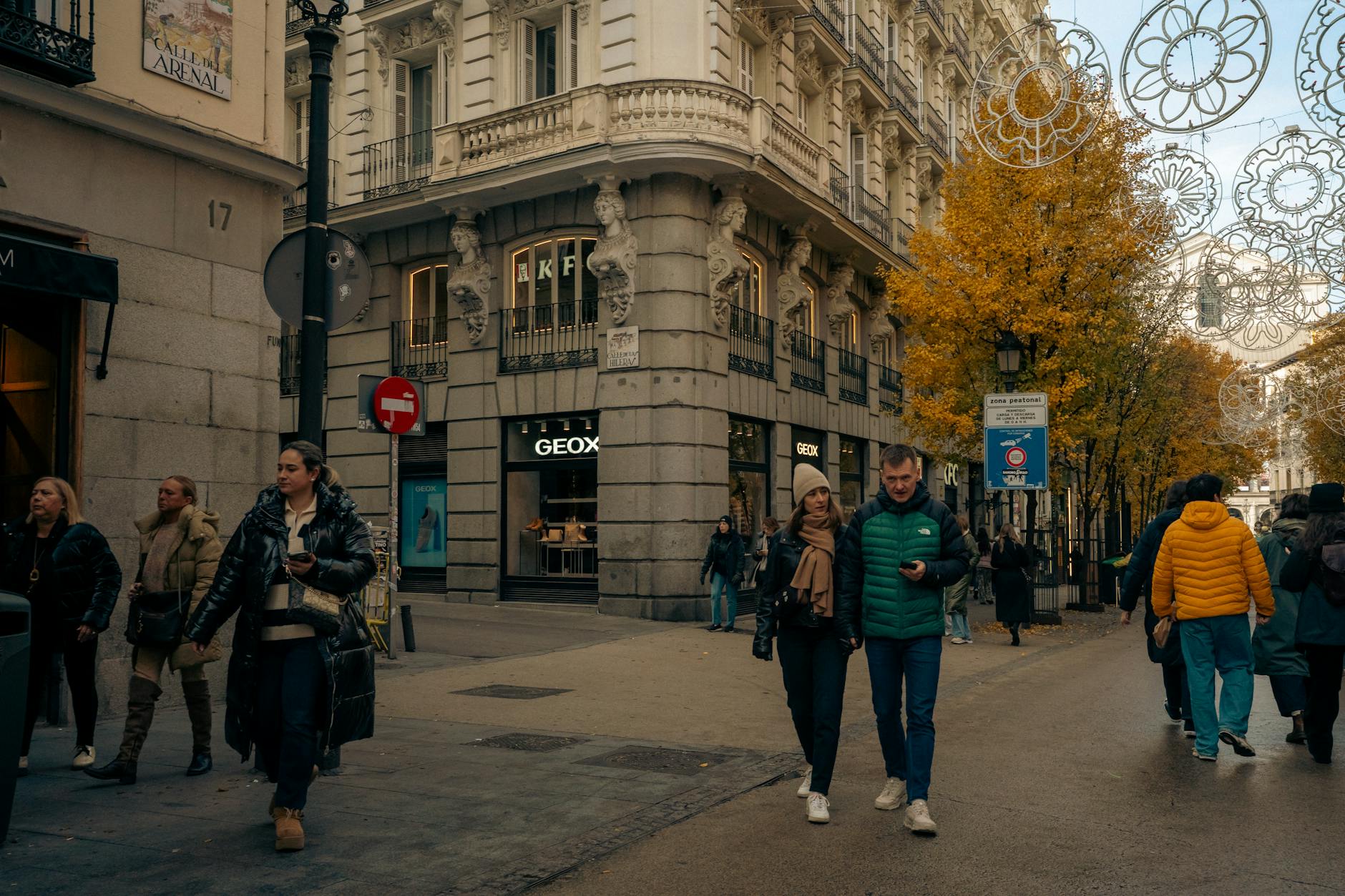
The Salamanca district is Madrid at its most elegant and refined — a neighborhood of wide tree-lined boulevards, handsome nineteenth-century architecture, luxury boutiques, and fine dining restaurants that represents the sophisticated, cosmopolitan face of the Spanish capital. Developed in the mid-nineteenth century by the Marquis of Salamanca as an upscale residential quarter for Madrid’s growing bourgeoisie, the neighborhood’s grid layout of grand avenues and ornate apartment buildings contrasts dramatically with the organic medieval streets of the old city center.
Shopping is Salamanca’s defining activity. The Milla de Oro (Golden Mile) — centered on Calle de Serrano, Calle de Ortega y Gasset, and Calle de Claudio Coello — houses virtually every major international luxury brand, from Louis Vuitton and Gucci to Loewe (the Spanish luxury house born in Madrid). But Salamanca’s shopping scene goes far beyond international labels — independent Spanish designers, artisan leather goods shops, gourmet food stores, and antiques dealers fill the side streets, offering a shopping experience that rewards exploration beyond the main avenues. The ABC Serrano shopping center, housed in a beautifully converted newspaper building, and the El Jardin de Serrano mall provide additional retail therapy options.
Salamanca also offers outstanding dining, with more Michelin-starred restaurants than any other Madrid neighborhood. From innovative tasting menus at the latest culinary temple to elegant lunch spots serving classic Spanish cuisine, the neighborhood’s restaurant scene caters to discerning palates and generous budgets. For more casual eating, the Mercado de la Paz — Salamanca’s neighborhood market — offers excellent stalls selling cheese, jamon, wine, and prepared foods at prices that are surprisingly reasonable for the neighborhood.
Culturally, Salamanca is home to several excellent museums including the Lazaro Galdiano Museum, the National Archaeological Museum, and numerous commercial art galleries that make for excellent browsing. The western edge of Salamanca borders Retiro Park, putting one of Europe’s finest urban parks just minutes away.
Best for: Luxury travelers, shoppers, fine dining enthusiasts, those seeking an elegant residential atmosphere. Metro stations: Serrano (Line 4), Velazquez (Line 4), Nunez de Balboa (Lines 5, 9).
Retiro and the Museum District
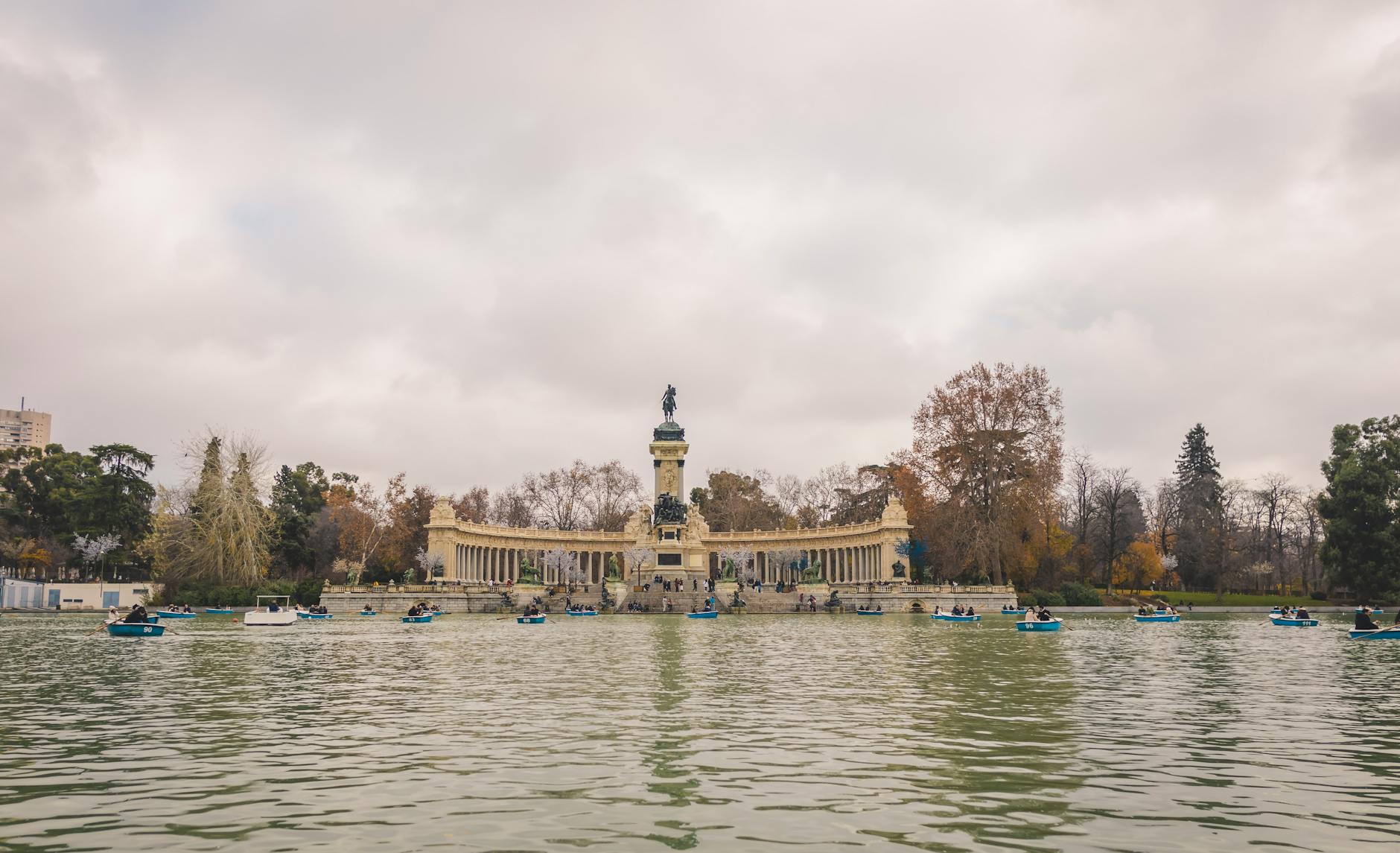
The Retiro district, named for the magnificent Buen Retiro Park that forms its green heart, is one of Madrid’s most pleasant residential neighborhoods and an ideal base for visitors who want to combine cultural sightseeing with green spaces and a relaxed, family-friendly atmosphere. The park itself — 125 hectares of landscaped gardens, tree-lined promenades, lakes, monuments, and cultural venues — is Madrid’s answer to New York’s Central Park or London’s Hyde Park, and daily life in the Retiro district revolves around its leafy expanses.
The park’s highlights include the Estanque Grande (a boating lake where you can rent rowboats — a beloved Sunday tradition for Madrid families), the Palacio de Cristal (a stunning glass-and-iron pavilion that hosts free exhibitions organized by the Reina Sofia Museum), the Rose Garden (breathtaking in May and June when thousands of roses bloom), and the Paseo de la Argentina (a tree-shaded avenue lined with statues of Spanish monarchs originally intended for the Royal Palace). Early morning joggers, afternoon strollers, weekend picnickers, and evening musicians create a constantly shifting cast of characters that makes the park endlessly entertaining.
The Retiro district’s western edge borders the Paseo del Prado — Madrid’s grand museum boulevard — putting the Prado, Thyssen-Bornemisza, and Reina Sofia museums, CaixaForum, and the Royal Botanical Garden all within easy walking distance. The neighborhood itself offers charming residential streets with local bakeries, bookshops, and restaurants that cater to a neighborhood crowd rather than tourists, providing excellent value and authentic atmosphere.
Best for: Families, nature lovers, museum-goers, those seeking a peaceful residential atmosphere with easy access to cultural attractions. Metro stations: Retiro (Line 2), Ibiza (Line 9), Estacion del Arte (Line 1).
Chamberi: Authentic Local Life
Chamberi is the neighborhood that many experienced Madrid visitors eventually settle on as their favorite — a gracious, tree-lined residential district just north of the center that offers everything the tourist-heavy neighborhoods provide but with an authentically local atmosphere and noticeably lower prices. Originally a separate village that was absorbed into Madrid during the nineteenth-century expansion, Chamberi retains the feel of a self-contained community with its own markets, traditions, and rhythms of daily life.
The neighborhood’s central axis is Calle de Fuencarral, which runs from Gran Via northward through Chamberi, lined with shops, restaurants, and cafes that cater primarily to local residents rather than visitors. The Mercado de Vallehermoso, a renovated neighborhood market, has become one of Madrid’s most popular food halls, with stalls serving craft beer, gourmet hamburgers, Asian fusion, Italian pasta, and traditional Spanish fare alongside the market’s original fishmongers, butchers, and produce vendors. Calle de Ponzano — known as Ponzanotown among madrilenos — has emerged as one of the city’s hottest dining streets, packed with innovative tapas bars, vermouth bars, and small-plate restaurants that draw food-loving crowds from across the city.
Culturally, Chamberi offers the Sorolla Museum (the painter’s former home and studio), the charming Anden Cero metro station museum (a beautifully preserved ghost station from the original 1919 metro line that you can visit for free), and the quieter galleries around Calle de Santa Engracia. The neighborhood’s elegant nineteenth-century architecture, small neighborhood plazas, and local shops — traditional pharmacies, family-run bakeries, independent bookstores — create an atmosphere of established, comfortable urbanity that is increasingly rare in Europe’s major cities.
Chamberi is also an excellent base for exploring the northern reaches of Madrid that most tourists miss. The nearby Canal de Isabel II exhibition space hosts excellent free photography and art exhibitions in a beautifully restored water tower. The tree-lined Paseo de la Castellana — Madrid’s grandest avenue, stretching several kilometers northward past the Santiago Bernabeu stadium — begins at Chamberi’s eastern edge and provides a striking architectural tour of Madrid’s evolution from nineteenth-century elegance through twentieth-century modernism to twenty-first-century skyscrapers.
Best for: Repeat visitors, foodies, those seeking authentic local atmosphere, families, longer stays. Metro stations: Bilbao (Lines 1, 4), Iglesia (Line 1), Quevedo (Line 2), Alonso Cano (Line 7).
Gran Via and Around: The Grand Boulevard

Gran Via is not exactly a neighborhood but rather Madrid’s most iconic boulevard — a sweeping avenue of early twentieth-century architecture that cuts diagonally across the city center from Calle de Alcala to Plaza de Espana. Often compared to Broadway for its concentration of theaters and bright lights, Gran Via is a monument to Madrid’s ambitions during the early 1900s, when the city demolished entire medieval neighborhoods to create this grand European-scale boulevard. The resulting architecture — a spectacular parade of Beaux-Arts, Art Deco, and Neo-Baroque buildings, many topped with elaborate cupolas and sculptural crowns — is worth a stroll for the architecture alone.
Gran Via divides neatly into three sections, each with its own character. The eastern section, near the intersection with Calle de Alcala, features the most architecturally impressive buildings, including the iconic Metropolis Building with its gilded dome and winged Victory statue. The central section is Madrid’s theater district, with major musical productions and live performances at venues like the Teatro Lope de Vega, Teatro Rialto, and the Teatro Coliseum. The western section, descending toward Plaza de Espana, is more commercial, with major chain stores, fast-food restaurants, and a mix of budget and mid-range hotels.
While Gran Via itself can feel overwhelming — noisy, crowded, and somewhat impersonal — the streets immediately surrounding it in every direction contain some of Madrid’s most interesting dining, drinking, and shopping. The side streets connecting Gran Via to Chueca and Malasana are particularly rewarding for exploration, offering a mix of traditional and contemporary Madrid that the main boulevard’s scale tends to obscure.
The Rooftop bar scene along and near Gran Via has become one of Madrid’s signature experiences. The Circulo de Bellas Artes terrace offers some of the best panoramic views in the city, while newer rooftop bars at hotels like the Room Mate Oscar, the Vincci Capitol, and the Hotel Atlantico provide cocktails with spectacular sunset views over Madrid’s skyline. These elevated vantage points reveal the extraordinary beauty of Gran Via’s architecture from above — the ornate cornices, sculpted figures, and tiled domes that are easy to miss from street level become the stars of the show when seen from a rooftop terrace with a glass of Spanish wine in hand.
Best for: Theater lovers, architecture enthusiasts, first-time visitors wanting a central location with transport links. Metro stations: Gran Via (Lines 1, 5), Callao (Lines 3, 5), Plaza de Espana (Lines 2, 3, 10).
Emerging Neighborhoods Worth Exploring
Beyond the well-established barrios, several Madrid neighborhoods are experiencing rapid transformation and offer adventurous visitors a glimpse of the city’s evolving character. Usera, Madrid’s Chinatown in the southern part of the city, has become a destination for serious food lovers seeking some of the most authentic Chinese cuisine outside of Asia — dim sum restaurants, hand-pulled noodle shops, and Sichuan hot pot establishments line the streets around the Usera metro station. The neighborhood also hosts Madrid’s spectacular Chinese New Year celebrations, one of the largest outside of China.
Tetuan, north of Chamberi, has attracted a growing wave of creative businesses, affordable restaurants, and young professionals drawn by reasonable rents and excellent metro connections. The Mercado de Maravillas — one of Europe’s largest covered markets — is a spectacular experience in itself, with over two hundred stalls selling produce, fish, meat, and prepared foods to a largely local clientele. The neighborhood’s mix of Spanish, Moroccan, Dominican, and Chinese communities creates a culinary diversity that rivals Lavapies.
Carabanchel, across the Manzanares River from the historic center, has undergone a remarkable cultural transformation in recent years. Former industrial spaces have been converted into art studios, galleries, and performance venues, and the neighborhood hosts a growing number of cultural events, open studio days, and community festivals. The streets around the Opañel and Vista Alegre metro stations offer some of Madrid’s most affordable and authentic dining, with traditional taverns and immigrant-run restaurants serving food at prices that downtown visitors can only dream of.
Madrid Rio — the spectacular linear park built along the banks of the Manzanares River after the burial of the M-30 motorway — has transformed the neighborhoods along its length, creating miles of green space, cycling paths, sports facilities, children’s playgrounds, and public art installations that connect previously disconnected districts. The park is now one of Madrid’s most popular recreational areas, particularly on weekends when families, joggers, and cyclists fill its paths. The riverside stretches near the Matadero cultural center and the Puente de Toledo are especially scenic.
Choosing the Right Neighborhood for Your Trip
Selecting the right base in Madrid depends on your priorities, travel style, and what kind of experience you are seeking. For first-time visitors who want maximum sightseeing efficiency, Centro or Huertas place you within walking distance of most major attractions. For food lovers, La Latina and Chamberi offer the deepest culinary experiences at the best value. For nightlife seekers, Malasana and Chueca are unbeatable. For luxury and shopping, Salamanca is the clear choice. For families or those seeking a quiet residential feel, Retiro and Chamberi deliver tranquility with excellent access to parks and cultural attractions. For budget travelers and seekers of authentic multicultural atmosphere, Lavapies provides experiences unavailable anywhere else in the city.
One of Madrid’s greatest assets as a tourist destination is its superb public transport system. The metro is fast, affordable (a ten-trip pass costs just over twelve euros), and connects every neighborhood in this guide within minutes. This means your choice of base does not limit your ability to explore the entire city — wherever you stay, all of Madrid’s neighborhoods are easily accessible for day and evening visits. Many of the most rewarding experiences in Madrid come from neighborhood-hopping: morning coffee in Chamberi, lunch in La Latina, an afternoon at the Prado, evening tapas in Chueca, and a late drink in Malasana. The real secret to Madrid is that no single neighborhood tells the whole story — it is the interplay between them, the way each barrio’s personality complements and contrasts with the others, that makes Madrid one of Europe’s richest and most rewarding cities to explore.
Whatever neighborhood you choose as your base, remember that Madrid is above all a city for walking. The distances between these barrios are short, the streets are endlessly interesting, and some of the best discoveries happen in the transitions between neighborhoods — a tiny plaza you stumble upon between La Latina and Lavapies, a hidden courtyard glimpsed through an open door in Huertas, a spectacular rooftop view from a bar on a Gran Via side street. Madrid reveals its treasures to those who explore on foot, and its neighborhoods reward curiosity, spontaneity, and a willingness to wander beyond the guidebook recommendations into the authentic fabric of this extraordinary city.
Leave a Reply