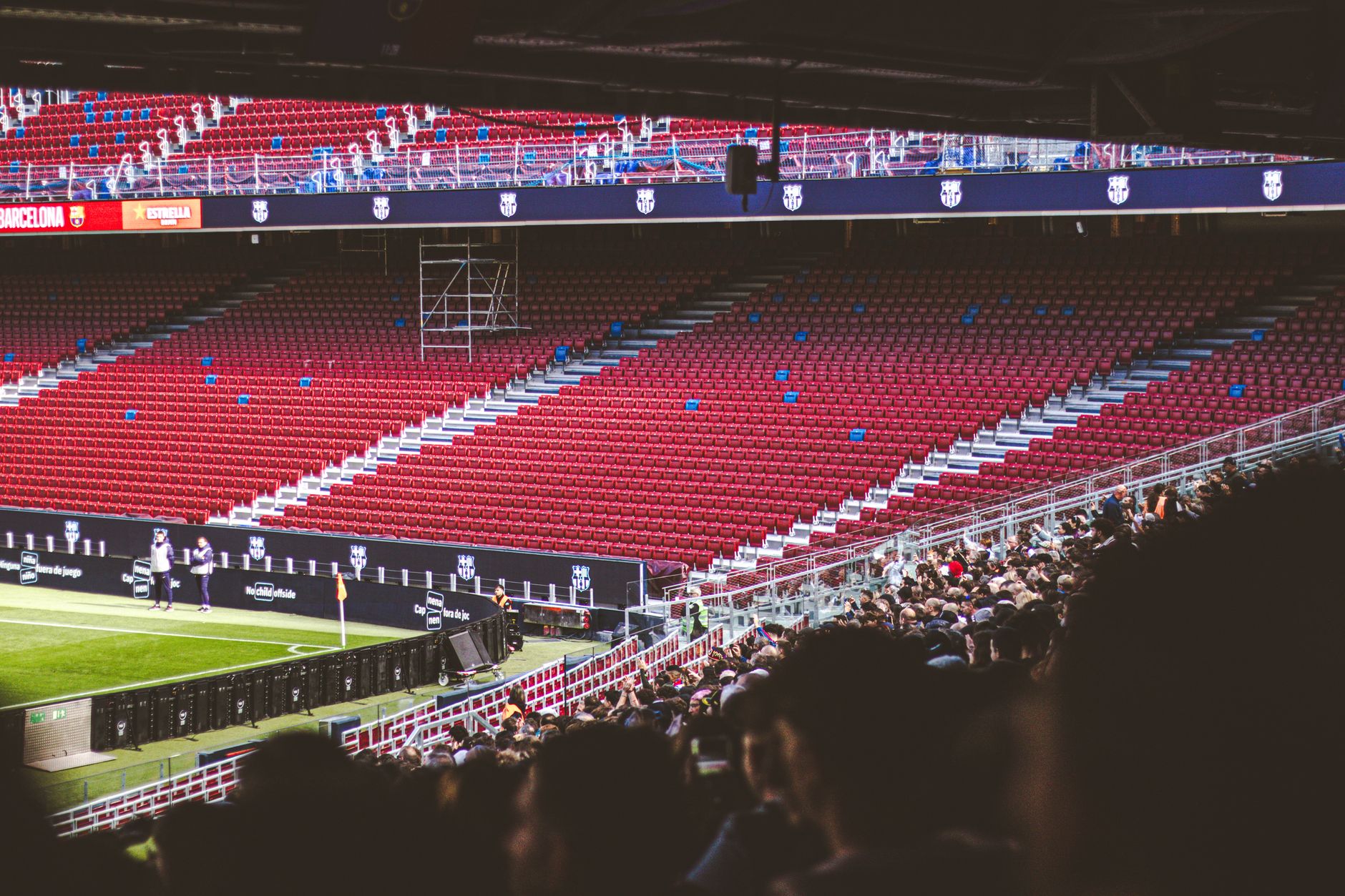
On a match night the Paseo de la Castellana changes character about two hours before kick-off. The office workers disappear, white shirts fill the Metro, the bars on the side streets spill onto the pavements, and by the time the floodlights come on the whole stretch around the Bernabéu is a slow-moving river of people. Madrid has two of the biggest clubs in the world, a proudly working-class third club in Vallecas, and a city that takes the game completely seriously, which makes football in Madrid one of the best things you can do here — if you can get in. This guide is about going to a real match: tickets, stadiums, getting there and what the night is like. If you want to walk around the Bernabéu on a non-match day, see the guide to Real Madrid stadium tour tickets instead.
Below you will find how to buy tickets for Real Madrid, Atlético de Madrid, Rayo Vallecano and Getafe without getting scammed, what they cost, how each stadium works on the day, when the season runs and why kick-off times are announced so late, and what to do if you cannot get a ticket. Prices were checked in September 2026 and move with the fixture; treat them as the right order of magnitude.
Football in Madrid at a Glance
| Club | Stadium | Capacity (approx.) | Nearest Metro | Typical La Liga ticket | How hard to get |
|---|---|---|---|---|---|
| Real Madrid | Santiago Bernabéu | About 80,000 | Santiago Bernabéu (L10) | Roughly €75–€210 through official channels | Hard for big games; possible for ordinary league matches |
| Atlético de Madrid | Riyadh Air Metropolitano | About 70,000 | Estadio Metropolitano (L7) | From about €30 for lesser fixtures; €60–€90+ upper tier for the big ones | Moderate; derby and Barcelona are very hard |
| Rayo Vallecano | Estadio de Vallecas | About 14,000 | Portazgo (L1) | Usually much cheaper than the big two | Usually easy, except against the big clubs |
| Getafe | Coliseum | About 17,000 | Getafe, on Metro Sur L12 and Cercanías C4 | Usually cheap | Usually easy |
A reality check before we go further. For a Champions League knockout game at the Bernabéu, the Madrid derby, or either big club against Barcelona, you are very unlikely to get an official ticket as a visitor. For an ordinary La Liga game against a mid-table side, you have a very good chance with a little planning.
A City of Rivals: A Short History
You will enjoy a match more if you know who hates whom and why, so here is the short version.
Real Madrid was founded in 1902 and received its “Real” — royal — title from King Alfonso XIII in 1920. Its modern identity was built in the 1950s under the club president Santiago Bernabéu, who gave his name to the stadium, opened in 1947, and to a team that won the first five European Cups in a row with Alfredo Di Stéfano at its heart. The club has won more European Cups than anyone else, and that history is the lens through which its fans see everything: winning is expected, and a draw at home can be greeted with whistles.
Atlético de Madrid was founded in 1903 by Basque students in the city as a branch of Athletic Club of Bilbao, which is why the two clubs share red-and-white stripes. For much of its history Atlético has been cast as the other Madrid — the working-class, long-suffering, romantic club of the south of the city, against the establishment club of the north. The nickname colchoneros, “mattress-makers”, comes from the red-and-white striped fabric once used for mattresses. Under Diego Simeone, coach since 2011, Atlético has won La Liga twice and reached two Champions League finals, both lost to Real Madrid, which explains a great deal about the mood at derbies. The old stadium, the Vicente Calderón beside the Manzanares, was demolished after the move; the land is now part of the Madrid Río riverside and new housing.
Rayo Vallecano was founded in 1924 in the then-separate town of Vallecas, and it has spent its life bouncing between divisions. Its fans see themselves as the club of the neighbourhood rather than the city, and they have supported evicted neighbours, protested against far-right players and made the Estadio de Vallecas a byword for authenticity.
Getafe in its current form dates from 1983 and reached the top flight for the first time in 2004. It has spent most seasons since in La Liga and even played in Europe. It does not have the romance of the others, but it has long outperformed a modest budget.
Real Madrid: Matchdays at the Bernabéu
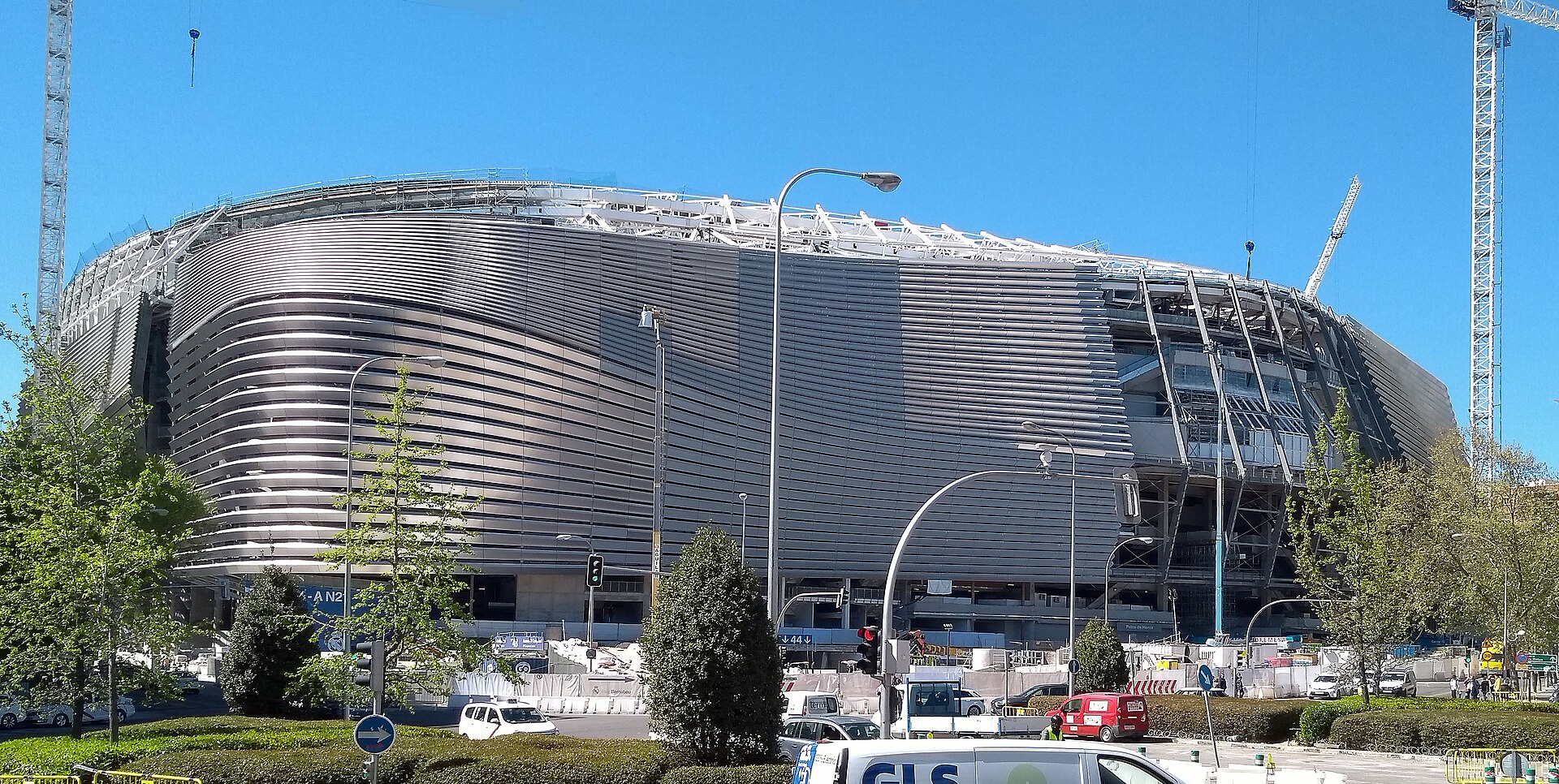
The rebuilt Santiago Bernabéu is one of the most striking stadiums anywhere: wrapped in a skin of curved steel strips, topped with a retractable roof, and fitted with a pitch that slides away into an underground greenhouse so the building can host concerts and other events. It sits right on the Castellana, in the middle of the city, which is part of the magic. You come out of the Metro and it is simply there, looming over the traffic.
How to buy Real Madrid tickets
There are only two official channels: the club’s own site, realmadrid.com, and its authorised ticketing partner, entradas.com. Anything else is resale. The process works like this:
- Socios and Madridistas get priority. Club members (socios, which you cannot easily become as a visitor) and holders of the Madridista fan membership get an early window before tickets go on general sale.
- Season-ticket holders release unused seats through the club, which is where many general-sale tickets come from. This is why availability can appear, disappear and reappear.
- General sale. For ordinary La Liga fixtures, some tickets often remain on general sale two to three weeks before the match. Keep checking; seats are released in batches.
- Big games rarely reach general sale. Champions League fixtures, the derby and El Clásico usually sell out to members.
Standard La Liga tickets through official channels run roughly €75 to €210, depending on the stand — Fondo (behind the goals), Lateral (along the side) or Tribuna (the main stand) — and how high up you are. The cheapest seats in the top tier are very high; the view is complete, and on a big night the noise rolls up the steep stands in a way the lower tiers never feel.
Why you should not buy from touts or unofficial resellers
Tickets at the Bernabéu are digital and linked to the original buyer’s account, and the automated turnstiles reject tickets that have been resold outside authorised channels. People do get turned away at the gate with a ticket they paid several hundred euros for. The touts you will see on the Castellana on match nights are selling the same risk, at a higher price. If you do use a big secondary marketplace for a game you cannot otherwise get into, understand that you are paying for a guarantee from that platform, not from the club, and read what it actually promises.
Match packages and hospitality
Real Madrid sells VIP and hospitality packages directly, with a seat, food and drink in a lounge, and often a better chance of getting into a big game. They are expensive, but they are real tickets through a real channel. Authorised travel companies also sell packages combining a ticket and a hotel. If what you really want is to see the inside of the stadium, the trophy room and the dressing rooms, a Bernabéu stadium tour costs a fraction of a match ticket and runs almost every day.
Getting to the Bernabéu
Take the Metro. Santiago Bernabéu station on Line 10 comes up right beside the stadium. Nuevos Ministerios (Lines 6, 8 and 10, plus Cercanías) is a pleasant 15-minute walk south down the Castellana and often less crowded after the game. Several bus routes run along the Castellana too, but traffic around the stadium on a match night is slow. Do not drive. Arrive at least 30 minutes before kick-off, and more for a big game: security checks at the gates take time and the stadium is steep, so finding your seat in the upper tiers is a climb.
The Bernabéu on a match night
Madrid crowds are often described as quieter and more demanding than, say, Atlético’s — the pañuelos, the white handkerchiefs waved at a poor performance, are a Bernabéu tradition. Ultras and organised singing are concentrated in the Grada Fans section behind one goal. But on a Champions League night, when the anthem plays and the roof is closed, the building is ferocious. Bars around the stadium and along the side streets off the Castellana fill up from early evening; if you want a beer and a bocadillo before the game, get there early.
Atlético de Madrid: Matchdays at the Metropolitano
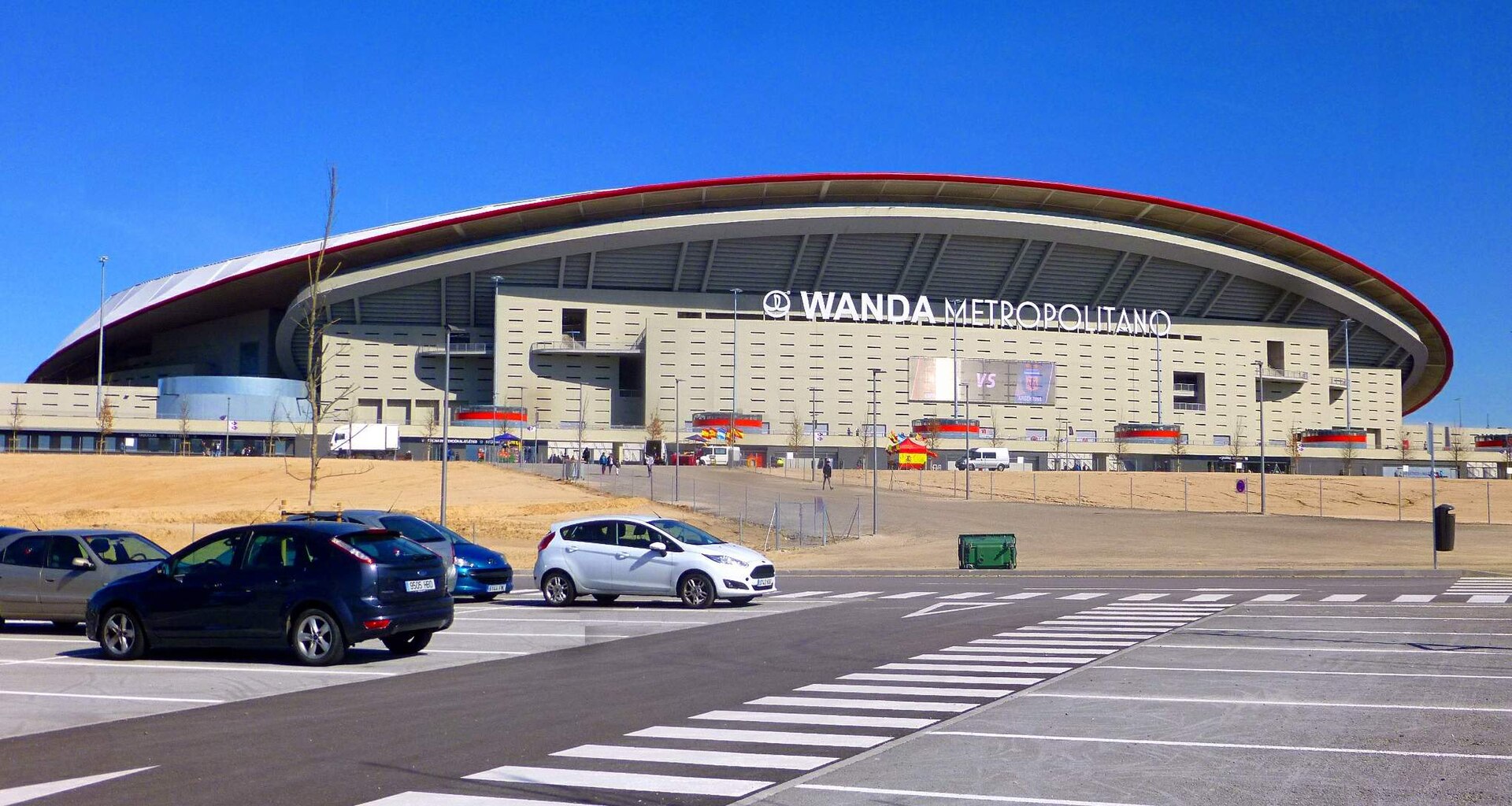
Atlético moved from the old Vicente Calderón, on the river by the Manzanares, to the Metropolitano in 2017. The stadium, now called the Riyadh Air Metropolitano under its current sponsorship deal, sits on the far eastern edge of the city, in the San Blas-Canillejas district. It is a big, modern bowl with a sweeping roof covering every seat, and it is loud. Atlético fans have a well-earned reputation for being the most passionate in the city, and the atmosphere on a good night is superb.
How to buy Atlético tickets
Tickets are sold through the club’s official website and app. Atlético has a very large membership, well over 150,000 members competing for around 70,000 seats, and members get priority. For lower-profile La Liga matches, tickets usually do reach general sale, with the cheapest seats from around €30. For the derby against Real Madrid, the visit of Barcelona or a Champions League knockout tie, general sale is short or non-existent, and upper-tier seats that do appear often start at €60 to €90 and rise sharply for better positions.
The same warnings about resale apply here as at the Bernabéu: buy officially where you can, and treat anyone selling tickets outside the ground as a risk, not a solution.
Getting to the Metropolitano
The stadium has its own Metro station, Estadio Metropolitano on Line 7, which comes up beside the ground. From Sol or Gran Vía allow 35 to 45 minutes, including the change. Las Rosas, on Line 2, is a slightly longer walk and can be a good option after the game when Estadio Metropolitano is packed. The Metro runs extra trains on match nights, but the post-match queue at the station can take half an hour or more. Stay for a drink or walk to the next station.
The Metropolitano on a match night
Atlético’s organised support is concentrated behind the south goal, and the whole stadium sings. There is a fan zone and food and drink stalls outside, but the Metropolitano does not have a dense web of neighbourhood bars around it the way the Bernabéu does; most fans eat and drink nearer home and travel out. If you want the pre-match bar experience, find a bar near your hotel showing the build-up, then head out an hour before kick-off.
Rayo Vallecano: Football as It Used to Be
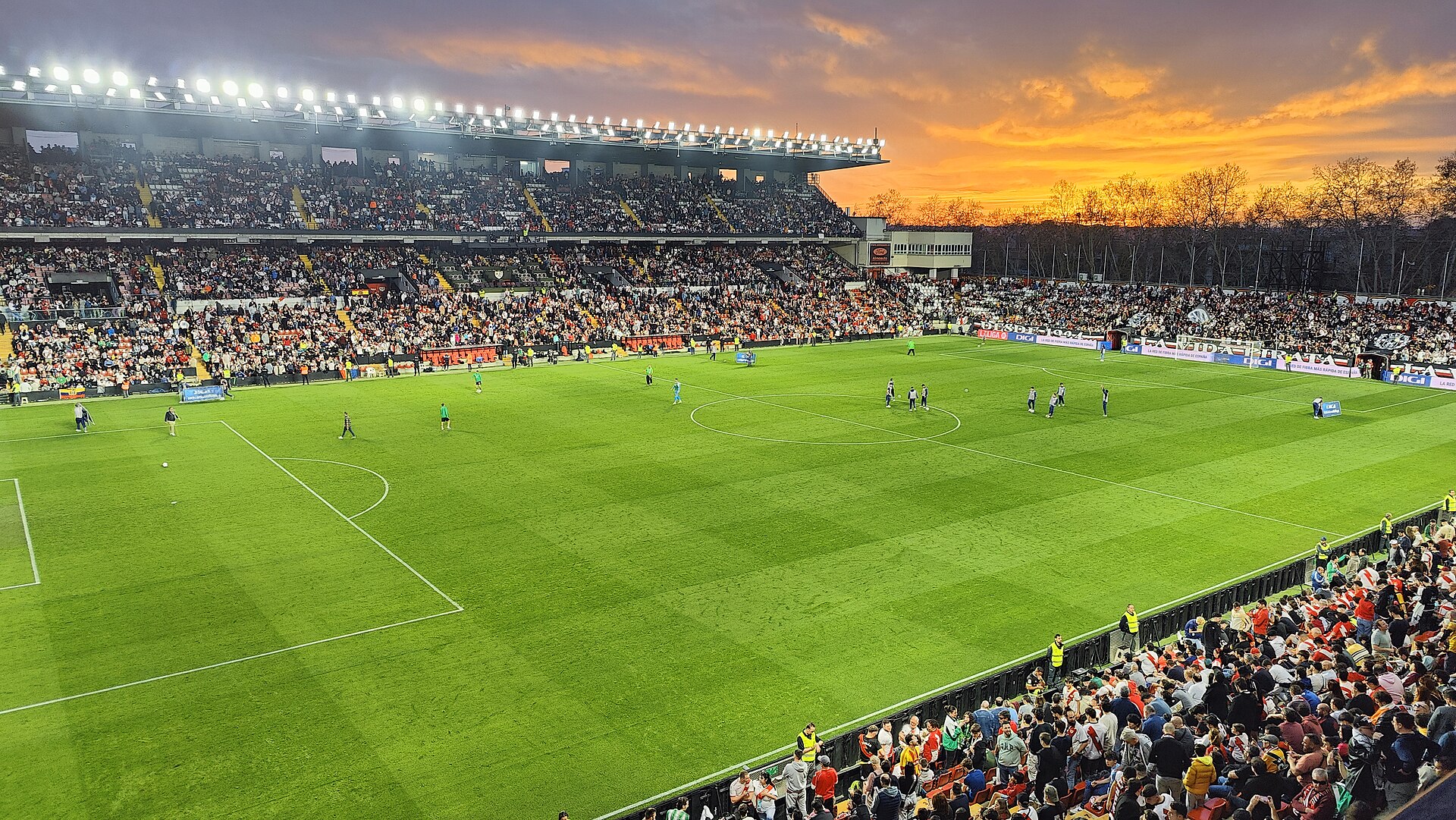
Rayo is the club people fall in love with. Its stadium, the Estadio de Vallecas, is squeezed into the dense, working-class neighbourhood of Vallecas in the south-east of the city, with one end famously open to the tower blocks behind it. It is small, old, a bit shabby, and the atmosphere is fantastic. Rayo’s fans are known for their left-wing politics, their social campaigns, and a sense of humour about being the little club in a city of giants.
Tickets and getting there
Tickets are sold through the club’s official website and at the ground. They are usually far cheaper than at the big two, and outside the games against Real Madrid, Atlético and Barcelona they are generally easy to get. The stadium is next to Portazgo station on Metro Line 1, about 20 minutes from Sol with no change needed.
One important note for this season: Rayo has had repeated problems with the condition of its stadium, and some home games may be moved to another venue in the Madrid region. Check the venue on the club’s website before you buy, and again on the day.
Why go
If you have already seen the Bernabéu on a tour, if the big clubs’ tickets are out of reach, or if you just want to see what a neighbourhood football club feels like in Spain, Rayo is the answer. Go early and have a beer on the Avenida de la Albufera, where the bars fill with fans in the hour before kick-off.
Getafe
Getafe is a suburban town south of Madrid, and its club has been a fixture in La Liga for most of the past two decades. The Coliseum is a compact, modern stadium; atmosphere is modest compared with the others, and Getafe’s style of play has not always won neutrals over. For a visitor, the appeal is practical: tickets are usually cheap and easy to get, and seeing Real Madrid, Atlético or Barcelona play away at the Coliseum can be much more achievable than seeing them at home. Getafe is reached by Cercanías C4 or Metro Line 12 (Metro Sur), around 30 to 45 minutes from central Madrid.
The Madrid Derby
Real Madrid against Atlético — el derbi madrileño — is the biggest game in the city, and one of the biggest in Europe. There are at least two a season in La Liga, one at each stadium, with cup and Champions League meetings on top. Tickets are extremely hard to get through official channels: home-club members take almost all of them, with a small away allocation. Resale prices run into the hundreds of euros, and the resale risk at the turnstile is at its highest for exactly this fixture.
Our honest advice: unless you are a member of one of the clubs, watch the derby in a bar. The atmosphere in a packed Madrid bar with split loyalties is electric, and you will spend about €10 instead of €400.
When the Season Runs and When Games Kick Off
The season
La Liga runs from mid-August to late May, with a short winter break around Christmas and New Year. The Champions League group or league phase runs from September to January, with knockout rounds from February to the final in late May or early June. The Copa del Rey runs from autumn through to a spring final. There are international breaks in September, October, November and March when no league games are played — check before you book a football-focused weekend.
Kick-off times are announced late
This catches out visitors every season. La Liga fixtures are published by round at the start of the season, but the exact day and time of each match — Friday, Saturday, Sunday or Monday; 14:00, 16:15, 18:30 or 21:00 — are set only a few weeks ahead, to suit television. A match listed for “the weekend of” could be on Friday night or Monday night. Do not book a flight that leaves on Sunday afternoon until the time is confirmed. For Champions League games, dates are fixed further ahead and most kick off at 21:00 local time.
Late kick-offs matter in Madrid. A 21:00 game finishes around 23:00, and by the time you are out of the stadium it is nearly midnight. The Metro runs until around 01:30, with extra services on match nights, so getting home is not a problem; getting up for an early train the next morning might be.
What It Costs: A Matchday Budget
| Item | Real Madrid | Atlético | Rayo / Getafe |
|---|---|---|---|
| Ticket, ordinary league game | €75–€210 | €30–€90 | Usually well under the big two |
| Ticket, big game (official) | Rarely available | €60–€90+ if available | More than usual, still reasonable |
| Metro there and back | Two single fares or a ten-trip card | Same | Same |
| Beer and a bocadillo before | About €10–€15 | About €10–€15 | About €8–€12 |
| Club shop shirt | €100+ | €100+ | Less |
For transport costs and which card to buy, see our guide to Madrid transport card pricing.
What to Know Before You Go
Security and bags
All the stadiums search bags at the entrance. Large bags, backpacks, glass, cans, flares and anything that might be thrown are not allowed. Neither is alcohol: selling or drinking beer with alcohol inside Spanish football stadiums is banned by law at professional matches, so what you are sold inside is non-alcoholic. There is generally no left-luggage service at the grounds; travel light.
Tickets and ID
Most tickets are now digital and linked to an account. Have your phone charged, the ticket downloaded before you leave (mobile signal around a full stadium is poor), and carry photo ID in case you are asked for it.
Colours and away sections
Madrid football is generally friendly, and wearing a neutral shirt or a home shirt in the home end is completely normal. Wearing an away shirt in a home section is not a good idea, especially at a derby. If you are supporting the visiting team, buy in the away allocation through that club.
Children
Spanish football crowds are family-friendly by European standards, and you will see plenty of children, including at late kick-offs. All spectators, including babies and toddlers, generally need their own ticket. Read the club’s specific rules before you buy. For a less intense introduction, Rayo or Getafe on a Sunday afternoon is ideal. More ideas for families are in our Madrid with kids guide.
Safety
Matchdays in Madrid are very safe for spectators. The usual big-crowd rules apply: keep your phone and wallet in a front pocket in the crush on the Metro and at the station, and move away from any trouble. Our guide to safety in Madrid covers pickpocketing in more detail.
If You Cannot Get a Ticket: Watching Football in Madrid
This is the part nobody writes about and many visitors end up doing — and it is a very good night out. Almost every bar in Madrid with a television shows the big games, and for a Real Madrid or Atlético match you will find the whole neighbourhood watching. A few tips:
- Get there early. For the Clásico, a derby or a Champions League night, bars fill up an hour before kick-off.
- Neighbourhood bars beat tourist bars. A traditional bar in Chamberí, La Latina or Lavapiés, full of locals who care, is a better experience than an Irish pub on Sol showing five screens.
- Know whose bar it is. Some bars are openly madridista or colchonero (Atlético); you will work it out from the walls.
- Order properly. A caña (small draught beer) keeps coming, often with a free tapa in traditional places. Nobody expects you to leave during the game.
For the kind of neighbourhood bar that shows the match without trying, see our guides to tapas bars in La Latina and Chamberí.
Stadium Tours on Non-Match Days
If your dates do not line up with a home game, you can still get inside both big stadiums. The Bernabéu tour is one of the most visited attractions in the city, with the trophy room, a walk through the stands and interactive exhibits on the club’s history; tickets, timings and what is included are covered in our guide to Real Madrid stadium tour tickets. Atlético also runs a museum and stadium tour at the Metropolitano, which is quieter, cheaper and a good option for fans of the club. Tours at either ground are restricted or closed on match days and the day before a big game, so check the calendar before you go.
Where to Stay for a Match
If football is the reason for your trip, it is worth thinking about the stadium when you choose a hotel.
- For the Bernabéu: anywhere on or near the Castellana — the northern end of Chamberí, around Nuevos Ministerios, or the Salamanca district — puts you a short Metro ride or a walk from the stadium, and the neighbourhood is full of bars on match night. Salamanca is covered in our Salamanca neighbourhood guide.
- For the Metropolitano: there is little reason to stay near the stadium itself, which sits in a residential and business district on the edge of town. Stay centrally, near a Line 2 or Line 7 station, and travel out.
- For Rayo: anywhere on Line 1, which runs through Sol, gets you to Portazgo without a change.
For the wider decision about neighbourhoods, see our guide to where to stay in Madrid. Hotel prices around the Bernabéu rise noticeably on Champions League nights, so book early if a big game is on.
A Football Weekend in Madrid
Here is how we would spend a weekend built around a match, assuming a Saturday evening kick-off. Remember that the exact time is confirmed only a few weeks ahead, so keep the plan flexible.
Friday
Arrive, check in, and head out for a late dinner in La Latina or Huertas. If there is a Friday night game anywhere in La Liga, find a bar showing it and get into the rhythm of Spanish football-watching.
Saturday
Spend the morning at the Prado or in the Retiro while your legs are fresh. Have a long lunch — this is Madrid, and lunch at 14:30 is normal — and then take the Metro out to the stadium about two hours before kick-off. Find a bar near the ground, soak up the build-up, then go in 45 minutes before the start. After the match, let the crowd thin out before you head for the Metro, and finish the night somewhere central. The city will still be awake.
Sunday
If you went to the Bernabéu on Saturday, take the Atlético museum tour at the Metropolitano, or the other way around. If Rayo or Getafe are at home, a Sunday afternoon match in Vallecas is a perfect contrast to the big stadium the night before. Otherwise, spend the morning at the El Rastro flea market and the afternoon somewhere green.
Accessibility at the Stadiums
Both the Bernabéu and the Metropolitano are modern stadiums with wheelchair spaces, accessible entrances and adapted toilets. Accessible tickets are sold through the clubs’ own channels, usually with a companion place, and must be requested specifically rather than bought as a standard seat — contact the club’s supporter services well ahead. Santiago Bernabéu Metro station and Estadio Metropolitano station both have lifts, though the crowds around them before and after a big game are intense. Vallecas, as an older stadium squeezed into a neighbourhood, is more limited. For getting around the city more generally, see our guide to wheelchair-accessible transport in Madrid.
Women’s Football and Youth Teams
Both big clubs have women’s teams in Liga F, Spain’s top women’s division, and both have enjoyed strong seasons since professional women’s football took off after Spain’s 2023 World Cup win. Real Madrid Femenino and Atlético Femenino usually play at the clubs’ training complexes on the edge of the city rather than at the big stadiums, with tickets that are cheap and easy to get. Occasional big fixtures are moved to the main stadiums. Real Madrid Castilla, the club’s reserve team, plays at the Estadio Alfredo Di Stéfano in Valdebebas. If you want a relaxed afternoon of good football and do not mind a trip to the edge of town, all of these are worth considering.
Beyond Football: Other Sport in Madrid
Football dominates, but it is not the only show in town.
- Basketball. Real Madrid’s basketball team is one of the best in Europe, playing in the Spanish league and the EuroLeague. Games are cheaper and easier to get into than football, and the atmosphere is excellent.
- Tennis. The Mutua Madrid Open, a combined ATP and WTA event, takes place at the Caja Mágica each spring, usually from late April into early May.
- Formula 1. Madrid hosted its first Formula 1 Grand Prix in about 45 years in September 2026, at the new MADRING circuit around IFEMA and Valdebebas, with a capacity of up to around 110,000. Future race dates and tickets are sold through Formula 1’s official channels.
- Bullfighting. Las Ventas holds bullfights from spring to autumn. It is a deeply contested tradition, not a sport in the ordinary sense, and it deserves its own careful treatment rather than a line in a football guide.
Frequently Asked Questions
How do I buy Real Madrid tickets as a tourist?
Through realmadrid.com or entradas.com. For ordinary La Liga matches, tickets often go on general sale and remain available two to three weeks before the game. Champions League games, the derby and El Clásico rarely reach general sale.
How much are Real Madrid tickets?
Standard La Liga tickets through official channels are roughly €75 to €210, depending on the stand and tier. Big games cost more and are rarely available to the public.
Is it easier to get Atlético de Madrid tickets?
Usually, yes, for ordinary La Liga matches, with cheaper seats from about €30. The derby, Barcelona and big European nights are just as hard to get into.
Can I get tickets for the Madrid derby?
Very rarely through official channels unless you are a club member. Resale tickets are expensive and risk being rejected at the turnstile. Watching in a bar is the realistic option for most visitors.
When are La Liga kick-off times confirmed?
Usually only a few weeks before the match, to suit television schedules. Do not book fixed travel around a match until the day and time are published.
What is the best Madrid stadium for atmosphere?
For a big European night, the Bernabéu with its roof closed. For consistent, full-throated noise, the Metropolitano. For character and neighbourhood feel, Rayo’s Estadio de Vallecas.
Can you drink beer at football matches in Madrid?
Only non-alcoholic beer inside the stadium. Alcohol sales at professional matches are banned by law. Bars outside the grounds are busy before and after the game.
Is the Bernabéu stadium tour worth it if I cannot go to a match?
Yes. The tour covers the trophy room, the panoramic view from the top of the stands and, on most days, the dressing rooms and the players’ tunnel, and it costs far less than a match ticket.
Related Madrid Guides
- Real Madrid Stadium Tour Tickets
- Madrid Metro Map and Guide
- Madrid Nightlife Guide
- Tapas Bars in La Latina
- Is Madrid Safe?
- Madrid Events Calendar
- Things to Do in Madrid
Photo Credits
The Santiago Bernabéu’s new façade: Estadio Santiago Bernabéu 38 by Luis García (Zaqarbal), CC BY-SA 4.0, via Wikimedia Commons.
Exterior of the Metropolitano: Madrid – Estadio Wanda Metropolitano 03 by Zarateman, CC0, via Wikimedia Commons.
Estadio de Vallecas at half-time: Campo de fútbol de Vallecas en el descanso del Rayo Vallecano – Real Betis 23-24 by Davicilio20, CC0, via Wikimedia Commons.