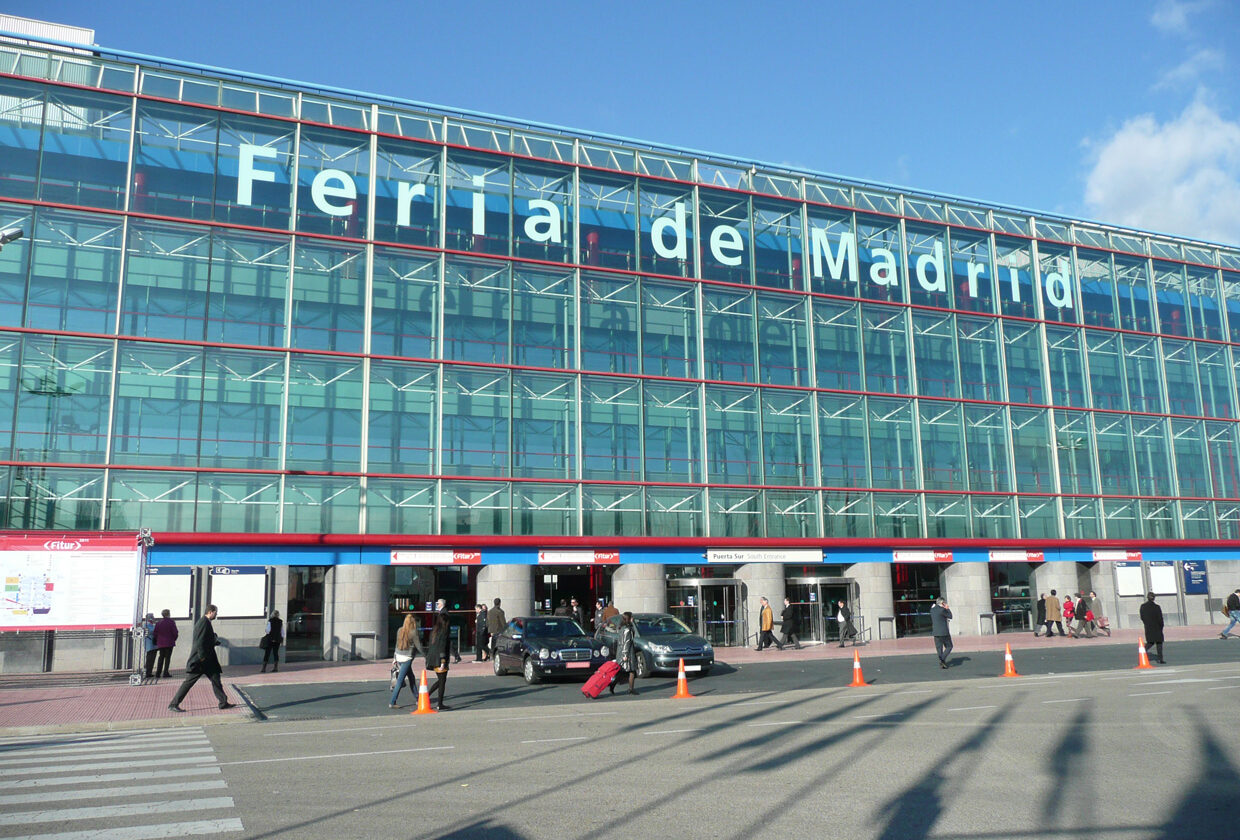
For most of its history IFEMA has been the place Madrid sends trade fairs: tourism expos, car shows, fruit and vegetable conventions, the sort of halls you visit with a lanyard round your neck. In September 2026 it became a racetrack. The first madrid f1 grand prix at Madring ran over three days, Kimi Antonelli won it for Mercedes, and the organiser counted more than 350,000 attendances across the event’s four days of activity. The second edition is booked for 10 to 12 September 2027, and tickets are already on sale.
This guide is for anyone planning to go in 2027: what kind of circuit it is, what the first race was actually like, how tickets work (three-day passes only, and no resale), the two separate ways in by Metro and Cercanías, the rules at the gate, and where to stay, from the official partner hotels by the airport to a room in the centre and a train out each morning. Dates, ticket rules and transport were checked in November 2026 against the organiser’s and Formula 1’s own pages. Ticket prices sit in the booking flow and change as grandstands sell, so check them on the official ticket site when you buy.
The Madrid Grand Prix at a Glance
| Question | Answer |
|---|---|
| Official name (2027) | Formula 1 Lenovo Gran Premio de España |
| Dates | Friday 10 to Sunday 12 September 2027; race on Sunday |
| Place in the season | Round 16 of 24, the weekend after Monza |
| Circuit | Madring, a hybrid of purpose-built track and streets around IFEMA, Valdebebas (northeast Madrid); about 5.4 km a lap |
| Signature corner | La Monumental, banked at 24% and roughly 550 m long |
| Tickets | Three-day passes only, on sale since 29 September 2026 at ticketsf1.madring.com and the F1 Official Ticket Store |
| Getting there | Metro Line 8 to Feria de Madrid (south sector) or Cercanías C-1 to Valdebebas (north sector); no public parking |
| Gates | 08:00 to 19:30; no re-entry |
| Contract | The organiser says its agreement runs to 2036 |
What Happened at the First Madrid Grand Prix
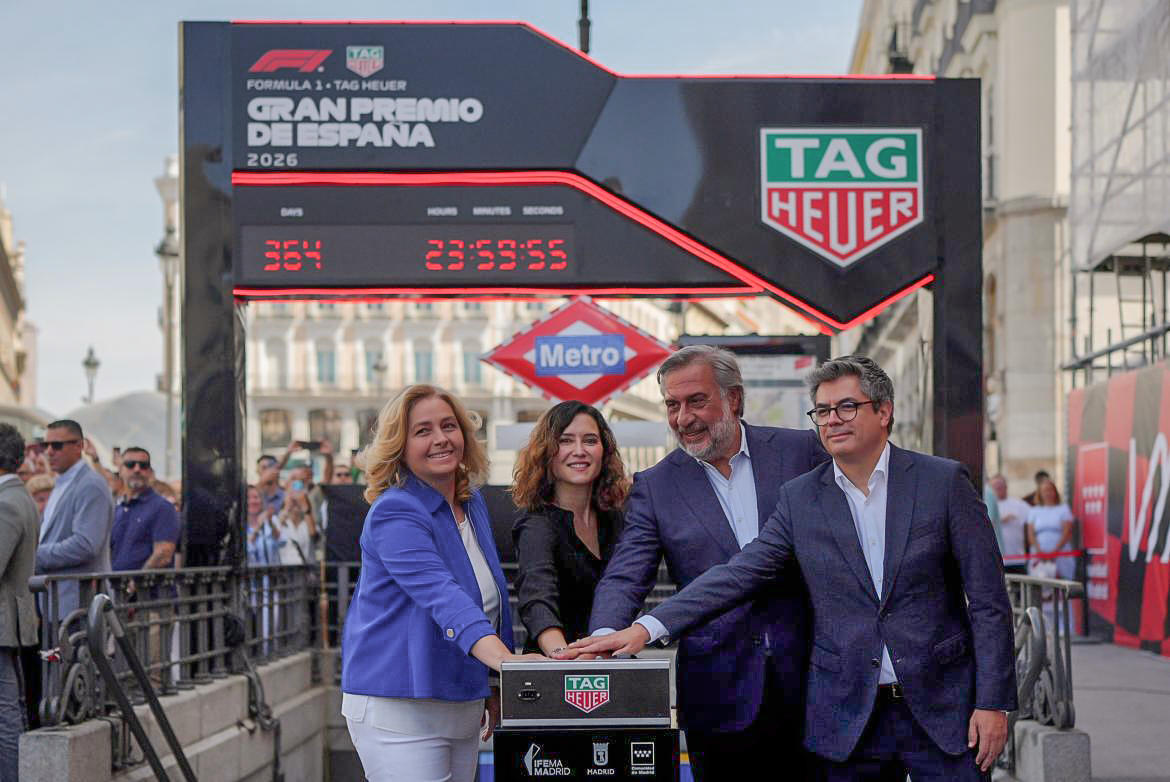
The Formula 1 TAG Heuer Gran Premio de España ran at Madring from 11 to 13 September 2026, the first race at the new circuit. Formula 1’s official results give the win to Kimi Antonelli for Mercedes, in 1 hour 34 minutes 23.754 seconds over 57 laps, with Max Verstappen 4.351 seconds behind and Lando Norris third.
Off the track, the organiser’s own figures are big. Its post-event release counted 352,618 cumulative attendances over four days of activity, peaking at 128,183 on race day, with 122,039 on the Saturday and 87,890 on the Friday. It says eight in ten spectators arrived by public transport, that Metro carried around 168,000 trips over the three race days and Cercanías line C-1 around 107,000, and that the transport plan used 14 lines with a peak capacity of 35,000 people an hour. Those are the organiser’s numbers, not an independent count, but they tell you the public transport plan was the backbone of the weekend and is likely to be again.
The reviews were more mixed. Reuters reported in October 2026 that the race itself had been a procession, and that the organiser was working on changes to some corners, subject to FIA approval, and on moving pedestrian bridges that had blocked spectators’ views. None of that is unusual for a first-year circuit, and some of it may be fixed by 2027, but it is worth knowing before you choose a grandstand. Check the organiser’s site in the months before the race for the final layout and any new viewing areas.
The 2027 Race: Dates and What Is Changing
Formula 1’s 2027 calendar lists the Formula 1 Lenovo Gran Premio de España for 10 to 12 September 2027, round 16 of 24, the weekend straight after the Italian Grand Prix at Monza. Lenovo replaces TAG Heuer as title sponsor; the race is still Spain’s Grand Prix, held in Madrid.
The format is the standard Grand Prix weekend: practice on the Friday, qualifying on the Saturday, the race on the Sunday, with support races between the sessions. The organiser’s FAQ says Formula 2 and Formula 3 races are part of the programme, and the fan zones run concerts, food and drink, merchandise and family areas, with more than eight hours of activity each day. Session times are published by Formula 1 closer to the race; check the 2027 race page on formula1.com in the summer.
Mid-September is a good time to be in Madrid in its own right. The city has come back from its August holidays, the terraces are still busy, and the heat has usually eased. AEMET’s long-term averages for its Retiro station (1981-2010) give September an average high of 26.4°C and an average low of 15.4°C, with 22 mm of rain across the month. On an exposed grandstand on a sunny afternoon it will feel hotter than that, so bring a hat and sunscreen and drink plenty.
The Circuit: What Kind of Track Is Madring?
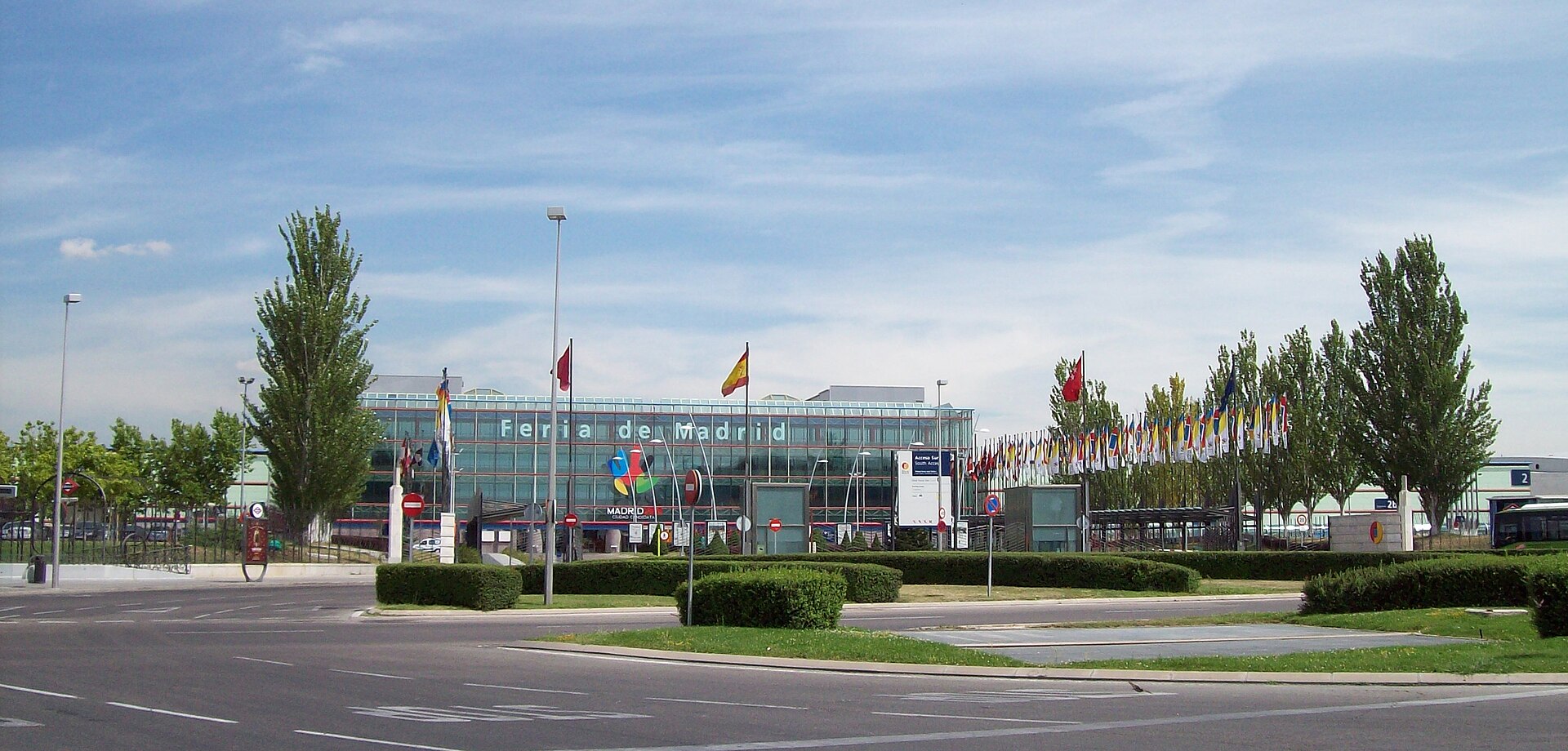
Formula 1 describes Madring as a hybrid circuit: purpose-built track combined with urban sections that run across the IFEMA exhibition grounds in Valdebebas, in the northeast of the city. The organiser gives the lap as about 5.4 km and says around 1.5 km of streets near IFEMA are affected. It is not a street circuit in the Monaco sense, with buildings at the barrier, but it is not a permanent racing facility like Barcelona’s either; much of it is laid out each year across car parks, access roads and the edges of the trade-fair site.
The corners worth watching
- La Monumental. The circuit’s showpiece is a long banked corner, roughly 550 m long (the organiser’s FAQ gives 547 m), with a 24% gradient. Formula 1’s ticket store calls it the steepest and longest banked turn on the F1 calendar. It is the obvious place to see cars at speed and close together, and the corner most people will remember from the television pictures.
- The main straight. The organiser gives it as 589 m, with the start line, pit lane and grid. The longest flat-out stretch on the lap, through the urban sections, is longer: the circuit page gives it as about 837 m.
- The final turn. The covered Straight 1A grandstand looks onto the last corner and the start of the main straight, which makes it a good seat for race starts and late-race overtaking attempts.
The organiser’s circuit map numbers the corners in a way that includes a couple of split corners (5A and 20A), so you will see different corner counts quoted depending on how they are counted. If corner numbers matter to your seat choice, use the map on the ticket site, which is the one your grandstand will refer to.
Madring Tickets for 2027
General sale for 2027 opened on 29 September 2026 at 17:00, after an American Express presale from 21 to 28 September. Grandstand and hospitality tickets are sold until each area sells out. There are three official ways to buy:
- ticketsf1.madring.com, the organiser’s ticket site, for grandstand and general admission.
- The F1 Official Ticket Store on formula1.com.
- hospitality.madring.com or Match Hospitality, for VIP and hospitality packages.
The organiser also names a short list of authorised agencies that sell packages: Diwoto Events, Arena XS2Events BV, Global Multi Partners, Gulliver Sports Travel, IDEMICE and Grand Prix Tickets. Anything else is a reseller, and that matters here more than at most events, because resale is not allowed (see below).
How the tickets work
- Three-day passes only. The organiser’s FAQ is clear that there are no single-day tickets: every ticket covers Friday, Saturday and Sunday. If you only care about the race, you are still paying for all three days.
- Numbered seats. Every grandstand ticket includes a numbered seat. Separate purchases may not sit together, so the organiser recommends buying all the tickets in one transaction.
- Up to ten per person. For bigger groups, the organiser has a separate groups service at ticketsf1.madring.com/groups.
- Children. Everyone needs a ticket except children under 3 who do not take a seat. Under-18s must be with a responsible adult at all times, and the organiser sets further rules for babies and young children with an adult other than a parent, so read its FAQ before you book for a family.
- Accessible tickets. Tickets for people with reduced mobility are sold through a separate link, in selected grandstands and in all hospitality areas, and a companion must be booked in the same transaction. The organiser asks for an official disability certificate of 33% or more, which may be checked at the gate.
- Tickets arrive before the event. You receive a ticket with a QR code ahead of the race weekend.
Grandstands, zones and tiers
The organiser sorts its grandstands into three tiers: Gold for the main straight, Silver and Bronze for grandstands around the corners. The circuit is divided into zones, labelled A, C and E on the ticket site. In Zone A, the three main-straight grandstands are covered (except for the first few rows), have direct access from the Metro and give access to Fan Zone A:
| Grandstand | What you see |
|---|---|
| Straight 1A | The final turn and the start of the main straight |
| Straight 1B | The starting grid, main straight and pit lane |
| Straight 1C | The starting grid, main straight and pit lane |
A covered seat is worth paying for in Madrid in September. Three days in direct sun on an aluminium bench is hard going even when the average high is in the mid-twenties. If you are choosing between a cheaper uncovered corner and a covered seat on the straight, think about how many hours you will actually sit there.
Prices
Prices are shown in the booking flow on the official ticket sites, by grandstand, and they move as areas sell out. Before you commit, compare the same grandstand on ticketsf1.madring.com and the F1 Official Ticket Store, and remember that the price covers all three days.
Resale, transfers and refunds
- No resale. Tickets may not be resold without prior authorisation from the promoter and Formula One World Championship Limited, and resale for profit is prohibited.
- Transfers are allowed. You can transfer your ticket to someone else as often as you like until the wristband linked to it is activated; the organiser publishes the reassignment procedure closer to the event.
- Refunds only if the event is cancelled. Tickets are non-refundable if you do not attend, and a change to the schedule for weather, safety or organisational reasons does not entitle you to a refund.
Is the Madrid Grand Prix Worth It?
The honest answer depends on what you want from it. If you want a great motor race, 2026 did not deliver one, and the corner changes the organiser has talked about need FIA approval, so check its site for the final 2027 layout. If you want a Formula 1 weekend with a capital city attached, Madring has a lot going for it. You can sleep in the centre, eat dinner at 22:00 like a local, spend the Monday morning at the Prado, and get to the circuit on the Metro. Few Grand Prix venues are this easy to reach without a car.
The weak points are cost and the format. Every ticket is a three-day pass, so a race-day-only visit costs the same as the full weekend. And because much of the circuit is temporary, sightlines can change from one year to the next. Our advice: buy a covered grandstand on the straight or a seat that looks onto La Monumental, plan to use at least two of the three days, and treat the rest of the trip as a Madrid holiday rather than a racing pilgrimage.
Getting to Madring
The single most important thing to know: the circuit has two separate entrances, north and south, and you cannot move between them once inside. Check which sector your ticket is for before you plan the journey, because the right station depends on it. There is no private car access or general parking at the circuit (only spaces for holders of reduced-mobility tickets), so public transport, taxis and ride-hailing are the options.
South sector: Metro Line 8 to Feria de Madrid
Feria de Madrid station, on Metro Line 8, is beside the circuit and serves the south sector. Line 8 is the airport line: it runs from Nuevos Ministerios to the airport terminals, so you can join it from the centre at Nuevos Ministerios, or come straight in from Barajas. The organiser also lists Line 4 stations at Canillas, Mar de Cristal and San Lorenzo, and EMT bus lines 120, 122, 104, 171, T11, 87, 172SF, 125 and 172 for the south side.
North sector: Cercanías C-1 to Valdebebas
The north sector is served by Valdebebas station on Cercanías line C-1, which runs between Airport T4 and Chamartín. From Atocha, Recoletos or Nuevos Ministerios, the organiser’s directions say to change at Chamartín. EMT buses 171 and 174, and the night bus N28, serve the north fan zone. Our Cercanías guide explains tickets and how the network works.
Shuttles, buses and taxis
For 2026, the organiser ran shuttle buses from Plaza de Castilla, Canillejas, Avenida de América and Estadio Metropolitano, the last of which is handy if you are also going to a football match at Atlético’s stadium. Taxis and ride-hailing cars use designated drop-off and pick-up zones. Expect queues at the end of each day; the Metro and Cercanías, with reinforced services, will usually be faster.
How long does it take?
The organiser describes the circuit as 20 to 30 minutes from the city centre and about 5 minutes from the airport; Formula 1’s ticket store says about 25 minutes from the centre and about 10 km from the airport. In practice, allow more on race weekend: the stations at the circuit end handle tens of thousands of people at once, especially after the race on Sunday. Use a Metro or Renfe journey planner for your own route, and our Metro map guide and transport fares guide for which ticket to buy. If you are coming in on Line 8 from the airport, note the airport supplement explained in our airport to city centre guide.
Coming from the airport
Madring is unusually close to Madrid’s main airport, which opens up a few options for international visitors: land on Friday morning and go straight to the circuit by Line 8 or C-1, or base yourself at an airport hotel for the weekend. Remember that large backpacks, suitcases and wheeled luggage are not allowed in, so drop your bags first. Our Madrid-Barajas airport guide covers the terminals, and which one your airline uses.
At the Gate: Rules and What to Bring
- Gates open 08:00 to 19:30.
- No re-entry. Once your ticket has been validated and you leave, you cannot come back in that day, so bring what you need.
- Food and drink. Alcohol, glass bottles, cans and metal bottles are on the prohibited list, and food and drink are sold inside; check the organiser’s list before you pack. The venue uses a cashless wristband: you can top it up online before the event, the wristband is free, unused balance can be refunded afterwards (promotional credit cannot), and refunds are processed on Tuesdays and can take up to 15 days.
- No large backpacks, suitcases or wheeled luggage. Weapons, drugs, bicycles and scooters are also on the prohibited list; check the organiser’s FAQ for the full list before you pack.
- Cameras. Photos and video for personal use are fine; professional cameras, tripods and extendable poles are not.
- Dress code: none. Comfortable shoes matter more than you think on a circuit this size.
- Guide dogs and service dogs are allowed.
Where to Stay for the Madrid Grand Prix
You have three sensible choices, and the right one depends on whether you want to be close to the track or close to Madrid.
Near the circuit and the airport
The organiser lists four recommended hotels for 2027: Hotel101 Madrid in Valdebebas, Ocean Drive Madrid, Axor Feria and Axor Barajas. Staying out here means the shortest trip to the gates, but the area is business parks and airport hotels, and you will spend your evenings travelling into town or eating in the hotel. Our guide to hotels near Madrid airport covers the options in this part of the city. Rooms near IFEMA go early for race weekend, and prices are set dynamically, so book as soon as you have tickets.
Along Line 8 and the C-1
Nuevos Ministerios and Chamartín are a good compromise. Both are on the direct routes to the circuit (Line 8 from Nuevos Ministerios, C-1 from Chamartín; from Nuevos Ministerios the C-1 means changing at Chamartín), both are well connected to the rest of the city, and the business hotels around the Castellana are often better value at weekends. You lose the old-town atmosphere but gain a quick, simple commute each morning.
In the centre
For most visitors, the best plan is a hotel in the centre and a train out each morning. You get the city at night, which is half the point of a Madrid Grand Prix, and the journey is manageable with one change. Sol, Huertas, Malasaña and Chueca are all within reach of Line 8 or the C-1 via Nuevos Ministerios or Chamartín. Our where to stay in Madrid guide and the best neighbourhoods to stay in will help you choose.
Making a Long Weekend of It
Because every ticket is a three-day pass, the Grand Prix fills Friday to Sunday. If you can add a day either side, Madrid rewards it:
- Thursday: arrive, find your station for the north or south sector, and spend the evening on a tapas crawl in La Latina or Huertas.
- Friday to Sunday: the circuit by day, dinner in the centre. Madrid eats late, so you will not miss anything by leaving the circuit at the end of the day’s sessions.
- Monday: the Prado, the Royal Palace or the Retiro, before a late flight home. Our things to do in Madrid guide has the rest.
Check the city’s events calendar for what else is on that weekend: September is busy, and a football match on the same weekend adds pressure on transport and hotels. Our football in Madrid guide explains how the fixture calendar works.
Frequently Asked Questions
When is the 2027 Madrid Grand Prix?
Friday 10 to Sunday 12 September 2027, with the race on the Sunday. It is round 16 of the 2027 season, the weekend after Monza.
Is the Madrid Grand Prix the Spanish Grand Prix?
Yes. The race at Madring is the Gran Premio de España, the Spanish Grand Prix; in 2027 it is the Formula 1 Lenovo Gran Premio de España.
Can I buy a ticket for just the race day?
No. The organiser sells three-day passes only, covering Friday, Saturday and Sunday.
Where do I buy official Madring tickets?
From ticketsf1.madring.com, the F1 Official Ticket Store, hospitality.madring.com or Match Hospitality for VIP packages, or one of the organiser’s authorised agencies. Resale for profit is prohibited.
How much are Madrid F1 tickets?
Prices depend on the grandstand tier (Gold, Silver or Bronze) and are shown in the booking flow on the official ticket sites. They change as areas sell out, so compare the official sites when you are ready to buy.
How do I get to Madring?
Metro Line 8 to Feria de Madrid for the south sector, or Cercanías C-1 to Valdebebas for the north sector. You cannot move between the two once inside, so check your ticket first. There is no public parking.
Is Madring a street circuit?
Partly. Formula 1 describes it as a hybrid, combining purpose-built track with urban sections across the IFEMA exhibition grounds.
Can I leave and come back in?
No. Re-entry is not allowed once your ticket has been validated.
Can I bring food and drink?
Alcohol, glass bottles, cans and metal bottles are prohibited, so check the organiser’s list of prohibited items before you pack. Food and drink are sold inside, and payment is by cashless wristband, which you can top up before the event.
Do children need a ticket?
Yes, except children under 3 who do not take a seat. Under-18s must be with a responsible adult at all times.
What is the weather like in Madrid in mid-September?
Usually warm and dry. AEMET’s 1981-2010 averages for Madrid’s Retiro station give September an average high of 26.4°C and low of 15.4°C, with 22 mm of rain in the month.
Related Madrid Guides
- Madrid-Barajas Airport guide
- Hotels near Madrid Airport
- Madrid Airport to the city centre
- Madrid Cercanías trains
- Madrid Metro map guide
- Where to stay in Madrid
- Football in Madrid
- Madrid festivals and events
Photo Credits
The Feria de Madrid facade at IFEMA: Fachada Feria de Madrid – IFEMA by Alquiler de Coches, CC BY 2.0, via Wikimedia Commons.
Countdown clock for the 2026 Gran Premio de España: Díaz Ayuso en la cuenta atrás para el regreso de la F1 a Madrid by Comunidad de Madrid, CC BY-SA 4.0, via Wikimedia Commons.
IFEMA exhibition grounds, Campo de las Naciones: IFEMA (Campo de las Naciones) 01 by Luis García ( Zaqarbal ), CC BY-SA 3.0, via Wikimedia Commons.
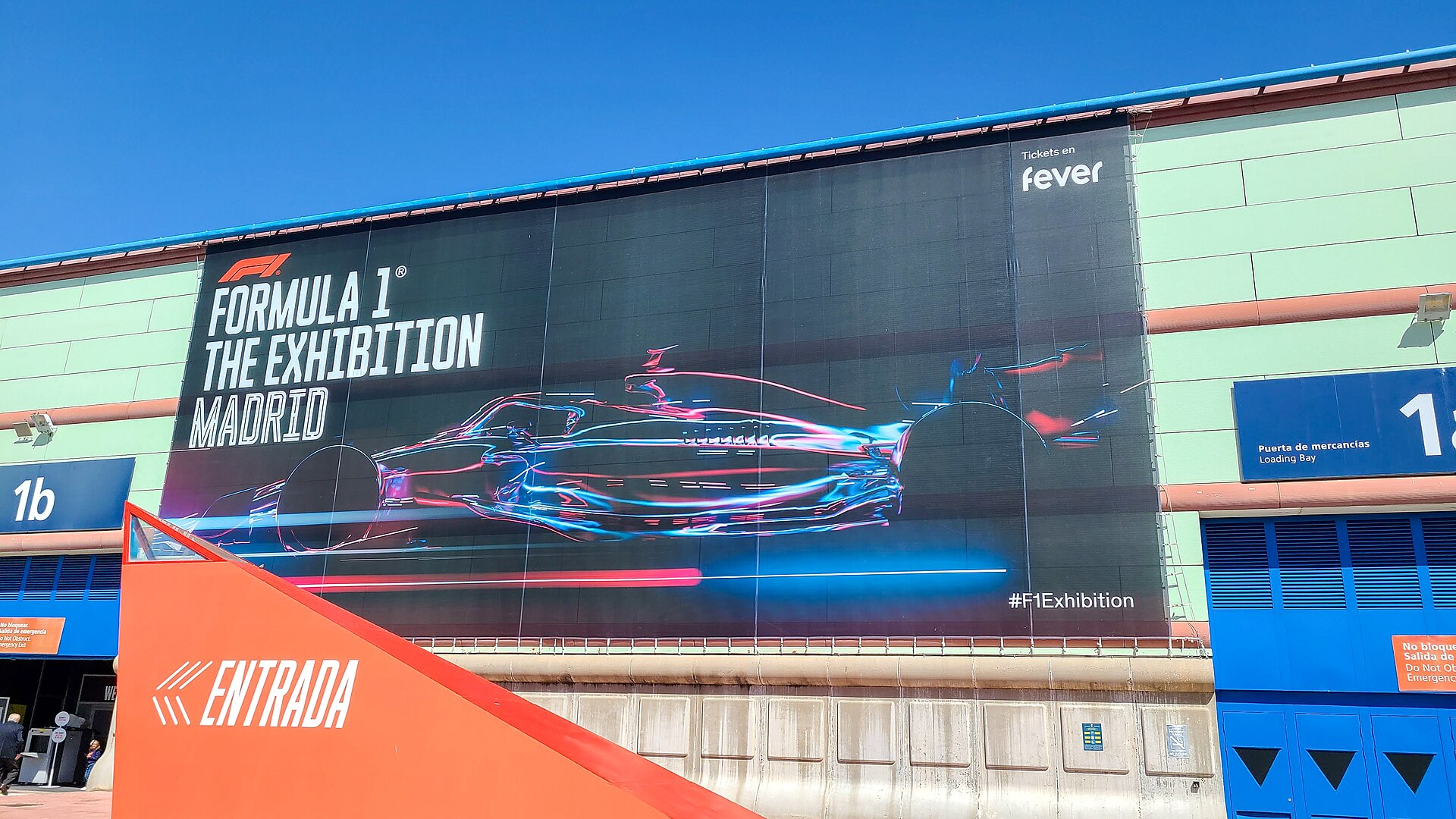
Formula 1: The Exhibition at IFEMA: Madrid F1 Exhibition-1 (52849594719) by Steve, CC BY-SA 2.0, via Wikimedia Commons.
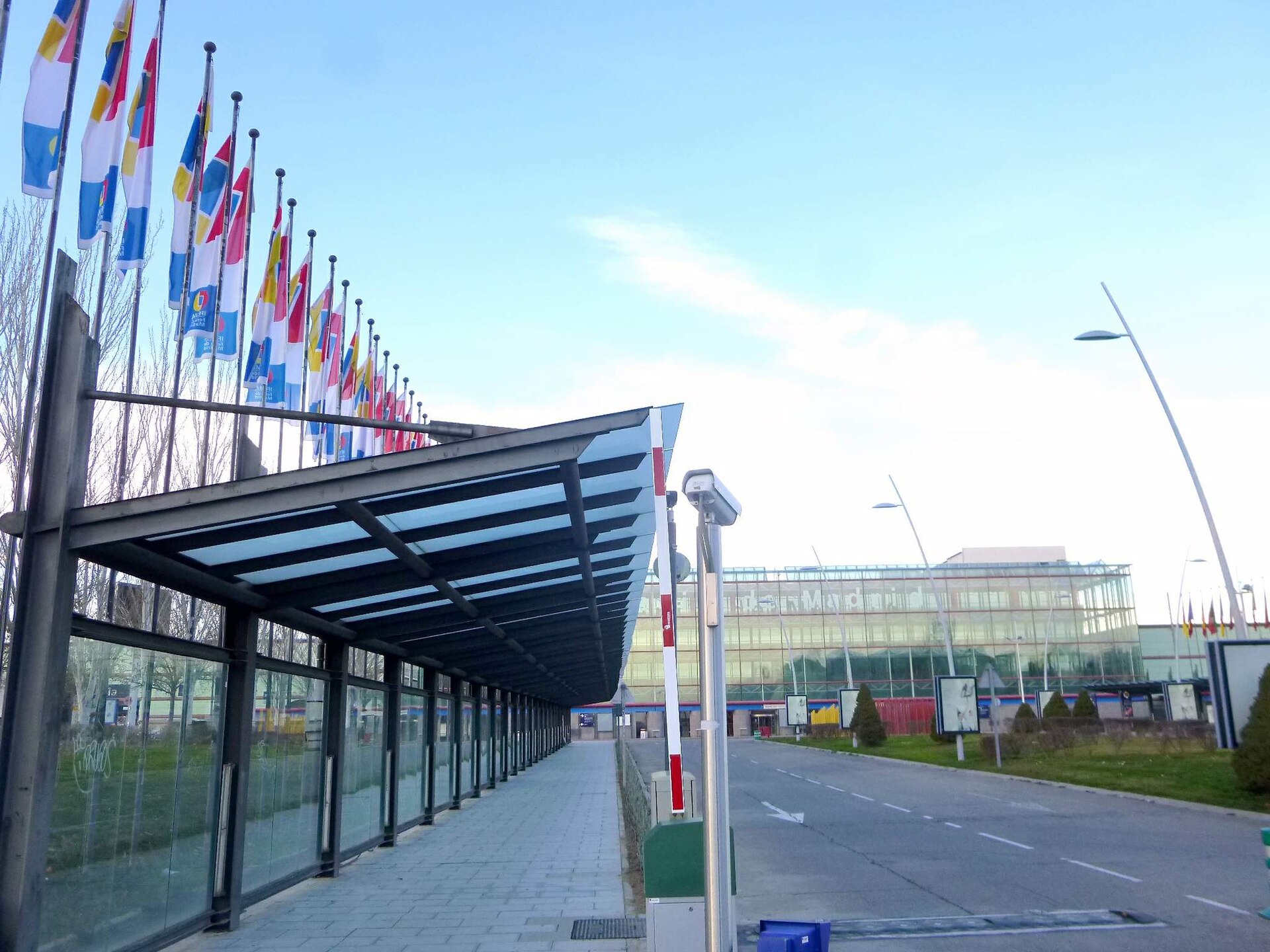
Walkway into the IFEMA grounds: Madrid – Campo de las Naciones, Feria de Madrid (IFEMA) 02 by Zarateman, CC0, via Wikimedia Commons.