
If you’re putting together a Madrid museum itinerary, the Museo Arqueológico Nacional (MAN) deserves a serious slot — not as an afterthought, but as a centrepiece. This is Spain’s national archaeological collection, housed at Calle de Serrano 13 in the Salamanca district, and it covers around 30,000 years of human history on the Iberian Peninsula: from Palaeolithic cave painters through Iberian nobles, Roman colonists, Visigothic kings, and Moorish caliphs. I’ve visited Madrid’s museums many times, and the MAN consistently surprises people who come expecting a dusty warehouse of pottery shards. It is not that. For a broader look at where this fits in the city’s cultural landscape, the Madrid museums guide covers all the major institutions and helps you prioritise based on your interests.
The Lady of Elche stopped me cold — I’d seen her in textbooks for years but nothing prepares you for the real thing, two feet away through a glass case. That limestone face, the extraordinary headdress with its flanking wheel-coifs, the calm expression: she’s been staring back at visitors since the 4th century BCE, and she still commands the room. The MAN has several moments like that, which is why I keep coming back.

At a Glance
- Full name: Museo Arqueológico Nacional (MAN)
- Address: Calle de Serrano 13, 28001 Madrid
- Metro: Serrano (Line 4) or Colón (Lines 4 & 5) — 2–3 minute walk from either
- Hours: Tuesday–Saturday 9:30–20:00; Sunday 9:30–15:00; closed Mondays
- Closed on: 1 Jan, 6 Jan, 1 May, 24 Dec, 25 Dec, 31 Dec
- Standard ticket: €3 (2026)
- Reduced ticket: €1.50
- Free entry: Saturdays 14:00–20:00; Sundays 10:00–15:00; under-18s; EU students under 25; May 18, Oct 12, Dec 6
- Audio guide: €4 — strongly recommended (much signage is Spanish-only)
- Average visit: 2–3 hours; allow 3–4 for the full collection
The Star Exhibits
The MAN has eight or nine pieces that would headline any European archaeological museum. Here’s what to prioritise:
1. Lady of Elche (Dama de Elche) — 4th century BCE
Spain’s most famous pre-Roman sculpture. This Iberian limestone bust was unearthed in Elche (Alicante) in 1897 and sold to the Louvre, then returned to Spain in 1941. The detail is extraordinary: the pleated veil, the elaborate wheel-shaped coifs flanking her face, the hollow cavity in her back (possibly used as a funerary urn). She is the anchor of the entire collection — find her on the lower floor in the Iberian galleries and give her the time she deserves.
2. Lady of Baza (Dama de Baza) — 4th century BCE
Less globally famous than the Lady of Elche but arguably more striking in person — a seated Iberian noblewoman discovered in Baza (Granada) in 1971, with traces of original polychrome paint still visible on her robes and jewellery. She was found holding a bird and sat in a burial chamber surrounded by grave goods. Standing beside her gives a visceral sense of how sophisticated Iberian funerary culture was, centuries before Roman influence arrived.
3. Treasure of Guarrazar — 7th century CE
Visigothic gold votive crowns, discovered in 1858 near Toledo and split between this museum and the Cluny in Paris (the MAN has the better pieces). The Crown of Recceswinth — hung with pendant gold letters spelling the king’s name — is one of the finest surviving pieces of early medieval goldwork anywhere in Europe. Sapphires, pearls, garnets, and Byzantine-influenced filigree. This is the kind of object that makes you stop and genuinely reassess what you thought you knew about the Visigoths.

4. The Altamira Cave Replica
In the museum’s garden (accessible from the lower floor), there’s an underground replica of the Altamira cave ceiling — the 15,000–18,000-year-old Palaeolithic bison paintings from Cantabria. The original cave is essentially closed to visitors; this full-scale reproduction is the most faithful way to experience the paintings. It’s surprisingly affecting: standing beneath those running bison in a low-ceilinged space, you feel something of what their creators felt. Don’t skip it.
5. Greek and Roman Antiquities
The MAN’s Greek and Roman collections are more selective than encyclopaedic, but they include several exceptional pieces: Attic red-figure pottery, Roman portrait busts from Hispania, and floor mosaics from Roman villas at Itálica, Mérida, and Complutum — some still carrying their original vivid colour after nearly two millennia. These provide the Mediterranean context that makes the Iberian pieces legible: you can trace exactly how Greek and Phoenician influences filtered into Iberian culture before Rome arrived.
6. Egyptian Collection and the Pyxis of Zamora
The Egyptian holdings — including the bronze figure of the Lady Takushit (8th century BCE) — are unexpectedly strong for a museum focused on Iberian history. And don’t miss the Pyxis of Zamora: a 10th-century carved ivory casket from caliphal Córdoba, among the great masterpieces of Hispano-Islamic decorative art. The level of carving is almost hallucinatory up close.
If you’re comparing admission costs across Madrid’s archaeology and history collections, the free museum hours guide lays out which institutions offer gratis entry and when — the MAN’s Saturday afternoon and Sunday windows make it easy to fit in without spending much.
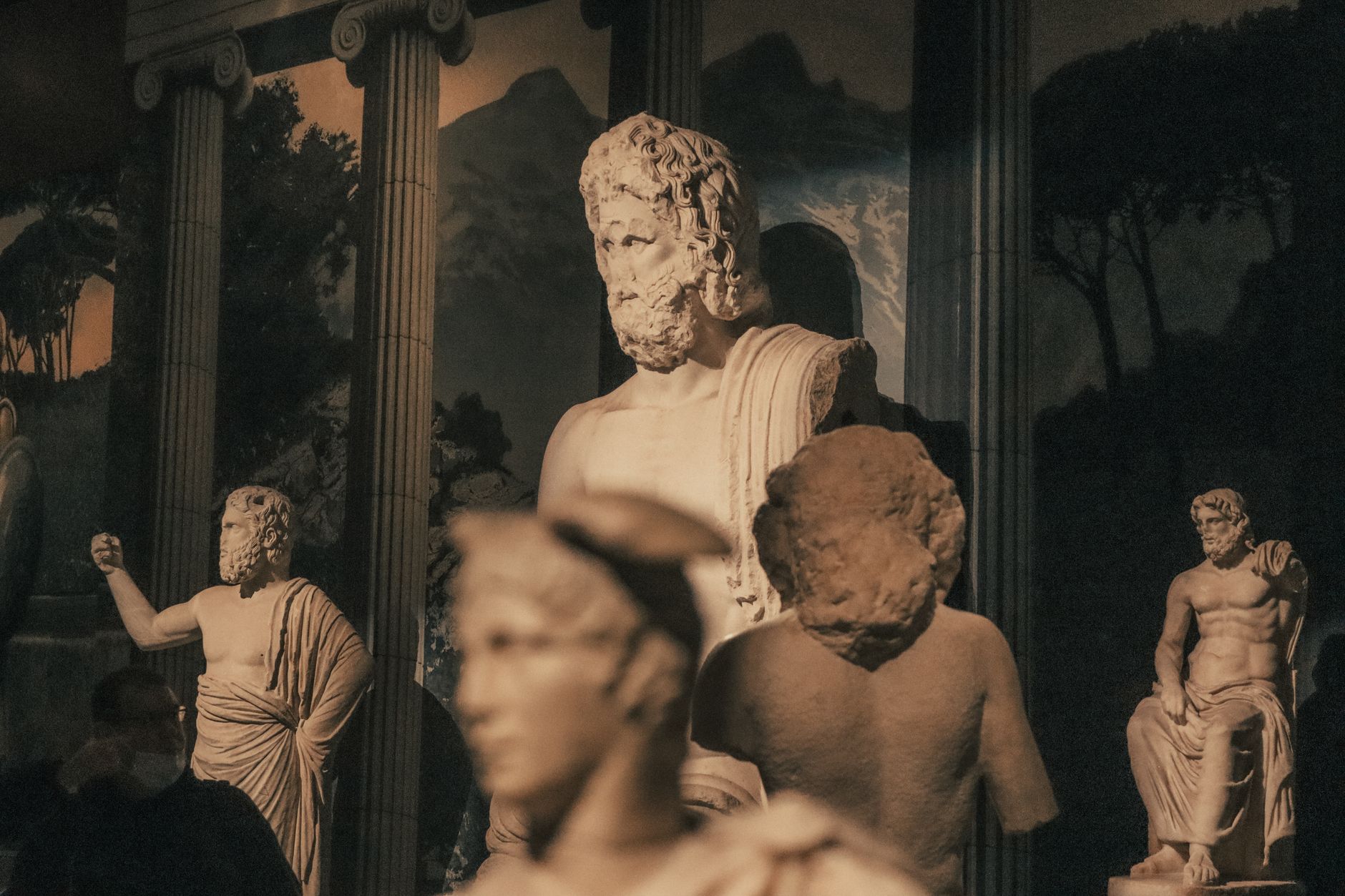
Museum Layout: Three Floors, Thirty Millennia
The MAN is organised chronologically across three floors, which makes navigation intuitive once you know the logic:
- Lower floor (basement level): Prehistory and Protohistory — Palaeolithic, Neolithic, Bronze Age, Iron Age. This is where the Lady of Elche and Lady of Baza live, alongside Iberian sculpture and the Altamira replica.
- Ground floor: Roman Hispania and Visigothic Spain — Roman mosaics, portrait sculpture, coins, and the Treasure of Guarrazar.
- Upper floor: Al-Andalus, medieval Christian Spain, Egyptian and Greek collections, and the Pyxis of Zamora.
My recommended route: start underground with the Altamira replica and work chronologically upward. The building itself — a 19th-century palace shared with the Biblioteca Nacional, comprehensively renovated in 2008–2014 — is worth looking at too: the entrance hall’s marble columns and the light wells are genuinely beautiful.
Tickets and Hours in Detail
The MAN is one of Madrid’s best-value major museums at €3. Free entry applies on Saturdays from 14:00–20:00 and Sundays from 10:00–15:00 — the Sunday morning window fills up faster, so the Saturday afternoon slot is often quieter in practice.
- Standard: €3
- Reduced: €1.50 (over-65s, unemployed, large families)
- Free: Under-18s always; EU students under 25; Saturdays 14:00–20:00; Sundays 10:00–15:00; May 18 (International Museum Day), Oct 12, Dec 6
- Audio guide: €4 — available in Spanish, English, French, German, Italian, Portuguese
- Booking: Tickets available at the door or via man.es; advance booking not usually necessary outside peak summer weeks
If you’re planning a wider museum pass strategy, the Madrid Museum Pass covers the big three (Prado, Reina Sofía, Thyssen) but not the MAN — which at €3 is cheap enough to pay separately anyway.
Practical Tips
- Get the audio guide. Much of the detailed label text is in Spanish only. The €4 audio guide is available in six languages and adds significant context, especially in the Iberian galleries.
- Tuesday–Friday mornings are the quietest. Weekend free-entry periods attract crowds; if you want the Lady of Elche without a scrum around the case, a weekday morning is better.
- Photography is permitted without flash; tripods are not allowed.
- Wheelchair accessible throughout, with a lift serving all floors.
- Combine with the Salamanca neighbourhood. The MAN sits one block from Calle Serrano’s luxury shopping strip. After three hours of archaeology, a coffee at a pavement café on Calle Goya is a reasonable reward.
- Nearby museums: Museo Lázaro Galdiano is a 15-minute walk north. The Golden Triangle museums (Prado, Reina Sofía, Thyssen) are a 20-minute walk or one metro stop away — a full day could combine an MAN morning with a Thyssen afternoon.
- Family visits: Children 8+ tend to engage well — the Altamira replica, Egyptian mummies, Visigothic gold, and Iberian stone warriors hold attention better than oil paintings. Under-18s are always free.
How the MAN Fits Into a Wider Madrid Museum Trip
The MAN occupies a different lane from the Golden Triangle — it’s not about painting or modern art, it’s about the deep history of the peninsula. That makes it a natural complement rather than a competitor to the Prado. A reasonable three-day museum strategy: Day 1 Prado, Day 2 MAN + Lázaro Galdiano, Day 3 Reina Sofía + Thyssen.
For those with a specific interest in Spanish colonial history and pre-Columbian civilisations, the Museum of America covers entirely different ground — it focuses on the Americas rather than the Iberian Peninsula, so they’re complementary rather than overlapping. The Naval Museum nearby rounds out the history angle with maritime and exploration artefacts from the Age of Discovery.
If you’re building a broader Madrid itinerary beyond museums, Retiro Park is 15 minutes south by foot from the MAN — a useful decompression zone after a long gallery session. And for a full overview of what the city offers across all categories, things to do in Madrid is a useful starting point.
Background: The Museum’s History
The Museo Arqueológico Nacional was founded in 1867 by Queen Isabel II to consolidate the royal cabinet of antiquities with dispersed collections from suppressed monasteries and academic institutions. It moved into its current building on Calle Serrano (shared with the Biblioteca Nacional de España) in 1895. The collection grew dramatically through the 20th century as major excavations — Elche in 1897, Baza in 1971, and ongoing Roman-era digs — contributed headline pieces. A major six-year renovation (2008–2014) modernised the galleries comprehensively: new lighting, bilingual labels for most major pieces, and reconfigured thematic circuits. The result is a museum that looks and functions like a 21st-century institution while housing genuinely ancient material.
Frequently Asked Questions
Is the Archaeological Museum Madrid worth visiting?
Yes — particularly for anyone interested in pre-Roman Spain, the Visigoths, or the deep history of the Iberian Peninsula. The Lady of Elche and the Treasure of Guarrazar alone justify the visit. At €3 (or free on Sunday mornings), the value is exceptional.
What are the free entry times?
Free on Saturdays from 14:00–20:00 and Sundays from 10:00–15:00. Also free on May 18, October 12, and December 6. Always free for under-18s and EU students under 25.
How long does a visit take?
Two hours covers the highlights comfortably. Three to four hours lets you do the full chronological walk across all three floors without feeling rushed. With children, 90 minutes focused on the Altamira replica, Iberian galleries, and Egyptian section tends to work well.
Can I see the original Altamira cave paintings?
No — the original Altamira cave in Cantabria (350 km north of Madrid) is closed to almost all visitors to preserve the paintings. Access is by rare lottery. The MAN’s full-scale underground replica is the most accessible way to experience the ceiling’s scale and detail.
What’s the difference between the MAN and the Museum of America?
The MAN covers the Iberian Peninsula from the Palaeolithic through the medieval period. The Museum of America covers pre-Columbian civilisations and Spanish colonial-era America — entirely different geography and timeframe. Both are worth visiting; neither duplicates the other.
Is there parking nearby?
Street parking in Salamanca is metered and expensive. The metro is far easier: Serrano (Line 4) or Colón (Lines 4 and 5) both leave you 2–3 minutes from the entrance.
Where is the best place to eat near the museum?
Mercado de la Paz on Calle Ayala (5 minutes on foot) has Casa Dani’s legendary tortilla de patatas — queue early. For sit-down: La Castela on Calle Doctor Castelo does traditional Madrid tapas well. The Salamanca neighbourhood more broadly is the city’s most expensive dining district, so walk one street back from Serrano to find more reasonable prices.
Official Resources
- Official museum website: man.es
- Madrid tourism information: esmadrid.com