
If you’re building a serious itinerary of Madrid’s best museums, the Cerralbo belongs on it — not because it’s the biggest or the most famous, but because nothing else in the city feels quite like it. This is the private palace of Enrique de Aguilera y Gamboa, 17th Marqués de Cerralbo, at Calle Ventura Rodríguez 17, and it has been kept exactly as he left it in 1922. The donation terms were unusually strict: nothing moved, nothing rearranged. Eighty-odd years later, the staff have honoured that condition scrupulously. Cerralbo is one of those rare museums that feels like the owner just stepped out for a moment — the 1922 donation terms required everything be kept exactly as it was, and they have been.
I find it more interesting, honestly, than a lot of larger collections. The Prado is an institution; Cerralbo is a personality. You’re walking through somebody’s idea of how to live — a man who funded Iron Age archaeological digs in the morning and hung a Tintoretto next to a suit of Turkish armour in the afternoon. That combination of obsessions, frozen in place, is what makes an afternoon here unlike anything else in Madrid’s cultural calendar.

Cerralbo Museum: The Essential Facts
- Address: Calle Ventura Rodríguez 17, 28008 Madrid
- Metro: Ventura Rodríguez (Line 3) — 2 minutes on foot; or Plaza de España (Lines 2 and 10) — 5-minute walk
- Hours: Tuesday–Saturday 9:30–15:00; Thursday also 17:00–20:00; Sunday 10:00–15:00
- Closed: Mondays and major public holidays
- Standard ticket: €3 (2026)
- Reduced: €1.50 (EU students under 25, over-65s, registered unemployed)
- Free: Thursdays 17:00–20:00; Sundays 10:00–15:00; permanent free for under-18s; also May 18, October 12, December 6
- Audio guide: €4 (strongly recommended — most signage is Spanish-only)
- Photography: Permitted without flash; tripods not allowed
- Time needed: 90–120 minutes
The Man Behind the Palace
Enrique de Aguilera y Gamboa (1845–1922) was the kind of 19th-century aristocrat who made the most of having too much money and genuine intellectual curiosity. He was a Carlist political activist, a Spanish senator, an archaeologist who led excavations at Iron Age and Bronze Age sites across the Iberian Peninsula, and a collector who spent forty years accumulating roughly 50,000 objects: paintings, weapons, ceramics, glass, furniture, tapestries, archaeological finds, and books. He built this palace on Calle Ventura Rodríguez between 1885 and 1893 and lived there with his wife and stepchildren until his death.
His will was specific: he bequeathed the entire estate — palace, collection, library, and all furnishings — to the Spanish state, with the explicit condition that nothing be altered or rearranged. The Museo Cerralbo opened in 1944 and has kept that promise ever since. Every painting is hung where he placed it. Every decorative object sits on the surface he chose. The original 1893 gas chandeliers — later adapted for electricity but otherwise unchanged — still hang in the reception rooms. This is not reconstruction or recreation; it is the real thing.
Room by Room: What to See
The Ballroom (Salón de Baile)
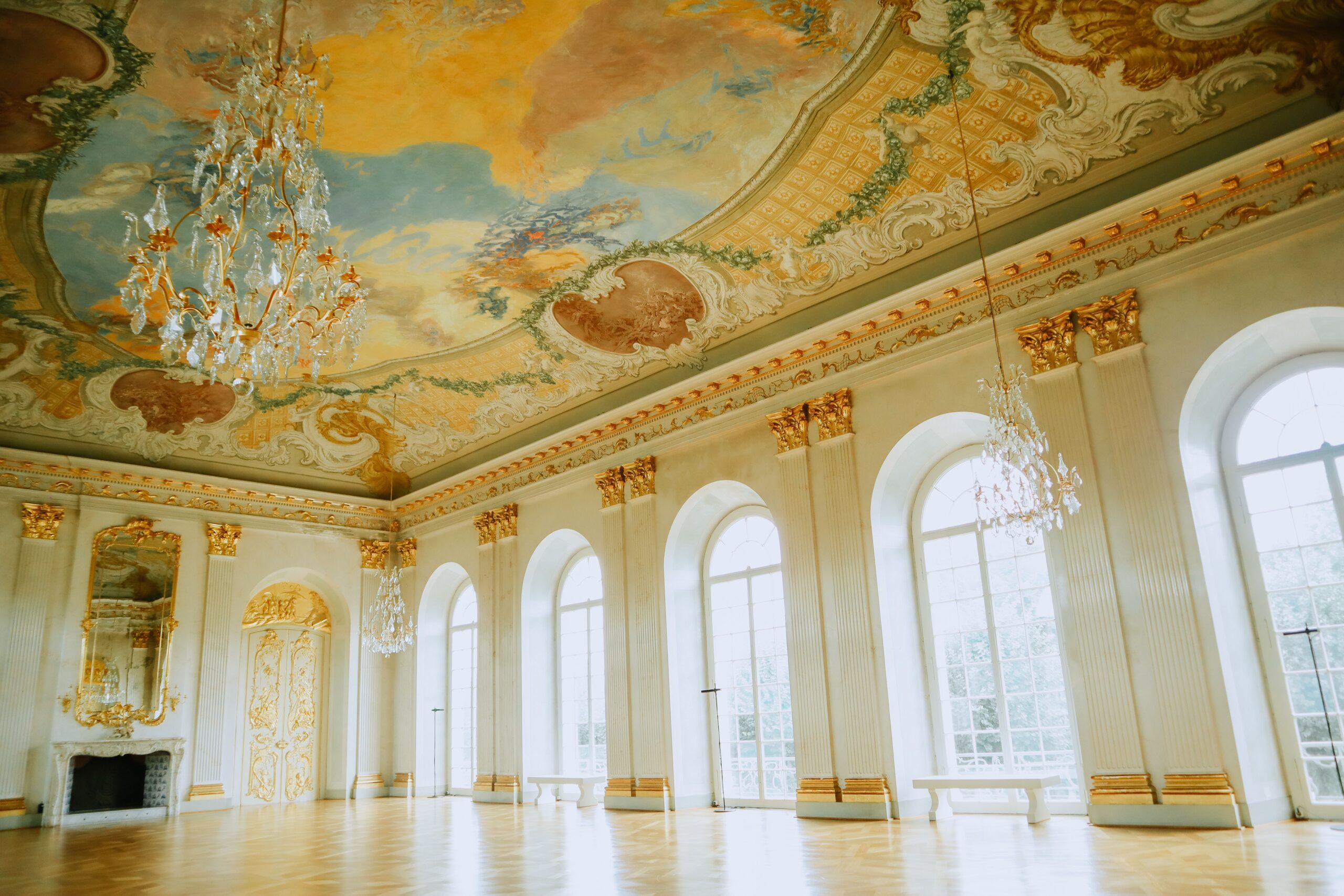
This is the room that stops people in their tracks. The Salón de Baile is a Rococo-inflected entertainment hall stretching the width of the palace — gilt columns, floor-to-ceiling mirrors, ceiling frescoes, and the original 1893 chandeliers casting warm light across the parquet. The Marqués designed it to impress, and it still does. At €3 admission, standing in this room for ten minutes alone justifies the ticket.
Room 6: El Greco’s Ecstasy of Saint Francis
The undisputed masterpiece of the collection, and one of the better El Grecos in Madrid outside the Prado. The “Ecstasy of Saint Francis” (c. 1610) hangs in Room 6 — the so-called Saleta — among other Spanish Old Master works. What makes seeing it here different from seeing an El Greco in a purpose-built gallery is context: you’re looking at it surrounded by the Marqués’s other choices, in a room he arranged, which is very close to how it looked in 1922. That specificity matters.
The Rest of the Painting Collection
Beyond the El Greco, the collection runs to Zurbarán, Ribera, and Tintoretto — the latter represented by a late 16th-century Crucifixion. These are not second-tier works. A private collector in 19th-century Madrid accumulating Tintoretto and Zurbarán knew exactly what he was doing. The paintings are hung salon-style, floor to ceiling, exactly as was fashionable in the 1890s, which means you need to look up and down rather than straight ahead.
The Armory
The Marqués had a serious passion for historic weaponry, and the armory reflects it. Hundreds of pieces: 16th and 17th-century Spanish, Italian, and Turkish arms, swords, daggers, firearms, and complete suits of armour. Many are elaborately decorated — parade armour rather than battlefield kit. This is one of the strongest private armour collections in Madrid, and it tends to hold the attention of visitors who thought they weren’t interested in such things.
The Library
A two-storey room with a wrought-iron gallery staircase and 12,000 volumes, including incunabula and rare 16th-century editions. The Marqués was a working scholar — he used this library — which gives it a different feeling from decorative palace libraries installed for show. The architecture alone is worth a few minutes: it’s one of the most beautiful interior spaces in the building.
The Grand Staircase and Reception Rooms
The marble entrance staircase with ceiling frescoes and tapestries was designed specifically to impress arriving guests during the Restoration period. The reception rooms leading off it contain French and Spanish 18th-century furniture, Sèvres porcelain, Bohemian glass, and Roman sculpture — the full apparatus of aristocratic display. Walk through slowly; the density of objects per square metre is considerable.
The Archaeological Display
The Marqués funded and personally participated in excavations at Numantia and other Celtiberian, Iron Age, and Bronze Age sites across Spain. The finds — alongside Greek vases, Roman bronzes, and Egyptian objects he acquired on travels — are displayed in dedicated rooms. This is a less-visited part of the museum and worth your time if you have any interest in Iberian prehistory. The context of a private 19th-century collector juxtaposing his own archaeological digs with Egyptian antiquities says something real about how the discipline was practised and perceived in that era.

Tickets, Free Hours, and What They Cover
At €3, the standard ticket is one of the better-value museum admissions in Madrid. The free hours — Thursday evenings (17:00–20:00) and Sunday mornings (10:00–15:00) — cover the full collection with no restrictions. Sunday morning is the more pleasant option: uncrowded, good natural light in the upper rooms, and you can take your time with the El Greco without anyone queuing behind you.
The €4 audio guide is worth considering if you read Spanish slowly or not at all — the in-room signage leans heavily toward Spanish-language panels, and the object labels assume some prior knowledge of period decorative arts. The guide adds about 30–40 minutes to the visit but makes the armory and painting rooms considerably more rewarding.
The Madrid Museum Pass does not include the Cerralbo, so there is no pass-based saving here — the €3 ticket is already priced low enough that it does not need one.
How the Cerralbo Compares to Other Madrid House-Museums
Madrid has several house-museums of this type, and they reward comparison. The Sorolla Museum is the most direct counterpart in atmosphere — another preserved private residence, another strong individual personality behind the collection — but Sorolla was a working painter and his home reflects that. Cerralbo is a collector’s house: denser, more encyclopaedic, less coherent in the art-historical sense, and more interesting for exactly those reasons.
The Lázaro Galdiano Museum offers a useful contrast: both are private collections in original early-20th-century Madrid mansions, but Lázaro Galdiano’s holdings are broader and art-historically deeper. Cerralbo is smaller and more atmospheric — the intact 1890s arrangement, not the quality of individual works, is its defining characteristic.
If you’re planning a day around this part of Madrid, the best pairing for a single morning is the Cerralbo followed by the Templo de Debod five minutes’ walk through the Parque del Oeste, then lunch in Argüelles before heading to the Royal Palace, a 10-minute walk back east.
Practical Notes
- Getting there: Metro Ventura Rodríguez (Line 3) is the closest stop — the museum is on the same street. Plaza de España (Lines 2 and 10) is a five-minute walk. Both are straightforward from the city centre.
- Best time to visit: Tuesday or Wednesday morning, when the museum is quietest. Avoid Saturday afternoons during free hours, which see a noticeable uptick in visitors.
- Wheelchair access: Partial. The ground floor is largely accessible, but the historic mansion has staircases throughout and not all rooms can be reached. Confirm specifics with the museum before visiting if this is a requirement.
- With children: Works well for children 8 and older. The armory, the eccentric density of objects, and the old-house atmosphere tend to engage them in a way that purpose-built galleries often do not. Free admission for under-18s.
- Photography: Permitted throughout, no flash. The Salón de Baile and the library photograph particularly well. The narrow rooms mean a wider lens is useful.
- Eating nearby: Casa Mingo on Paseo de la Florida (Asturian cider house, operating since 1888) is a 10-minute walk and the most atmospheric option in the area. La Bola Taberna for cocido madrileño is 10 minutes south.
Frequently Asked Questions
Is the Cerralbo Museum worth visiting?
For visitors interested in preserved historic interiors and eclectic private collections, yes — it’s among the most distinctive small museums in Madrid. The intact 1890s aristocratic arrangement is unique in the city, and the El Greco in Room 6 alone is worth the €3 admission.
When is entry free?
Thursdays 17:00–20:00 and Sundays 10:00–15:00. Always free for under-18s. Also free on May 18 (International Museum Day), October 12, and December 6.
Are the rooms really original?
Yes. The 1922 donation terms required that nothing be moved or altered. Furniture, paintings, and decorative objects remain as the Marqués arranged them. The museum has honoured this consistently since opening in 1944.
How long does a visit take?
90 minutes covers the full collection at a reasonable pace. Allow 2 hours if using the audio guide or if you want time with the library and archaeological rooms, which tend to get less attention from first-time visitors.
Is there a gift shop or café?
There is a small gift shop near the exit. No café on-site — the museum is compact and the historic building has no space for one. Eat before or after.
More Madrid Museums
- Madrid Museums Art Guide — the full guide covering every major collection in the city
- Sorolla Museum Madrid — the painter’s house and garden in Almagro
- Lázaro Galdiano Museum — the broadest private collection in Madrid
- Free Museum Hours in Madrid — full schedule of when major museums admit free
- Golden Triangle of Madrid Museums — the Prado, Reina Sofía, and Thyssen-Bornemisza
The Cerralbo is €3 and two hours, and it shows you something the city’s larger institutions cannot: a single, particular 19th-century intelligence expressed through 50,000 objects, left exactly where he put them. That’s a rarer thing than it sounds.