Why Madrid’s Transport System Is a Traveler’s Best Friend
Madrid operates one of Europe’s most efficient and affordable public transportation networks. Whether you are arriving at Barajas Airport, navigating between museums and tapas bars, or venturing out on a day trip to Toledo, you will find that getting around Madrid is remarkably straightforward. The city’s integrated system of metro, buses, commuter trains, and ride-sharing apps means you rarely need a car — and in most cases, public transport is faster than driving through the capital’s bustling streets.
This comprehensive guide covers every transportation option available to visitors, from the extensive metro network to cycling routes and airport transfers. We have included current prices, practical tips, and insider advice to help you move through Madrid like a local.
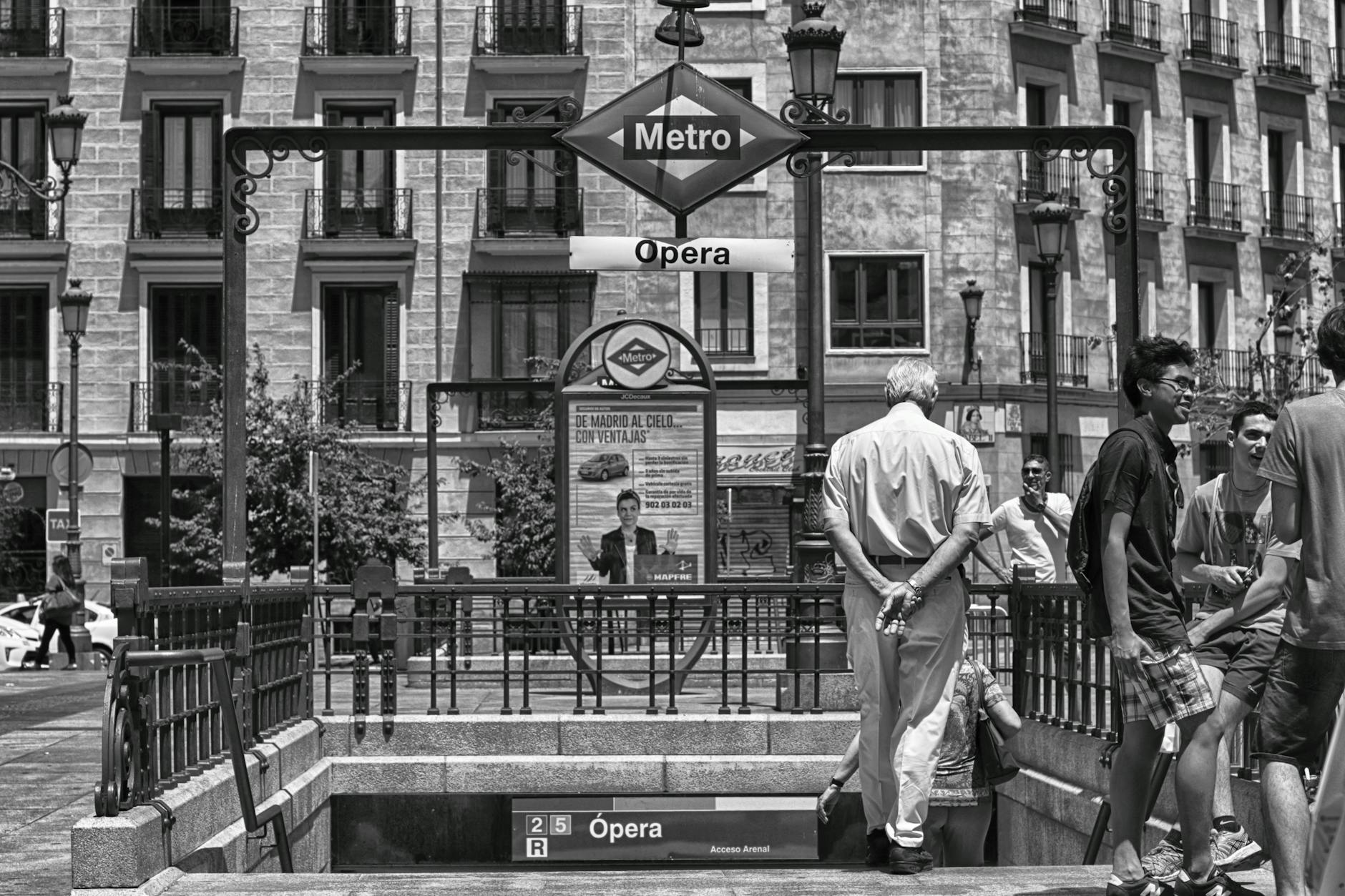
Madrid Metro: The Backbone of City Transport
Overview and Coverage
The Madrid Metro is the backbone of the city’s public transport system and one of the largest underground networks in Europe. With 13 numbered lines, over 300 stations, and nearly 300 kilometers of track, the metro reaches virtually every neighborhood and tourist attraction in the capital. Trains run from 6:05 AM until 1:30 AM daily, with frequencies ranging from every two minutes during peak hours to every 15 minutes late at night.
For tourists, the metro is almost always the fastest and most convenient way to travel. Major attractions like the Prado Museum (Banco de España or Atocha stations), the Royal Palace (Ópera station), Puerta del Sol (Sol station), and Retiro Park (Retiro or Ibiza stations) are all directly accessible by metro. The system is clean, safe, air-conditioned, and well-signposted in both Spanish and English.
Key Metro Lines for Tourists
While all 13 lines serve different parts of the city, several are particularly useful for visitors. Line 1 (light blue) runs north-south through the heart of Madrid, connecting Chamartín station with key stops at Gran Vía, Sol, Atocha, and Pacífico. Line 2 (red) serves the Retiro area and connects to major interchange stations. Line 3 (yellow) links Sol with Moncloa and passes through Callao on Gran Vía. Line 5 (green) connects Callao with the Carabanchel district and Aluche intermodal hub. Line 8 (pink) is the airport line, running from Nuevos Ministerios to Terminal 4 at Barajas Airport. Line 10 (dark blue) connects the northern suburbs with Tribunal in Malasaña and extends to the southwest.
Metro Etiquette and Tips
Madrid’s metro has its own unwritten rules that will make your journey smoother. Stand on the right side of escalators to let people pass on the left. Allow passengers to exit before boarding. Avoid blocking doorways, especially during rush hour between 8:00 and 9:30 AM and again from 6:00 to 8:00 PM. Keep your belongings close in crowded carriages, as pickpockets can operate in tourist-heavy stations like Sol, Gran Vía, and Callao. Most stations have elevators for accessibility, though some older stations may only offer escalators or stairs.
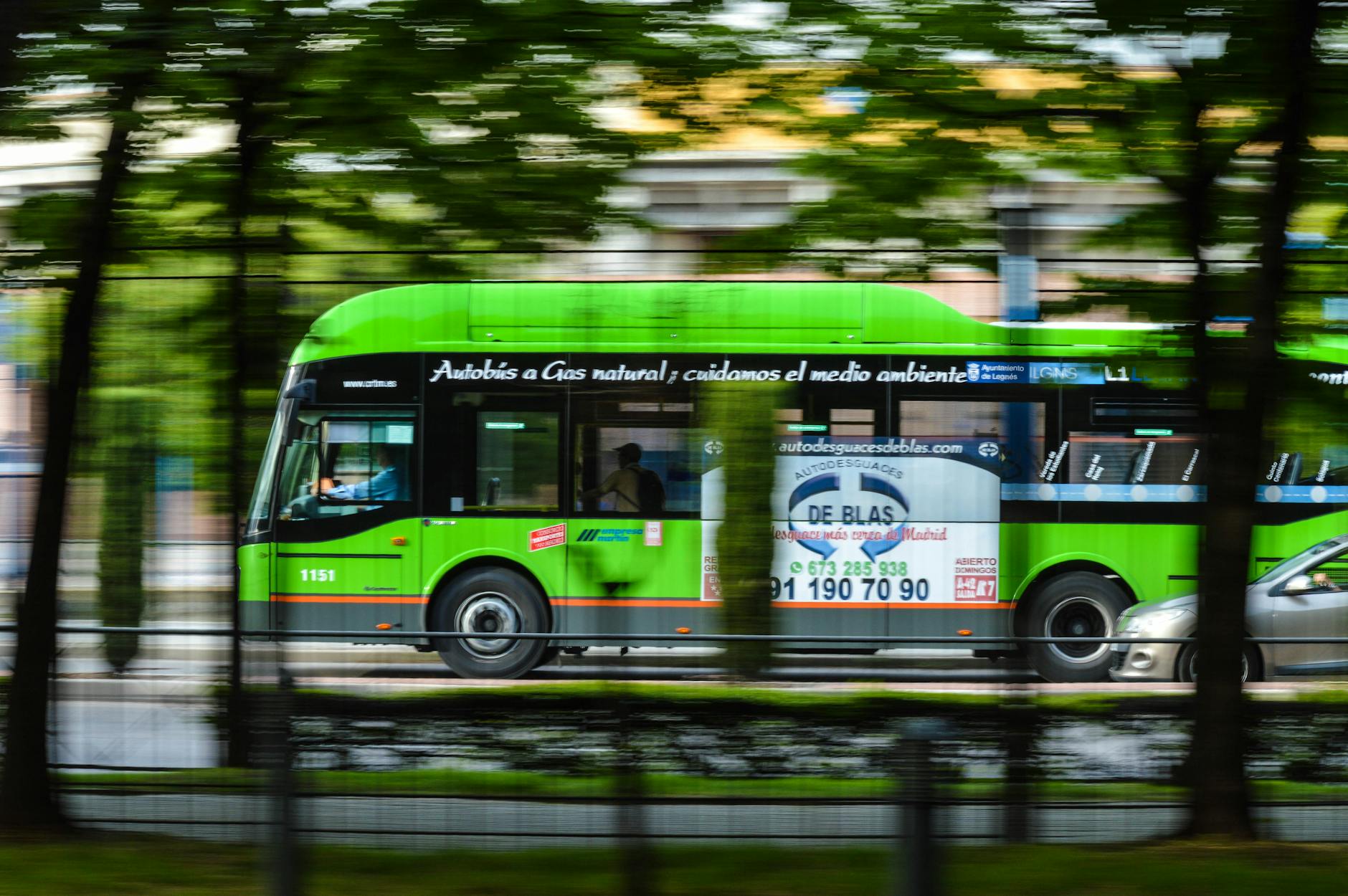
Madrid Bus Network: Reaching Every Corner
City Buses (EMT Madrid)
Madrid’s EMT bus network complements the metro by reaching neighborhoods and areas without underground stations. Over 200 bus routes criss-cross the city, operating from approximately 6:00 AM to 11:30 PM on weekdays. Buses run every 5 to 15 minutes during the day, depending on the route, and are equipped with air conditioning, wheelchair ramps, and digital displays showing upcoming stops.
For tourists, buses offer the advantage of seeing the city above ground while traveling. Several routes pass through scenic areas that the metro misses entirely. Route 001 (formerly the Circular) loops around the city center, connecting Atocha, Cibeles, Colón, and the major museums. The EMT Madrid app provides real-time tracking, so you can see exactly when the next bus will arrive at your stop.
Night Buses (Búhos)
When the metro closes at 1:30 AM, Madrid’s night buses — known as búhos (owls) — take over. These 27 night routes all depart from Plaza de Cibeles in the city center, radiating outward to cover the metropolitan area. Búhos run from approximately 11:45 PM to 5:45 AM, with departures every 15 to 35 minutes depending on the route and time of night. They accept the same tickets and travel cards as regular buses and the metro, making them a seamless extension of the daytime network.
Night buses are particularly valuable for visitors enjoying Madrid’s legendary nightlife. If your hotel is near the center, the walk back may be short, but for those staying in outer neighborhoods, the búho network ensures you can always get home safely without relying on taxis.
Tickets, Cards, and Fares: What You Need to Know
The Multi Card (Tarjeta Multi)
Madrid’s public transport runs on a contactless smart card system called the Tarjeta Multi. This reusable plastic card costs €2.50 and can be purchased at any metro station vending machine. Once you have the card, you load it with either individual trips or a travel pass. The card is valid for 10 years and can be shared between travelers if you are using single-trip tickets — just tap it for each person entering the system.
Single Tickets and Multi-Trip Options
A single metro journey within Zone A costs between €1.50 and €2.00, depending on the number of stations traveled. The most popular option among visitors who stay several days is the 10-trip ticket (Metrobús), which costs €12.20 — working out to just €1.22 per ride. This ticket works on both the metro and city buses, making it excellent value. Note that a supplementary fare of €3.00 applies when traveling to or from the airport on Line 8, regardless of your ticket type.
Tourist Travel Pass (Abono Turístico)
For visitors planning to use public transport extensively, the Tourist Travel Pass offers unlimited rides on the metro, city buses, Cercanías commuter trains, and light rail. It comes in two zone options. Zone A covers central Madrid and all the tourist sights most visitors want to see, while Zone T covers the entire region including the airport and outer suburbs like Alcalá de Henares and Aranjuez.
Zone A prices range from €8.40 for one day to €35.40 for seven days. Zone T prices range from €17.00 for one day to €70.80 for seven days. The pass includes the airport supplement, which is a significant saving if you plan to take the metro to and from Barajas. For most tourists spending three to five days in the city, the Zone A pass at €16.80 (three days) or €22.00 (five days) represents solid value — especially if you plan on using public transport more than four times per day.
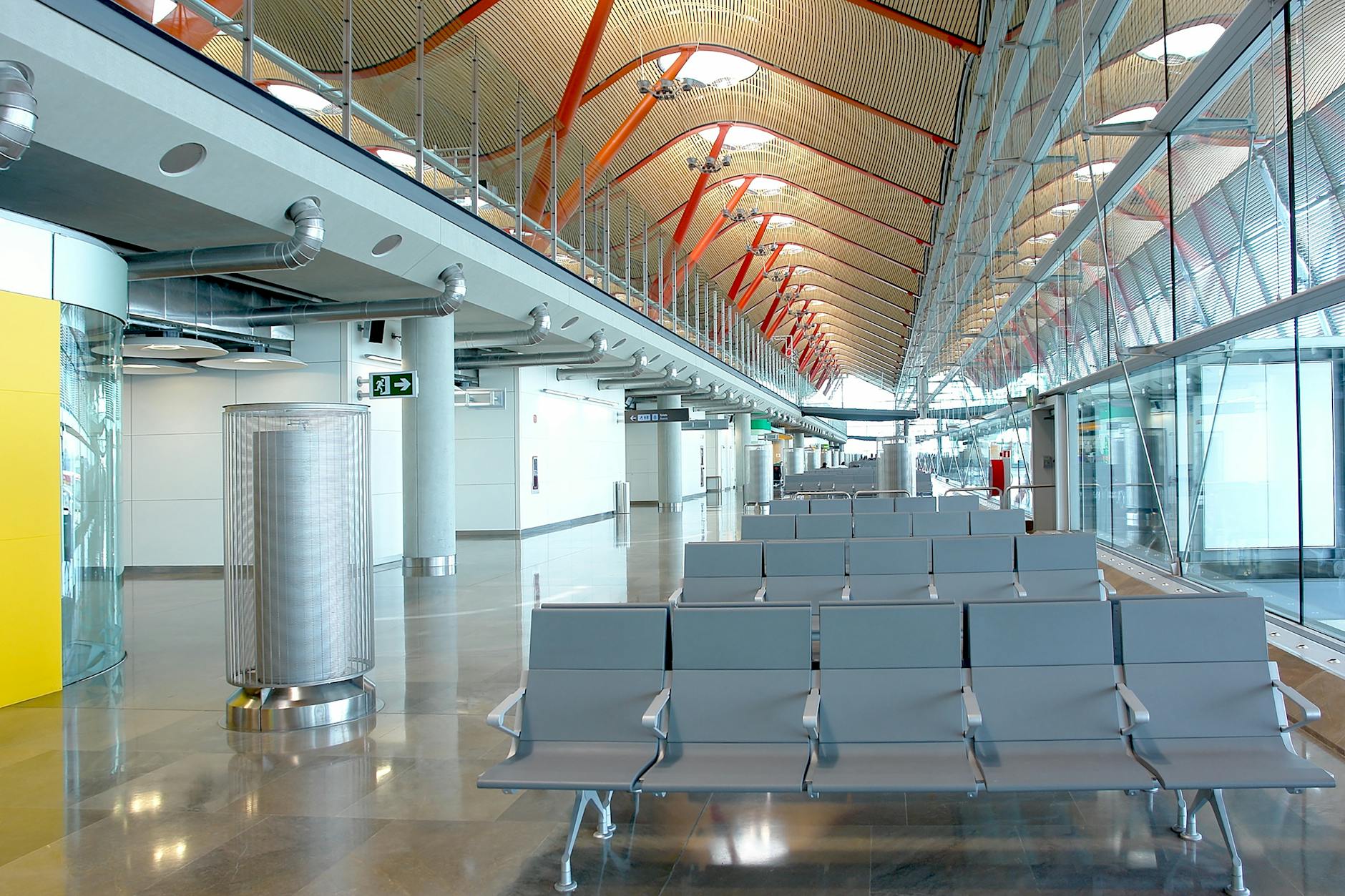
Madrid Airport Transfers: Getting to and from Barajas
Airport Overview
Adolfo Suárez Madrid-Barajas International Airport is Spain’s largest and busiest airport, located approximately 13 kilometers northeast of the city center. It has four terminals: T1, T2, and T3 are grouped together in the original airport complex, while T4 and its satellite T4S are a separate, modern facility about four kilometers away. Most international flights from the Americas and many European carriers operate from T4, while low-cost airlines and some European flights use T1 and T2. A free shuttle bus connects all terminals.
Metro Line 8: Fast and Affordable
Metro Line 8 (pink) connects both airport metro stations — Aeropuerto T1-T2-T3 and Aeropuerto T4 — with Nuevos Ministerios interchange in central Madrid. The journey takes approximately 12 to 15 minutes from T4 and about 15 to 20 minutes from the T1-T2-T3 station. From Nuevos Ministerios, you can transfer to Lines 6, 10, or the Cercanías commuter trains to reach your final destination. The total cost is the standard single fare plus the €3.00 airport supplement, totaling approximately €4.50 to €5.00. The metro operates from 6:05 AM to 1:30 AM.
Airport Express Bus (Line 203)
The Exprés Aeropuerto bus (Line 203) is Madrid’s dedicated airport shuttle, running 24 hours a day, 365 days a year. During the day (6:00 AM to 11:30 PM), it connects the airport with Atocha train station, stopping at O’Donnell along the way. During nighttime hours, the route terminates at Plaza de Cibeles instead of Atocha. The journey takes approximately 30 to 40 minutes depending on traffic, and the fare is €5.00. Buses depart every 15 minutes during peak hours and every 20 minutes at quieter times. This is an excellent option for travelers arriving late at night when the metro is closed.
Taxi: Fixed-Rate Convenience
Madrid taxis offer a flat rate of €30 for any journey between the airport and destinations within the M-30 ring road, which encompasses the entire city center. This fare applies regardless of the time of day, traffic conditions, or number of passengers (up to four in a standard taxi). The journey takes 20 to 40 minutes depending on traffic. Taxi ranks are clearly marked at each terminal’s arrivals area. This option is particularly good value for groups of two or more travelers, as the per-person cost drops below that of individual metro tickets. Make sure the driver uses the fixed fare — it should be displayed prominently inside the cab.
Cercanías Commuter Train
Cercanías Lines C-1 and C-10 stop at Terminal 4 station and connect to several major city stations including Chamartín, Nuevos Ministerios, Sol, and Atocha. The fare is approximately €2.60, making it the cheapest airport transfer option. However, the service is less frequent than the metro (trains roughly every 30 minutes), and the station only serves T4 — travelers arriving at T1, T2, or T3 must first take the free inter-terminal shuttle bus to T4. This option works best for travelers whose accommodation is near one of the Cercanías stations along the line.
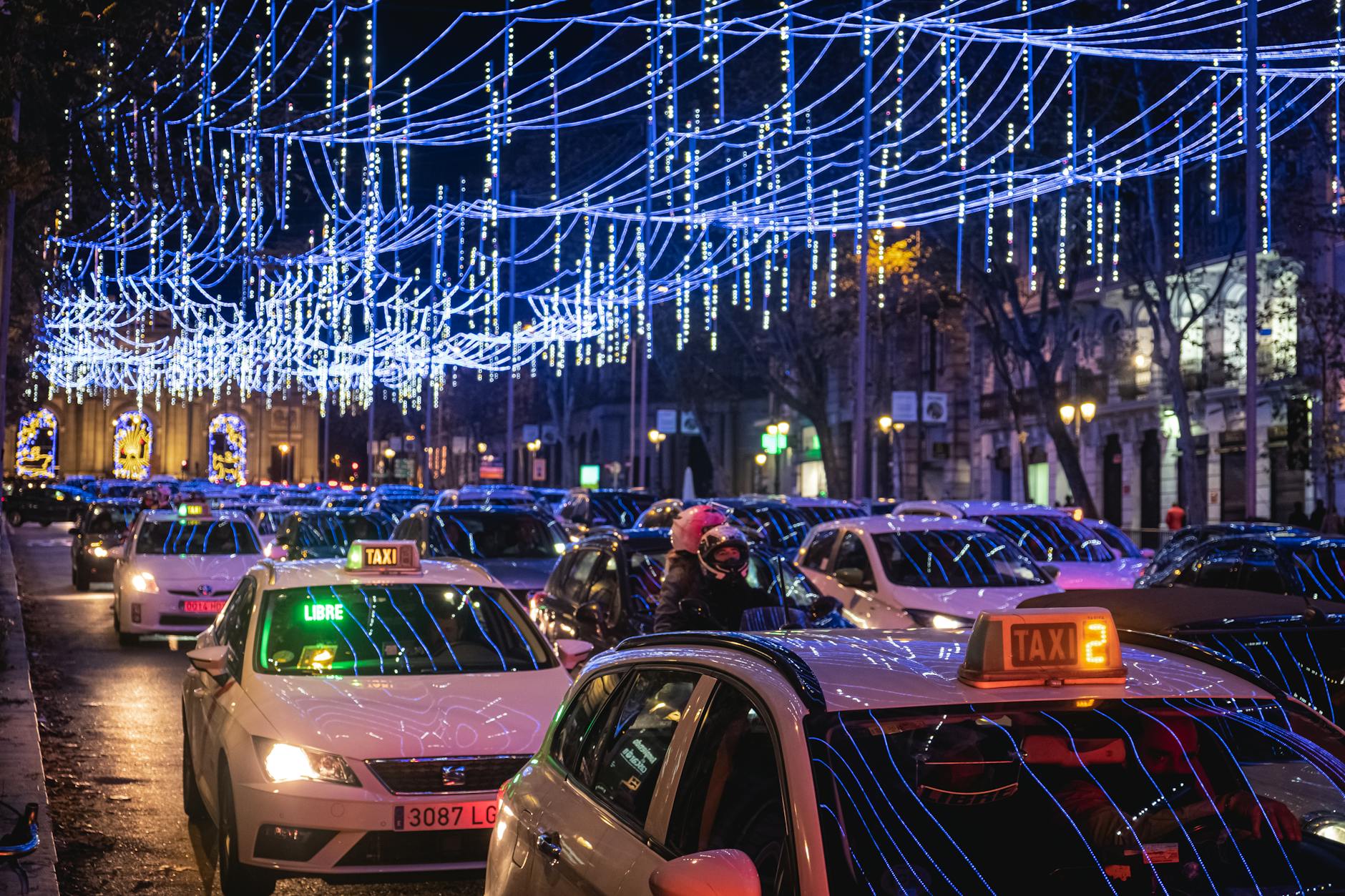
Taxis in Madrid: When and How to Use Them
Official Taxis
Madrid’s official taxis are white with a diagonal red stripe on the front door, making them easy to identify. The city has over 15,000 licensed taxis, so finding one is rarely a problem. You can hail a taxi on the street (look for a green light on the roof indicating availability), find one at designated taxi ranks throughout the city, or book through apps like FreeNow, PideTaxi, or the official Taxi Madrid app.
Metered fares start with a base charge of approximately €2.50 (€3.15 at night and on weekends), plus €1.10 to €1.30 per kilometer depending on the time of day. A typical 10-minute ride across the city center costs €8 to €12. Tipping is not required but rounding up to the nearest euro is common. All taxis accept credit cards, though carrying small cash is still advisable.
Ride-Sharing Apps: Uber, Cabify, and Bolt
Madrid has embraced ride-sharing services, and three major platforms operate in the city: Uber, Cabify, and Bolt. Cabify is the most established, having been founded in Madrid in 2011, and generally has the best availability and coverage. Uber operates as a licensed VTC (private hire vehicle) service, not the peer-to-peer model used in some other countries, meaning drivers are professional and vehicles are typically newer and more comfortable than standard taxis.
Pricing on all three apps is dynamic and varies with demand. During normal conditions, ride-sharing prices are often comparable to or slightly lower than metered taxis. However, during peak times — late Friday and Saturday nights, during major events, or in bad weather — surge pricing can push fares above taxi rates. A useful strategy is to compare prices across all three apps plus taxis before booking, as rates can differ significantly at any given moment. For airport rides, the fixed taxi rate of €30 is often cheaper than app-based services during high-demand periods.
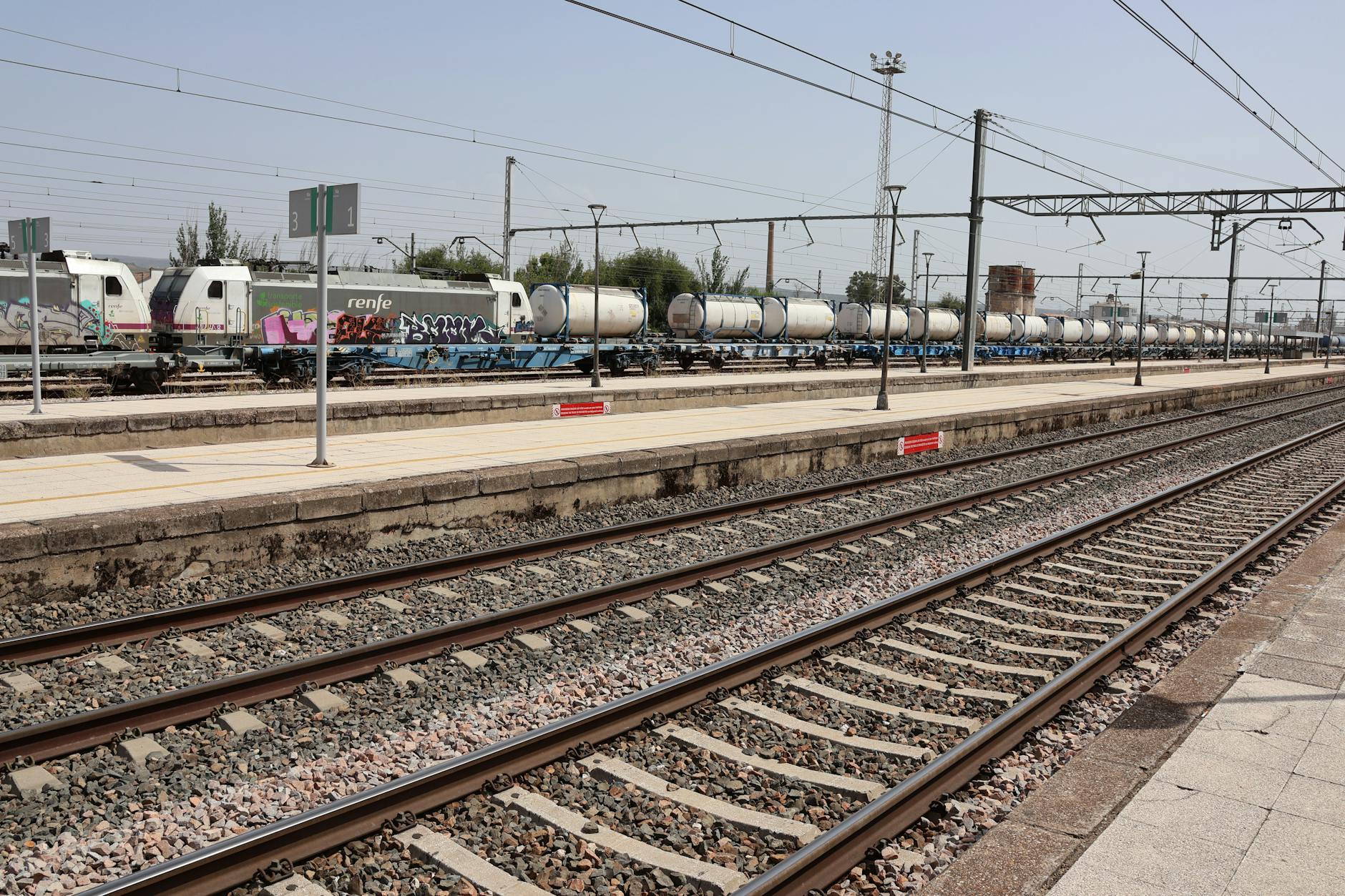
Cercanías Commuter Trains: Gateway to Day Trips
The Cercanías network is Madrid’s suburban rail system, operated by Renfe, Spain’s national railway company. While primarily designed for commuters, these trains are invaluable for tourists wanting to explore destinations beyond the city center without renting a car. The network has 10 lines radiating from central Madrid, with key hub stations at Sol, Atocha, Chamartín, and Nuevos Ministerios.
For day trippers, Cercanías trains reach several popular destinations directly. El Escorial, the massive royal monastery and palace, is accessible on Line C-3 from Atocha in about an hour. Alcalá de Henares, the birthplace of Cervantes and a UNESCO World Heritage city, is reachable on Lines C-2 and C-7 in about 35 minutes. The royal gardens of Aranjuez are at the end of Line C-3, approximately 50 minutes from Atocha.
Cercanías tickets are separate from metro tickets but can be loaded onto the same Multi Card. Fares depend on the number of zones traveled, starting at €1.70 for a single zone and increasing with distance. If you have a Tourist Travel Pass for Zone T, all Cercanías rides within the metropolitan area are included at no extra charge.
High-Speed Trains (AVE) and Long-Distance Rail
Madrid is the hub of Spain’s high-speed rail network, the AVE (Alta Velocidad Española), which connects the capital to major cities across the country at speeds up to 310 kilometers per hour. Two major stations serve long-distance trains: Atocha-Almudena Grandes in the south and Chamartín-Clara Campoamor in the north.
Atocha is the primary station for AVE services to the south and east, including Barcelona (2 hours 30 minutes), Seville (2 hours 20 minutes), Málaga (2 hours 25 minutes), Valencia (1 hour 40 minutes), and Córdoba (1 hour 45 minutes). Chamartín serves routes to the north and northwest, including Valladolid, León, Galicia, and Asturias. Both stations are well connected to the metro system and have taxi ranks, shops, and restaurants.
Booking AVE tickets in advance through the Renfe website or app can yield significant savings, with promotional fares sometimes dropping to €15 to €25 for routes that normally cost €60 or more. Iryo and Ouigo, two private competitors, also operate high-speed services on the Madrid-Barcelona and Madrid-Valencia corridors, often at lower prices than Renfe.
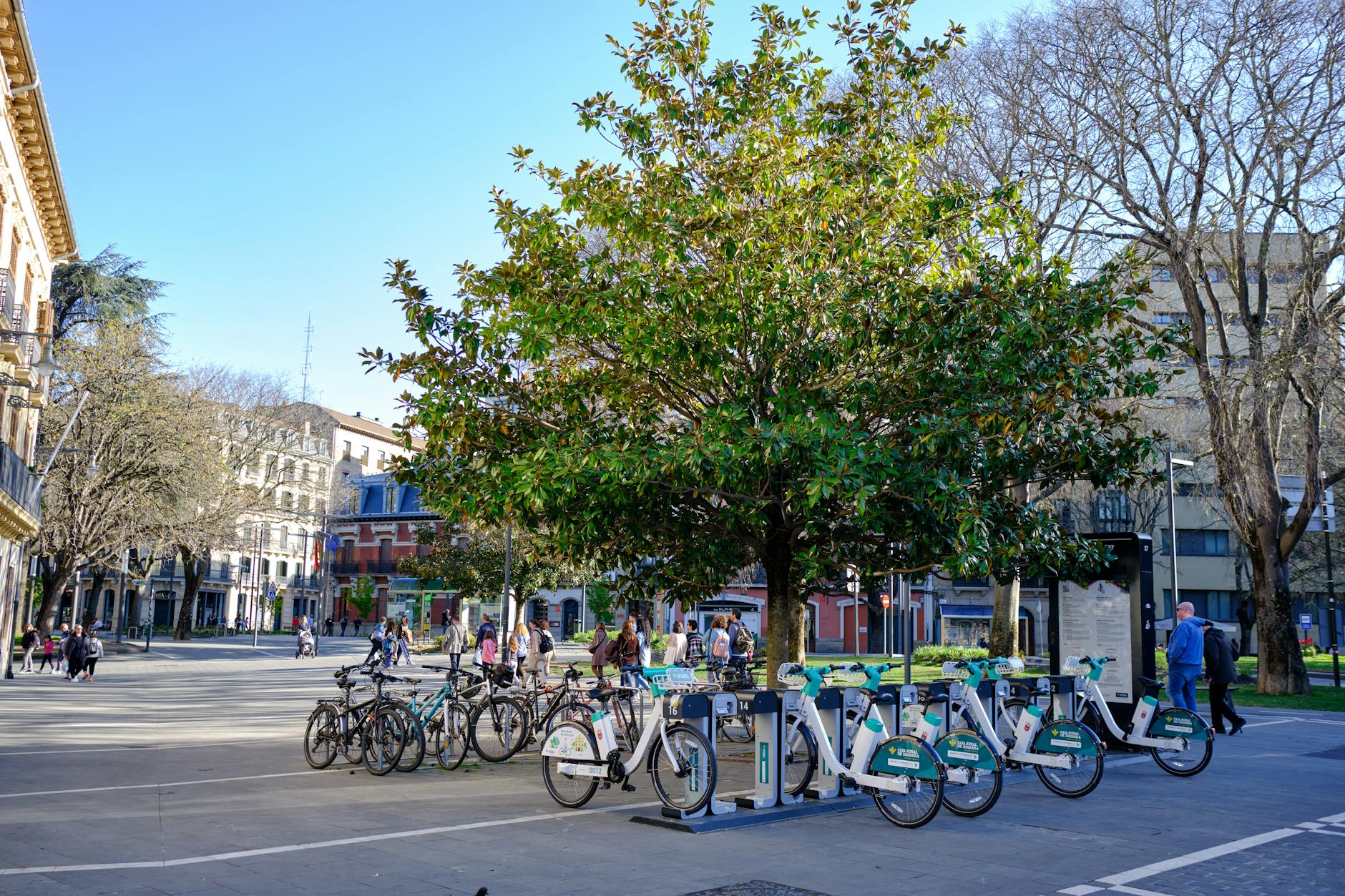
Cycling in Madrid: Bike Lanes and Bike Share
Madrid has invested heavily in cycling infrastructure in recent years, and the city now has over 340 kilometers of bike lanes connecting major neighborhoods and parks. While cycling is not the primary way most tourists get around, it offers a pleasant alternative for exploring areas like Retiro Park, Madrid Río along the Manzanares River, and the Casa de Campo urban forest.
BiciMAD: Madrid’s Bike-Share System
BiciMAD is Madrid’s public electric bike-sharing system, with over 600 docking stations and 7,500 bikes spread across the city center. The electric-assist bikes make navigating Madrid’s hilly terrain much easier than a standard bicycle. To use BiciMAD, you can purchase a casual pass directly at any docking station or through the BiciMAD app. An annual subscription costs €25, while occasional users pay €2 for the first 30 minutes and €4 per subsequent 30-minute block. The system operates 24 hours a day, and bikes can be picked up and returned at any station.
Best Cycling Routes for Visitors
The most popular cycling route for visitors is the Madrid Río greenway, which follows the Manzanares River for about 10 kilometers from Puente de los Franceses to Puente de la Princesa. The route is flat, car-free, and passes through beautifully landscaped parks and gardens. Another excellent option is the circuit around Retiro Park, which covers approximately 3.5 kilometers on dedicated cycling paths. For more adventurous riders, the Anillo Verde (Green Ring) cycling route circles the entire city, covering 65 kilometers through parks, forests, and suburban areas.
Walking in Madrid: The Most Rewarding Way to Explore
Madrid is one of Europe’s most walkable capital cities, with a compact historic center, wide boulevards, and pleasant pedestrian zones. Many of the top tourist attractions are within walking distance of each other, and strolling between sights allows you to discover hidden plazas, street art, and neighborhood character that you would miss on public transport.
The central triangle formed by Sol, the Royal Palace, and Retiro Park encompasses most major sights and can be covered on foot in a leisurely day. From Sol to the Prado Museum is about a 15-minute walk along the Paseo del Prado. From Sol to the Royal Palace takes roughly 10 minutes through the atmospheric streets of Habsburg Madrid. The Gran Vía shopping street connects Callao to Plaza de España in a pleasant 15-minute stroll.
Madrid’s flat-to-gently-rolling terrain makes walking comfortable for most people, though some neighborhoods like Malasaña and La Latina have steeper streets. Summer heat can make midday walking unpleasant from June through September, so plan longer walks for mornings and evenings during warmer months. Comfortable shoes are essential — Madrid’s historic center features cobblestone streets that can be hard on feet.
Car Rental and Driving in Madrid
For most visitors, renting a car in Madrid is unnecessary and potentially stressful. The city center has extensive restricted-traffic zones (Zonas de Bajas Emisiones), limited and expensive parking, and aggressive traffic that can intimidate unfamiliar drivers. However, a rental car becomes practical if you plan extended trips to rural areas outside the Cercanías network, such as La Mancha wine country, the Sierra de Guadarrama mountains, or smaller towns not served by public transport.
If you do rent a car, book through major international companies (Europcar, Sixt, Avis, Enterprise) or local operators available at the airport and central locations. Prices typically start from €25 to €40 per day for a small car. Automatic transmission vehicles are available but cost more than manual — request one when booking if you are not comfortable with a stick shift. Be aware of Madrid’s low-emission zone (Madrid 360), which restricts older, more polluting vehicles from entering certain areas of the city center. Most modern rental cars comply with these regulations, but confirm with your rental agency.
Parking in Madrid
Street parking in central Madrid uses a color-coded system. Green zones are for residents and short-term visitors (maximum two hours), while blue zones allow longer parking at higher rates. Expect to pay €2 to €4 per hour for metered street parking. Underground car parks are available throughout the city center, with rates ranging from €2 to €3 per hour or €20 to €30 for 24 hours. The Parkimeter and ElParking apps help locate available spaces and compare prices.
Accessibility: Getting Around with Reduced Mobility
Madrid has made significant progress in making its transport system accessible to visitors with reduced mobility. All city buses are wheelchair accessible, with low floors and dedicated spaces. On the metro, approximately 80 percent of stations now have elevators connecting the street level to platforms, though some older stations still lack step-free access. The Metro de Madrid website and app indicate which stations are fully accessible, allowing you to plan routes accordingly.
For wheelchair users, the metro’s accessibility varies by line and station. Lines 1, 6, and 12 have the most accessible stations, while some older sections of Lines 2 and 5 present challenges. If you need step-free transport, the bus network is generally more reliably accessible than the metro. Taxis that accommodate wheelchairs can be booked through the Eurotaxi service by calling 91 547 82 00, and most ride-sharing apps offer accessibility options as well.
Useful Transportation Apps for Visitors
Several smartphone apps will make navigating Madrid significantly easier. The official Metro de Madrid app provides real-time train information, route planning, and station accessibility details. The EMT Madrid app does the same for city buses, with live GPS tracking showing exactly when the next bus will arrive. Google Maps works excellently for multi-modal route planning in Madrid, combining metro, bus, and walking directions into optimal routes.
For taxis and ride-sharing, download FreeNow (formerly MyTaxi), Cabify, Uber, and Bolt before arriving. Having all four allows you to compare prices in real time. The Renfe app is essential if you plan to use Cercanías trains or book AVE tickets. The BiciMAD app handles bike-share rentals. Madrid also offers the Madrid Mobility 360 app, which integrates multiple transport modes into a single interface for route planning and ticket purchasing.
Transport Tips by Neighborhood
Where you stay in Madrid affects which transport options are most useful. If you are based around Sol or Gran Vía, you are at the nexus of multiple metro and bus lines, and most attractions are within walking distance. Staying in Malasaña or Chueca gives easy access to Lines 1, 3, 5, and 10, with Tribunal and Chueca stations nearby. If you choose the Salamanca district near the Prado, Lines 2, 4, and 9 at Serrano, Velázquez, or Goya stations will serve you well.
Guests in La Latina should note that the La Latina metro station (Line 5) is the main connection point, though Tirso de Molina (Line 1) is also within walking distance. For visitors staying near Atocha station, the major transport hub provides metro, Cercanías, and AVE connections plus the airport express bus. The Chamberí neighborhood is served by Lines 1, 2, 7, and 10, making it surprisingly well-connected despite feeling like a local residential area.
Seasonal Transport Considerations
Madrid’s transport usage patterns shift with the seasons, and knowing what to expect can improve your experience. Summer (June through August) sees reduced metro frequency as many Madrileños leave the city on vacation, but lower ridership means less crowded trains. The metro can be a welcome air-conditioned refuge from the scorching midday heat. In contrast, Christmas and Easter see increased ridership as families travel and tourists flock to holiday markets.
During major events like San Isidro festival (May), Madrid Pride (late June/early July), and large football matches at the Bernabéu, expect packed trains on nearby lines. The metro typically extends service hours during major festivals and New Year’s Eve. Check the Metro de Madrid website or app for special service announcements during your visit.
Money-Saving Transport Strategies
Maximizing your transport budget in Madrid is straightforward with a few strategic choices. For stays of one to two days, the 10-trip Metrobús ticket at €12.20 is usually sufficient and offers excellent value at €1.22 per ride. For stays of three or more days with heavy sightseeing, the Tourist Travel Pass pays for itself quickly — a three-day Zone A pass at €16.80 breaks even after roughly 11 metro rides.
Walking remains free and is the best way to experience many neighborhoods. Combine walking for short distances with metro rides for longer journeys to stretch your transport budget. If you are visiting day-trip destinations like El Escorial or Aranjuez, the Zone T tourist pass eliminates the need to buy separate Cercanías tickets. For airport transfers, the metro at roughly €5 total (including airport supplement) is the cheapest option, though sharing a €30 taxi between three or four travelers works out to just €7.50 to €10 per person.
Getting to Madrid: Arriving by Air, Rail, and Road
Most international visitors arrive at Madrid-Barajas Airport, which handles direct flights from across Europe, the Americas, Africa, and Asia. Airlines serving Madrid include Iberia (Spain’s national carrier and member of Oneworld), Air Europa, Ryanair, EasyJet, and dozens of international carriers. Terminal 4 is the main hub for Iberia and its oneworld partners, while T1 and T2 handle many other airlines.
Travelers arriving by train will use either Atocha or Chamartín stations. The high-speed AVE network makes Madrid accessible from Barcelona in 2.5 hours, Seville in 2.3 hours, and Valencia in 1.7 hours. Long-distance buses, operated by companies like ALSA, Avanza, and Socibus, arrive at the Estación Sur de Autobuses near Méndez Álvaro metro station (Line 6). Bus travel is generally cheaper than trains but takes significantly longer.
Drivers approaching Madrid will use the radial highway system, with the A-1 through A-6 highways converging on the city. The M-30 ring road circles the inner city, while the M-40 and M-50 form outer rings. Navigation apps are essential for driving in Madrid, and parking should be pre-booked whenever possible to avoid circling the center.
Practical Tips for Smooth Travel
A few final pieces of advice will ensure your Madrid transport experience is stress-free. Purchase your Multi Card and load it with credit as soon as you arrive — the metro station at the airport has vending machines with English-language interfaces. Keep your card and phone secure in crowded stations, using a front pocket or money belt in busy areas. Download offline maps of Madrid before your trip in case you lose mobile data coverage underground.
If you are arriving late at night, know that the Airport Express Bus (Line 203) runs 24 hours, so you always have a way into the city. For early morning departures, pre-book a taxi or Cabify the night before to ensure timely pickup. And remember that during rush hours (8:00 to 9:30 AM and 6:00 to 8:00 PM), metro trains are packed — plan sightseeing to avoid traveling during these windows.
Madrid’s transport system is not just functional — it is one of the best values in European travel. With a little planning and the right ticket, you can explore every corner of this magnificent city without ever worrying about how to get from A to B.
Leave a Reply