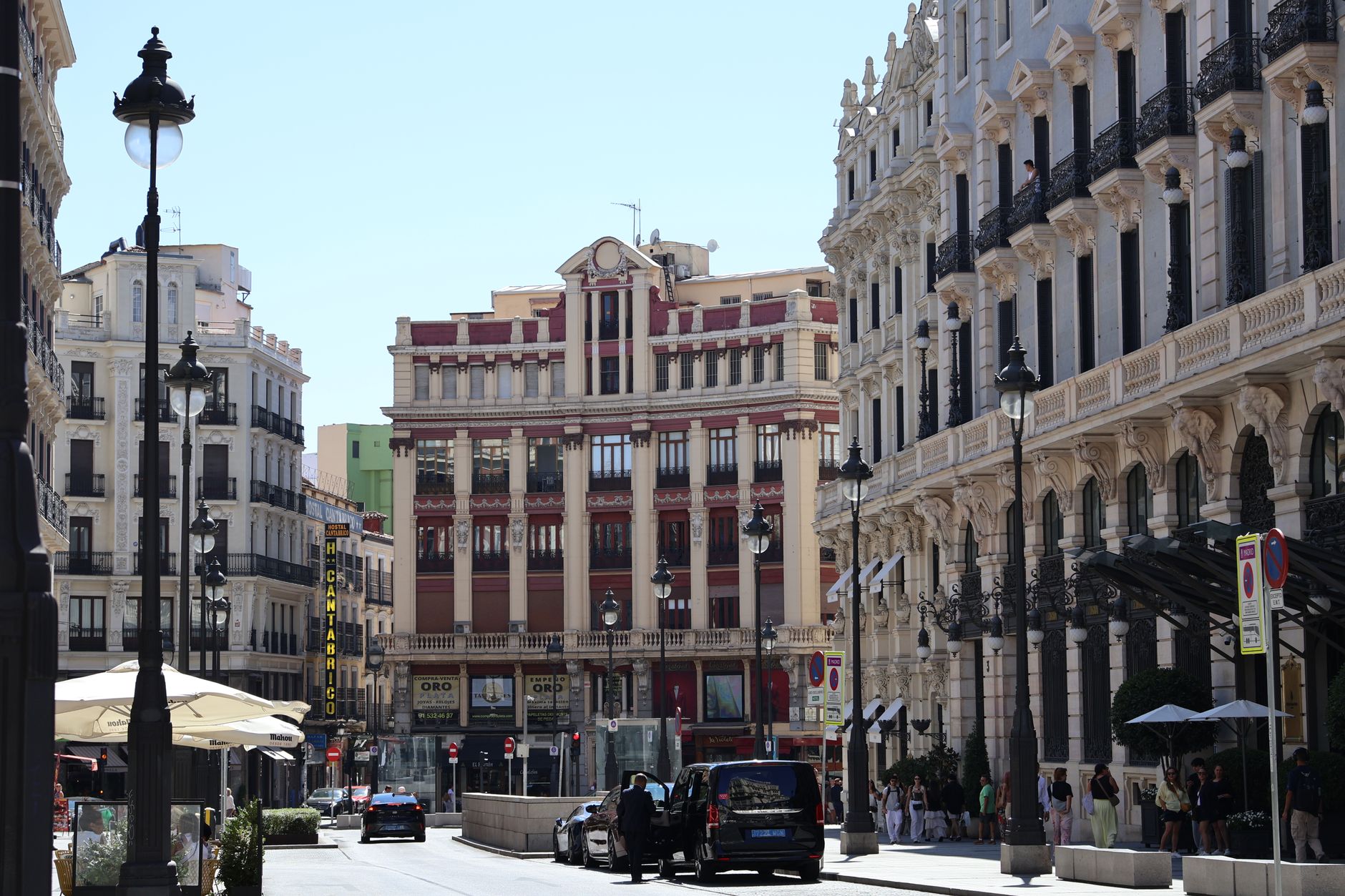
The first evening in Madrid follows the same script for almost every visitor. You get hungry at seven, walk into a restaurant, and find it empty — chairs up, staff eating their own dinner, a polite “a partir de las nueve”, from nine. By ten the same room is packed, and by midnight the terrace outside is louder than it was at lunchtime. Most of the useful Madrid travel tips come down to that: the city works perfectly well, just on a slightly different clock, with its own habits about money, food, Sundays and August, and a few things that catch out almost everyone on their first trip. This page collects them. It deliberately does not go deep on safety, which has its own guide: read is Madrid safe? for pickpockets, scams and the areas to watch.
What follows is the practical layer between deciding to go and booking: paperwork, money and tipping, the daily rhythm, eating and drinking without looking lost, getting around, sightseeing without queues, language and etiquette, phones and plugs, and the handful of mistakes worth avoiding. Prices were checked in October 2026; treat them as the right order of magnitude, because fares and tickets in Madrid tend to move each January.
Madrid Essentials at a Glance
| What | The short answer |
|---|---|
| Currency | Euro (€). Contactless cards accepted almost everywhere |
| Tipping | Not expected. Round up, or leave 5–10% for a good restaurant meal |
| Lunch | Early afternoon onwards, and the main meal of the day |
| Dinner | Late, well after the usual hour in northern Europe |
| Tap water | Safe and very good — Madrid’s water comes from the Sierra de Guadarrama |
| Plugs | Type C and F (two round pins), 230 V |
| Emergency number | 112, free and 24 hours, with a translation service |
| Airport to centre | €33 flat-fare taxi, or Metro/train/bus for €2.60–€5 |
| Language | Spanish. English is spoken in hotels and major sights, less so in neighbourhood bars |
| Time zone | Central European Time — the same as Paris and Berlin, one hour ahead of London |
| Best months | April–June and mid-September–October |
Before You Go
Entry requirements
Spain is in the EU and the Schengen area. EU, EEA and Swiss citizens need only a valid ID card or passport. Visa-exempt nationals can stay up to 90 days in any 180-day period without a visa, but the rules around that have been changing.
- EES (Entry/Exit System). The EU’s digital border system now records the fingerprints and facial image of non-EU short-stay travellers at their first entry, replacing passport stamps. Some groups are exempt, including holders of qualifying residence permits and long-stay visas. It adds time to your first arrival; later crossings are quicker.
- ETIAS. The pre-travel authorisation for visa-exempt visitors has had its start date moved several times. Check the official EU ETIAS website before you travel rather than relying on a blog post, including this one, and only ever apply through the official site — look-alike sites charge inflated fees.
- Passport validity. Non-EU passports generally need to be valid for at least three months beyond your planned departure from Schengen and issued within the previous ten years. UK travellers get caught by the ten-year rule more than anyone.
Travel insurance and healthcare
EU citizens should carry their European Health Insurance Card (EHIC); UK residents their GHIC. Both give access to state healthcare on the same terms as Spanish residents, but neither covers everything, such as repatriation or private clinics. Everyone else needs travel insurance with medical cover. Madrid’s public hospitals are excellent.
When to go and how long to stay
Madrid is at its best in spring and autumn — the weather is warm, the terraces are full and the light is lovely. July and August are very hot: AEMET’s 1981–2010 averages for Retiro put the mean daily high at 32.1 °C in July and 31.3 °C in August. Winter is cold, bright and much cheaper, with Christmas lights and the Three Kings parade on 5 January. The full month-by-month breakdown is in our guide to the best time to visit Madrid.
Three full days is the minimum to see the big museums, the Royal Palace, the old town and the Retiro without rushing. Five gives you time for a day trip to Toledo or Segovia. Our 3-day first-timer’s itinerary is a good starting point.
Book these in advance
- The Royal Palace, especially at weekends and in spring — see Royal Palace tickets.
- The Prado, if you want a specific time; the ticket queue in high season can be long.
- The Temple of Debod, which is free, though booking ahead is recommended.
- Train tickets for day trips, especially the Toledo and Segovia returns at weekends — see trains from Madrid.
- Flamenco shows and Michelin-starred restaurants.
- Football tickets, if you can get them at all — see football in Madrid.
Money
Cards, cash and ATMs
Madrid is close to cashless for visitors. Contactless cards and phone payments are widely taken, and they work on the airport express bus and, for single tickets, at the Metro gates. A small bar may still prefer cash for a coffee, so ask before you order. It is still worth carrying €20–€50 in cash for the odd market stall, a traditional bar with a card minimum, or a flea-market purchase at El Rastro.
Two rules save real money:
- Always decline dynamic currency conversion. When a card terminal or cash machine offers to charge you “in your home currency”, say no and pay in euros. The conversion rate offered is almost always worse than your bank’s.
- Use bank ATMs. Machines attached to Spanish banks are generally cheaper than the standalone, brightly coloured currency-exchange ATMs clustered around Sol and Gran Vía, which charge heavy fees.
Tipping
Tipping in Madrid is modest and optional. Service staff are paid a wage, and nobody expects American-style percentages. At a bar, leave the small change or nothing at all. In a café, rounding up is plenty. At a sit-down restaurant, 5–10% for good service is generous; for a menú del día, a euro or two is normal. Taxi drivers do not expect a tip, though rounding up is appreciated.
What things cost
Madrid is cheaper than Paris, London or Barcelona, but less cheap than it was. A caña (small beer) runs about €2–€3.50 in a neighbourhood bar, and more on a terrace in Plaza Mayor. A coffee is €1.50–€2.50. A menú del día — a three-course weekday lunch with bread and a drink — is often €13–€18. The big museums cost €12–€15 each without discounts. For the full picture, see our Madrid daily costs guide, and for ways to bring that down, how to save money in Madrid.
Tax-free shopping
Visitors from outside the EU can reclaim VAT on shopping above a small minimum spend; the process is explained in our guide to tax-free shopping in Madrid.
The Madrid Clock
More than anything else on this page, adjusting to the city’s rhythm will change your trip. Fight it, and you will eat in empty tourist restaurants at 19:00. Go with it, and Madrid is one of the most sociable cities in Europe.
A typical day
| Time | What madrileños are doing | What that means for you |
|---|---|---|
| 08:00–10:00 | A quick coffee and toast (tostada) standing at a bar | Great time for museums and the Retiro before crowds and heat |
| 11:00–12:00 | A mid-morning coffee break | Cafés briefly get busy |
| 13:00–14:00 | Pre-lunch vermouth or a caña with a tapa | The best time to join a bar crowd |
| Afternoon | Lunch, the main meal of the day | Menú del día time. Small shops may close |
| 16:00–18:00 | Back to work; summer streets empty in the heat | Museum time in summer; the Prado is air-conditioned |
| 18:00–20:00 | Shopping, walks, drinks | Busy streets, the evening paseo |
| 20:30–21:00 | Tapas before dinner | The tapas crawl begins |
| Late evening | Dinner | Restaurants fill; book at weekends |
| After midnight | Drinks; clubs start around 01:00–02:00 | Nightlife runs very late |
The siesta, honestly
Most madrileños do not take a siesta; they have jobs. What survives is the long lunch, and the habit of some small, independent shops closing for a few hours in the afternoon. Department stores, chains and anything in the centre stay open all day. In high summer the streets do empty in the afternoon heat, and it is not a bad idea to follow the locals indoors.
Sundays and holidays
Madrid is more relaxed about Sunday trading than most of Spain: in the centre, many shops and department stores open on Sundays and holidays. Neighbourhood shops and markets are more likely to close, and Sunday morning belongs to El Rastro. Sunday lunch is a long family affair, and restaurants are busy.
August
A lot of Madrid goes on holiday in August. The big sights, hotels and chains all stay open, and the city is pleasantly quiet in the evenings, but you will find many family-run restaurants and bars closed for two to four weeks, with a handwritten sign on the shutter. Check before you cross town for a specific place.
Monday and Tuesday closures
Plenty of museums close one day a week. The Prado has no weekly closing day and shuts only on 1 January, 1 May and 25 December, but the Reina Sofía closes on Tuesdays, and many smaller museums, including the Museo Cerralbo, close on Mondays. The Sorolla’s historic house is closed for rehabilitation with no reopening date, though its new extension on Calle Zurbano is open. The Temple of Debod is also closed on Mondays. Check the day before you plan a museum-heavy itinerary.
Eating and Drinking Like You Live Here
How bars work
In a traditional bar you order at the counter, eat standing up or at a high table, and pay when you leave. Nobody brings a bill until you ask for it — “la cuenta, por favor” — and it is not rude to call it out. The napkins on the floor under the counter are a sign of a busy bar, not a dirty one, though fewer places do that now.
In some traditional places, and in plenty of bars in La Latina and Lavapiés, a small free tapa arrives with each drink. It is not guaranteed in Madrid the way it is in Granada, and it is less common in the smarter areas. Enjoy it when it happens.
What to order
- A caña is a small draught beer, the default order. A doble is bigger; a tercio is a bottle.
- Vermouth (vermut) on tap, with an olive and a slice of orange, is the classic weekend aperitif — see vermouth bars in Madrid.
- A ración is a full plate for sharing; a media ración is half; a tapa is a small portion.
- Madrid classics: bocadillo de calamares, patatas bravas, croquetas, huevos rotos, tortilla de patatas, oreja a la plancha if you are brave, and cocido madrileño, the city’s great winter stew.
- Coffee: café solo is an espresso; cortado has a dash of milk; café con leche is a milky coffee. Nobody minds if you order one after lunch.
The menú del día
On weekdays, most traditional restaurants offer a fixed-price lunch: a starter, a main, dessert or coffee, bread and a drink, often including wine. It is the best-value meal in the city and the way most working madrileños eat. Look for the chalkboard outside. Our menú del día guide lists places worth crossing town for.
Water, bread and terraces
Madrid’s tap water is excellent. You can ask for agua del grifo in restaurants, though some places will bring bottled water unless you ask specifically. Bread is often put on the table and appears on the bill for a euro or two; if you do not want it, say so. Sitting on a terrace (terraza) usually costs a little more than standing at the bar for the same drink, and in Plaza Mayor considerably more. That is not a scam; it is the price of the view.
Tourist-trap warning signs
Laminated menus with photographs in six languages, staff out front inviting you in, paella on a Tuesday night in a bar on Plaza Mayor: you are about to pay double for worse food. Walk two streets away from the big squares and things improve dramatically. And paella is a Valencian dish; in Madrid, most people eat it at lunch, if at all.
Dietary needs
Madrid is increasingly easy for vegetarians and vegans, particularly in Malasaña and Lavapiés — see our vegan and vegetarian restaurants guide. In traditional bars, be aware that “vegetable” dishes often contain ham or tuna. Spanish restaurants are required by law to be able to tell you which of the main allergens are in each dish; ask for the carta de alérgenos.
Getting Around
Walk
Central Madrid is compact, and the Royal Palace and the Prado are within walking distance of each other. You will walk more than you expect, and you will enjoy most of it. The city is also hillier than it looks on a map — the old town slopes steeply down towards the river, and anyone with a stroller or reduced mobility will notice.
The Metro
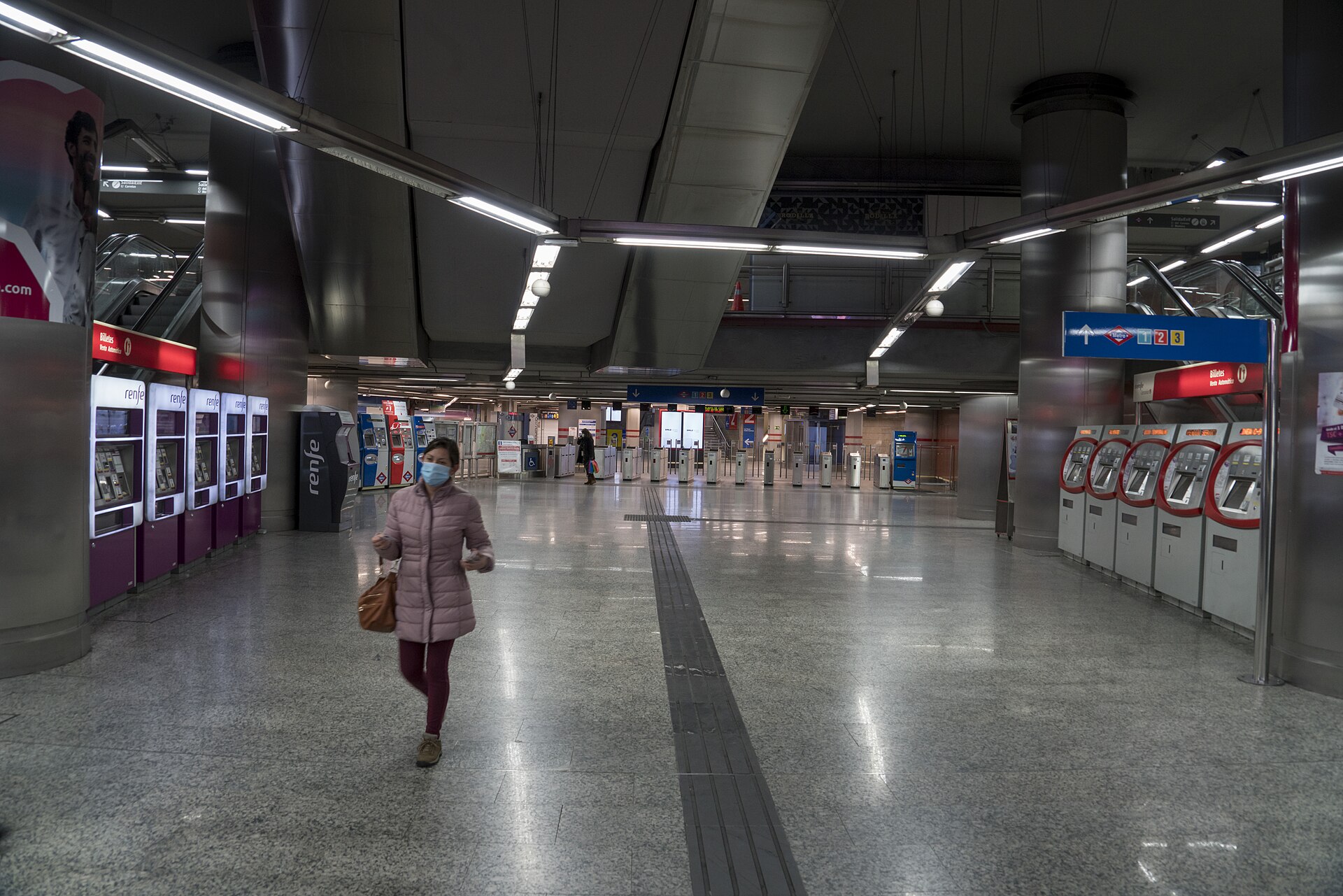
The Metro is clean, safe, air-conditioned and runs from around 06:00 to 01:30. Twelve numbered lines plus the short Ramal (R) cover the whole city. A single ticket in the central zone and a ten-trip card are the options most visitors need, and you can now tap a contactless bank card at the gates on much of the network. Beware of the €3 airport supplement, which is not covered by the ordinary ten-trip ticket. The details are in our Madrid Metro guide and transport card pricing guide.
Taxis and ride-hailing
Madrid’s white taxis with a red diagonal stripe are plentiful, metered and reasonably priced. A green light on the roof means free. Uber, Cabify and Bolt all operate. The €33 flat fare from the airport to anywhere inside the M-30 ring road is fixed in law. See Madrid taxi fares.
Do not drive in the city
The whole of Madrid is a low-emission zone policed by cameras, parking in the centre is expensive and difficult, and the Metro is faster. If you hire a car for day trips, pick it up on the way out of town and check that it carries a Spanish environmental label on the windscreen. The fine for driving into the zone without the right label is €200.
Sightseeing Tips
- Use free hours wisely. The Prado, Reina Sofía and several other museums have free entry in the last hours of the day. Queues form, and two hours in the Prado is not enough — but it is a very good second visit. See free museum hours in Madrid.
- Consider the Paseo del Arte card if you plan to see the Prado, Reina Sofía and Thyssen-Bornemisza on your own schedule; the savings are modest, but it saves buying three tickets. Most city passes only pay back if you use three or more paid attractions.
- Go early. The Royal Palace and the Prado are calmest at opening time.
- Summer heat is real. Plan outdoor sightseeing for the morning and evening, and museums for mid-afternoon. Carry water.
- Have a rain plan. It does not rain often, but when it does, see what to do in Madrid when it rains.
- Look up. Gran Vía, Calle de Alcalá and the streets around Sol have some of the most beautiful early-20th-century rooftops in Europe. The free viewpoint on the ninth floor of El Corte Inglés at Callao is the easiest way to see them.
Where to Stay: A Few Practical Pointers
The neighbourhood decision is covered properly in our where to stay in Madrid guide. A few things apply whichever area you choose:
- Noise is part of the deal. In the centre, streets stay busy until two or three in the morning at weekends, and rubbish collection happens at night. If you sleep lightly, ask for an interior room (habitación interior) facing the courtyard rather than the street, and pack earplugs.
- Air conditioning matters from June to September. Do not assume an older building or a budget apartment has it; check.
- Lifts are small or missing in older buildings. A fourth-floor walk-up with two large suitcases is a memorable way to arrive.
- Tourist apartments must be licensed. Madrid has tightened the rules on short-term lets in the centre, and an unlicensed flat can be cancelled at short notice. A registration number on the listing is a good sign. Our guide to apartments in Madrid explains more.
- Book early for big events. Prices climb sharply during San Isidro in mid-May, Madrid Pride in early July, big football nights, major trade fairs at IFEMA and the Christmas and New Year period.
- Your passport will be scanned. Spanish law requires hotels and apartments to register guests’ identity documents. It is normal, not suspicious.
What to Pack
Madrid has a continental climate: hot, dry summers and cold, bright winters, with big swings between day and night. It is further inland and higher than most visitors expect, and the weather surprises people in both directions.
Spring (March to May)
Layers. In April the average daily low is 7.7 °C and the average high 18.2 °C, so mornings are cool and afternoons mild, and the month sees 45 mm of rain. A light jacket, a jumper, comfortable shoes and a small umbrella cover it.
Summer (June to August)
Light, breathable clothes, a hat, sunglasses, sunscreen and a refillable water bottle. The average afternoon high in July and August is above 31 °C, and even the average overnight low stays near 19 °C, so evenings are warm. Pack one smarter outfit; madrileños dress up to go out even in the heat, and shorts and flip-flops look out of place in a good restaurant.
Autumn (September to November)
September is still summer for most of the month. By late October you want a jacket in the evening, and November can be properly chilly and wet.
Winter (December to February)
A warm coat, scarf and gloves. Daytime can be sunny and pleasant, but nights often drop close to freezing, and the wind off the Sierra de Guadarrama is sharp. Old buildings are not always well heated.
All year
- Comfortable walking shoes that can cope with cobbles and slopes. This is the single most important item.
- A plug adapter for Type C/F sockets.
- A small cross-body bag with a zip, rather than a backpack worn on your back in crowds.
- Something to cover your shoulders for church visits.
Shopping Tips
- Sales seasons are fixed in people’s minds. January and July are the usual months for the sales (rebajas), though each shop chooses its own dates. Discounts deepen as the weeks go on. See our guide to the rebajas.
- El Rastro, the Sunday flea market in La Latina, is at its best before 11:00. Keep your bag in front of you.
- Good souvenirs are edible or wearable: jamón, olive oil, saffron, turrón, wine, espadrilles, Spanish fashion brands. Our Madrid souvenirs guide separates the good from the fridge magnets.
- Carrying food home. Vacuum-packed jamón travels well in checked luggage within the EU; rules for bringing meat into the UK, US and many other countries are strict, so check before you buy a whole leg.
Going Out at Night
Madrid’s nightlife is legendary and runs later than almost anywhere in Europe. A few things to know:
- Nobody arrives at a club before 01:00. The usual night runs dinner at 22:00, drinks from midnight, clubs from 01:30 or 02:00, and home when the Metro reopens at 06:00.
- Drinks are poured generously, particularly a copa (a spirit and mixer). Pace yourself.
- Night buses (búhos) run from Cibeles when the Metro closes; taxis are easy to find in the centre.
- Drinking in the street (the botellón) is prohibited and fined.
- Guest lists and door policies exist at the bigger clubs. Dressing a little smarter helps.
Where to go is covered in our Madrid nightlife guide.
Dates That Change a Trip
Some weeks of the year transform the city, for better or worse depending on what you want.
- Semana Santa (Easter week): processions in the old town, many locals away, hotels busy with Spanish visitors.
- San Isidro (around 15 May): Madrid’s patron-saint festival, centred on the Pradera de San Isidro.
- Madrid Pride (early July): one of the biggest Pride celebrations in Europe, centred on Chueca. Hotels book out and prices soar.
- August: quiet, hot, with the neighbourhood verbenas of San Cayetano, San Lorenzo and La Paloma in the old town.
- 12 October: Spain’s National Day, with a military parade along the Paseo del Prado and the Paseo de Recoletos.
- Christmas to 6 January: lights, markets, New Year’s Eve at Sol and the Three Kings parade on the evening of 5 January.
Our Madrid events calendar has the full year.
Language
Madrid is a Spanish-speaking city, and English is less widely spoken here than in Barcelona or Lisbon. Hotel staff, museum staff and younger people usually speak good English; in a neighbourhood bar, at a market or with an older taxi driver, you may need some Spanish or a translation app. Madrileños are generally patient and appreciative of any effort.
A few words go a long way:
| Spanish | English |
|---|---|
| Hola / Buenos días / Buenas tardes | Hello / Good morning / Good afternoon or evening |
| Por favor / Gracias | Please / Thank you |
| Perdona | Excuse me (to get attention) |
| Una caña, por favor | A small beer, please |
| La cuenta, por favor | The bill, please |
| ¿Se puede pagar con tarjeta? | Can I pay by card? |
| Agua del grifo | Tap water |
| ¿Dónde está el baño? | Where is the toilet? |
| No hablo mucho español | I don’t speak much Spanish |
Say “hola” when you walk into a small shop or bar, and “adiós” or “hasta luego” when you leave. It is expected, and it changes how you are treated.
Etiquette and Culture
- Greetings. Friends and acquaintances greet with two kisses, right cheek first. As a visitor meeting someone in a business or formal setting, a handshake is fine.
- Volume. Madrid is loud. Conversations in bars are animated, and nobody will think you rude for talking over the noise.
- Dress. Madrileños dress smartly even for a casual evening. Beachwear away from a pool is out of place, and churches expect covered shoulders and no very short shorts.
- Queues. In markets and bakeries, ask “¿quién es el último?” (who is last?) when you arrive, then go after that person.
- Smoking. Banned indoors in bars and restaurants, but still common on terraces.
- Politics and history. The Civil War and the Franco dictatorship are still sensitive topics; if they come up, listen more than you talk. The Spanish Civil War in Madrid guide gives the background.
- Bullfighting. It still happens at Las Ventas, and opinions in Spain are sharply divided. It is a personal decision, not something to argue about at the bar.
Phones, Wi-Fi and Power
EU visitors, and UK travellers whose tariff includes roaming in Europe, generally need nothing — check your plan before buying anything. For everyone else, a Spain eSIM bought before you fly costs roughly €12 for 10 GB and undercuts the tourist SIM counters at the airport. 5G covers central Madrid, and 4G is everywhere useful. Free Wi-Fi is standard in hotels, most cafés and the airport.
Spain uses Type C and F sockets (two round pins) at 230 V. Travellers from the UK, Ireland, North America and Australia need an adapter; most phone and laptop chargers handle the voltage without a converter, but check hair straighteners and other appliances.
Health and Emergencies
- 112 is the number for all emergencies — police, ambulance and fire. The call is free, it answers around the clock, and a translation service can help if you don’t speak Spanish.
- Pharmacies are marked with a green cross. Pharmacists are highly trained and can advise on minor problems. At least one pharmacy in each area is open overnight; the rota is posted on every pharmacy door.
- Sun and heat. Madrid sits at about 650 metres above sea level, and the sun is strong even in spring. Wear sunscreen and a hat in summer and drink more water than you think you need.
- Altitude and dryness. The air is dry. Lip balm and a refillable water bottle help.
- Lost passport. Report it to the police, then contact your embassy or consulate, most of which are in Madrid.
Safety, Briefly
Madrid is a safe city by the standards of any European capital, and violent crime against visitors is rare. The real issue is pickpocketing in busy places: Sol, Gran Vía, the Metro, El Rastro and the airport transfer. Keep your phone out of back pockets and off café tables. We cover the rest — the common scams, which areas to be more alert in at night, and what to do if something goes wrong — in our dedicated guide, is Madrid safe?
Travelling with Children or Reduced Mobility
Children are welcome almost everywhere in Madrid, including bars and restaurants late in the evening; you will see Spanish families out with toddlers at 22:00 in summer. Parks, playgrounds and the Retiro are excellent. Our Madrid with kids guide has more.
For travellers with reduced mobility, the newer Metro lines, the buses and the major museums are well adapted, while the old town’s slopes, cobbles and older Metro stations without lifts can be hard work. Our guide to wheelchair-accessible transport lays out the options.
The Mistakes First-Time Visitors Make
- Eating dinner at 19:00 in the only restaurant that is open, which is open because it serves tourists.
- Staying only in Sol. It is central but noisy and full of chains. Chamberí, Las Letras, La Latina and Malasaña give you a better sense of the city — see where to stay in Madrid.
- Trying to see the Prado in two free hours as the only visit. Pay for a proper morning.
- Accepting the “home currency” option at a card terminal or ATM.
- Turning up at a museum on the day it is closed.
- Doing Seville or Barcelona as a day trip. Possible, not advisable.
- Going to the wrong airport terminal. T4 and T1 are three kilometres apart. See our Madrid airport guide.
- Planning a July afternoon walking tour. Nobody local would do that.
Frequently Asked Questions
Do I need cash in Madrid?
Very little. Cards and phone payments are accepted almost everywhere, including taxis and the Metro. Carry a small amount for markets and the occasional traditional bar.
Should I tip in Madrid?
It is not expected. Round up in bars and cafés; leave 5–10% for good service in a sit-down restaurant if you want to.
What time do people eat dinner in Madrid?
Late by most European standards: restaurants are busiest well into the evening. Lunch, the main meal, is a long one in the afternoon.
Is Madrid tap water safe to drink?
Yes, and it is among the best tap water in Spain, coming from reservoirs in the Sierra de Guadarrama.
Does Madrid have a tourist tax?
Ask your hotel or apartment host whether any tax is added to the room rate, and check the total on your booking before you pay.
Is English widely spoken in Madrid?
In hotels, big museums and tourist businesses, yes. In neighbourhood bars and markets, less so. A few words of Spanish help.
Are shops open on Sundays in Madrid?
Many in the centre are, including department stores and chains. Smaller neighbourhood shops often close.
How many days do I need in Madrid?
Three full days for the main sights; four or five if you want a day trip to Toledo or Segovia and time to slow down.
What plug adapter do I need for Spain?
Type C or F, with two round pins. The voltage is 230 V.
Related Madrid Guides
- Is Madrid Safe?
- Best Time to Visit Madrid
- Where to Stay in Madrid
- Madrid Daily Costs
- Menú del Día in Madrid
- Madrid Metro Guide
- Madrid Airport Guide
- Trains from Madrid
- Madrid 3-Day Itinerary
Photo Credits
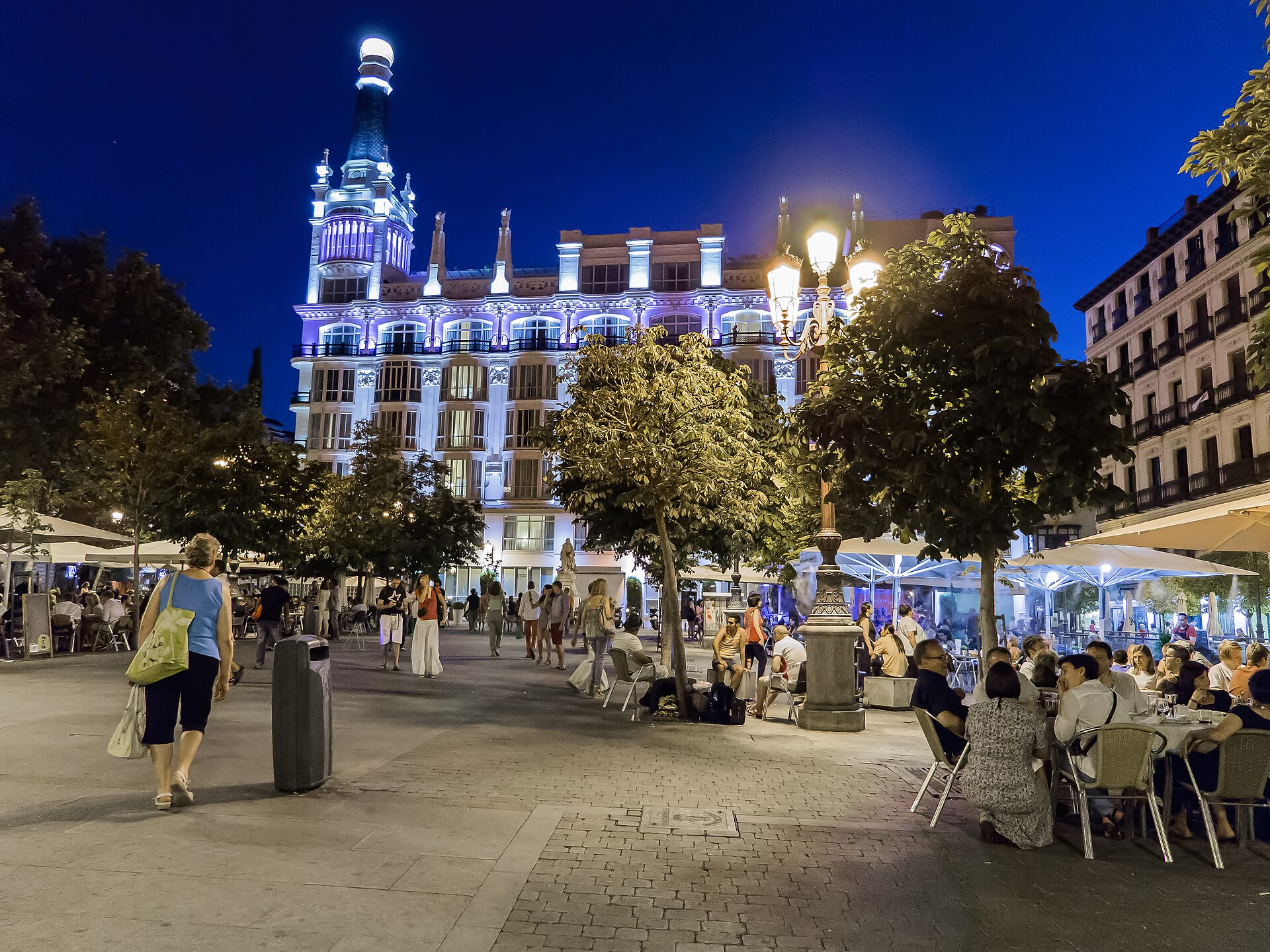
Plaza de Santa Ana at night: Plaza de Santa Ana, Madrid (26159833570) by Edgardo W. Olivera from Montevideo, Uruguay, CC BY 2.0, via Wikimedia Commons.
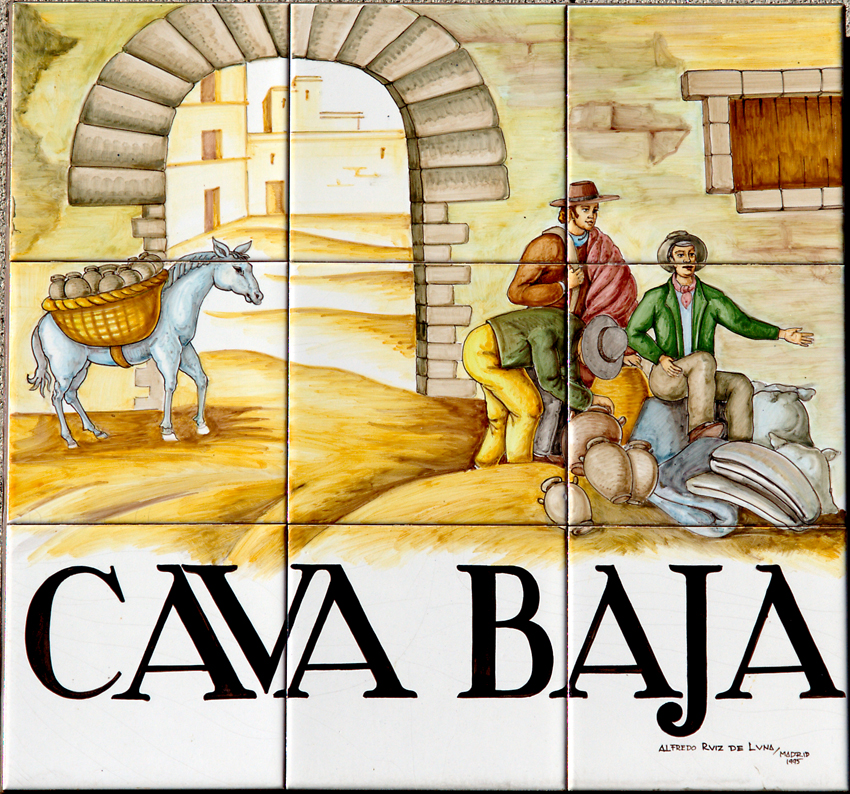
Cava Baja street-name tile: Calle de la Cava Baja (Madrid)1 by Pedro Reina, CC BY-SA 3.0, via Wikimedia Commons.
Ticket hall at Puerta del Sol station: 29 de marzo-Metro Puerta del Sol-07 by Nemo, CC BY-SA 4.0, via Wikimedia Commons.