There is no barrier at the edge of Madrid’s low-emission zone, no toll booth and no attendant waving you down. You drive in, the cameras read your number plate, and if your car isn’t allowed, the first you hear of it is a fine, or a charge on your hire-car bill, long after you’ve gone home. That quiet, automatic enforcement is what makes driving in Madrid a trap for visitors, and it comes on top of the city’s other good reasons to leave the car behind: tight streets, expensive parking and a Metro that is quicker than any car across the centre.
This guide explains how the ZBE (Zona de Bajas Emisiones) works, which cars can go where, what changes if you bring your own foreign-registered car, how hire cars fit in, and when a car is worth having at all. The rules here were checked on 21 November 2026 against the city council’s own pages and the DGT, Spain’s traffic authority. They change, sometimes by ordinance with a few weeks’ notice, so check the official pages before you drive. For every other way of getting about, start with our Madrid transportation guide.
Driving in Madrid at a Glance
Everything in Madrid’s system hangs on the environmental label the DGT gives each Spanish-registered vehicle, based on its fuel and the year it was first registered. Find your car’s label and read across.
| DGT label | Typical car | Rest of the city (citywide ZBE) | Distrito Centro (the historic centre) |
|---|---|---|---|
| 0 (blue) | The cleanest, zero-emission vehicles | Allowed | Allowed to drive in freely |
| ECO | Mostly hybrids and gas-powered cars | Allowed | Allowed to drive in freely; on-street parking in the centre limited to two hours |
| C (green) | Petrol cars first registered from January 2006, diesels from September 2015 | Allowed | Only to park in a public car park, a private garage or a reserved space, unless another exception applies |
| B (yellow) | Petrol cars from January 2001, diesels from 2006 | Allowed | As for C |
| No label (rated A) | Older petrol and diesel cars | Banned, except a few listed cases | Banned |
| Foreign-registered | Any car on non-Spanish plates | No Spanish label available; see the section below | Allowed once the city has accepted your documents |
The penalty for driving where your car isn’t allowed is €200, cut to €100 if you pay promptly. Read the notice for the deadline, because the discount only applies within the period it states.
The Honest Verdict: Should You Drive in Madrid?
For a city break, no. Central Madrid is compact, the Metro runs from early morning until after midnight, and taxis and ride-hailing cars are everywhere. A car spends most of its time parked, and parking is where the money goes. Add one-way systems that seem designed by a chess grandmaster, and the case for driving yourself around the centre collapses.
A car starts to make sense when you leave the city: a loop through the villages of the Sierra de Guadarrama, a long lunch in Chinchón, or a few days moving on through Castile. Even then, the classic day trips are often easier by train. Toledo and Segovia are both a short rail journey away, and both are hilly old towns whose narrow streets are miserable to drive and park in. Our day trips from Madrid guide compares the options trip by trip.
The sensible pattern for most visitors is simple: no car while you’re in Madrid, and if you want one for the countryside, pick it up on the morning you leave the city rather than the day you arrive.
How Madrid’s Low Emission Zone Works
The whole city is the zone
Madrid ZBE isn’t a ring around the centre. It covers every public urban road in the municipality, across all 21 districts. Since 1 January 2025 it has banned every vehicle that appears in the DGT’s national register with an environmental rating of A, which in practice means cars with no label: petrol cars first registered before 2001 and diesels before 2006.
There are a few exemptions: vehicles carrying a holder of a disabled parking card, as long as that card is registered with the city’s access system, and officially recognised historic vehicles. In April 2026 the city also brought in a temporary arrangement that lets some older vehicles registered in Madrid itself keep circulating outside the two special zones, for as long as air-quality limits are met. That concession covers vehicles registered and taxed in Madrid continuously since January 2022, plus vans, motorbikes and other vehicles that aren’t cars. It does nothing for a visitor’s car.
Two zones with stricter rules
Inside the citywide zone sit two special-protection zones, known as ZBEDEP: Distrito Centro, which covers the historic centre where many visitors stay, and Plaza Elíptica, a busy traffic junction in the south of the city that few visitors pass through. Distrito Centro is the one that matters, and it has its own section below.
How it’s enforced
Enforcement is automatic. Cameras read number plates and the system checks them against the vehicle’s classification, so there is nobody to explain yourself to and no warning at the time. The city also bans older vehicles on days declared as pollution episodes, under its nitrogen dioxide protocol. Fines are issued as serious traffic offences: €200, or €100 with the prompt-payment discount.
Distrito Centro: The Zone That Catches Visitors
The historic centre, from Sol and Gran Vía to Lavapiés, Malasaña and the streets around the Royal Palace, is a special-protection zone with rules of its own. Residents and businesses registered there have their own access. For everyone else, the label decides:
- 0 and ECO cars can drive in freely. ECO cars can park on the street in the centre for two hours at most.
- B and C cars can come in only to park: in a public car park, a private garage or a reserved space. Driving around looking for street parking isn’t allowed. Guests authorised by residents, vehicles carrying people with reduced mobility, essential services and deliveries within their hours are among the exceptions.
- Cars with no label can’t come in, apart from a few exceptions such as vehicles carrying people with reduced mobility.
Public car parks inside or at the edge of the zone include Plaza Mayor, Jacinto Benavente, Pedro Zerolo and Villa de París, with Recoletos, Marqués de Salamanca and Almagro just beyond. If your hotel is in the centre and you are arriving by car, ask the hotel before you set off how it handles guests’ cars and whether it uses a car park nearby. Don’t assume a booking alone gets you in.
The city’s Madrid 360 zone page carries the full list of exceptions and a map of the boundary.
Hire Cars: Check the Windscreen
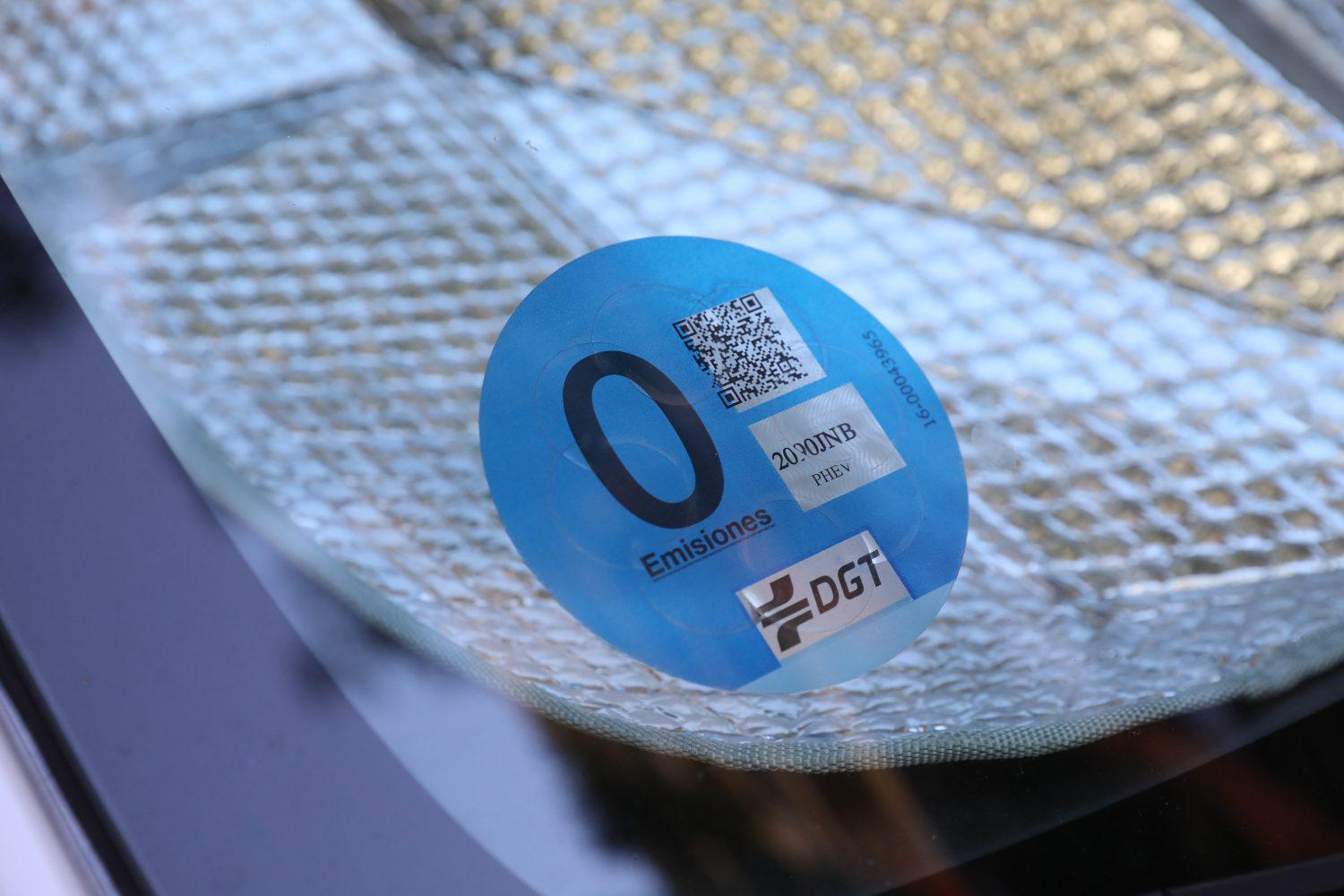
A Spanish-registered hire car already has its rating on the national register, and the windscreen sticker shows it. Going by the DGT’s criteria, any petrol car first registered from January 2006, or diesel from September 2015, gets at least a C, so a modern fleet car will be C, ECO or 0 and can drive anywhere in the citywide zone. The stickers are colour-coded and easy to read: green C, yellow B, blue 0, and ECO in green and blue.
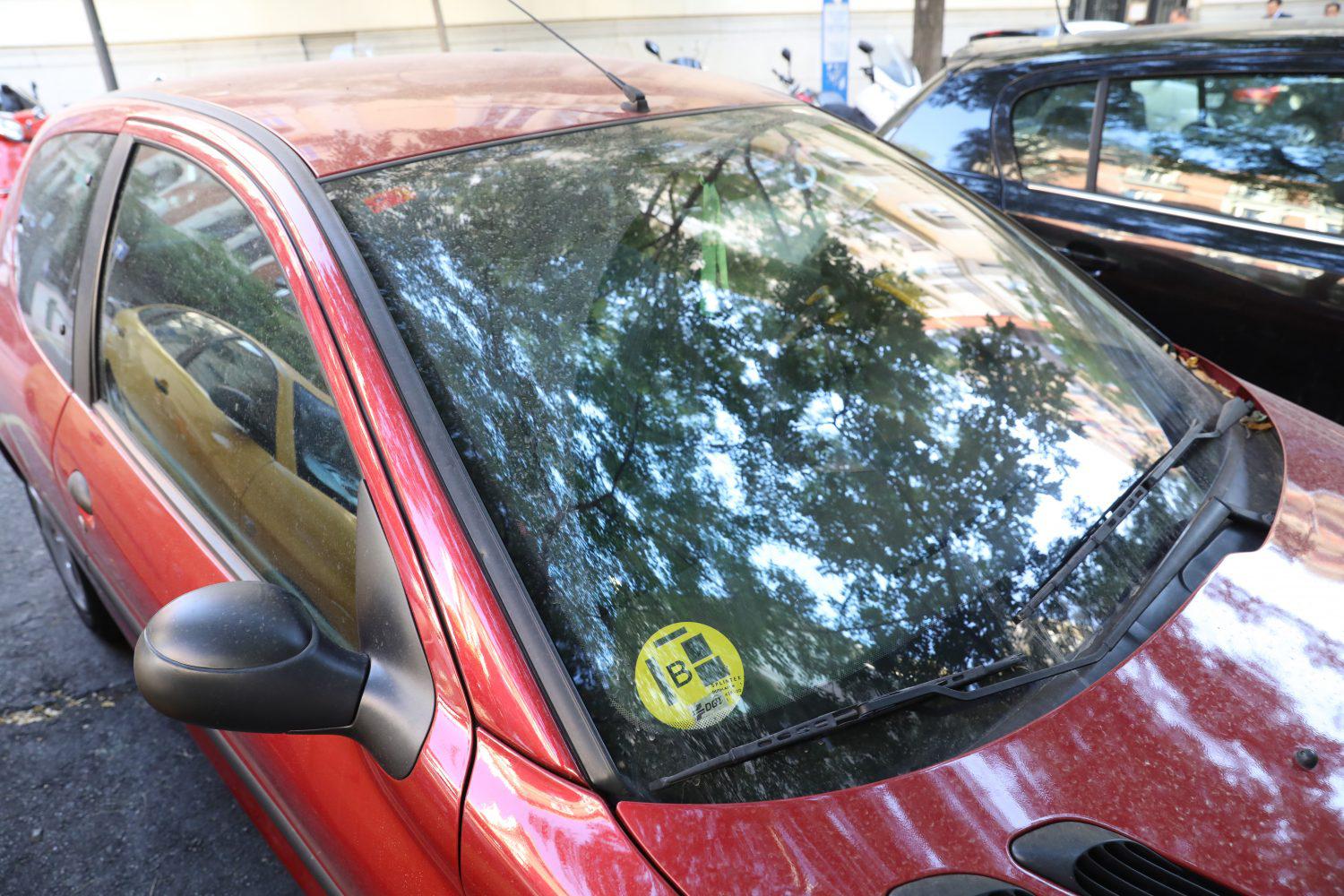
Three things are worth doing at the rental desk:
- Look at the sticker before you drive off, and photograph it with the number plate.
- Say where you’re going. If your hotel is in Distrito Centro, a C car still can’t drive in except to a car park, whatever the agent says about “all our cars are fine for Madrid”.
- Read the fine clause. A ZBE or speeding fine reaches the hire company first, which will pass it on under the rental terms; check its handling fee on traffic fines before you sign.
From 1 January 2026, a connected V-16 beacon is the only valid way to signal a broken-down or immobilised vehicle on Spanish roads, replacing the old warning triangles, and the DGT’s fine for not carrying one is €80. Ask the hire company to show you where the beacon is, and confirm it’s in the car before you leave.
Licence rules depend on where yours was issued. EU licences are straightforward; if yours is from outside the EU, read the DGT’s page on driving in Spain with a foreign licence and ask the hire company whether it also wants an International Driving Permit, well before you travel.
Driving Your Own Foreign-Registered Car
This is where most of the confusion lives. The DGT is clear that a foreign-registered vehicle can’t get a Spanish environmental label. That doesn’t mean foreign cars are banned, but it does mean the label system can’t vouch for yours, so you have to do it yourself.
- Cars from countries with their own label scheme. The DGT says vehicles from Germany, Austria, Denmark and France can look up their Spanish equivalent and drive with their own country’s label.
- Distrito Centro. The city lets foreign-registered vehicles in once they have been matched, by type and emissions, to the equivalent Spanish category. The owner sends the vehicle’s technical sheet (ficha técnica), registration certificate and proof of ownership, ideally well ahead of the trip, by email to [email protected], or takes them by appointment to the city’s ZBEDEP Distrito Centro authorisations office at Calle Bustamante 16.
- Older cars. The citywide ban is aimed at vehicles that would rate A, meaning petrol cars from before 2001 and diesels from before 2006. If your car is that old, don’t plan on driving it into Madrid; check with the city first, or park outside and take the train in.
The details of the foreign-vehicle procedure are on the city council’s Distrito Centro access page. Send the documents early; the city asks for them well ahead of the trip.
Four Common Situations, and What the Rules Mean
The rules read like a legal text because they are one. Here is how they play out for the visitors who ask most often.
You fly in, hire a petrol car at Barajas and drive to a hotel near Plaza de Santa Ana
A modern petrol hire car will be a C, so the citywide zone is no problem. Plaza de Santa Ana, though, is inside Distrito Centro, where a C car can only come in to park. Drive straight to a public car park such as Jacinto Benavente, leave the car there and don’t go hunting for a space on the street. Then ask yourself why you have the car at all: it will sit in that car park, at a daily charge, for every day of the city part of your trip. Compare that with the €33 fixed taxi fare from the airport to anywhere inside the M-30, and pick the car up on the day you leave Madrid instead.
You hire a hybrid
Hybrids are usually ECO, which is the most convenient label a visitor is likely to get. An ECO car can drive into the historic centre freely, the one limit being two hours at most in an on-street space there. It still pays to plan where the car will spend the night.
You drive down from France in your own diesel
French cars carry the Crit’Air sticker, and the DGT says vehicles from France, Germany, Austria and Denmark can look up their Spanish equivalent and drive with their own country’s label. Outside the historic centre, a car that equates to B or C is fine. To enter Distrito Centro, send the city the technical sheet, registration certificate and proof of ownership in advance; once it has been matched to a Spanish category, the same rules apply as for a Spanish car with that label, so a B or C equivalent can come in only to park.
You bring your own car from the UK, a petrol model registered in 2004
The UK isn’t among the countries the DGT names, so there is no label to fall back on. Under the DGT’s criteria a petrol car first registered in 2004 would be a B in Spain, which is not the kind of car the citywide ban targets; keep the paperwork that proves its age and engine in the glovebox all the same. For the historic centre the document procedure applies, and a car that equates to B can only come in to park.
Parking: Where the Real Cost Is
Even with a car that can go anywhere, parking in central Madrid is metered, limited and expensive enough to change the maths of a trip. On-street parking is regulated by the SER (Servicio de Estacionamiento Regulado), with time limits and charges; check the current rules on madrid.es or the city’s parking app before you rely on a kerb. Inside Distrito Centro the label rules come first: an ECO car can stay two hours on the street, and B and C cars shouldn’t be on the street at all unless they are using a public car park, a garage or a reserved space.
For a stay of more than a night, a public car park near your hotel, or simply not bringing the car into the centre, is usually the less stressful answer. If you’re arriving by road, consider leaving the car at your last stop before Madrid, or returning a hire car at the airport or a station before you reach the centre.
When a Car Does Make Sense
A car earns its keep on trips that public transport serves badly:
- The Sierra de Guadarrama, with its mountain passes, walking trails and stone villages, where buses run but not always when you want them.
- Chinchón, south-east of the city, whose arcaded Plaza Mayor is the reason for the trip, and easy to combine by car with Aranjuez.
- A road trip onwards, whether through Castile and León, down to Extremadura or across La Mancha, where small towns and wineries sit far from the railway.
For Toledo, Segovia and El Escorial, compare the train or bus first. The fast trains to Toledo and Segovia are quicker than driving once you count parking at the far end, and both towns’ old centres are difficult places to drive. Our guides to the Toledo day trip and the Segovia day trip have the transport details.
Getting Around Madrid Without a Car
The alternatives are good enough that most visitors never miss a car:
- Metro and Cercanías. The Metro covers the centre densely, and Cercanías commuter trains run out to the suburbs and towns around Madrid. Our transport card and fares guide explains what to buy.
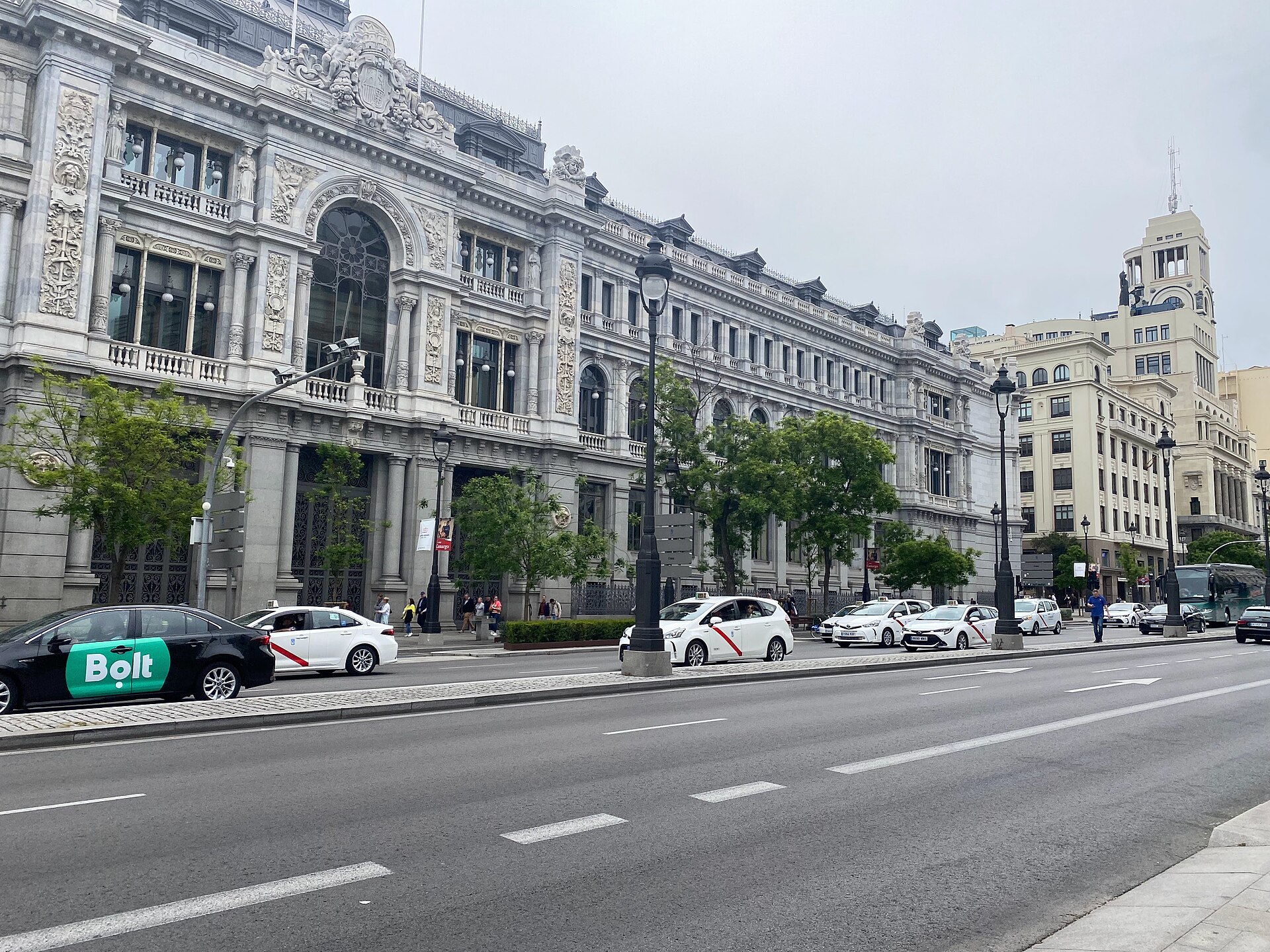
- Taxis. Madrid’s white taxis with the red diagonal stripe are easy to find, and the airport has a fixed fare of €33 to anywhere inside the M-30 ring road.
- Ride-hailing. Uber and other ride-hailing apps operate in the city.
- Car-sharing. The city’s tourism office lists Free2Move and WiBLE among the shared-car services. Check each app for the current coverage before you count on it.
Between them, these cover nearly every trip a visitor makes inside the city, without a parking bill or a camera in sight.
Before You Drive in Madrid: A Checklist
- Know your label. On a Spanish car, it’s on the windscreen sticker. On a foreign car, work out the Spanish equivalent before you leave home.
- Check whether your hotel is in Distrito Centro. If it is and your car isn’t 0 or ECO, plan to use a public car park or a garage, and ask the hotel what it recommends.
- Send foreign-car documents early if you will need to enter the historic centre: technical sheet, registration certificate and proof of ownership, to [email protected].
- Find the V-16 beacon in the car, and check your licence rules on the DGT’s site.
- Read the hire contract’s fine clause, including its handling fee.
- Remember the price of a mistake: €200, or €100 with the prompt-payment discount, per offence.
Frequently Asked Questions
Can I drive into central Madrid?
With a 0 or ECO car, yes. With a B or C car, you can enter the Distrito Centro zone only to park in a public car park, a private garage or a reserved space. Cars with no label can’t enter it, and are banned from the rest of the city too, apart from a few listed exceptions.
How much is the fine for breaking Madrid’s ZBE rules?
€200, reduced to €100 if you pay within the prompt-payment period stated on the notice.
Do rental cars in Madrid have the environmental sticker?
A Spanish-registered car has its rating on the national register, and the windscreen sticker shows it. Check it at the desk and photograph it. Under the DGT’s criteria, a petrol car registered from 2006 or a diesel from September 2015 is at least a C.
Can a foreign car enter Madrid’s low emission zone?
Foreign cars can’t get a Spanish label, but they aren’t automatically banned. For the historic centre, send your car’s technical sheet, registration certificate and proof of ownership to the city in advance so it can be matched to a Spanish category. Cars from Germany, Austria, Denmark and France can use their own country’s label equivalence, according to the DGT.
Can I drive to my hotel in the centre?
Ask the hotel before you travel. Unless your car is 0 or ECO, the rules only let you into Distrito Centro to park in a car park, a garage or a reserved space.
Do I need a V-16 beacon in a hire car?
Since 1 January 2026 the connected V-16 beacon has replaced warning triangles for signalling a broken-down vehicle in Spain. Ask the hire company to confirm the car has one and show you where it is.
Is it worth hiring a car for day trips from Madrid?
For the Sierra de Guadarrama, Chinchón or a road trip onwards, often yes. For Toledo and Segovia, the train is usually easier.
Related Madrid Guides
- Madrid transportation guide
- Madrid travel tips
- Madrid transport cards and fares
- Madrid-Barajas Airport guide
- Madrid airport to the city centre
- Day trips from Madrid
- Toledo day trip
- Segovia day trip
- Entry requirements for Spain
Photo Credits
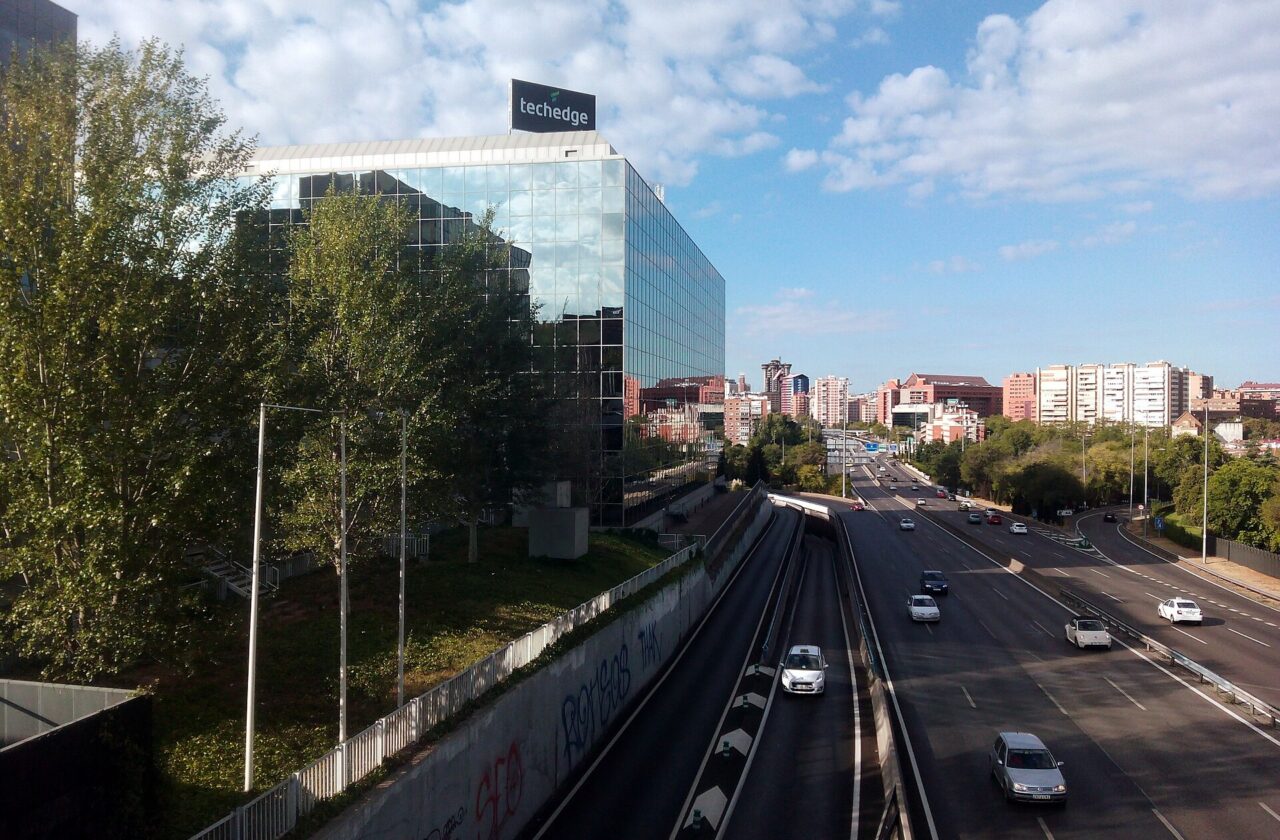
The M-30 ring road in Madrid: Madrid M-30 – 005 by Américo Toledano, CC BY-SA 4.0, via Wikimedia Commons.
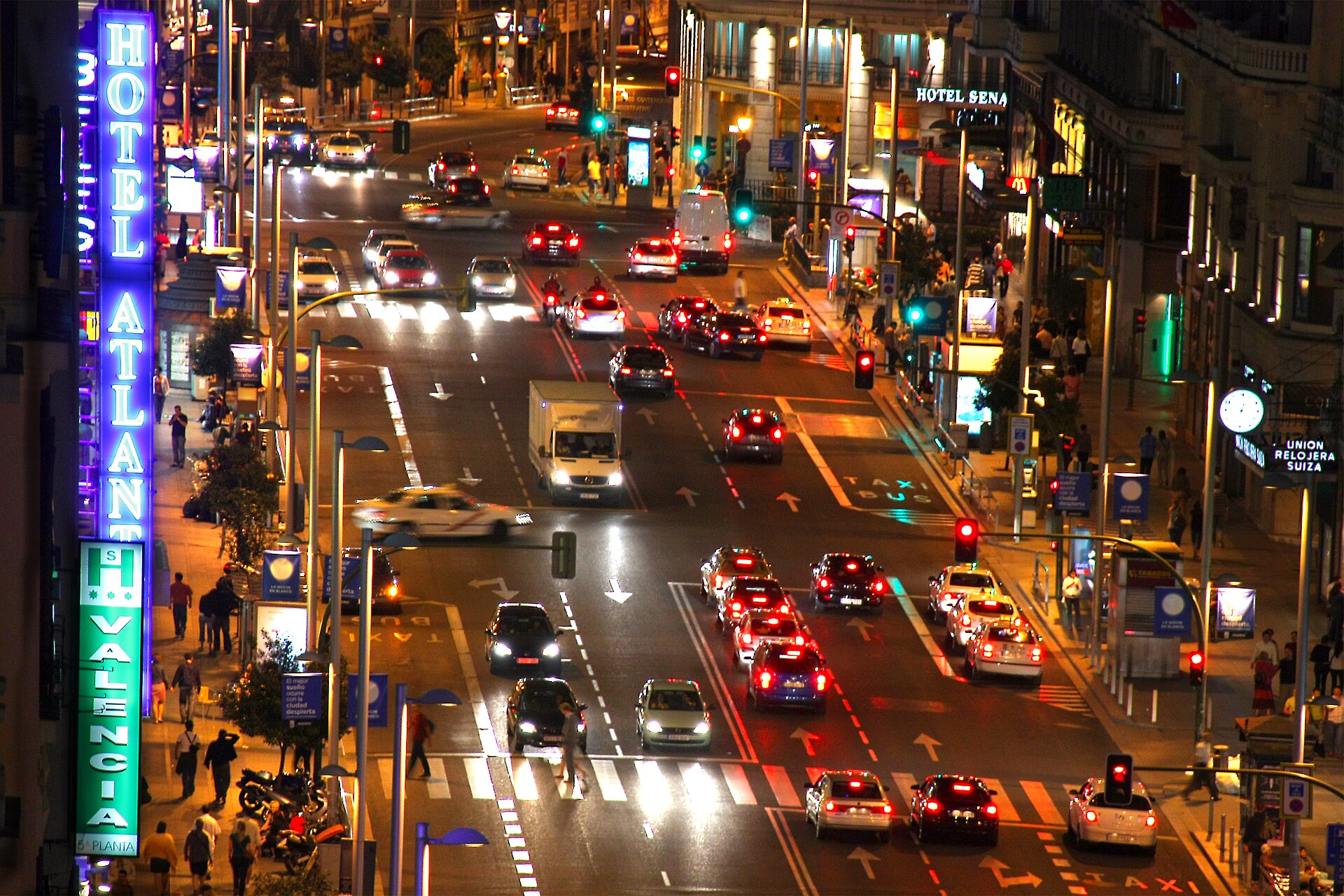
Gran Vía after dark: Gran Vía (Madrid) 25 by Tomás Fano, CC BY-SA 2.0, via Wikimedia Commons.
A DGT 0 emissions label on a windscreen: Los distintivos ambientales de la DGT serán obligatorios en Madrid en seis meses 01 by Diario de Madrid, CC BY 4.0, via Wikimedia Commons.
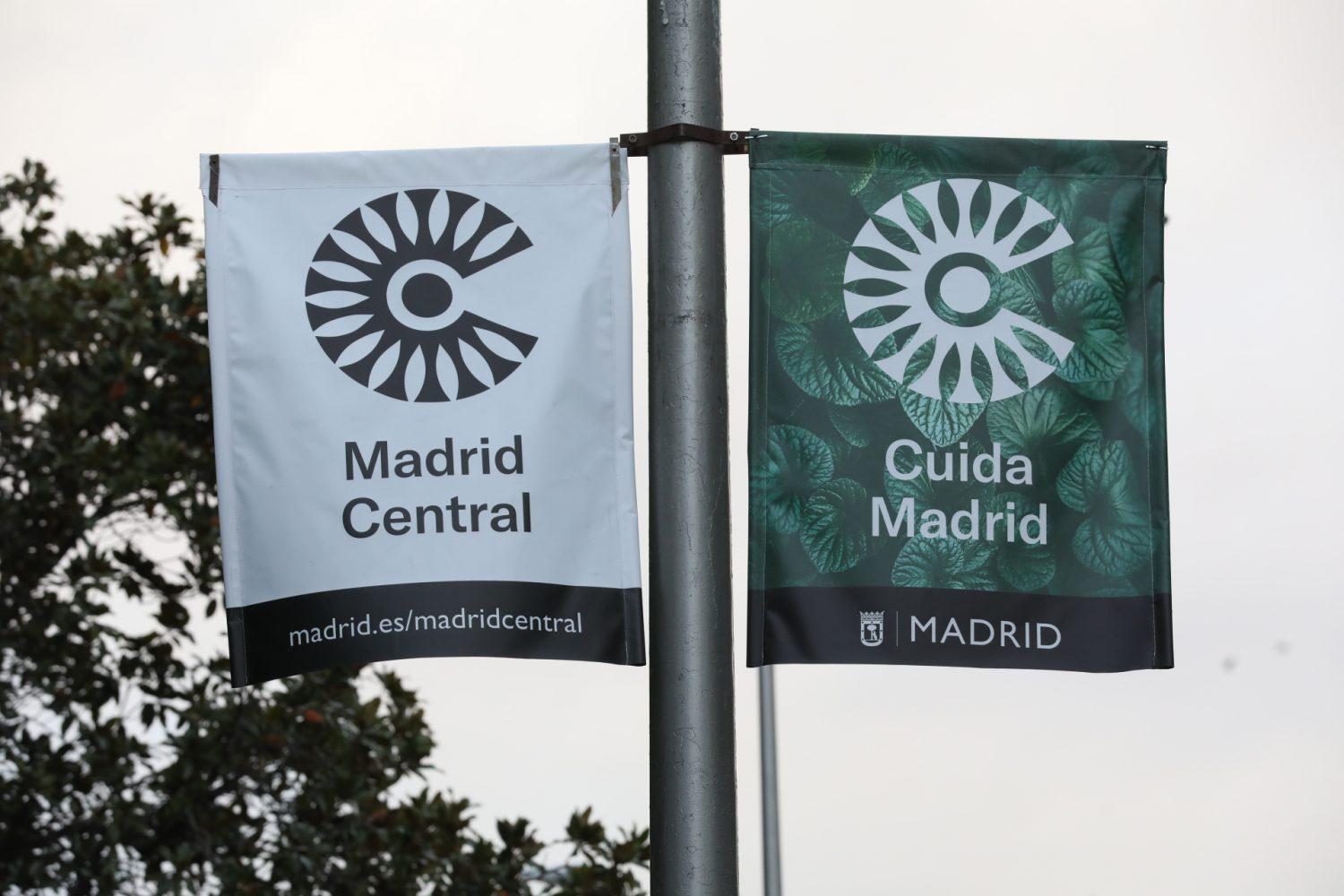
Madrid Central banners: Este viernes arranca la zona de bajas emisiones Madrid Central 02 by Diario de Madrid, CC BY 4.0, via Wikimedia Commons.
A DGT B label on a car windscreen: Los distintivos ambientales de la DGT serán obligatorios en Madrid en seis meses 03 by Diario de Madrid, CC BY 4.0, via Wikimedia Commons.
A Bolt car and Madrid taxis on Calle de Alcalá: ESP Madrid, Calle de Alcalá 0015 by -wuppertaler, CC BY 4.0, via Wikimedia Commons.