Madrid has no shortage of extraordinary free museums, and if you’re planning a serious cultural itinerary you’ll want to start with the complete Madrid museums guide before drilling down into individual collections. But I’ll say this plainly: the Naval Museum (Museo Naval) is the one that catches most visitors completely off guard. It sits at Paseo del Prado 5 — a few steps from the Prado’s front door — yet it draws a fraction of the crowds, charges nothing to enter, and houses one of the most historically significant objects in the Western world. I keep recommending it to people who think they’re not interested in naval history, and they keep coming back surprised. This guide covers everything you need to visit in 2026: admission, opening hours, the exhibits worth your time, and how to slot it into a day on the Paseo del Arte.
Table of Contents
- Naval Museum Madrid at a Glance
- The Juan de la Cosa Map — Why It Matters
- Must-See Exhibits
- A Brief History of the Museum
- Practical Tips and How to Visit
- What to Do Nearby
- FAQs
Naval Museum Madrid at a Glance
- Address: Paseo del Prado 5, 28014 Madrid
- Metro: Banco de España (Line 2) — 2-minute walk
- Hours: Tuesday–Sunday, 10:00–19:00 (last entry 18:30)
- Closed: Mondays and major public holidays
- Admission: Free — online registration required before you arrive
- Audio guide: €2 — worth it given how specialised the content is
- Average visit time: 90–120 minutes
- Photography: Permitted, no flash; tripods not allowed
- Accessibility: Fully wheelchair accessible throughout
One practical note before you go: free admission does not mean walk-in. You need to register online on the museum’s official site before your visit. It takes two minutes and secures your slot — skip it and there’s a real chance of being turned away at the door, especially on weekends.
The Juan de la Cosa Map — Why It Matters
I want to talk about this before anything else, because it’s the reason to come.
The Juan de la Cosa map, drawn in 1500, is the earliest surviving European map to show the Americas. Juan de la Cosa was a Basque cartographer and navigator who sailed with Columbus on his second voyage — he saw the Caribbean with his own eyes, then sat down and drew what he knew. The result is a piece of ox-hide parchment, roughly the size of a large poster, that depicts a recognisable coastline of Cuba and northern South America stretching westward into what the mapmaker could only represent as unknown territory.
The Juan de la Cosa map alone justifies the visit — a piece of parchment that changed how Europeans understood the world, displayed in a nearly empty room for free.
What strikes me every time I see it is how mundane the display is. No theatrical lighting, no protective crowd barrier keeping you twenty feet away. You can stand close enough to make out the individual ink strokes. There’s context signage in Spanish and English, but no fanfare. It’s the kind of object that would be behind glass in a climate-controlled pod at the Smithsonian, surrounded by a queue. Here it’s just… there.
Must-See Exhibits at the Naval Museum Madrid
1. The Juan de la Cosa Map (1500)
Already covered above — but worth repeating: this is the star. The first surviving map to show any coastline of the Americas. Drawn by a man who was there. Free to see. Go.
2. Scale Models of Spanish Galleons
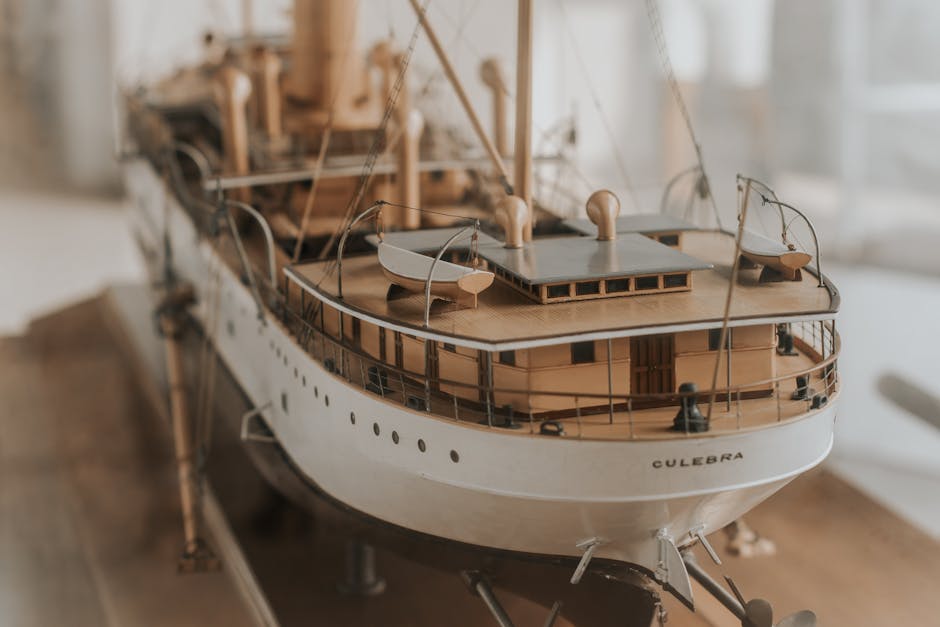
The museum holds over 700 ship models, ranging from crude early replicas to extraordinarily detailed 18th-century constructions with rigging finer than thread and miniature sailors at their posts. I could spend an hour at just these cases. The models are arranged chronologically, so you watch the evolution of hull design from oared galleys to steam-powered warships across a single gallery walk.
3. Navigational Instruments from the Age of Discovery
Astrolabes, quadrants, cross-staffs, and early compasses — some contemporary with Columbus and Magellan’s voyages, some directly attributed to expeditions you’ll recognise from history class. The collection runs to over 1,000 instruments. There’s enough contextual labelling that you understand what you’re looking at without needing a specialist’s background.
4. Battle of Trafalgar Artifacts
The 1805 battle is taught in British schools as Nelson’s triumph. Spanish schools teach it differently — as a heroic defeat in which Admiral Federico Gravina died of wounds sustained fighting an outgunned action. The museum holds weapons, personal effects, uniforms, and paintings from the Spanish perspective. It’s not a narrative you encounter often in English-language travel coverage, which makes it more interesting, not less.
5. Naval Cannons and Weapons
16th-to-19th-century naval cannons, swords, and firearms, many with engraved royal emblems. These are the kind of objects that look generic in photographs and stop you cold in person — the scale, the weight implicit in their construction, the craftsmanship applied to things designed purely for destruction.
6. Battle Paintings and Naval Portraits
Large-scale oil paintings of Spanish naval engagements line several galleries — battles that shaped the global order between 1500 and 1800, most of which international visitors have never heard of. Alongside them: portraits of admirals and commanders, some famous, most forgotten outside of Spain. These rooms feel genuinely different from the galleries at the Prado two minutes away — less art-for-art’s-sake, more historical document rendered in oil.
7. Spanish Empire Cartography
Beyond the Juan de la Cosa map, the museum holds a remarkable run of 16th-to-18th-century charts used for treasure-fleet navigation, military expeditions, and colonial administration. Watching the maps evolve across the decades — coastlines sharpening, interiors filling in — is its own kind of time-lapse of European knowledge expanding across the globe.
A Brief History of the Naval Museum Madrid
The Museo Naval was founded in 1843 by royal decree, originally conceived as the official historical archive of the Spanish Navy. For much of the 19th century it occupied various locations around Madrid before settling into its current 1932 building on Paseo del Prado — a functional neoclassical structure that makes no attempt to compete architecturally with the Prado or the Thyssen across the road, which I think works in its favour. The building fits the collection: serious, unglamorous, focused.
The collection grew over 180 years as the Spanish Navy contributed objects from decommissioned ships, closed naval academies, and government archives. Today it holds approximately 11,000 artifacts: 700-plus ship models, more than 1,000 navigational instruments, hundreds of battle paintings, uniforms, weapons, and primary documents spanning the Age of Discovery through the 20th century. It’s an unusually coherent collection for its size — the thematic thread of Spanish maritime power holds everything together.
Practical Tips for Visiting the Naval Museum Madrid
- Register online first: Admission is free but requires prior online registration. Do this before you leave for the museum.
- Bring photo ID: Required for entry — non-negotiable even though it’s free.
- Last entry is 18:30, not 19:00: Doors close to new visitors at 18:30. Plan accordingly if you’re coming late in the day.
- Get the audio guide (€2): The content is specialised enough that the context genuinely helps.
- Go Tuesday–Thursday for low crowds: Weekends attract school groups and the Juan de la Cosa room gets busy. Midweek mornings are almost empty.
- Photography is fine: No flash, no tripods — but you can photograph everything else freely.
- Combine with the Prado: They’re five minutes apart on foot. A morning at the Naval Museum and an afternoon at the Prado is an excellent full day.
- Closed Mondays: Along with major public holidays. Check the calendar if you’re visiting around Easter or Christmas.
- Family-friendly: The ship models work well with older children — the detail holds attention in a way that painting galleries often don’t.
What to Do Nearby
The Naval Museum sits on the southern section of Paseo del Prado, which puts you within easy walking distance of several of Madrid’s best cultural draws. The Prado Museum is literally across the road — five minutes on foot — and together these two make a full cultural day without any transit. If you want to understand how the Naval Museum fits into the broader picture of Madrid’s art and history collections, the Golden Triangle of museums (Prado, Reina Sofía, Thyssen) is the natural wider context.
For a different kind of afternoon entirely, Retiro Park is a ten-minute walk east — good for decompressing after a dense morning of historical artifacts. If you’re building a multi-museum day and want to maximise free entry, check the guide to free museum hours in Madrid before finalising your itinerary. And if you’re comparing the Naval Museum against other strong options nearby, the Archaeological Museum and the Museum of America are both worth serious consideration — very different collections, similarly undervisited.
For anyone doing several museums across a few days, it’s also worth checking whether the Madrid Museum Pass adds value to your trip — the Naval Museum is free regardless, but the pass covers a lot of paid venues you’ll want to hit.
Naval Museum Madrid FAQs
Is the Naval Museum Madrid free?
Yes — admission is always free. But you must register online in advance; walk-ins are not guaranteed entry. Bring photo ID on the day.
What are the Naval Museum Madrid opening hours?
Tuesday to Sunday, 10:00 to 19:00, with last entry at 18:30. The museum is closed on Mondays and major public holidays.
Where is the Naval Museum Madrid?
Paseo del Prado 5, 28014 Madrid — steps from the Prado Museum’s southern entrance. The nearest metro is Banco de España on Line 2, a two-minute walk away.
What is the most important exhibit at the Naval Museum Madrid?
The Juan de la Cosa map (1500) — the oldest surviving European map to show any part of the Americas. It’s on permanent display and is, without exaggeration, one of the most historically significant objects in Madrid.
How long does the Naval Museum Madrid take?
Plan for 90 to 120 minutes. You could rush through in an hour, but the ship model collection and the cartography rooms reward patience. If you linger on the Juan de la Cosa map and the battle paintings, two hours goes quickly.
Is the Naval Museum Madrid worth visiting?
Yes — particularly if you have any interest in Spanish history, the Age of Discovery, cartography, or military history. Even without those interests, the Juan de la Cosa map is the kind of object that stops you regardless of what you came in expecting. It’s free, it’s rarely crowded, and it’s five minutes from the Prado. There’s no good reason to skip it.
Can I visit the Naval Museum Madrid with children?
Yes. The ship model collection works particularly well with older children — the detail is striking for anyone interested in miniatures, ships, or historical craft. The cannons and weapons galleries also hold attention. Younger children may find the pace slow, but there’s enough visual interest to keep a curious 8-to-12-year-old engaged throughout.
For more ideas on building a full day around Madrid’s museum district, the things to do in Madrid guide covers the wider picture beyond just the Paseo del Arte.